Using a Home Ice Cream Maker for Special Diets: Low-Sugar, Keto, Allergy-Aware
Learn how to use a home ice cream maker to create low-sugar, keto-friendly, and allergy-conscious frozen treats for every guest.
Using a Home Ice Cream Maker for Special Diets
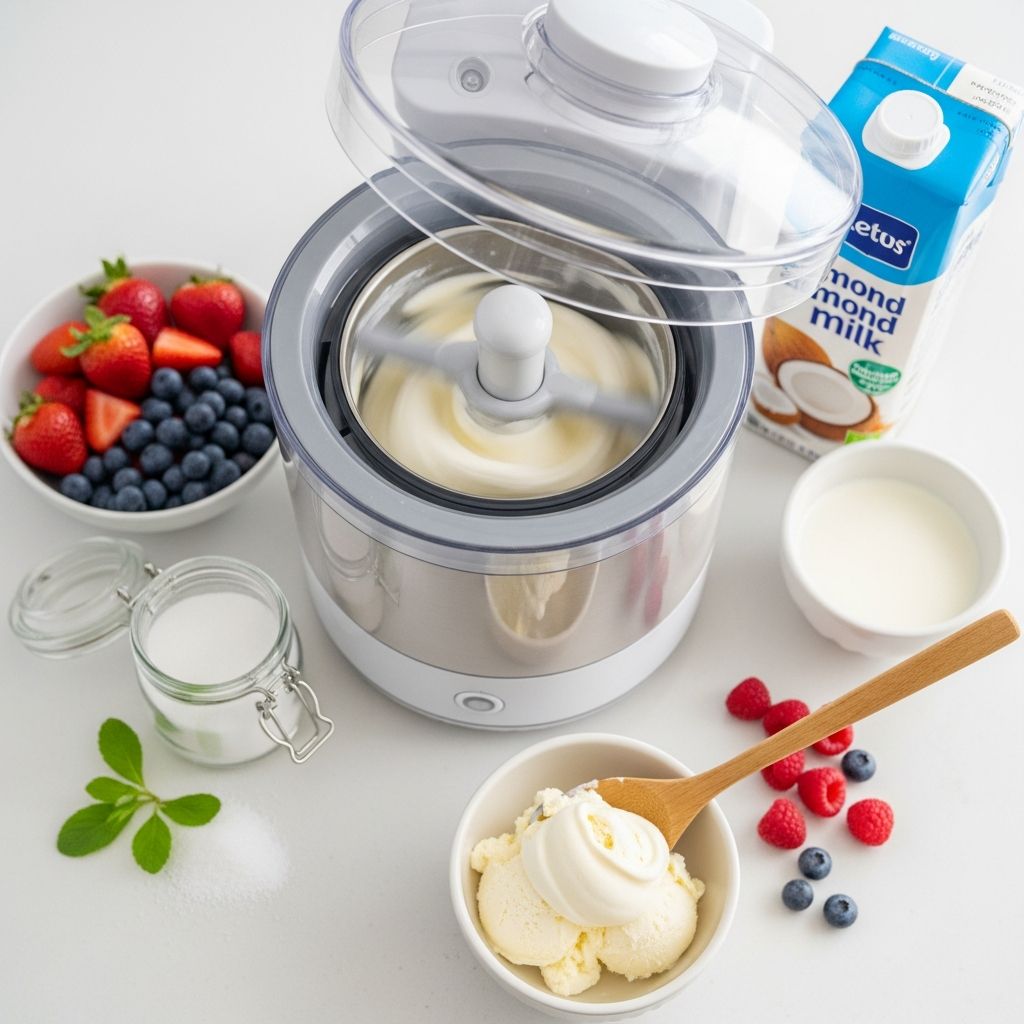
Home ice cream makers make it much easier to enjoy frozen desserts that fit low-sugar, keto-friendly, and allergy-aware eating patterns. By controlling ingredients, sweeteners, and mix-ins, you can customize texture and flavor while avoiding common triggers such as added sugar, gluten, dairy, nuts, or eggs. Many healthy ice cream recipes rely on full-fat dairy or coconut milk, low-carb sweeteners, and fruit or yogurt bases instead of sugar-heavy custards.
Table of Contents
- Benefits of Special-Diet Ice Cream at Home
- Ice Cream Maker Basics for Healthier Recipes
- Core Strategies for Low-Sugar Ice Cream
- Keto-Friendly Ice Cream in a Home Machine
- Allergy-Aware and Intolerance-Friendly Approaches
- Managing Texture, Sweeteners, and Mix-Ins
- Sample Framework Recipes
- Troubleshooting Common Problems
- Frequently Asked Questions (FAQs)
- Conclusion
Benefits of Special-Diet Ice Cream at Home
Commercial low-sugar or allergen-free ice creams can be expensive and still contain additives, stabilizers, and sugar alcohol blends that some people do not tolerate well. Using a home ice cream maker, you can fine-tune sweetness, fat content, protein, and allergens while limiting ultra-processed ingredients.
Key benefits include:
- Reduced added sugar by relying on fruit, stevia, erythritol, or other low-calorie sweeteners.
- Control over carbohydrates for low-carb or ketogenic diets, using high-fat bases instead of sugar syrups.
- Flexibility to avoid dairy, eggs, nuts, soy, or gluten using coconut milk, oat milk, banana, or yogurt bases.
- Ability to boost nutrition with protein powders, Greek yogurt, or high-protein pudding mixes.
- Customization of flavor and texture while maintaining dietary restrictions for families or gatherings.
Ice Cream Maker Basics for Healthier Recipes
Most home ice cream makers work by churning a chilled mixture while it freezes, incorporating air and preventing large ice crystals from forming. Recipes made for traditional machines can usually be adapted to low-sugar or allergy-aware diets by swapping sweeteners and base liquids.
Common types of home ice cream makers
- Pre-frozen bowl machines, where the insulated bowl must be frozen for several hours before churning.
- Compressor-based machines, which chill the mixture with a built-in freezer and allow back-to-back batches.
- High-speed blender or specialty devices like certain popular machines that turn pre-frozen mixtures into smooth ice creams and high-protein desserts.
Base components of any ice cream recipe
- Fat source, such as heavy cream, whole milk, coconut milk, or nut-based milks for richness and creaminess.
- Liquids, often milk, yogurt, or plant milk, which affect mouthfeel and freezing point.
- Sweeteners, including sugar, sugar substitutes, or fruit, which influence flavor and texture.
- Flavorings, such as vanilla, cocoa, coffee, fruit, spices, or extracts.
- Stabilizers or thickeners in some recipes, like egg yolks, gelatin, or xanthan gum for a smoother scoop.
Core Strategies for Low-Sugar Ice Cream
Low-sugar ice cream recipes aim to minimize sucrose and corn syrup while preserving creaminess and avoiding icy textures. Balanced sweetener choice and adequate fat are crucial.
Choosing low-sugar sweeteners
Common options include:
- Sugar alcohols such as erythritol or xylitol, which provide bulk and mild sweetness with minimal effect on blood sugar but can cause digestive upset in large amounts.
- High-intensity sweeteners like stevia or monk fruit extract, often combined with erythritol for better texture and flavor.
- Small amounts of honey or maple syrup when moderate sugar is acceptable, often balanced with high-fiber or high-protein ingredients.
- Whole fruit, especially bananas or dates, which can naturally sweeten and thicken blends.
Balancing sweetness and texture
Reducing sugar can make ice cream harder and icier because sucrose lowers the freezing point and helps keep the mixture scoopable. To counter this, recipes often increase fat, add fiber or protein, or include small amounts of other sweeteners.
Helpful tactics:
- Use full-fat dairy or canned coconut milk to maintain creaminess.
- Add a small amount of glycerin or alcohol in some adult recipes to soften texture.
- Serve low-sugar ice cream after 5 to 10 minutes at room temperature for easier scooping.
- Include fiber-rich ingredients such as fruit, nut butters, or oats in non-keto recipes.
Example low-sugar vanilla base pattern
Many sugar-free vanilla ice cream recipes use whole milk and heavy cream with a granular sugar substitute. A general pattern is:
- Whole milk and heavy cream or coconut milk as the base.
- Sugar substitute such as a sucralose blend or erythritol.
- Vanilla extract and a pinch of salt to accent flavor.
Keto-Friendly Ice Cream in a Home Machine
Keto ice cream keeps net carbohydrates very low by relying on high-fat bases and sugar-free sweeteners. Recipes frequently use full-fat coconut milk or heavy cream and exclude sugar, syrups, and high-sugar fruits.
Keto-friendly bases
- Canned full-fat coconut milk, which delivers rich texture and fits dairy-free keto diets.
- Heavy cream and lower-carb milk alternatives in dairy-based keto recipes.
- Protein powder blends combined with milk or low-carb plant milks to make high-protein, low-sugar ice creams in certain machines.
Keto sweeteners and flavors
Keto ice cream formulas typically rely on:
- Erythritol or xylitol, sometimes mixed with stevia or monk fruit to smooth the sweetness profile.
- Cocoa powder, coffee, vanilla, and extracts that add depth without added sugar.
- Lower-carb add-ins like nuts, seeds, unsweetened coconut, or sugar-free chocolate, used with portion awareness for calorie control.
Adapting a simple keto coconut ice cream to a machine
Some keto ice cream recipes are designed without an ice cream maker and involve freezing the mixture in cubes before blending. To adapt them for a standard machine, you can typically:
- Blend coconut milk, low-carb sweetener, salt, and vanilla until smooth.
- Chill the mixture thoroughly in the refrigerator.
- Churn according to the manufacturer’s directions until thick and soft-serve-like.
Allergy-Aware and Intolerance-Friendly Approaches
Many people avoiding common allergens still want to enjoy ice cream. Recipes can be tailored to avoid dairy, gluten, eggs, nuts, or soy using alternative bases and careful selection of mix-ins.
Dairy-free and lactose-free choices
- Canned coconut milk or coconut cream produces a texture similar to full-fat dairy ice cream and is widely used in vegan and keto recipes.
- Almond, cashew, oat, or soy milks can be used, though lower-fat options may benefit from added fat such as coconut cream or nut butter for creaminess.
- Frozen bananas, blended with small amounts of plant milk, create a soft-serve style dessert often called banana ice cream.
Egg-free and vegan adaptations
Traditional custard-style ice cream uses egg yolks as a natural emulsifier. To avoid eggs, many vegan or allergy-aware recipes rely on:
- High-fat coconut milk or cream for structure.
- Blended bananas, avocados, or silken tofu to add body and smoothness.
- Starches or gums used in small amounts where permitted and tolerated.
Nut-free and gluten-free considerations
- Choose seed butters such as sunflower seed butter instead of peanut or tree nut butters.
- Use gluten-free flavorings and avoid cookie or brownie mix-ins unless they are certified gluten-free.
- Check chocolate chips, sprinkles, and sauces for hidden gluten or cross-contamination risks.
Managing Texture, Sweeteners, and Mix-Ins
Special-diet ice creams often need deliberate balancing of fat, water, and sweeteners to avoid icy or crumbly results. Texture is especially sensitive when sugar is reduced or dairy is removed.
How bases, fat, and sweeteners interact
| Component | Role in Ice Cream | Special-Diet Adjustments |
|---|---|---|
| Fat (cream, coconut milk) | Provides creaminess and richness, slows melting | Increase slightly in low-sugar recipes to counter iciness |
| Sweetener | Adds sweetness and lowers freezing point | Combine low-carb sweeteners or fruit to mimic sugar’s texture effects |
| Water content | Excess can form ice crystals | Limit watery fruits or low-fat milks without added fat or stabilizers |
| Protein | Supports structure and body | Use Greek yogurt or protein powders for high-protein versions |
Timing and handling of mix-ins
- Fold in nuts, chocolate chunks, or fruit pieces in the last few minutes of churning to avoid them sinking or breaking apart.
- Use unsweetened or sugar-free versions of mix-ins to keep total carbohydrates low in keto recipes.
- Pre-chill liquid add-ins, such as coffee or fruit purees, so they do not warm the base.
Sample Framework Recipes
The following framework recipes illustrate how to adapt ingredient choices for different dietary needs. They are generalized patterns based on common approaches to keto, high-protein, and fruit-based healthy ice creams.
Framework 1: Low-Sugar Vanilla Ice Cream
- Base: Whole milk and heavy cream, or an equivalent mixture of lactose-free cream and milk.
- Sweetener: Granulated sugar substitute, such as a sucralose blend or erythritol.
- Flavor: Vanilla extract and a pinch of salt for balance.
Process:
- Whisk milk and sweetener until dissolved, then stir in cream, vanilla, and salt.
- Chill thoroughly and churn according to your machine’s directions.
- Serve soft-serve style or freeze for a firmer scoop.
Framework 2: Keto Coconut Vanilla Ice Cream
- Base: Full-fat canned coconut milk or coconut cream.
- Sweetener: Erythritol or a preferred low-carb blend, adjusted to taste.
- Flavor: Vanilla extract, with optional cocoa powder for a chocolate version.
Process:
- Stir coconut milk, sweetener, salt, and vanilla until smooth.
- Chill and churn until thick; freeze briefly for scoopable texture.
- Store in a covered container, allowing time to soften before serving.
Framework 3: Banana-Based Dairy-Free Ice Cream
- Base: Frozen banana slices plus a small amount of unsweetened almond or oat milk.
- Sweetness: Comes primarily from ripe bananas, with optional small amounts of maple syrup or dates.
- Flavor options: Mixed berries, cocoa powder, peanut butter or seed butter, coffee, or tropical fruits.
Process in a blender-based machine or freeze the blended mixture in a shallow container before processing if your ice cream maker allows it.
Framework 4: High-Protein, Low-Sugar Ice Cream
- Base: Milk or a milk alternative plus a serving of protein powder.
- Thickener: Sugar-free pudding mix or Greek yogurt can add body and creaminess.
- Sweetener: Non-sugar sweetener within the pudding or separate low-calorie sweeteners.
These formulas are often used with machines that can process frozen high-protein mixtures into smooth ice cream-like textures.
Troubleshooting Common Problems
Special-diet recipes sometimes behave differently from traditional ice creams. Common issues and strategies include:
Ice cream is too hard or icy
- Increase fat content slightly with cream, coconut cream, or nut butters in non-allergic recipes.
- Use a blend of sweeteners instead of relying exclusively on erythritol, which can crystallize.
- Allow extra time at room temperature before scooping.
Flavor is flat or too bitter
- Increase vanilla, salt, or cocoa slightly to balance alternative sweeteners.
- Combine two sweeteners (for example, erythritol plus a small amount of stevia) for a more sugar-like taste.
Mixture does not thicken properly in the machine
- Ensure the base is fully chilled before churning.
- Confirm the freezer bowl, if used, is frozen solid according to the manufacturer’s instructions.
- Reduce water-rich ingredients and increase fat or solids.
Frequently Asked Questions (FAQs)
Can I convert any normal ice cream recipe into a low-sugar version?
Many recipes can be converted by replacing sugar with appropriate low-calorie sweeteners and slightly increasing fat or solids, but you may need to experiment with ratios and chilling time to avoid iciness.
Is banana-based ice cream suitable for keto diets?
Bananas are relatively high in carbohydrates, so banana-based ice creams usually do not fit strict ketogenic macros, though they can be appropriate for other low-sugar or whole-food approaches.
What is the best milk alternative for creamy vegan ice cream?
Full-fat canned coconut milk is commonly recommended for vegan and dairy-free recipes because it mimics the richness of heavy cream and produces a smooth texture in home ice cream makers.
Are sugar alcohols safe for children?
Sugar alcohols are widely used in low-sugar products but can cause digestive discomfort in some people when consumed in larger amounts, so portion size and individual tolerance are important considerations.
How do I keep nut or gluten allergens completely out?
Select clearly labeled nut-free and gluten-free ingredients, avoid cross-contamination in utensils and containers, and prepare allergy-safe batches separately from other recipes.
Conclusion
Using a home ice cream maker for low-sugar, keto-friendly, and allergy-aware desserts allows precise control over ingredients, flavor, and nutrition. By understanding how fat, sweeteners, and base liquids interact, you can adjust traditional formulas into options that better match health goals and dietary restrictions.
Whether you prefer ultra-low-carb coconut-based keto ice creams, fruit-forward banana blends, or high-protein frozen treats, the same foundational techniques of chilling, churning, and balancing sweetness and texture apply. A thoughtful approach to sweeteners, careful choice of dairy or plant-based bases, and attention to allergens makes it possible for more people to enjoy ice cream together, with recipes tailored to their individual needs.
Similar Articles





Read full bio of medha deb