
Preventing Cross-Contamination in Ice Cream Makers for Allergens, Gluten, and Nuts
Comprehensive best practices to keep allergen, gluten, and nut cross-contact under control in commercial and home ice cream makers.
Introduction
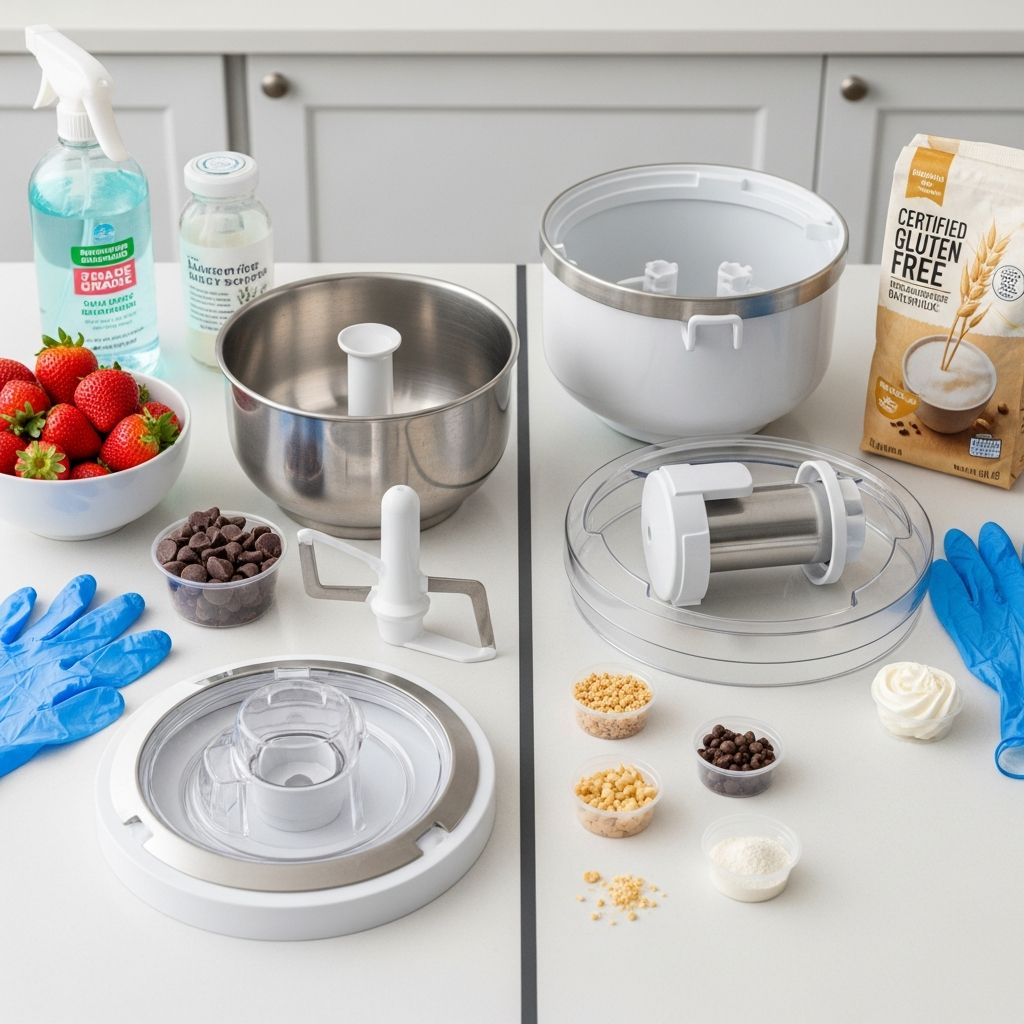
Ice cream is often viewed as a simple treat, but for people with food allergies, celiac disease, or nut sensitivities, a single scoop can carry serious risk. Cross-contamination (or more precisely, cross-contact) in ice cream makers can introduce trace amounts of milk proteins, gluten, peanuts, tree nuts, eggs, soy, or other allergens into products that are supposed to be safe. Effective control requires a combination of hygienic equipment design, validated cleaning, thoughtful scheduling, and strict operating procedures.
This article explains how cross-contamination happens in ice cream equipment and provides practical strategies to prevent it in both commercial and serious home production, with special attention to allergens, gluten, and nut sensitivities.
Table of Contents
- Understanding Cross-Contamination and Cross-Contact
- Key Allergen and Sensitivity Risks in Ice Cream
- Ice Cream Maker Design and Hygienic Features
- Cleaning and Sanitizing Protocols Between Allergen Runs
- Preventing Gluten Cross-Contact in Ice Cream Makers
- Preventing Nut and Nut-Trace Cross-Contact
- Operational Controls, Scheduling, and Staff Practices
- Labeling, Communication, and Consumer Transparency
- Risk Management, Verification, and Recalls
- Frequently Asked Questions (FAQs)
- Conclusion
Understanding Cross-Contamination and Cross-Contact
In food safety, it is vital to distinguish between cross-contamination and cross-contact when managing allergens and sensitivities.
- Cross-contamination is the transfer of harmful microorganisms (like bacteria) from one surface or food to another, such as from dirty equipment to ice cream mix.
- Cross-contact is the transfer of allergenic proteins (such as peanut, gluten, or milk proteins) from one food to another, even in tiny, invisible amounts that can still trigger reactions.
Both issues matter for ice cream makers. Inadequate cleaning of freezing barrels, valves, or mix hoppers can leave behind allergens or microbes that contaminate the next batch.
Why Ice Cream Makers Are High-Risk for Cross-Contact
Ice cream equipment poses special challenges:
- Complex interiors with small crevices, seals, and gaskets that can trap residues.
- Thick, sticky mixes that cling to surfaces and are harder to rinse away.
- Frequent switching between flavors, some containing nuts, cookies (gluten), or other allergens.
- Toppings and inclusions added late in the process, increasing contact surfaces and handling steps.
Key Allergen and Sensitivity Risks in Ice Cream
Ice cream routinely uses several of the major food allergens, as well as common sensitivities such as gluten. These include:
- Milk (dairy proteins, casein, whey) as the base of traditional ice cream.
- Egg in custard-style mixes and some inclusions.
- Peanuts and tree nuts in nut flavors, swirls, and toppings.
- Gluten from cones, cookie pieces, brownie chunks, or malt ingredients.
- Soy in emulsifiers or inclusions such as chocolate coatings.
For individuals with food allergies or celiac disease, even minute traces can be dangerous. Controlling these risks requires both physical separation and effective cleaning that physically removes allergenic residues from equipment surfaces.
Ice Cream Maker Design and Hygienic Features
The design and construction of ice cream machines significantly influence how effectively they can be cleaned and how well cross-contamination can be controlled.
Hygienic Materials and Construction
Professional ice cream makers increasingly rely on hygienic design principles:
- Use of food-grade stainless steel with smooth, non-porous surfaces that resist scratches and bacterial attachment.
- Careful selection of gaskets and seals made from food-grade silicone or similar materials, resistant to cleaning chemicals and temperature swings.
- Seamless or welded mixing chambers to avoid crevices where residues and allergens can accumulate.
Simplified Structures for Easier Cleaning
Complex structures hinder effective cleaning and can allow microbial or allergen residues to persist. Good design focuses on:
- Minimizing corners, joints, and dead zones in barrels and mix hoppers.
- Quick-release or modular mixing blades and scrapers that can be fully disassembled, cleaned, and sanitized.
- Well-designed drainage so no stagnant water or product remains in drip trays and lines.
Independent Circuits in Multi-Flavor Machines
Multi-flavor soft-serve units and batch freezers may include multiple barrels and hoppers. Higher-end designs can have:
- Independent mixing tanks and piping for each flavor to physically isolate allergen-containing products from allergen-free flavors.
- Separate inlets and discharge ports per flavor, reducing shared contact surfaces.
Even with independent circuits, any shared parts (like external nozzles or spouts) must be cleaned or dedicated by allergen status.
Automated Cleaning and Pasteurization
Modern commercial machines may include automated cleaning cycles and integrated pasteurization.
- Automated wash cycles that circulate warm water or cleaning solution through internal components can standardize and improve routine cleaning.
- Pasteurization modes that heat mix within the system to 65–80°C (149–176°F) help reduce microbial loads and extend safe holding times, though they do not remove allergens.
- Some machines also use UV sterilization around the dispensing outlet to limit microbial growth during idle times.
Cleaning and Sanitizing Protocols Between Allergen Runs
To prevent cross-contamination between allergen-containing and allergen-free batches, equipment must be fully cleaned and sanitized, not just rinsed.
Key Steps in an Effective Cleaning Cycle
Based on ice cream food safety plans and industry guidelines, a typical cleaning sequence includes:
- Pre-rinse: Drain product completely and flush with warm water to remove as much visible residue as possible.
- Disassembly: Remove all detachable parts (blades, o-rings, gaskets, nozzles, drip trays).
- Detergent wash: Manually scrub interior surfaces and parts with hot, soapy water to physically remove fats, proteins, and particles.
- Rinse: Rinse thoroughly with clean water to remove all detergent residues.
- Sanitize: Immerse small parts in an approved sanitizer at the proper concentration and contact time (for example, 100–200 ppm chlorine solutions).
- Dry and reassemble: Allow to air-dry on a sanitized surface, then reassemble using sanitized hands or gloves.
Allergen-Specific Considerations
For allergens and gluten, the goal is to physically remove the proteins from all food-contact surfaces.
- A simple water rinse is not sufficient; contact surfaces must be fully washed and scrubbed.
- Cleaning protocols should be more stringent when switching from an allergen-containing product to an allergen-free or “free-from” label claim.
- Validated procedures (e.g., swabbing and testing for residual proteins) are recommended in commercial operations for high-risk allergens like peanuts and gluten.
Disinfection of Dispensing Outlets
Studies on soft ice cream franchises highlight the need for special attention to dispensing outlets, which are exposed to the environment and heavily used.
- Manual disinfection of outlets and nozzles with approved sanitizers multiple times daily.
- Use of sterile disposable gloves during cleaning to avoid recontamination.
Preventing Gluten Cross-Contact in Ice Cream Makers
Many consumers seek gluten-free ice cream for celiac disease or non-celiac gluten sensitivity. The main gluten risks arise from cones, inclusions (cookies, cakes, cookie dough), malt flavorings, and cross-contact on equipment.
Gluten Sources in Ice Cream Production
- Wheat-based cones and bowls stored or served near gluten-free items.
- Cookie, cake, brownie, or cereal inclusions added through the machine or by hand.
- Malt flavorings or thickeners derived from barley.
Equipment and Process Controls for Gluten-Free Production
To produce reliably gluten-free ice cream from shared equipment, consider:
- Dedicated lines or machines for gluten-free products where possible, especially in commercial settings.
- Full clean-out (wash, rinse, sanitize) of the freezer barrel, inclusion feeders, and transfer lines after any gluten-containing run.
- Separate or color-coded utensils for gluten-free and gluten-containing ingredients.
- Physical separation of gluten-containing inclusions from gluten-free ingredients in storage and mixing areas.
Table: Examples of Gluten Risk Points in Ice Cream Operations
| Process Step | Potential Gluten Source | Control Measure |
|---|---|---|
| Mixing | Malt flavor, cookie crumbs | Verify gluten-free ingredients; separate utensils |
| Freezing | Residues from previous gluten flavor | Validated cleaning before gluten-free run |
| Inclusions | Shared feeders for cookie and gluten-free pieces | Dedicated feeders or full clean-out between uses |
| Serving | Crumbs from cones, cookies | Separate scoops, cone-free serving area |
Preventing Nut and Nut-Trace Cross-Contact
Nut allergies, especially peanut and tree nut allergies, can cause rapid and severe reactions. Preventing even small traces from contacting nut-free flavors is critical.
High-Risk Nut Contact Points
- Flavor bases that include nut pastes or praline.
- Swirl injectors and variegate pumps used for nut sauces.
- Inclusion hoppers for chopped nuts.
- Shared scoops and utensils between nut and non-nut flavors.
Control Strategies for Nut Allergens
Dairy and ice cream processors are advised to use multiple layers of control:
- Segregation of nut ingredients in clearly labeled, closed containers with dedicated storage areas.
- Dedicated equipment (e.g., separate hoppers or even entire machines) for nut flavors when feasible.
- Strict cleaning and sanitation between nut-containing and nut-free runs to physically remove nut proteins.
- Production scheduling that runs nut-free products first and nut-containing products later, reducing risk of contaminating allergen-free lines.
Operational Controls, Scheduling, and Staff Practices
Beyond equipment and cleaning, day-to-day operations play a central role in preventing cross-contamination and cross-contact.
Production Scheduling and Line Management
Many food safety plans recommend strategic scheduling to minimize allergen risks:
- Run non-allergen or low-allergen products first, followed by products with more complex allergen profiles.
- Reserve the end of a production cycle for nut-containing or gluten-containing products, then perform a full clean-out.
- Avoid unnecessary switching back and forth between allergen classes on the same equipment.
Staff Training and Hygiene
Workers are a potential source of both microbial and allergen cross-contact.
- Train staff on the difference between microbial cross-contamination and allergen cross-contact, and why both matter.
- Require proper handwashing and the use of clean or disposable gloves when handling finished product or cleaned parts.
- Ensure workers understand color-coding schemes for utensils and equipment (e.g., one color for nut-free, another for nut-containing).
Documented Food Safety Plans
Formal food safety plans for ice cream typically specify cleaning and sanitizing procedures, monitoring, and corrective actions.
- Written procedures for assembling, washing, sanitizing, and reassembling machines before and after production.
- Checklists for verifying that cleaning steps were completed correctly and at the required frequency.
- Recordkeeping of cleaning, sanitation, and any incidents or deviations.
Labeling, Communication, and Consumer Transparency
Even with strong controls, shared equipment can rarely guarantee absolute absence of allergens or gluten. Transparent communication is essential.
Facility and Product-Level Allergen Statements
Manufacturers and scoop shops should consider:
- Clear labeling of ingredients and allergen content for each flavor.
- Disclosure that products are made on shared equipment when applicable.
- Additional cautionary statements when cross-contact with nuts or gluten cannot be ruled out.
Communication at Retail and Foodservice
At ice cream parlors, restaurants, and buffets, risk arises during scooping and service as well as during production.
- Train staff to answer allergen questions accurately and honestly, including equipment-sharing details.
- Use dedicated scoops for allergen-free flavors, or wash and sanitize scoops between flavors, especially after nut or cookie-based products.
- Position allergen-free or gluten-free flavors away from heavy crumb or nut fallout areas to reduce accidental contact.
Risk Management, Verification, and Recalls
Even with strong controls, cross-contact or cross-contamination events can occur. A robust risk management approach prepares producers to detect and respond rapidly.
Verification and Monitoring
Food manufacturers increasingly use verification tools to ensure allergen controls are working:
- Routine visual inspections of equipment after cleaning.
- Environmental and product testing for microbiological indicators, such as coliforms, to assess cleaning effectiveness.
- When feasible, swab testing for specific allergens (e.g., peanut protein or gluten) on cleaned surfaces before allergen-free production.
Responding to Cross-Contact Incidents
If cross-contact or cross-contamination is discovered after production:
- Immediately stop production on the affected line and segregate potentially impacted batches.
- Investigate the cause, including equipment design, cleaning failures, or human error.
- If product has entered the market, initiate a product withdrawal or recall and notify relevant parties, as seen with past ice cream recalls over peanut cross-contamination.
- Revise procedures and training to prevent recurrence.
Frequently Asked Questions (FAQs)
Q1: Is rinsing an ice cream machine with water enough to remove allergens?
No. A water rinse may remove visible product but does not reliably remove allergenic proteins. Effective control requires full washing with detergent, rinsing, and sanitizing of all food-contact surfaces, often with disassembly of parts.
Q2: Can one ice cream machine safely produce both nut and nut-free flavors?
It can be done, but only with strict controls: thorough validated cleaning between nut-containing and nut-free runs, careful scheduling, and often dedicated utensils or sections of equipment for nut products. Without these, cross-contact risk remains high.
Q3: Does pasteurization inside an ice cream machine remove allergens or gluten?
No. Pasteurization kills many microorganisms but does not destroy allergenic proteins or gluten. It improves microbial safety but does not address allergen cross-contact.
Q4: What is the difference between “may contain” and “made on shared equipment” statements?
Both suggest possible allergen presence. “Made on shared equipment” directly indicates that the same machinery is used for allergen-containing and alleged allergen-free products, whereas “may contain” or “processed in a facility with” generally indicate unavoidable cross-contact risk during manufacturing.
Q5: How can small scoop shops reduce cross-contact when they do not control the factory?
Shops can still reduce risk by using dedicated scoops for allergen-sensitive customers; storing allergen-free flavors away from heavy nut or crumb fallout; cleaning and sanitizing scoops and spades between uses; and being transparent about shared factory equipment based on manufacturer information.
Conclusion
Preventing cross-contamination and cross-contact in ice cream makers is a multi-layered task that starts with hygienic equipment design and extends through cleaning, scheduling, and communication. Machines built with smooth, easily cleaned surfaces, independent circuits, and efficient drainage make it easier to physically remove both microbes and allergenic residues. Yet design alone is not enough.
Effective allergen and gluten control depends on disciplined cleaning and sanitizing protocols, verified by monitoring and, when necessary, testing. Strategic production scheduling, segregated storage and utensils, and well-trained staff further reduce the likelihood that nut, egg, milk, or gluten residues will be carried from one flavor to another. When coupled with honest labeling and clear communication to consumers, these practices help protect highly sensitive individuals while maintaining product quality and reputation.
For both commercial producers and serious home users, a thoughtful, informed approach means recognizing where allergens and microbes can hide in the system, adopting robust procedures to remove them, and continuously improving controls in light of new evidence and incidents. In ice cream production, safety is as important as flavor, and careful management of cross-contamination risk is central to delivering both.
Similar Articles






Read full bio of medha deb