Repair or Replace? How Homeowners Should Evaluate a Faulty Ice Cream Maker
A practical homeowner’s guide to deciding when to fix a faulty ice cream maker and when it is smarter to buy a new one.
Repair or Replace? Evaluating a Faulty Ice Cream Maker From a Homeowner’s Perspective
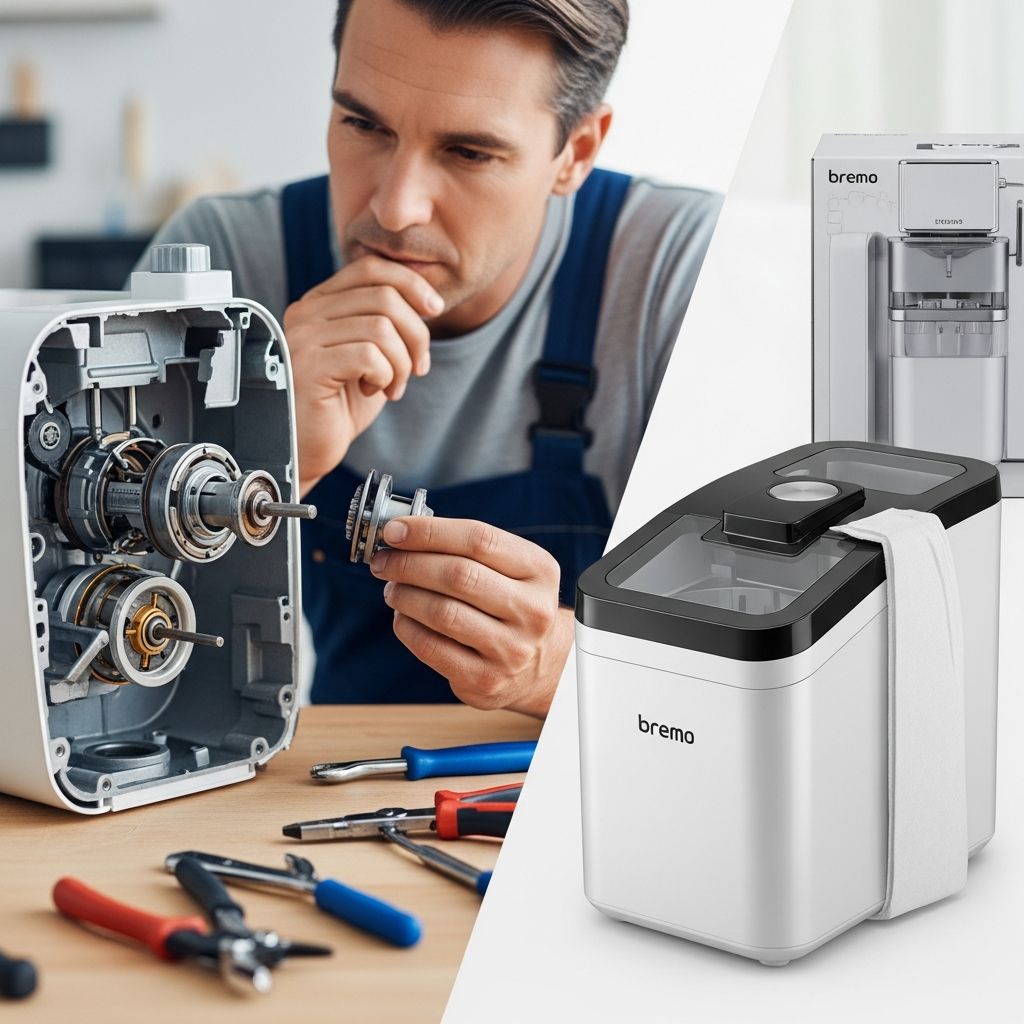
When a beloved ice cream maker suddenly stops churning or refuses to freeze, most homeowners face the same dilemma: repair it or replace it. The right decision depends on a mix of practical, financial, and even environmental factors. This guide walks you through a clear, step-by-step framework to evaluate a faulty ice cream maker and choose the smartest path forward for your home and budget.
Table of Contents
- Understanding Common Ice Cream Maker Issues
- Initial Troubleshooting at Home
- Key Factors in the Repair vs Replace Decision
- Cost-Based Rules of Thumb for Homeowners
- Age and Expected Lifespan of Ice Cream Makers
- Performance, Energy Use, and Convenience
- Safety and Reliability Concerns
- Environmental and Sustainability Considerations
- Step-by-Step Decision Checklist
- Frequently Asked Questions (FAQs)
- Conclusion
Understanding Common Ice Cream Maker Issues
Before you can decide whether to repair or replace, you need a basic understanding of what tends to go wrong with home ice cream makers. Different designs fail in different ways, and some problems are far cheaper to address than others.
Typical Designs and Components
Most household ice cream makers fall into three broad categories:
- Manual or hand-crank models – Simple construction with a crank, dasher (paddle), and insulated or salted-ice bucket.
- Freezer-bowl electric models – A motor turns a dasher inside a pre-frozen bowl that contains refrigerant gel.
- Compressor-based self-freezing models – Built-in refrigeration system actively chills the mix, similar to a tiny freezer.
Because each design has different parts, the cost and feasibility of repair vary widely. For example, replacing a dasher on a manual or freezer-bowl machine is usually simple and inexpensive, whereas fixing a failed compressor can approach the cost of a new unit, as is often true with ice machines in general.
Common Symptoms of Faults
- Does not freeze properly – Mixture remains soupy or only partially thickens.
- Motor will not run or stalls – Complete failure to turn, intermittent stopping, or loud grinding noises.
- Excessive noise or vibration – Worn gears, misaligned paddles, or failing motor bearings.
- Leaking – Cracks in the bowl, failed seals, or refrigerant gel leakage in freezer-bowl models.
- Electrical issues – Tripping breakers, burning smells, or visible sparking.
Some issues are cosmetic or minor; others signal that the unit may be nearing the end of its useful life. For homeowners, identifying whether a symptom points to a simple part replacement or a major failure is the first step.
Initial Troubleshooting at Home
Before calling a repair shop or shopping for a new machine, it is worth trying basic troubleshooting. Many apparent “failures” turn out to be user errors, minor misalignments, or simple maintenance issues.
Quick Checks Any Homeowner Can Perform
- Power and outlet – Verify the outlet works with another appliance and that any power switch on the unit is turned on.
- Bowl temperature – For freezer-bowl models, ensure the bowl has been frozen for the manufacturer’s recommended time (often 16–24 hours) and that your freezer is cold enough.
- Batch size and recipe – Overfilling or using a recipe with too much sugar or alcohol can prevent proper freezing.
- Assembly and alignment – Confirm that the dasher, lid, and bowl are locked in correctly; misalignment can prevent the motor from engaging.
- Cleaning and residue – Built-up residue on the dasher or bowl can increase drag and strain the motor.
If the problem persists after these checks, you move into the territory where repair vs replace becomes relevant.
When DIY Repair Might Be Reasonable
- Replacing a broken paddle or lid.
- Swapping a worn drive belt or gear on certain models.
- Fixing loose screws, handles, or external hardware.
These repairs typically cost far less than buying a new unit and can extend the life of the machine if the motor and cooling performance are still strong.
Key Factors in the Repair vs Replace Decision
Across refrigeration and ice-making equipment, professionals often weigh several consistent factors: age, condition, frequency of breakdowns, repair cost compared to replacement cost, and overall performance. Homeowners can apply the same logic on a smaller scale.
Core Evaluation Factors
- Age of the ice cream maker
- Type and severity of the fault
- Repair cost vs price of a comparable new unit
- Frequency of past repairs or breakdowns
- Energy efficiency and running costs
- Safety and reliability
- Emotional value and usage patterns
Commercial guidance often uses a rule of thumb that if a repair is more than about half the price of new equipment, replacement becomes more attractive. While home ice cream makers are less expensive, the percentage-based decision logic still applies.
Cost-Based Rules of Thumb for Homeowners
Financial considerations usually dominate the repair vs replace debate. Even for commercial ice machines, experts suggest comparing repair costs to the cost of a new unit and tracking cumulative service spending over time.
Simple Cost Comparison Framework
| Situation | Lean Toward Repair | Lean Toward Replacement |
|---|---|---|
| Repair cost vs new price | Repair is under about 30–40% of the price of a similar new model. | Repair is near or above 50% of the cost of a comparable new unit, a common industry threshold. |
| Frequency of repairs | First or second minor repair in several years. | Repairs are becoming frequent or multiple issues appear in a short time frame. |
| Nature of the repair | Minor parts like paddles, lids, or accessible gears. | Major components such as motors or compressors that are costly and difficult to replace. |
| Warranty | Unit is still under manufacturer warranty that covers parts or labor. | Warranty expired and no extended coverage; all costs are out of pocket. |
Adapting Commercial Thresholds to Home Use
Guides for ice machines and frozen beverage dispensers often advise replacing when a single repair surpasses 50–60% of the equipment’s “book value” or replacement cost. At home scale, this can be simplified:
- If a repair quote is less than about one-third the price of a comparable new ice cream maker, repair is usually reasonable.
- If the quote is around one-half or more of a new unit’s price, especially on an older machine, replacing tends to be more economical in the long run.
This approach mirrors the logic used for larger refrigeration equipment and keeps homeowners from overspending on aging appliances.
Age and Expected Lifespan of Ice Cream Makers
Age strongly affects the decision. For commercial ice-making and freezing equipment, sources note that as machines exceed 5–10 years, repairs become more frequent and efficiency declines, tilting the balance toward replacement. While home ice cream makers are smaller, the same pattern appears: components wear, plastic becomes brittle, and motors tire over time.
Approximate Lifespan Ranges
- Manual/hand-crank models – Often 10+ years with basic care, because they lack complex electronics or compressors.
- Freezer-bowl electric models – Frequently 5–8 years of regular use before motors weaken or bowls lose effectiveness.
- Compressor models – Can last 7–10 years, but repairs to cooling systems become increasingly expensive as they age, similar to other refrigeration equipment.
Age-Based Guidelines
- 0–3 years old
- Likely under warranty; repair or replacement may be covered.
- Any non-abuse fault usually justifies at least pursuing repair.
- 3–7 years old
- Evaluate cost vs performance carefully.
- One moderate repair can be reasonable, but growing repair frequency is a warning sign.
- 7+ years old
- Most models are approaching or past their typical useful life.
- Replacing often makes more sense, especially if repair costs are significant or performance has noticeably declined.
Performance, Energy Use, and Convenience
Even if a repair seems affordable, it may not be wise if the machine’s performance no longer meets your expectations. Newer designs often bring better freezing, quieter operation, and improved energy efficiency, much like modern commercial machines that use less energy and operate more reliably.
Signs Performance Is Slipping
- Batches take much longer to freeze than when the unit was new.
- Texture is consistently grainy, icy, or uneven.
- The motor struggles or overheats with normal loads.
- Noise levels have increased significantly over time.
If you are paying for repairs but still getting mediocre ice cream, replacement is often the more satisfying choice.
Considering Energy and Operating Cost
For small home units, energy savings are modest, but with compressor-based models the cumulative effect can matter, especially if the appliance is used frequently. Commercial guidance notes that newer ice and frozen beverage machines often use far less energy and have lower cooling costs than older units, improving long-term economics. A homeowner using a large, older compressor machine heavily may see similar benefits from a modern replacement.
Safety and Reliability Concerns
Safety must trump cost. No matter how inexpensive a repair may be, if the machine shows signs of serious electrical or mechanical issues, replacement is usually the responsible option.
Red-Flag Safety Symptoms
- Burning smells, smoke, or signs of melted plastic.
- Exposed wiring, cracked power cords, or recurring breaker trips.
- Sharp cracks in the bowl or housing that could break under stress.
- Leaking refrigerant gel from a freezer-bowl model.
For larger refrigeration units, experts warn that failing components can reduce safety and reliability, justifying replacement even before total failure.[10] At home, if you are unsure whether a symptom is safe, it is prudent either to consult a professional or retire the unit.
Environmental and Sustainability Considerations
Beyond your wallet, there is the question of waste. Extending the life of an appliance through repair can reduce landfill contribution and the environmental cost of manufacturing a new unit. However, extremely inefficient or frequently failing equipment may consume more resources over time than a durable, efficient replacement.
Balancing Repair and Replacement for Sustainability
- Prioritize small, inexpensive repairs that significantly extend life, such as replacing paddles or lids.
- Consider donating or recycling a working but outdated machine when upgrading, where possible.
- When replacing, look for models with durable construction and readily available spare parts.
The same long-term thinking that restaurant operators apply to total cost of ownership and efficiency can help homeowners make more sustainable choices.
Step-by-Step Decision Checklist
To bring all these factors together, use this practical, homeowner-friendly checklist whenever your ice cream maker fails.
Step 1: Confirm the Problem
- Repeat a basic troubleshooting run: check power, bowl freezing, assembly, and batch size.
- Note what exactly happens (no power, no freezing, strange noises, leaks).
Step 2: Check Age and Warranty
- Locate the purchase date or estimate the age.
- Review the manual or manufacturer’s website for warranty terms.
- If under warranty, contact the manufacturer before pursuing independent repair.
Step 3: Get a Repair Cost Estimate
- Identify likely parts involved (paddle, lid, motor, compressor, bowl).
- Compare parts prices and estimated labor (if using a repair service) to the price of a similar new unit.
- Include any shipping or diagnostic fees in your estimate.
Step 4: Apply Cost Thresholds
- If the total repair cost is under roughly 30–40% of the cost of a comparable new model and the machine is not very old, repair is typically sensible.
- If the cost is around 50% or more of a new unit’s price, especially on a machine older than 5–7 years, strongly consider replacement, following the same logic used for larger ice machines and frozen drink equipment.
Step 5: Weigh Performance and Reliability
- Ask whether the machine still meets your needs in batch size, freeze time, and texture.
- Consider how often you have repaired or tinkered with it in the last one to two years.
- If issues are frequent, replacing may save more time and frustration than another repair.
Step 6: Evaluate Safety
- If there are any electrical hazards, burning smells, or structural cracks, do not continue using the unit.
- In such cases, replacement is usually safer than repair, unless a qualified technician specifically clears and restores the unit.
Step 7: Make the Final Call
- Combine age, cost, performance, and safety into a single judgment.
- If it is a beloved machine with mostly minor issues and low-cost parts, repair can be a satisfying, sustainable choice.
- If it is older, inefficient, increasingly unreliable, and expensive to fix, replacing it will likely provide better long-term value and peace of mind, mirroring recommendations for commercial ice equipment.
Frequently Asked Questions (FAQs)
Q: Is it ever worth repairing a very cheap ice cream maker?
For ultra-budget models, a repair that costs more than a small fraction of the unit’s original price rarely makes sense. If replacement parts and labor together approach even one-third of the cost of a new machine, most homeowners are better off replacing the unit, especially if the build quality is modest.
Q: How do I estimate the “value” of my existing ice cream maker?
Commercial owners sometimes use “book value” and compare repair costs to that figure. At home, you can approximate by asking what a similar, current model costs today and then mentally adjusting down based on age and wear. If the machine is old and well used, treat its effective value as low when applying repair-percentage thresholds.
Q: Should I repair a compressor-based ice cream maker with a failed cooling system?
Repairs involving compressors and sealed cooling systems tend to be among the most expensive for any ice or frozen-beverage equipment. Unless your unit is fairly new, under warranty, or very high-end, a compressor failure often pushes you into replacement territory rather than repair.
Q: How can I extend the life of a new ice cream maker?
- Follow the manufacturer’s fill lines and recipe recommendations.
- Allow the motor to rest between batches as directed.
- Always freeze bowls for the recommended duration and at the proper freezer temperature.
- Clean and dry all components thoroughly after use to prevent buildup and corrosion.
These simple practices can reduce wear and delay the point at which you must face the repair vs replace decision.
Q: Are newer ice cream makers really more efficient or reliable?
In commercial settings, newer ice and frozen beverage machines are often noticeably more efficient and reliable than older models, using less electricity and requiring fewer repairs over their lifetimes. Similar improvements tend to filter down to consumer appliances as manufacturers refine motors, insulation, and controls, so upgrading from a very old unit may offer quieter operation and more consistent results in addition to reliability gains.
Conclusion
Deciding whether to repair or replace a faulty ice cream maker involves more than reacting to a single breakdown. Homeowners benefit most by stepping back and weighing the age of the unit, the cost and nature of the repair, the frequency of past issues, and how well the machine currently serves their needs. Industry guidelines for larger ice and refrigeration equipment, such as avoiding repairs that cost more than about half the price of a new unit, adapt well to home kitchens and provide a useful benchmark.
When minor parts fail on a relatively young, otherwise reliable machine, repairing it can be economical, sustainable, and emotionally satisfying. As the machine ages, becomes less efficient, or demands repeated service, the balance shifts toward replacement, much as it does for commercial ice machines and frozen beverage dispensers where rising repair bills and downtime gradually outweigh the value of keeping old equipment alive.
A thoughtful, informed decision ultimately aligns the numbers, your cooking habits, and your comfort level with risk and hassle. By following a clear checklist and borrowing proven rules of thumb from the broader world of refrigeration and ice equipment, you can confidently choose whether to give your current ice cream maker a second life or welcome a new one into your kitchen.
Similar Articles






Read full bio of medha deb