Soft-Serve vs Scoopable Ice Cream From Home Makers: Expectations and Results
Understand what home ice cream makers can and cannot do when it comes to soft-serve style and firm scoopable ice cream at home.
Soft-Serve vs Scoopable Ice Cream From Home Ice Cream Makers: What You Can Realistically Expect
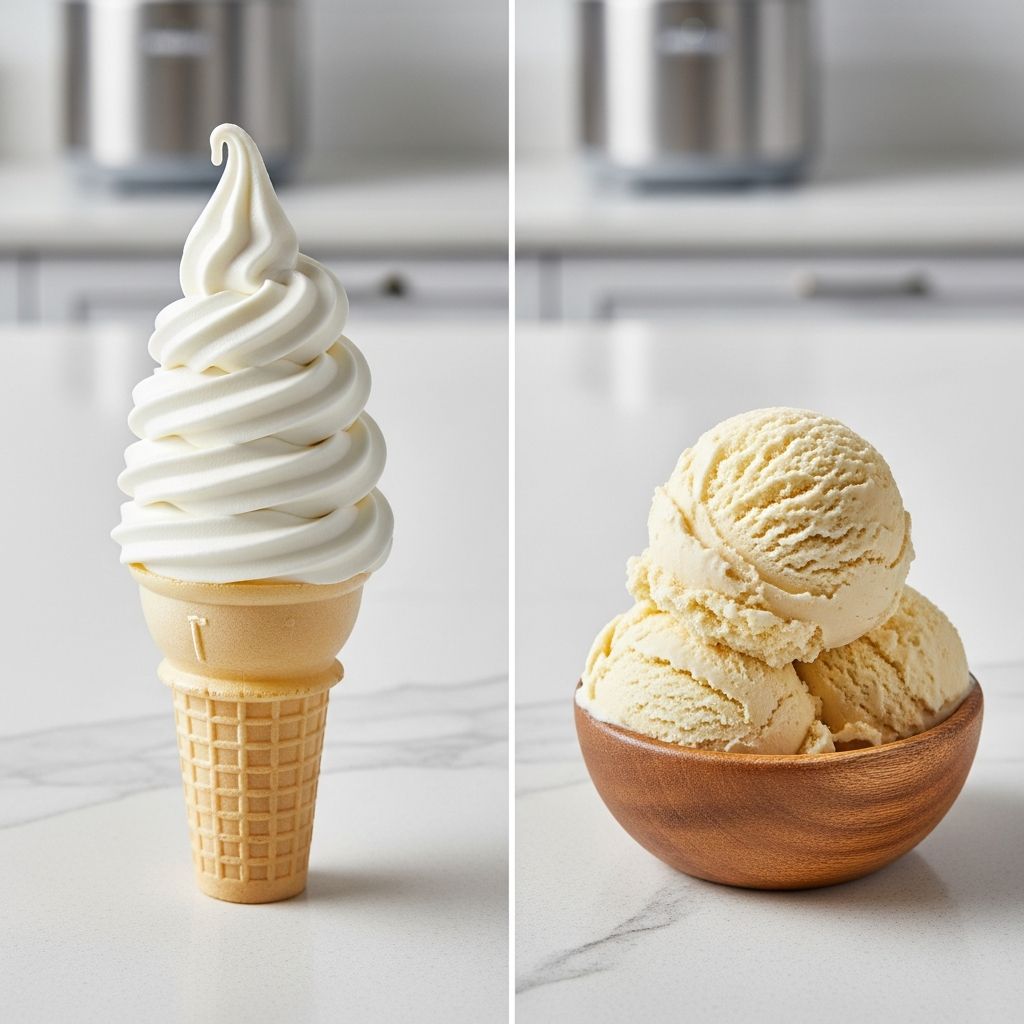
Soft-serve ice cream and traditional scoopable ice cream look similar in a bowl or cone, but they are produced and served in very different ways, especially when you compare commercial equipment to the average home ice cream maker. To get the best results from your machine and avoid disappointment, it helps to understand how these desserts differ, how home devices work, and what textures you can realistically achieve in your own kitchen.
Table of Contents
- Overview: Soft-Serve vs Scoopable Ice Cream
- How Commercial Soft-Serve Works
- How Home Ice Cream Makers Work
- Texture Expectations With Home Machines
- Key Factors That Affect Your Results
- What Each Type of Home Machine Does Best
- Typical Problems and Realistic Fixes
- Quick Comparison Table
- Frequently Asked Questions (FAQs)
- Conclusion
Overview: Soft-Serve vs Scoopable Ice Cream
Soft-serve and hard, scoopable ice cream are related but distinct desserts. They use similar ingredients but differ in fat content, air incorporation, and serving temperature, which combine to change the texture.
Core Differences
- Texture: Soft-serve has a light, airy, and very smooth texture, while scoopable ice cream is denser and firmer.
- Air (Overrun): Soft-serve can contain up to about 30–60% air by volume, which makes it fluffy. Traditional ice cream contains less air, leading to a richer, denser bite.
- Serving temperature: Soft-serve is usually served around -4°C (25°F), noticeably warmer than hard ice cream, which is served closer to -12°C to -18°C (10°F to 0°F).
- Fat content: Soft-serve mixes often contain roughly 3–6% butterfat, while many hard scoop ice creams sit around 10% or more butterfat, depending on style and recipe.
- Serving method: Soft-serve is dispensed directly from a dedicated machine in a continuous flow, while hard ice cream is frozen, stored in tubs, and scooped to serve.
In commercial settings, these differences are tightly controlled by specialized equipment and standardized mixes. At home, your freezer bowl, compressor, or attachment cannot fully replicate a professional soft-serve machine, but you can approximate both soft and scoopable styles within certain limits.
How Commercial Soft-Serve Works
Commercial soft-serve relies on machines that are designed to freeze and aerate a liquid mix continuously.
Key Features of Commercial Soft-Serve Machines
- Continuous freezing: The mix is stored as a liquid in the machine and frozen only as it is churned and dispensed.
- Built-in aeration: The machine incorporates a controlled amount of air (overrun) to reach that light, fluffy texture.
- Precise temperature control: The serving barrel is kept in the soft-serve range around -4°C (25°F), maintaining softness without melting.
- On-demand dispensing: Pulling a lever releases freshly frozen, aerated product with the classic swirl shape.
This combination of continuous freezing, controlled aeration, and tight temperature control creates a texture that is difficult to reproduce exactly with home equipment, which is not designed to store and dispense soft-serve over hours of service.
How Home Ice Cream Makers Work
Home ice cream makers fall into a few main categories. All of them churn a liquid base while freezing it, but they differ in how they provide the cold and how long they can operate.
Common Types of Home Machines
- Freezer-bowl machines: Use a bowl that you pre-freeze for many hours. The chilled bowl gradually freezes the mixture as the paddle churns. Once the bowl warms up, it stops freezing effectively.
- Compressor (self-refrigerating) machines: Have built-in refrigeration, can chill the mix from room temperature, and may run multiple batches without pre-freezing a bowl.
- Stand mixer / attachment systems: Use a pre-frozen bowl or insulated attachment on a stand mixer, similar in principle to a freezer-bowl machine.
These devices typically produce a soft, spoonable ice cream right after churning. To get a firmer, scoopable texture, you usually need an additional freezing step in your regular freezer for a few hours.
Texture Expectations With Home Machines
The main question is what you can realistically expect in terms of soft-serve style versus firm scoopable ice cream at home.
What “Soft-Serve” Means at Home
Home machines do not normally aerate as aggressively or hold a narrow temperature window the way commercial soft-serve units do. As a result, “soft-serve” from a home maker usually means:
- A freshly churned batch that is soft, thick, and spoonable, roughly similar to melted soft-serve or a very soft scoop.
- Texture that is less airy and more dense than true commercial soft-serve, because home churners incorporate less air.
- No on-demand swirl dispensing; you scoop or pour the mixture instead of pulling a lever.
You can pipe freshly churned ice cream through a pastry bag or funnel into cones for a makeshift soft-serve style, but the texture will usually still be closer to “soft ice cream” than classic commercial soft-serve.
What Scoopable Ice Cream Means at Home
For a traditional, firm scoopable texture, home makers perform more predictably:
- Right out of the machine, ice cream is often the consistency of soft-serve.
- After 2–4 hours in the freezer, the ice cream becomes much firmer and scoopable, similar to store-bought hard ice cream.
- After an overnight freeze, it can become quite hard and may need 5–10 minutes at room temperature before scooping comfortably.
Because hard ice cream is normally stored at lower temperatures and has less air than soft-serve, it is expected to be dense and to require some effort to scoop, even in commercial settings.
Key Factors That Affect Your Results
Beyond the machine itself, recipes and handling have a major impact on whether your homemade ice cream feels closer to soft-serve or hard scoop.
1. Fat Content and Recipe Style
- Higher-fat, custard-style bases (with cream, egg yolks, and sometimes more sugar) freeze into rich, smooth hard ice cream. These recipes echo the higher butterfat content of typical scoopable ice cream.
- Lower-fat, milk-heavy bases can freeze harder and icier, which moves you away from the soft-serve experience, unless sugar and stabilizers balance it.
- To mimic soft-serve’s 3–6% butterfat profile, you would use a lighter dairy mix, but the home machine’s limited aeration and your freezer’s low temperature still make it more like a light, soft ice cream than true commercial soft-serve.
2. Sugar and Solids
- Sugar lowers the freezing point and keeps ice cream softer in the freezer; higher sugar often means a softer, more scoopable product.
- Additional solids (milk powder, stabilizers) can help control ice crystal size and improve smoothness.
3. Air Incorporation (Overrun)
- Commercial soft-serve can have up to 30–60% air, which makes it extremely light.
- Home machines typically incorporate noticeably less air, leading to a denser, richer texture closer to premium hard ice cream than fast-food soft-serve.
4. Churning Time and Temperature
- If you stop churning earlier, the mixture will be softer, like very loose soft-serve, but it may not be fully frozen and could melt quickly in a cone.
- Longer churning usually thickens the mix and incorporates slightly more air, but over-churning once the bowl warms can lead to a grainy texture.
- Commercial soft-serve stays at a stable soft-serve temperature inside the machine; home ice cream is either freshly churned (soft, but warming) or transferred to a much colder freezer, where it gradually becomes hard.
5. Freezer Storage
- Hard ice cream from home makers stores well for weeks in the freezer, much like commercial hard scoop ice cream, though texture can degrade over time if not well sealed.
- Soft-serve does not store well as soft-serve. Once you freeze it hard, you no longer have soft-serve—just soft-style ice cream that must be thawed slightly for scooping.
What Each Type of Home Machine Does Best
Different home machines excel at different textures. Knowing their strengths helps you set the right expectations.
Freezer-Bowl Machines
- Best at producing a single soft batch that can then be frozen firmer.
- Freshly churned ice cream is similar to a thick, soft scoop, but the bowl warms over time and cannot maintain a soft-serve texture for repeated servings.
- Great for classic scoopable ice cream after a short hardening time in the freezer.
Compressor (Self-Refrigerating) Machines
- Can maintain colder temperatures for longer churning and back-to-back batches.
- Some models allow you to hold the finished ice cream at a soft, scoopable consistency for a while, but they still do not mimic true soft-serve dispensing.
- Offer the most flexibility for dialing in exactly how soft or firm you want the mixture before transferring or serving.
Stand Mixer and Other Attachments
- Function similarly to freezer-bowl machines: good for one batch per freeze of the bowl.
- Can deliver a nice soft texture at the end of churning that resembles soft ice cream, but the window for serving is short.
Typical Problems and Realistic Fixes
Even with realistic expectations, you may run into texture issues. Here is what to expect and how far you can reasonably go in correcting them.
Problem: Ice Cream Too Hard Out of the Freezer
- This is normal for dense, low-air hard ice cream stored at standard freezer temperatures.
- Realistic fix: Let the container sit at room temperature for 5–10 minutes before scooping; use a warmed scoop; consider slightly increasing sugar or using a bit more cream in your recipe.
Problem: Not “Soft-Serve” Enough Right Out of the Machine
- Home machines do not reach commercial levels of overrun and operate at lower temperatures.
- Realistic fix: Embrace the result as “soft homemade ice cream.” You can experiment with slightly higher sugar or lighter dairy mixtures to loosen the texture, but you will not replicate the exact fast-food soft-serve feel without specialized machinery.
Problem: Grainy or Icy Texture
- Often caused by too little fat or sugar, large ice crystals from slow freezing, or repeated partial melting and refreezing.
- Realistic fix: Use a well-tested ice cream recipe; chill your base thoroughly before churning so it freezes faster; avoid frequent long openings of the freezer.
Quick Comparison Table
| Aspect | Commercial Soft-Serve | Home Machine “Soft” Ice Cream | Home Scoopable Ice Cream (After Freezing) |
|---|---|---|---|
| Texture | Very light, airy, smooth | Soft, smooth, but denser | Firm, dense, classic scoop |
| Air (Overrun) | High, often 30–60% | Moderate, less airy | Low to moderate, dense |
| Serving Temperature | Around -4°C (25°F) | Varies; usually slightly warmer than home freezer | Freezer temp, about -12°C to -18°C |
| Serving Method | Dispensed from machine in swirls | Scooped or poured immediately from bowl | Scooped from container |
| Fat Content | Often 3–6% butterfat | Depends on recipe; can vary widely | Often closer to 10% butterfat or higher |
| Storage | Held in machine for short periods only | Must be eaten soon after churning | Stores in freezer for weeks, though texture may change |
Frequently Asked Questions (FAQs)
Q1: Can a home ice cream maker truly make soft-serve?
Home machines can produce ice cream that is soft and spoonable right after churning, but they do not usually match the very airy, warm, continuously dispensed texture of commercial soft-serve. Think of it as “soft homemade ice cream” rather than fast-food style soft-serve.
Q2: Why does my homemade ice cream become so hard in the freezer?
Hard scoop ice cream is normally stored at low freezer temperatures and contains less air than soft-serve, so it freezes very firm. Homemade recipes, especially those with high fat and lower sugar, can become quite hard and need a short tempering period at room temperature before scooping.
Q3: Is soft-serve always lower in fat than regular ice cream?
Soft-serve mixes often have a lower butterfat percentage, roughly in the 3–6% range, compared with about 10% or more in many hard scoop ice creams, though exact numbers vary by brand and recipe. However, calories and sugar content can still be high in both, so nutrition depends on the specific formula.
Q4: Can I store soft-serve from a home machine for later?
Once you store the soft ice cream in your freezer, it will set into a hard, scoopable texture rather than staying soft-serve-like. Commercial soft-serve is kept soft by continuous churning and precise temperature control in the machine, which home freezers do not replicate.
Q5: How can I make my homemade ice cream softer and more like soft-serve?
You can serve it immediately after churning, use slightly higher sugar, and choose a base with moderate fat and good emulsifiers to keep it smooth. But even with these tweaks, your texture will still resemble soft, dense ice cream rather than the ultra-light commercial soft-serve produced by specialized machines.
Conclusion
Soft-serve and scoopable ice cream differ in air content, fat levels, and serving temperature, and those differences are driven as much by equipment as by recipe. Commercial soft-serve machines continuously freeze and aerate the mix and hold it at a narrow, warmer temperature range for on-demand swirls, while hard ice cream is frozen solid and scooped from cold storage.
Home ice cream makers are very capable of delivering excellent scoopable ice cream and a pleasant soft texture right after churning, but they are not designed to function as true soft-serve dispensers. Fresh from the machine, your ice cream will be soft and spoonable; after some time in the freezer, it will become firm and scoopable like traditional hard ice cream.
Understanding these limitations and strengths allows you to choose recipes, machine types, and serving times that align with the textures you enjoy most, whether that is a just-churned, soft bowl of ice cream or a dense, satisfyingly firm scoop.
Similar Articles



Read full bio of Sneha Tete