Understanding Ice Cream Maker Capacity for Households and Entertaining
Learn how ice cream maker capacity, batch size, and household habits fit together so you never run short or overproduce.
Understanding Capacity in Ice Cream Makers: Matching Batch Size to Your Household and Entertaining Needs
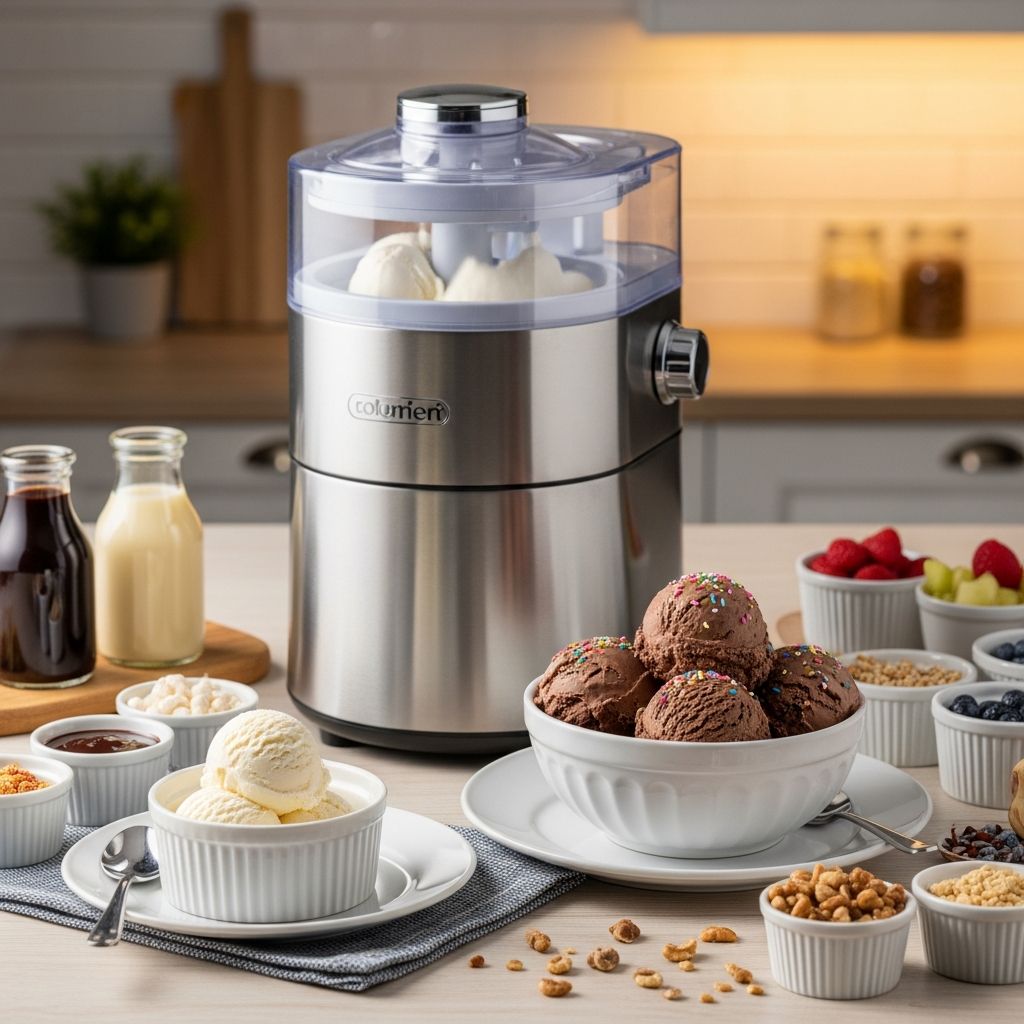
Choosing an ice cream maker is not only about brand, price, or features. Capacity and batch size determine how much you can produce at once, how often you need to churn, and whether your machine truly fits your family and entertaining style. This guide explains what capacity really means, how much ice cream different machines can realistically make, and how to select the right size for your household and social life.
Table of Contents
- Why Capacity Matters More Than You Think
- Understanding Ice Cream Maker Capacity Specifications
- Types of Ice Cream Makers and Typical Capacities
- Translating Capacity into Real Servings
- Matching Capacity to Household Size and Habits
- Planning for Parties, Entertaining, and Back-to-Back Batches
- Space, Time, and Energy: Practical Constraints Around Capacity
- Capacity Comparison Table by Use Case
- Common Mistakes When Choosing Capacity
- Frequently Asked Questions (FAQs)
- Conclusion
Why Capacity Matters More Than You Think
Ice cream maker capacity directly shapes how you use the machine and how satisfied you will be over time. Many home models advertise 1.5 or 2 quarts, but the actual usable mix volume is smaller because the mixture expands as air is incorporated during churning. If you pour in too much mix, it may overflow or churn poorly.
Capacity affects several key factors:
- How many people you can serve from a single batch
- Whether you can offer multiple flavors in one session
- How long you spend making ice cream on days you entertain
- How much freezer space you need for bowls, tubs, or storage
- How much leftover ice cream you will have to store or potentially waste
Choosing the right capacity means balancing your everyday needs with occasional entertaining, while also considering your kitchen space and time.
Understanding Ice Cream Maker Capacity Specifications
Product boxes and online listings often show a single capacity number, such as 1.5 liters, 2 quarts, or 1 pint. Interpreting these numbers correctly is essential.
Advertised Capacity vs Actual Usable Volume
The advertised capacity usually describes the total bowl volume, not how much liquid mix you should pour in. Because ice cream expands as it freezes and air is whipped in, the real working capacity is lower, commonly around 60–70% of the bowl’s stated volume.
- A 1.5 liter bowl may only accept around 800–1000 g (roughly 0.8–1.0 liters) of mix without overflowing.
- A 2 quart bowl might have an optimum mix volume around 0.9–1.1 liters, which yields a bit more than that in finished ice cream once air is incorporated.
This gap between advertised and practical capacity is important when planning servings and batch schedules.
Overrun: How Air Changes the Final Volume
When ice cream churns, air is whipped into the mix, creating overrun, or the percentage increase in volume relative to the original mix. Typical home ice cream may have 20–30% overrun, depending on the machine and recipe.
- 700 ml of mix with 29% overrun produces about 900 ml of finished ice cream.
- 800 ml of mix with around 25% overrun yields roughly 1000 ml of finished ice cream.
Understanding overrun helps explain why the finished batch size is not the same as your starting liquid volume, and why manufacturers set a lower optimum mix volume than the bowl’s advertised capacity.
Single Batch vs Hourly Production
Capacity can be expressed in different ways:
- Single-batch capacity: how much mix you can freeze per cycle
- Hourly production: relevant mainly to commercial and soft-serve machines, describing quarts per hour they can continuously produce
For home use, single-batch capacity is more meaningful. However, if you entertain frequently, it is helpful to know whether your machine can run back-to-back cycles without overheating or lengthy re-freezing times.
Types of Ice Cream Makers and Typical Capacities
Different ice cream maker technologies influence both capacity and how conveniently you can produce multiple batches.
Freezer-Bowl Ice Cream Makers
Freezer-bowl machines have a removable insulated bowl that you pre-freeze, usually for 12–24 hours, before churning. Many popular models in this category have 1.5 or 2 quart advertised capacities.
- Common sizes: 1.5 quart and 2 quart bowls
- Realistic optimum mix volume: around 0.8–1.1 liters, depending on the model
- Pros: relatively affordable, simple to use, lighter than compressor units
- Cons: require freezer space for the bowl; you usually get only one batch per freeze
Because the freezing element is in the bowl, you generally cannot do true back-to-back batches unless you own a second pre-frozen bowl.
Built-In Compressor Ice Cream Makers
Compressor machines have an integrated refrigeration unit, so they chill the mix without needing a pre-frozen bowl. They tend to be heavier and costlier but can often run batch after batch with short rests in between.
- Typical home capacities: around 0.7–1.5 liters of optimum mix volume
- Finished batch size: often 0.9–1.3 liters (roughly 1–1.4 quarts) per cycle
- Pros: no waiting for bowls to refreeze, good for frequent or multiple batches, consistent texture
- Cons: heavy, larger footprint, sometimes smaller real batch size than equivalently priced freezer-bowl units
Some semi-professional compressor models can run continuously for hours, producing over 10 liters of ice cream across multiple batches without overheating, which can be useful for larger gatherings.
Small Pint-Style and Compact Machines
Certain compact machines work with one-pint containers or similar small volumes. They are ideal for personal portions and frequent flavor experimentation.
- Typical capacity: about 1 pint (approximately 0.47 liters) per container
- Pros: small footprint, easy to clean, convenient for individuals or couples
- Cons: limited batch size, may require overnight freezing of each pint or container, not ideal for serving groups
These models prioritize flexibility and speed for small batches over high-volume production.
Large Countertop and Floor Models
Beyond typical home units, there are larger countertop or freestanding machines that can produce 4–20 quarts or more per batch for commercial or semi-commercial use.
- Typical batch capacities: 4–20 quarts
- Use cases: restaurants, catering, ice cream stands, or serious hobbyists
- Pros: strong compressors, high hourly output, built for continuous use
- Cons: expensive, heavy, require significant space and electrical capacity
For most households, these are beyond what is necessary, but understanding their scale helps frame what “large capacity” means in a professional context.
Translating Capacity into Real Servings
To match capacity to real life, it helps to think in servings rather than just liters or quarts.
Typical Serving Sizes
A standard scoop of ice cream is approximately 1/2 cup (about 120 ml). Using this as a reference:
- 1 pint (about 470 ml) makes roughly 4 small servings
- 1 quart (about 950 ml) makes roughly 8 small servings
- 1.5 quarts (about 1.4 liters) makes about 10–12 small servings
- 2 quarts (about 1.9 liters) makes about 16 small servings
Portion size varies widely; teens or adults might realistically eat more than one 1/2-cup serving, especially with homemade ice cream.
Everyday vs Special Occasion Portions
Consider the difference between a casual weekday dessert and a celebratory gathering:
- Weeknight dessert: 0.5–0.75 cup per person is often enough, especially for kids.
- Parties or cookouts: adults may take 1–1.5 cups each, plus seconds or toppings.
Estimating on the generous side for group events helps prevent running out during key moments, but oversizing dramatically can lead to storage and waste.
Matching Capacity to Household Size and Habits
Choosing the right capacity depends on how many people you regularly serve and how often you plan to make ice cream. Below are scenarios that can help guide your decision.
Single Person or Couple
If you mostly make ice cream for one or two people, a small to moderate capacity is usually sufficient.
- Ideal batch size: 1 pint to 1 quart per batch
- Recommended machine types:
- Pint-style compact machines (1 pint each) for frequent experimentation
- Freezer-bowl or compressor machines with 1.5 quart advertised capacity, using smaller batch volumes
- Benefits: less waste, easier storage, room to try new flavors more often
For couples who like to host occasionally, stepping up to a 1.5–2 quart advertised capacity gives flexibility for small dinners without resorting to multiple cycles.
Small Family (3–4 People)
For a household with children or multiple adults, capacity becomes more critical. A single batch should ideally serve everyone comfortably.
- Typical needs: 1–1.5 quarts per batch for weeknight treats
- Recommended capacities:
- Freezer-bowl models with 1.5–2 quart bowls
- Compressor models with around 0.7–1.1 liters of optimum mix volume
- Consider a second bowl (for freezer-bowl models) or the ability to run a quick second batch (for compressor units) when hosting guests.
For families with children, the ability to produce two flavors (for example, chocolate and vanilla) in separate batches on the same day is often highly valued.
Large Families (5+ People)
Larger households, or smaller families with hearty appetites, benefit from either larger single-batch capacity or reliable back-to-back performance.
- Typical needs: 1.5–2 quarts (1.4–1.9 liters) per full family dessert
- Machine options:
- 2 quart freezer-bowl ice cream makers, possibly with a second bowl
- Compressor machines that can run multiple batches without long cooldowns
- Look for robust compressors that can handle extended runtimes without overheating for repeated use.
In this context, the ability to comfortably scale up production for birthdays or school events might justify investing in a more capable compressor model.
Frequency of Use and Recipe Style
Beyond headcount, consider how you use the machine:
- Occasional use: a simple freezer-bowl unit with 1.5–2 quart capacity is often adequate.
- Weekly or multi-times-per-week: compressor models or multiple freezer bowls help reduce waiting and planning.
- Rich recipes (custards) vs lighter sorbets: custard bases may freeze more slowly and might benefit from doing slightly smaller loads for optimal texture.
Matching your machine’s capacity with your recipe style ensures you are not pushing the unit beyond its ideal performance range.
Planning for Parties, Entertaining, and Back-to-Back Batches
Ice cream is a natural fit for birthdays, barbecues, and holidays. Capacity planning helps you avoid last-minute shortages and rushed extra batches.
Small Gatherings (4–8 Guests)
For a dinner party or small backyard gathering, you might aim for 1–1.5 cups per adult guest, especially if ice cream is the main dessert.
- Target total: 2–3 quarts for 6–8 adults
- Approach:
- Run two batches on a 1.5–2 quart freezer-bowl machine (with two bowls or one made the day before).
- Use a compressor machine to produce one batch, rest briefly, then run a second batch, possibly in a different flavor.
Planning to churn at least one batch ahead of time and harden it in the freezer ensures it is firm and ready for serving.
Medium to Large Parties (10–20+ Guests)
For larger events, capacity strategy becomes more important than raw single-batch size.
- target total: 3–5 quarts or more, depending on other desserts offered
- Potential strategies:
- Use a reliable compressor machine capable of sustained operation to produce multiple 1–1.3 liter batches over a few hours.
- Combine a home machine with purchased ice cream, using the homemade batch as a “premium” feature or flavor.
- For serious entertainers, consider semi-pro models or larger capacity units designed for repeated use.
Scheduling production earlier in the day gives time for hardening and reduces stress as guests arrive.
Multiple Flavors vs Single Large Batch
Offering variety often matters more than extreme volume. Many hosts prefer two or three flavors in moderate amounts rather than a single giant tub.
- Plan several smaller batches (0.7–1 liter each) across different flavors.
- Use capacity planning to decide whether to make them on the same day or across multiple days.
- Label containers clearly and stack them efficiently in the freezer.
Machines that support reliable back-to-back churning, especially compressor units, simplify this multi-flavor strategy.
Space, Time, and Energy: Practical Constraints Around Capacity
In real kitchens, capacity is shaped not only by the machine itself but also by spatial and time constraints.
Freezer and Counter Space
Freezer-bowl machines require enough freezer room to store a large insulated bowl, often 1.5–2 quarts in volume, which can be significant if your freezer is small or already full.
- Measure your freezer before buying a bowl-based machine.
- If you plan to own two bowls, confirm there is space for both.
- Remember to account for space to store the finished ice cream containers.
Compressor machines shift the space burden to your countertop and cabinets. They are typically heavier and bulkier, though they free your freezer from needing a large bowl.
Time per Batch
Churning time varies by machine and recipe, typically falling between 20 and 40 minutes for most home units.
- Faster machines can produce multiple batches in less total time, helpful for events.
- Longer churn times might indicate an undersized compressor or overly large load, which can lead to icier texture.
- Remember to include pre-freezing time for freezer bowls or mix chilling time in your schedule.
Knowing how long a batch takes from mix to scoopable texture helps you realistically plan around mealtimes and guests’ arrival.
Energy and Noise Considerations
Larger capacity and more powerful compressors usually mean higher energy use and often more noise. While this does not directly change batch size, it influences when and how you use your machine.
- Running late-night batches in open-plan spaces may be disruptive.
- Higher power compressors may freeze faster but can also be louder.
Balancing performance, batch size, and household comfort can affect whether you prefer several smaller batches or fewer, larger ones.
Capacity Comparison Table by Use Case
| Use Case | Typical Servings per Batch | Suggested Finished Batch Size | Recommended Machine Type |
|---|---|---|---|
| Single or couple, occasional use | 2–4 | 1 pint to 1 quart | Pint-style or 1.5 quart freezer-bowl unit |
| Family of 3–4, weekly use | 4–8 | 1–1.5 quarts | 1.5–2 quart freezer-bowl or mid-size compressor |
| Large family (5+), frequent use | 8–12 | 1.5–2 quarts | 2 quart freezer-bowl with extra bowl or robust compressor |
| Small gatherings (up to 8 guests) | 8–16 | 2–3 quarts total (across 1–2 batches) | 2 quart freezer-bowl or compressor with back-to-back ability |
| Medium parties (10–20 guests) | 20–40 | 3–5 quarts total | Semi-pro compressor or multiple batches across one or more machines |
Common Mistakes When Choosing Capacity
Avoiding a few typical errors can help you choose a machine that truly fits your needs.
- Taking advertised capacity at face value: Remember that labeled capacity (1.5 or 2 quarts) is not the same as optimum mix volume. Plan based on realistic batch size, not the marketing figure.
- Ignoring freezer or counter space: A machine that barely fits your space becomes inconvenient and may be used less often.
- Overestimating how much you will eat: Very large batches can lead to leftover ice cream crystallizing in the freezer if not consumed quickly.
- Underestimating entertaining needs: If you host regularly, a small pint-style machine will require many cycles to serve a group.
- Not considering run-time limitations: Some machines overheat or lose performance when run continuously. If you need multiple back-to-back batches, choose a machine rated for sustained use.
Frequently Asked Questions (FAQs)
How much ice cream does a 1.5 quart machine really make?
A 1.5 quart machine typically has an optimum mix volume around 0.8–1.0 liters, which, with normal overrun, produces close to 1–1.2 quarts of finished ice cream. Exact results depend on the model and recipe.
Is a 2 quart ice cream maker too big for a couple?
Not necessarily. A 2 quart machine can comfortably handle smaller batches, and the extra capacity is useful for occasional guests or for making a base batch to enjoy over several days. Just avoid filling the bowl to the very top.
Do compressor machines always have larger capacity?
No. Many home compressor machines actually have similar or slightly smaller optimum batch volumes than comparable freezer-bowl models, but they make up for it with the ability to run multiple batches without pre-freezing bowls.
How many people can I serve with one quart of ice cream?
One quart yields roughly eight 1/2-cup servings. For realistic adult portions or parties, it may serve 4–6 people, depending on appetite and whether you offer other desserts.
What capacity is best if I want to make two flavors?
If you want two flavors for a typical family or small group, a machine that can comfortably handle about 1–1.5 quarts per batch is helpful. You can prepare two separate batches either on the same day (with a compressor or extra freezer bowl) or on consecutive days.
Conclusion
Capacity in ice cream makers is more than a number on a box. Understanding the difference between advertised bowl volume, realistic mix load, and finished batch size helps you predict how much ice cream you can truly make in one cycle. Overrun, recipe style, and machine type all influence the final yield, which is why two machines with the same stated capacity can behave quite differently in practice.
By translating capacity into real servings, comparing that to your household size, and honestly assessing how often you entertain, you can narrow down the range of batch sizes that work best for you. Considering practical factors such as freezer or counter space, churn times, and the ability to run back-to-back batches ensures that the machine fits smoothly into your kitchen and your routines.
A thoughtful capacity choice balances everyday family desserts with occasional gatherings, avoids both shortages and waste, and allows you to enjoy consistently good texture without overworking your machine. When capacity, lifestyle, and space are aligned, your ice cream maker becomes a dependable part of how you cook, host, and treat the people around you.
Similar Articles





Read full bio of Sneha Tete