Using Dairy-Free and Vegan Ice Cream Bases in Home Ice Cream Makers: Expectations and Adjustments
Learn how to get creamy, scoopable vegan ice cream at home by understanding plant-based bases, key ingredients, and simple adjustments.
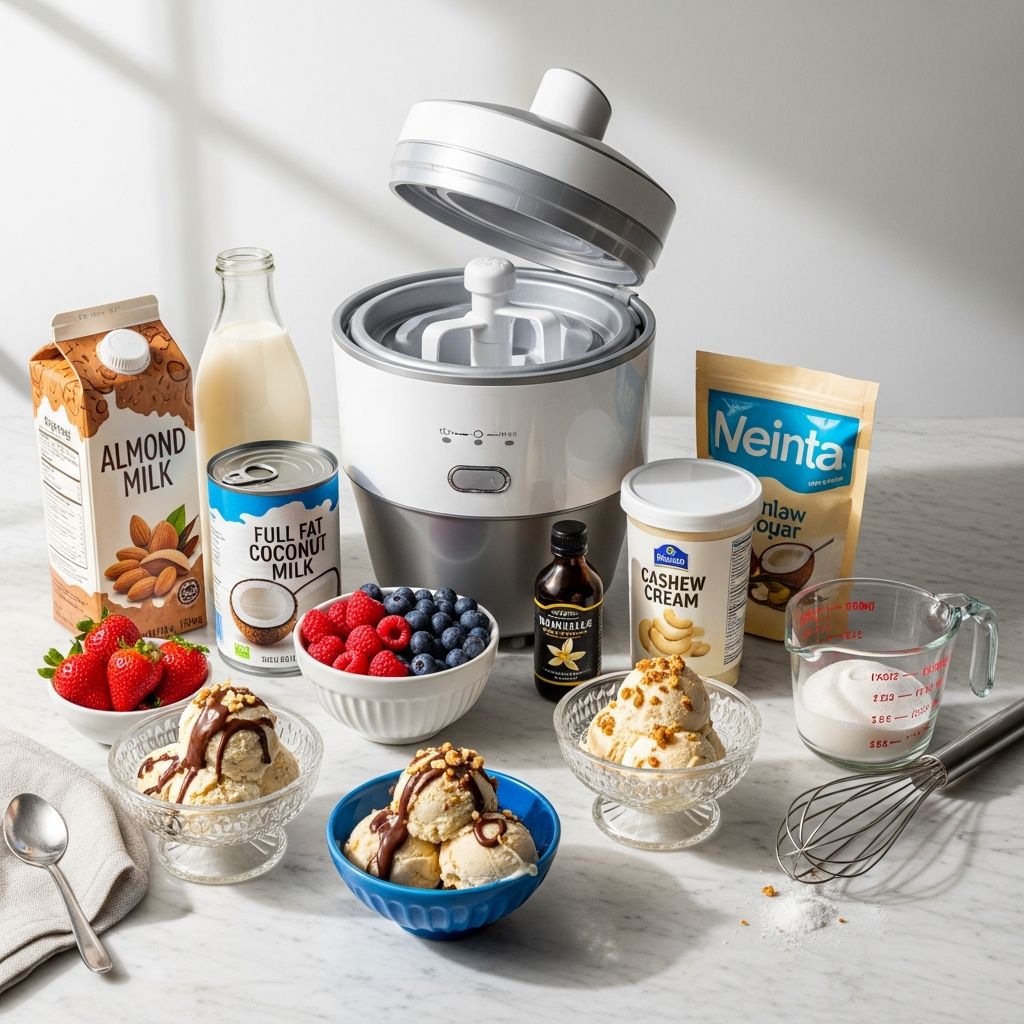
Dairy-free and vegan ice creams have moved far beyond icy sorbets. With the right base, ingredients, and a few simple adjustments, home ice cream makers can turn plant-based mixtures into rich, creamy, and scoopable frozen desserts that rival traditional dairy ice cream. This guide explains what to expect, how vegan bases differ from dairy, and which practical tweaks make the biggest difference in your own kitchen.
Table of Contents
- Why Vegan Ice Cream Behaves Differently
- Common Dairy-Free Ice Cream Bases
- Key Functional Ingredients for Texture and Stability
- Preparing the Base for Home Ice Cream Makers
- Machine-Specific Adjustments and Churning Tips
- Flavoring, Sweetening, and Adding Mix-Ins
- Troubleshooting Common Vegan Ice Cream Issues
- Storage, Softening, and Serving
- Frequently Asked Questions (FAQs)
- Conclusion
Why Vegan Ice Cream Behaves Differently
Traditional dairy ice cream relies on a specific balance of milk fat, milk solids, proteins, and sugars to create a smooth, creamy texture. Dairy-free bases must replicate these properties using plant-based ingredients, which behave differently during heating, churning, and freezing.
In typical vegan ice cream recipes, high-fat ingredients like full-fat coconut milk or cashew cream provide richness, while plant-based milks and additional solids contribute body and mouthfeel. Without dairy proteins and lactose, vegan mixtures are more prone to iciness and can freeze harder in the home freezer, especially when fat and sugar levels are too low or stabilizers are omitted.
Because home ice cream makers generally churn more slowly and freeze less aggressively than commercial machines, small formulation choices matter more. Understanding how plant-based fats and solids work allows you to set realistic expectations and make targeted adjustments for smoother results.
Common Dairy-Free Ice Cream Bases
There is no single “best” vegan base; each has trade-offs in flavor, richness, cost, and ease of use. Many successful home recipes blend two or more base types to balance creaminess with a clean flavor.
Coconut Milk and Coconut Cream
Full-fat canned coconut milk is one of the most popular dairy substitutes in vegan ice cream because its high fat content mimics heavy cream, producing soft and creamy textures with minimal additional ingredients.
- Pros: Naturally rich and creamy, widely available, churns well in home machines, works with simple three-ingredient recipes using only coconut milk, sweetener, and vanilla.
- Cons: Distinct coconut flavor, especially in mild flavors like vanilla; some people find the fat level heavy; can be too firm if sugar is reduced too much.
- Best uses: Vanilla, chocolate, tropical fruits, coffee, and flavors that complement coconut.
Cashew-Based and Nut-Enriched Bases
Soaked cashews blended with liquid form a smooth, neutral-tasting cream that pairs well with coconut milk or plant milks. Many vegan vanilla ice cream recipes combine cashews with full-fat coconut milk for a rich and balanced base.
- Pros: Very creamy when well-blended, relatively neutral flavor, helps reduce coconut dominance, excellent for vanilla and subtle flavors.
- Cons: Requires soaking and high-speed blending; not suitable for nut allergies; can be dense if the mixture is too concentrated.
- Best uses: Vanilla bean, spice-based flavors (chai, cinnamon), and nutty flavors like pistachio or hazelnut.
Oat, Pea, and Other Higher-Solid Plant Milks
Oat milk and pea milk contain more natural solids than many other plant milks, which improves body and mouthfeel in churned ice cream. Some modern vegan base formulas use unsweetened oat or pea milk combined with oils, fibers, and stabilizers to closely mimic commercial dairy-free ice cream.
- Pros: Mild flavor (especially pea milk), good background for complex flavors; can be lighter than coconut-heavy recipes.
- Cons: Often requires additional fat (coconut oil or other neutral oils) and stabilizers like gums to avoid iciness.
- Best uses: When you want a clean flavor canvas for mix-ins or when avoiding coconut.
Vegan Cream and Ready-Made Dairy-Free Creams
Some recipes rely on pre-formulated vegan heavy cream or whipping cream, combined with a smaller amount of dairy-free milk to create a simple, high-fat base.
- Pros: Very straightforward to use, often requires just whisking with sugar and flavorings before churning; produces a rich, scoopable texture.
- Cons: Availability varies by region; ingredients and quality differ among brands; some contain added stabilizers or emulsifiers you may or may not want.
- Best uses: Classic flavors like vanilla or chocolate when convenience is a priority.
Comparing Base Types
| Base Type | Typical Texture | Flavor Impact | Skill Level |
|---|---|---|---|
| Coconut milk/cream | Rich, creamy, can be firm | Noticeable coconut | Beginner-friendly |
| Cashew + coconut | Very smooth and dense | Mild coconut, nutty notes | Intermediate (requires soaking & blending) |
| Oat or pea milk + oils | Light to medium body | Neutral to subtle grain/legume | Intermediate (requires careful formulation) |
| Vegan cream products | Rich, commercial-style | Neutral to mild | Beginner |
Key Functional Ingredients for Texture and Stability
Beyond the main liquid base, several supporting ingredients determine how well your vegan ice cream churns, freezes, and scoops.
Fats: Coconut Oil and Liquid Oils
Fat provides creaminess and helps limit ice crystal growth. Many formulated plant-based bases use a blend of solid and liquid fats, such as refined coconut oil plus a neutral liquid oil.
- Refined coconut oil: Solid at room temperature, contributes to richness and a creamy melt without strong coconut flavor when refined.
- Liquid oils: Neutral oils (like grapeseed, avocado, or mild nut oils) prevent the mixture from becoming too waxy and help maintain scoopability straight from the freezer.
Sugars and Sweeteners
Sugar does more than sweeten; it depresses the freezing point and improves softness. Many advanced vegan bases combine different sugars for optimal texture.
- Sucrose (table sugar): Standard sweetener; easy to use but can yield firmer ice cream if used alone at lower levels.
- Dextrose and other simple sugars: Slightly lower sweetness but stronger impact on freezing point, helping maintain a softer texture.
- Liquid sweeteners: Maple syrup or agave can also improve scoopability, but too much can affect flavor and body.
Fibers and Solids
Non-fat solids build body and mimic the mouthfeel of dairy milk solids. Some recipes include added fibers like inulin to increase solids without excessive sweetness.
- Inulin: A plant-derived fiber that adds creaminess and reduces iciness.
- Nut solids: From cashews, pistachios, or seeds, which provide both fat and solids for smooth texture.
Stabilizers and Emulsifiers
Stabilizers limit ice crystal growth and keep water evenly distributed, which is especially helpful for dairy-free mixtures prone to separation. While not strictly necessary for every home recipe, they can dramatically improve quality and shelf life.
- Gums: Cellulose gum, guar gum, or xanthan gum are often used in tiny amounts to improve body and reduce iciness.
- Emulsifiers: Lecithin (often soy or sunflower) helps fats and water blend more uniformly, improving creaminess and slowing melting.
Salt and Flavor Enhancers
A small amount of salt enhances flavor and balances sweetness, just as in dairy recipes. Most vegan ice cream formulas include a pinch of sea or kosher salt.
Preparing the Base for Home Ice Cream Makers
How you prepare the vegan base has as much impact as which ingredients you choose. Good blending, heating (when needed), and proper chilling are essential steps.
Blending for Smoothness
For nut-based or fiber-enriched bases, a high-speed blender is crucial to achieve a silky texture before churning. Recipes using cashews or oats typically instruct you to blend the soaked nuts or oats with the full liquid until completely smooth before chilling.
- Soak cashews overnight or briefly boil them, then drain before blending.
- Blend oils, plant milk, and dry ingredients together for at least 30 seconds in a strong blender or with an immersion blender.
Heating the Mixture
Some dairy-free bases benefit from gentle heating to fully dissolve sugars, hydrate gums, and combine fat and water into a uniform mixture. Coconut milk bases, for example, are often warmed with sweetener, then cooled before churning.
- Warm coconut milk with sugar and any stabilizing ingredients until smooth and fully dissolved, usually just a few minutes.
- Avoid vigorous boiling; you want integration, not reduction, to keep the water balance stable.
Aging and Chilling the Base
Just like dairy ice cream, vegan bases benefit from an aging period in the refrigerator. Allowing the mixture to rest after blending and heating gives fats time to crystallize and stabilizers time to hydrate.
- Chill the base thoroughly, usually at least 2–4 hours for simple bases, and up to 8 hours or overnight for more complex formulas.
- The mixture should be very cold (refrigerator temperature) before you pour it into the ice cream maker to maximize overrun (incorporated air) and minimize ice crystals.
Machine-Specific Adjustments and Churning Tips
Home ice cream makers vary widely, but most fall into three categories: freezer-bowl models, compressor (self-refrigerating) machines, and no-churn or manual methods. Each type has implications for vegan ice cream bases.
Freezer-Bowl Machines
These machines rely on a pre-frozen bowl and tend to have limited run time before the bowl warms up.
- Freeze the bowl for a full 18–24 hours for best results, as many vegan mixtures take longer to firm up than dairy.
- Churn the ice cream until it reaches a soft-serve consistency, then transfer it to a container for further hardening in the freezer.
- Because the bowl gradually warms, a well-chilled base is even more important than with dairy mixtures.
Compressor Machines
Compressor machines can churn longer and maintain a cold environment, offering more forgiving conditions for vegan bases.
- Use normal churning times, typically 20–30 minutes, or until the mixture reaches a thick, soft-serve state.
- You can experiment with slightly lower sugar or fat levels since the freezing is more powerful, but increasing solids and using stabilizers still helps with texture.
No-Churn and Alternative Methods
When you do not have an ice cream maker, you can still use vegan bases but should expect a denser texture. Some recipes simply freeze the blended mixture in a container, stirring occasionally to break up ice crystals.
- Use higher fat and sugar levels and consider adding small amounts of alcohol (like a spoonful of vodka) in applicable recipes to improve softness.
- Be prepared for a more solid, semifreddo-like texture compared to churned versions.
Flavoring, Sweetening, and Adding Mix-Ins
Once you have a reliable base, the fun part is customizing flavors. Vegan bases take on flavor well, but a few guidelines help preserve texture.
Choosing Sweeteners and Flavor Balance
Liquid sweeteners such as maple syrup can complement coconut and nut-based recipes, while granulated sugars are more neutral and widely used in vanilla and subtle flavors.
- Taste the chilled base before churning and adjust sweetness, remembering that frozen mixtures taste less sweet than room-temperature ones.
- Add vanilla extract after heating, once the mixture has cooled slightly, to preserve its aroma.
Adding Mix-Ins at the Right Time
Chunks of chocolate, nuts, fruit, or cookie pieces should be folded in toward the end of churning so they distribute evenly without sinking or breaking down.
- Add mix-ins in the last 2–5 minutes of machine churning or fold into soft-serve-texture ice cream before transferring to the freezer.
- Avoid adding large amounts of watery ingredients like fresh fruit purée directly into the base without adjusting solids and sugar, as this can increase iciness.
Troubleshooting Common Vegan Ice Cream Issues
Plant-based bases can be finicky in home ice cream makers, but most problems trace back to a few common causes.
Ice Cream is Too Icy or Hard
- Increase fat slightly by adding more coconut cream, cashew, or a small amount of refined coconut oil.
- Increase total sugar (or replace some sucrose with dextrose or a liquid sweetener) to lower the freezing point.
- Add a stabilizer (such as a pinch of xanthan gum or guar gum) to help control ice crystal formation.
- Ensure the base is fully chilled and churned to a thick consistency before freezing.
Texture is Grainy or Lumpy
- Blend cashew or nut bases longer and strain if necessary to remove any remaining particles.
- Fully dissolve sugar and any gum-based stabilizers by whisking them into warm water or milk before combining with the main base.
- Check for separation of coconut milk; gently heat and whisk until fully uniform before chilling.
Flavor is Too Strongly Coconut or Nutty
- Blend coconut milk with oat or pea milk to dilute coconut flavor while maintaining creaminess.
- Use refined coconut oil instead of virgin coconut oil to avoid pronounced coconut aroma.
- Pair naturally complementary flavors like coffee, chocolate, matcha, or roasted nuts with coconut-heavy bases to balance the profile.
Ice Cream Melts Too Quickly
- Increase solids (through nuts, fibers like inulin, or slightly more sugar) to give the base more structure.
- Add a small amount of an emulsifier like lecithin, if available, to help stabilize the fat and slow melting.
- Serve from a properly frozen state; letting the ice cream soften too long at room temperature before scooping can make it melt rapidly.
Storage, Softening, and Serving
Even well-formulated vegan ice creams can become quite firm after extended time in the freezer, especially in home settings where temperature fluctuates. Gentle handling and planned softening make serving much easier.
- Store in a shallow, freezer-safe container with a tight lid. Press parchment paper or plastic wrap directly onto the surface to reduce ice crystal formation.
- For scoopable texture, transfer the container to the refrigerator for 10–20 minutes or leave at room temperature for a brief period before scooping, depending on your freezer.
- Consume homemade vegan ice cream within 1–2 weeks for best texture; over time, ice crystals may grow and flavor may dull.
Frequently Asked Questions (FAQs)
Do I have to use stabilizers like gums in homemade vegan ice cream?
No, you can make good dairy-free ice cream without gums, especially if you use rich bases like full-fat coconut milk and cashews. However, tiny amounts of stabilizers such as guar gum, xanthan gum, or cellulose gum significantly improve smoothness and reduce iciness, particularly when using lighter plant milks or wanting longer freezer storage.
Why does my dairy-free ice cream freeze harder than store-bought vegan brands?
Commercial producers use specialized equipment, precisely balanced formulas, and blends of sugars, fats, fibers, and stabilizers to maintain softness at freezer temperatures. Home freezers are colder and less consistent, and home recipes typically have simpler formulations, so the ice cream naturally sets harder. Balancing sugar and fat levels, increasing solids, and allowing time for softening before serving can help your results feel closer to store-bought products.
Can I just substitute plant milk 1:1 in a dairy ice cream recipe?
Simply swapping cow’s milk for a low-fat plant milk almost always leads to icy, thin ice cream. Vegan bases usually require more fat, higher solids, and sometimes stabilizers to replace dairy cream and milk solids. Adapting recipes by adding coconut milk, nuts, or vegan cream, and adjusting sugar levels, is more effective than a straight 1:1 substitution.
Which plant milk is best for neutral-tasting vegan ice cream?
Pea milk is often recommended for a neutral flavor and good solids content, while oat milk offers a mild taste with a bit more grain-like character. Many home cooks blend one of these with coconut milk or vegan cream to balance richness and flavor neutrality.
Can I make low-sugar vegan ice cream that is still creamy?
Reducing sugar is possible, but very low sugar levels almost always lead to a firmer, icier texture because sugar helps control freezing point and ice crystal size. To mitigate this, you can increase fat, add more solids through nuts or fibers, and use small amounts of stabilizers. Still, ultra-low-sugar dairy-free ice creams will rarely be as soft as their full-sugar counterparts.
Conclusion
Using dairy-free and vegan ice cream bases in home ice cream makers is absolutely feasible, but it requires a different mindset than working with traditional dairy. Plant-based ingredients do not behave exactly like cream and milk, so small adjustments to fat, sugar, solids, and stabilizers play an outsized role in how smooth, creamy, and scoopable your final ice cream becomes.
By choosing an appropriate base such as coconut milk, cashew cream, oat or pea milk, or vegan heavy cream, and pairing it with thoughtfully selected fats, sweeteners, and optional gums, you can design mixtures that freeze and churn well in your specific machine. Paying attention to blending, proper chilling, and correct churning time helps your home ice cream maker perform at its best.
Ultimately, realistic expectations and a willingness to fine-tune your formulas are the keys to success. Home-crafted vegan ice cream may vary slightly from batch to batch, but understanding these core principles will let you consistently create plant-based frozen desserts that are satisfying in flavor, pleasing in texture, and tailored to your own dietary needs and preferences.
Similar Articles






Read full bio of Sneha Tete