
Using an Ice Cream Maker in Hot or Humid Climates: Practical Adjustments for Perfect Results
Master ice cream making in hot, humid weather with smart adjustments to equipment, recipes, and workflow for consistently smooth results.
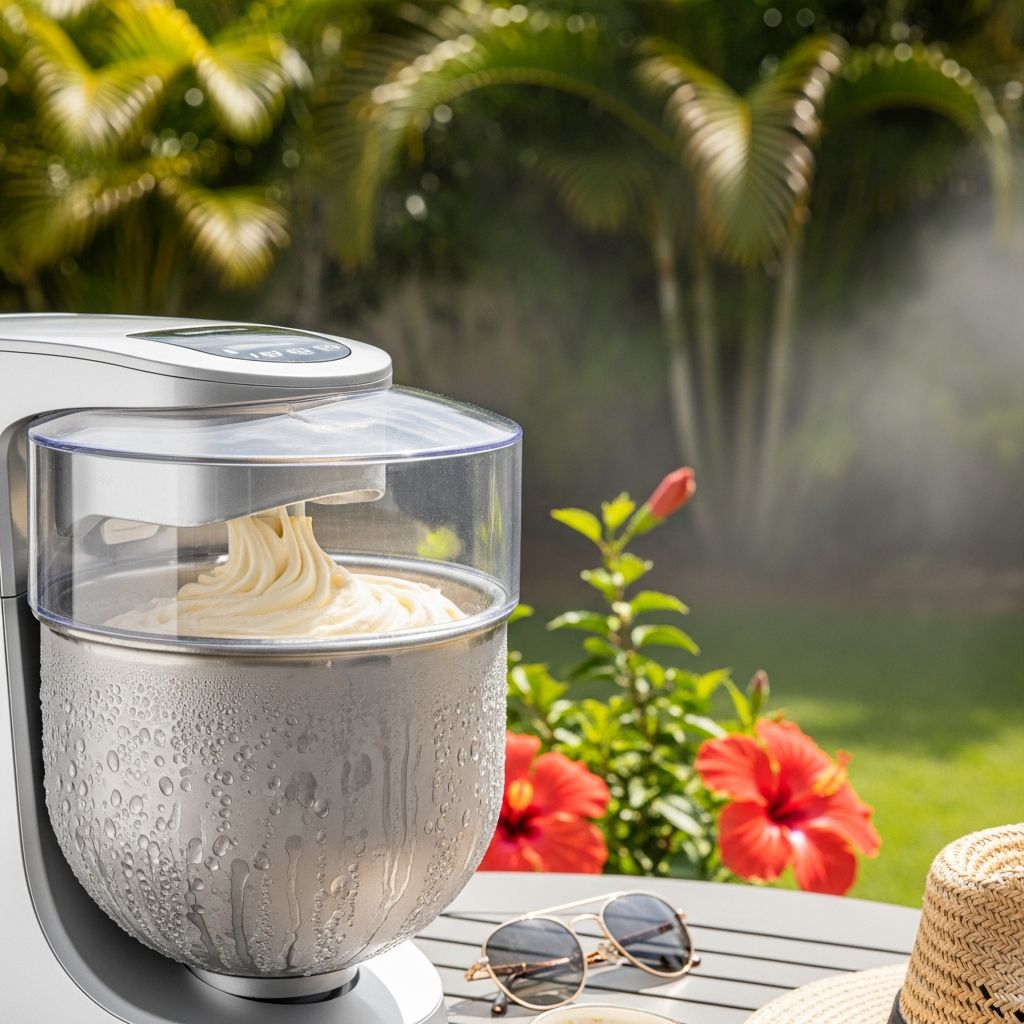
Using an Ice Cream Maker in Hot or Humid Climates: Practical Adjustments for Better Results
Making ice cream at home is satisfying, but hot or humid conditions can make it frustrating. Warm kitchens and moisture-heavy air slow chilling, increase ice crystal growth, and strain your machine. With a few practical adjustments to equipment, recipes, and workflow, you can still achieve smooth, creamy ice cream even in challenging climates.
Table of Contents
- Key Challenges of Hot or Humid Climates
- Preparing Your Environment and Equipment
- Pre-Chilling Strategies for Faster Freezing
- Recipe Adjustments for Heat and Humidity
- Churning Techniques in Warm Conditions
- Hardening, Storage, and Texture Protection
- Maintenance and Machine Health in Hot Weather
- Troubleshooting Common Problems
- Frequently Asked Questions (FAQs)
- Conclusion
Key Challenges of Hot or Humid Climates
Hot and humid environments affect both the machine and the ice cream itself. Understanding the main issues helps you choose the right adjustments.
How Heat Affects Ice Cream Makers
Higher room and water temperatures make your freezer or compressor work much harder to remove heat from the mix. In commercial contexts, efficiency of air-cooled refrigeration drops notably once ambient temperatures exceed about 30°C (86°F). Air-cooled ice makers and display cabinets are also far less efficient as the heat index rises, especially near 35°C–35°C+ (95°F). When temperatures approach this range, production slows or can stop entirely.
Warm water entering a refrigeration system substantially reduces its ability to freeze product; when water temperatures exceed about 26°C–27°C (80°F), freeze times grow and overall output drops.
How Humidity Affects Texture and Equipment
High humidity introduces extra moisture and frost into cold areas. In display and storage equipment, high humidity can cause frost buildup on evaporators, blocking airflow and reducing cooling power. It also raises the risk of condensation around lids and gaskets, and frequent door openings pull in moist air, leading to more frost and slight temperature fluctuations.
For the ice cream itself, humid weather encourages more surface frost, freezer burn, and texture deterioration when storage conditions are not stable.
Preparing Your Environment and Equipment
Thoughtful placement and setup of your ice cream maker are often the easiest and most effective improvements in hot climates.
Optimal Location and Airflow
To maintain performance, refrigeration and ice-making equipment generally should be kept in a cooler, low-humidity, temperature-controlled space where possible. Avoid locations that add unnecessary heat load.
- Keep the machine indoors in an air-conditioned room if you can.
- Avoid placing the machine near ovens, stoves, dishwashers, or other hot appliances.
- Keep it out of direct sun and away from windows that cause solar warming of panels and surfaces.
- Maintain clear space around vents and fans; blocked vents dramatically reduce cooling capacity.
Manufacturers typically recommend minimum clearances around air inlets and exhausts to ensure good airflow. These guidelines are especially important in heat waves.
Ambient Temperature Targets
While many home kitchens do not have tightly controlled ambient conditions, you can still aim for better ranges:
- Try to churn when the room is comfortably cool, not at the hottest time of day.
- If your kitchen reaches high 80s or 90s °F (30°C+), use a cooler room, run a fan, or briefly lower the thermostat for churning time.
- If you can, schedule long cycles (such as self-pasteurization or deep cleaning on commercial units) during the coolest hours, often between 1 a.m. and 4 a.m.
Water Temperature Considerations
For machines that use water for cooling or for initial mix handling, colder water significantly reduces the cooling work needed later. In commercial settings, high supply-water temperatures have been shown to greatly extend ice production times and decrease yield.
- When rinsing or cooling components, use cool, not warm, water.
- If your tap runs very warm in summer, briefly chill water in the fridge for mix cooling.
Pre-Chilling Strategies for Faster Freezing
In hot or humid climates, you want the mix and all cold surfaces to be as cold as reasonably possible before churning. This reduces freeze time, improves overrun (air incorporation), and helps create a finer ice crystal structure.
Chill the Mix Thoroughly
Professional guidance for ice cream production consistently emphasizes rapidly cooling liquid mixes and storing them chilled before freezing. The colder the mix going into the machine, the less work the freezer must do.
- Cool the cooked base quickly in an ice bath, then refrigerate until it is at or below 4°C (about 39°F) before churning.
- Whenever possible, hold the mix refrigerated for several hours or overnight to both chill and mature the base.
- Avoid pouring room-temperature mix into the freezer; if the mix is roughly 26°C (79°F), the machine must pull out a much larger amount of heat compared with starting around 4°C (39°F).
Pre-Chill the Machine and Components
Any part that will contact the ice cream mix benefits from being chilled first:
- For freezer-bowl style machines, ensure the bowl is fully frozen according to the manufacturer’s time recommendations.
- Place the dasher (paddle), lid, and any removable metal parts in the refrigerator or freezer for 15–30 minutes before churning.
- Chill storage containers in the freezer so that ice cream begins hardening immediately when transferred.
Suggested Temperature and Storage Targets
For texture preservation, commercial guidance generally recommends storing ice cream at about −18°C (0°F) or colder. Some sources note that dedicated ice cream freezers often keep product slightly warmer than typical home freezers to maintain scoopable texture, around −5°C to −10°C (23°F to 14°F), while still preserving quality if temperatures remain stable.
| Stage | Recommended Condition | Why It Matters in Hot/Humid Climates |
|---|---|---|
| Mix before churning | At or below 4°C (39°F) | Less heat to remove; faster freezing and smaller crystals. |
| Churning environment | As cool as practical, below 30°C (86°F) if possible | Improves machine efficiency, reduces strain on compressor. |
| Initial hardening | Quick transfer to freezer at about −18°C (0°F) or below | Rapid hardening locks in fine crystal structure. |
| Long-term storage | Stable −18°C (0°F) or slightly warmer but steady | Prevents texture damage and freezer burn from fluctuations. |
Recipe Adjustments for Heat and Humidity
In difficult climates, recipe formulation can support smoother texture and resist melt-related issues. Small changes in fat, solids, and stabilizers can dramatically influence how well ice cream stands up to heat.
Balance Fat, Sugar, and Solids
Higher sugar and fat levels depress the freezing point of the mix and help maintain scoopable texture, but too much can make ice cream overly soft, especially in hot conditions. Recipes with more milk fat, egg yolks, and sugar generally freeze slightly softer and can be stored at slightly warmer serving temperatures, around −13°C to −11°C (8°F to 12°F), without becoming rock-hard.
In hot climates, aim for a balance where the ice cream is firm enough to hold shape but not so hard that it becomes icy as it experiences small temperature rises:
- Maintain moderate fat levels (often 10–16% for classic ice creams).
- Use enough sugar for smoothness, but avoid excessively sweet formulas that may go soupy quickly in heat.
- Include milk solids-non-fat (such as milk powder) to improve body and water binding.
Use Stabilizers and Emulsifiers Wisely
Stabilizers help control ice crystal growth and water mobility, which is especially valuable in warm or fluctuating environments. Even simple household stabilizers—like a small amount of cornstarch or egg yolks—can improve body and slow melt.
- Consider using modest amounts of egg yolks or starch-based stabilizers for custard-style ice cream.
- Limit stabilizers to recommended levels; overuse can cause gumminess or a pasty mouthfeel.
Adjust Mix-Ins and Inclusions
Chunks and swirls behave differently in hot conditions:
- Pre-chill mix-ins (chocolate pieces, cookies, fruit) to prevent them from warming the base during folding.
- Avoid high-water inclusions (e.g., fresh watery fruits) unless they are cooked down, candied, or otherwise stabilized to prevent hard icy pockets.
- Add sauces and swirls at the end of churning, when the base is thick and cold, to avoid overmixing and warming.
Churning Techniques in Warm Conditions
In hot or humid weather, your churning technique must reduce exposure to warm air and speed up the freezing stage.
Timing and Batch Size
- Churn during the coolest part of the day to help the machine work efficiently.
- Make slightly smaller batches when conditions are extreme; less volume freezes more quickly and evenly.
- Avoid back-to-back batches with no rest; compressors in consumer machines can overheat and under-freeze later batches.
Minimize Open-Lid Time
Every time you open the machine, you let in warm, moist air. In humid climates this accelerates frost formation on cold parts and adds heat to the system.
- Prepare all ingredients and mix-ins in advance so that you can add them quickly.
- Resist the urge to frequently open the lid to check progress; use built-in windows or timers instead.
Recognizing the Right Texture
In a warm kitchen, the ice cream may appear slightly softer when you stop churning than it would in a cool environment, but the signs of completion are similar:
- The volume has increased and the mix is thick and aerated.
- The paddle leaves clear tracks and the ice cream clings to it.
- The mixture mounds softly rather than flowing like a liquid.
Transfer immediately to pre-chilled containers and move to a very cold freezer for hardening.
Hardening, Storage, and Texture Protection
Once churning stops, rapid hardening and stable storage are especially important in hot or humid climates to preserve smooth texture and flavor.
Rapid Hardening
Commercial operations use dedicated hardening rooms with strong airflow and very low temperatures to quickly freeze ice cream throughout. At home, you can emulate this on a smaller scale:
- Set your freezer to its coldest safe setting before churning.
- Place ice cream containers toward the back of the freezer, away from doors where warm, humid air enters.
- Avoid stacking warm containers together; leave a little space for air circulation.
Humidity and Frost Control
High humidity encourages frost accumulation on evaporators and inside storage spaces, which can block airflow and destabilize temperatures.
- Limit how often the freezer door is opened and how long it stays open.
- Wipe condensation from seals and lids when noticed.
- If your freezer develops heavy frost, defrost according to the manufacturer’s instructions; frost-clogged evaporators cannot cool efficiently.
Ideal Storage Temperature and Stability
The general rule for quality ice cream storage is to maintain product at about −18°C (0°F) or colder with as little fluctuation as possible. Temperature swings encourage partial melting and refreezing, which grow ice crystals and degrade texture.
- Use an appliance thermometer to verify freezer temperatures, especially during heat waves.
- Store ice cream in the coldest, most stable zone of your freezer, commonly away from the door and top edge.
- Keep containers tightly sealed to reduce moisture transfer and odor absorption, which contribute to freezer burn.
Maintenance and Machine Health in Hot Weather
Hot and humid conditions place extra stress on ice cream makers and freezers. Regular maintenance protects both performance and product quality.
Clean and Inspect Air Paths
Cooling equipment depends on free airflow across condensers and internal components. Dust, grease, and frost buildup are especially damaging during hot spells.
- Vacuum and gently clean condenser coils and vents on your freezer or compressor-based machine periodically.
- Listen for ventilation fans and condenser fans to ensure they run smoothly; unusual sounds can signal a developing problem.
- Confirm that there is adequate space around intake and exhaust vents as recommended in manuals.
Monitor Performance During Heat Waves
Most ice-making issues appear during the hottest months. Being proactive helps avoid spoiled batches.
- Watch for unusually long churn times or ice cream that never quite firms up.
- Use a thermometer to confirm that your machine is reaching expected temperatures or that your freezer is holding around −18°C (0°F).
- In commercial setups, regularly inspect evaporators, condensers, and filters during peak season, when ambient heat and demand are highest.
Troubleshooting Common Problems in Hot or Humid Climates
Even with good preparation, problems still occur. Many are directly linked to heat or humidity and can be traced to a few common causes.
Ice Cream Not Freezing or Staying Too Soft
- Mix not cold enough when added to the machine; ensure it is thoroughly chilled to refrigerator temperature.
- Ambient temperature too high, reducing cooling efficiency.
- Freezer bowl not fully frozen or compressor overheating due to blocked vents.
- Recipe too rich in sugar, alcohol, or fat, which depresses freezing point excessively.
Icy or Grainy Texture
- Slow freezing due to warm conditions leading to larger ice crystals.
- Temperature fluctuations in storage, often from frequent door openings in humid environments.
- Insufficient stabilizers or milk solids to control free water.
Machine Overheating or Struggling
- Blocked air vents or insufficient clearance around the unit.
- Machine located near strong heat sources or in direct sunlight.
- Running consecutive batches without a rest period, especially in very warm rooms.
Frequently Asked Questions (FAQs)
Q: Can I successfully use an ice cream maker outdoors in very hot weather?
Using an ice cream maker outdoors in high heat is possible but generally not ideal because air-cooled units lose efficiency as ambient temperature rises, especially beyond about 30°C (86°F). For more reliable results, use the machine indoors in a cooler room and bring the ice cream outside only once it has hardened sufficiently.
Q: How cold should my freezer be to store homemade ice cream in summer?
For quality and safety, guidance for ice cream storage commonly recommends around −18°C (0°F) or colder with minimal fluctuation. Some ice cream-specific freezers hold product slightly warmer (around −5°C to −10°C, 23°F to 14°F) for ideal scoopability, but the key is stable temperatures rather than constant cycling between warmer and colder settings.
Q: Does humidity really affect my home ice cream maker?
Humidity primarily affects the environment around your machine and freezer. Very humid air increases frost buildup on cold surfaces and evaporators, reducing airflow and cooling efficiency. It also leads to more condensation and minor temperature swings when doors or lids are opened, which can gradually damage texture. Keeping doors closed as much as practical and defrosting when needed helps mitigate these effects.
Q: Is it better to make smaller batches in the summer?
In hot or humid conditions, slightly smaller batches are often advantageous because they freeze faster and more evenly, reducing the window in which big ice crystals can form. Smaller volumes also reduce the strain on compressors already working against a high ambient heat load.
Q: Why does my ice cream become icy after a few days during heat waves?
In hot weather, freezers often cycle more aggressively, and frequent door openings admit warm, humid air; both factors can cause partial melting and refreezing of ice cream. This process enlarges ice crystals and forms surface frost. Ensuring stable, sufficiently low storage temperatures and minimizing door openings are key to maintaining smooth texture.
Conclusion
Using an ice cream maker in hot or humid climates demands more attention to environment, preparation, and storage, but smooth, stable results are absolutely achievable. The most impactful changes are often simple: locate your machine in a cool, well-ventilated space, thoroughly chill the mix, and minimize heat and moisture exposure during and after churning.
Beyond environment, thoughtful recipe design and rigorous hardening and storage practices further protect texture. Balanced fat and sugar, appropriate stabilizers, rapid freezing, and steady low temperatures together minimize ice crystal growth and resist the damage caused by heat and humidity. With these practical adjustments in place, your ice cream maker can perform reliably even through the hottest months, delivering consistently creamy, enjoyable ice cream regardless of the climate.
Similar Articles







Read full bio of medha deb