
Using Ice Cream Makers Safely Around Children: Tasks, Risks and Supervision
Practical guidance for safely involving children in ice cream making with age-appropriate tasks and active supervision.
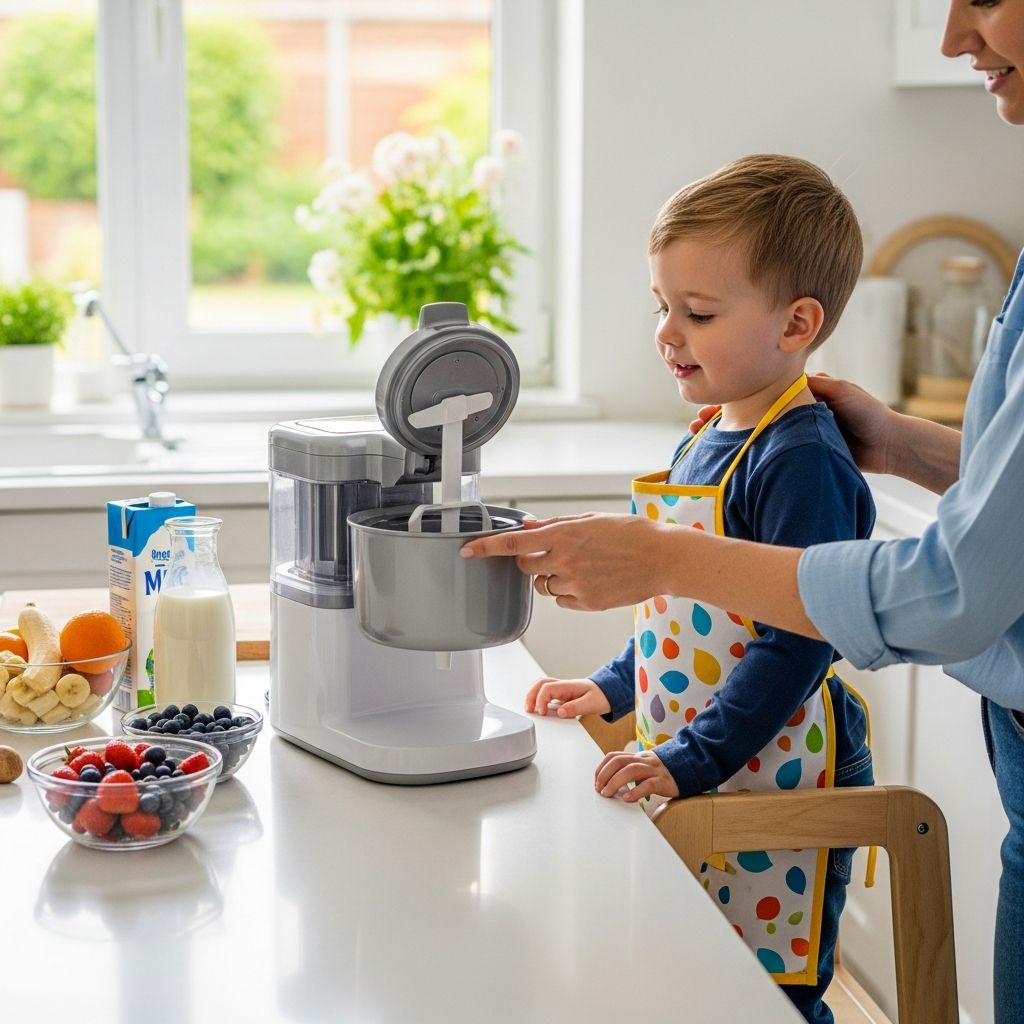
Using Ice Cream Makers Safely Around Children: Age-Appropriate Tasks and Supervision
Homemade ice cream can be a fun family activity, but ice cream makers are still electrical appliances with moving parts, cold surfaces, and food safety risks. Manufacturer manuals consistently stress that children must not play with ice cream makers, and that close supervision is required whenever the appliance is used by or near children.
This guide explains how to keep kids safe while still letting them participate, with age-appropriate tasks, clear safety rules, and practical supervision strategies for different types of ice cream makers.
Table of Contents
- Key Safety Risks When Using Ice Cream Makers Around Children
- Types of Home Ice Cream Makers and Safety Considerations
- Age-Appropriate Tasks for Children
- Effective Supervision Strategies
- Food Safety and Allergy Considerations
- Safe Setup, Operation and Cleanup
- Family Safety Rules for Ice Cream Making
- Quick Reference: Ages, Tasks and Supervision Level
- Frequently Asked Questions (FAQs)
- Conclusion
Key Safety Risks When Using Ice Cream Makers Around Children
Before assigning tasks to kids, it is important to understand the main hazards that manufacturers highlight in their safety instructions.
- Electrical hazards: Manuals warn not to immerse the cord, plug or motor unit in water and to avoid using the appliance near water to prevent electric shock.
- Risk of injury from moving parts: Children must keep hands, hair, clothing and utensils away from moving paddles and rotating parts.
- Playing with the appliance: Multiple manuals state that children should be supervised so they do not play with, operate, or climb on the appliance.
- Very cold surfaces and freezer burn: Freezer bowls and ice/salt canisters become extremely cold, and manuals recommend protecting hands to prevent freezer burn when handling frozen parts.
- Tripping and pulling hazards: Long cords should not dangle over the counter where children or pets could pull them or trip over them.
- Foodborne illness: Manuals advise that ice cream containing raw or partially cooked eggs should not be served to young children, pregnant people, older adults, or those who are unwell due to higher food safety risk.
- Choking hazards: Add-ins like nuts, hard candies, and chocolate chips can be choking hazards for young children.
Recognizing these risks helps caregivers assign tasks that are safe for each age group and choose the right level of supervision.
Types of Home Ice Cream Makers and Safety Considerations
Different styles of ice cream makers pose different risks and require tailored supervision.
Electric compressor ice cream makers
These models have a built-in compressor and freeze the mixture automatically.
- Connected directly to mains power, so electrical safety and keeping the cord out of reach are critical.
- Contain moving paddles and a motor; children must never touch interior parts while operating.
- Manuals warn that these appliances are not intended for unsupervised use by young children or by people with reduced physical or cognitive abilities without assistance.
Freezer-bowl ice cream makers
These models have a removable bowl that must be pre-frozen in a household freezer.
- Bowl surfaces become extremely cold and can cause freezer burn without protection.
- Children can help carry the empty bowl but should not handle the frozen bowl without adult assistance and protection.
- Similar moving-part and electrical precautions as compressor models apply.
Traditional bucket-style ice-and-salt makers
Often used for larger batches, sometimes with a hand crank or electric motor.
- Ice and rock salt can be messy; spilled salt and melting water create slip hazards.
- Crank mechanisms and rotating canisters present pinch points for fingers.
- Electric versions still require full electrical safety precautions and supervision, just like other powered units.
Novelty and toy-style ice cream makers
Even when marketed to children, manuals typically state that these products are not toys and that children must be supervised and not play with the appliance.
- They may reduce risk by using manual power, but still include small parts, very cold surfaces, and food safety issues.
- Caregivers should treat them as real kitchen equipment and follow all manufacturer instructions.
Age-Appropriate Tasks for Children
Manufacturers often allow use by older children only under supervision, and specify that cleaning and maintenance should not be performed by unsupervised children. Use these guidelines as a conservative starting point and adjust based on the child’s maturity and motor skills.
Under 3 years: Observe and taste only
- Stay away from the appliance, cords, and moving parts at all times.
- Observe from a safe distance in a high chair or behind a boundary.
- Participate only in choosing flavors and tasting finished ice cream, checking for age-appropriate textures and avoiding choking hazards.
Ages 3–5: Simple non-contact, non-electrical tasks
Children in this age range should not operate the appliance or handle frozen parts, but can help with simple preparation tasks with hands-on guidance.
- Wash hands with help and talk about kitchen hygiene.
- Help measure and pour safe ingredients like milk or cream with the adult holding the container.
- Add pre-measured sugar or flavorings into a bowl under supervision.
- Stir mixtures in a separate bowl with a sturdy spoon (away from the machine).
- Decorate finished servings with sprinkles or soft fruit pieces, avoiding hard or small choking hazards.
Ages 6–8: Guided prep and supervised observation
Children in this range can help more actively, but must still not be responsible for electrical operation or cleaning without adult help.
- Read or follow a simplified recipe with help.
- Measure ingredients using cups and spoons while an adult steadies containers.
- Help carefully pour the mixture into the bowl or canister while the appliance is switched off and unplugged.
- Help arrange ice and salt around a traditional canister while an adult manages heavy lifting and water spills.
- Stand at a safe distance to watch the machine run, learning not to touch moving parts or cords.
- Assist with wiping counters after use, avoiding contact with the cord or motor housing.
Ages 9–12: Closely supervised appliance operation
Some manuals allow children around 8 and above to use the appliance with supervision if they understand the hazards. These tasks should still be done under direct, in-room adult supervision.
- Help assemble the bowl, paddle and lid correctly while the unit is unplugged.
- Place the pre-frozen bowl into the base or the canister into a bucket, with adult support for heavy or very cold parts.
- Turn the power on and set the timer only after adult confirms the setup is safe.
- Monitor the timer and texture through the lid without opening it while the paddle is moving, in line with instructions that warn against opening during operation.
- Turn off and unplug the unit under adult guidance at the end of churning.
- Rinse non-electrical parts in the sink, keeping the motor and cord away from water as manuals require.
Teens (13+): Shared responsibility with oversight
Mature teenagers can often manage most steps independently, but manufacturers still recommend supervision when an appliance is used by or near children.
- Read the full user manual and safety section before first use, including warnings about electric shock, moving parts and cleaning limitations.
- Plan the recipe, check ingredients for allergies, and measure safely.
- Handle frozen bowls with dry hands and appropriate protection to avoid freezer burn.
- Operate the appliance, staying nearby and never leaving it running unattended, in line with several manuals that prohibit unattended use.
- Perform basic cleaning of removable parts, leaving any complex maintenance or repair to adults or professionals.
Effective Supervision Strategies
Many instruction manuals repeat that close supervision is necessary whenever the appliance is used by or near children, and that children must not play with it. Effective supervision is active and planned.
Active, in-room supervision
- Stay in the same room and close to the work area from setup through cleanup.
- Keep your attention primarily on the activity; avoid distractions like phones during risky steps.
- Position yourself between the child and the appliance when plugging in, opening the lid, or handling frozen parts.
Clear safety roles and boundaries
- Explain which tasks are “adult-only,” such as plugging and unplugging, pouring near the motor unit, and removing the frozen bowl.
- Establish a “no-touch” zone around cords and the back of the appliance.
- Teach children to ask permission before approaching the machine or adding ingredients.
Adapting to group size and ability
- With multiple children, assign one child at a time to be near the counter to avoid crowding around the appliance.
- Match tasks to each child’s developmental level, not just age; some children may need simpler roles and closer guidance.
- Have a second adult present if supervising very young children while operating an appliance.
Food Safety and Allergy Considerations
Safe ice cream making is not just about the appliance; it also involves hygiene, ingredient safety, and storage.
Hygiene and contamination
- Wash hands thoroughly before handling ingredients or equipment and again after touching raw eggs or unwashed fruit.
- Clean bowls, paddles, lids and utensils before use, as manuals emphasize thorough cleaning prior to making ice cream.
- Keep the motor unit and cord away from water and do not immerse them, in accordance with manufacturer warnings against electric shock.
Raw eggs and high-risk groups
Several manuals warn that ice cream or sorbet containing raw or partially cooked eggs should not be served to young children, pregnant women, the elderly or people who are unwell, due to foodborne illness risk.
- Use pasteurized eggs or egg-free recipes if serving young children or vulnerable family members.
- Keep dairy products refrigerated until just before use and return leftovers promptly to the freezer.
Allergies and intolerances
- Check for allergies to dairy, nuts, eggs, soy, or gluten in add-ins before planning recipes.
- Prevent cross-contact by using clean utensils and separate bowls for allergen-free batches.
- Label containers clearly when freezing multiple flavors, especially when some contain common allergens.
Safe Setup, Operation and Cleanup
Following manufacturer instructions helps reduce risk for everyone in the kitchen, especially children.
Safe setup
- Place the ice cream maker on a stable, dry, level surface out of reach of small children.
- Arrange the power cord so it does not hang over the edge of the counter or create a tripping hazard for children or pets.
- Ensure the appliance is turned off and unplugged before assembling parts or adding the mixture.
During operation
- Never leave the appliance unattended while in use, a rule repeated in multiple manuals.
- Do not open the lid or insert utensils while the paddle is moving, as manuals warn this can cause injury or damage.
- Keep children’s hands, hair, clothing and any tools away from openings or moving components.
Cleanup and storage
- Always unplug the appliance before moving, cleaning, or storing it, as emphasized in safety instructions.
- Allow the motor unit to cool before cleaning if the manual mentions potential overheating.
- Wash removable parts in warm soapy water, keeping electrical parts dry and never immersing the motor housing or cord.
- Store the appliance out of reach of young children and ensure that they cannot access heavy or breakable components.
Family Safety Rules for Ice Cream Making
Simple, repeated rules help children remember how to behave safely around the ice cream maker.
- Only adults plug in or unplug the ice cream maker.
- No one touches the machine while it is running, except an adult if necessary.
- Keep hands, hair, clothes and utensils out of the bowl and away from openings.
- Ask before adding ingredients or approaching the counter.
- Clean hands before cooking and after handling raw ingredients.
- Stop the activity immediately if someone is not following safety instructions.
Quick Reference: Ages, Tasks and Supervision Level
| Age Range | Suggested Tasks | Supervision Level |
|---|---|---|
| Under 3 | Watching from a distance, choosing flavors, tasting finished ice cream. | Constant, hands-on supervision; no contact with appliance or small toppings. |
| 3–5 | Hand washing, simple pouring into bowls, stirring mixtures away from the machine, decorating servings. | Direct, next-to-child supervision; no contact with power, moving parts or frozen components. |
| 6–8 | Measuring ingredients, carefully pouring mixture into the canister (appliance unplugged), arranging ice and salt with help, wiping counters. | Continuous in-room supervision; adults handle plugging in, frozen bowls and any troubleshooting. |
| 9–12 | Assisting with assembly, helping operate controls, monitoring churning time, basic cleaning of non-electrical parts. | Close supervision with adult present and checking each step before operation. |
| 13+ | Planning recipes, operating appliance, handling frozen parts with protection, routine cleaning of removable components. | Periodic oversight; an adult available nearby, especially for electrical safety and any problems. |
Frequently Asked Questions (FAQs)
Q: Can young children operate an electric ice cream maker by themselves?
Most manufacturer manuals state that these appliances are not intended for use by children and that children must be supervised to ensure they do not play with or operate the appliance. Operation should be done by adults or, at most, by older children under direct adult supervision.
Q: Is it safe for children to help clean the ice cream maker?
Manuals often specify that cleaning and user maintenance must not be performed by unsupervised children. Children can help wash non-electrical parts like bowls and paddles under guidance, but adults should handle unplugging, drying, and anything involving the motor or cord.
Q: Are raw-egg ice cream recipes okay for kids?
Several official instructions warn that ice cream or sorbet containing raw or partially cooked eggs should not be given to young children, pregnant women, older adults, or people who are unwell. For families, it is safer to use pasteurized eggs or egg-free recipes.
Q: Do toy or novelty ice cream makers remove the need for supervision?
No. Even small or toy-branded models have manuals stating that children should be supervised and should not play with the appliance. They still involve cold surfaces, moving parts and food handling, so active adult oversight remains essential.
Q: Is it okay to leave the ice cream maker running while we step out of the room?
Many instruction manuals emphasize that you should never leave the unit unattended while in use. An adult should remain nearby to respond quickly if the machine jams, overheats, leaks, or if a child approaches the appliance.
Conclusion
Using an ice cream maker with children can be a safe, memorable way to teach them about cooking when you treat the appliance with the same respect as any other electrical kitchen tool. Manufacturer guidelines consistently highlight the importance of close supervision, preventing children from playing with the appliance, and controlling exposure to electrical parts, moving components and extremely cold surfaces.
By matching tasks to each child’s developmental level, clearly separating adult-only jobs from kid-friendly roles, and enforcing simple family safety rules, you can minimize risk while still letting children take pride in their contribution. Attention to food hygiene, allergy awareness and proper cleanup further protects everyone at the table.
Thoughtful planning, careful reading of the specific user manual for your model, and calm, attentive supervision allow ice cream making to become a reliable, safe ritual that children can gradually take more responsibility for as they grow and gain experience.
Similar Articles







Read full bio of Sneha Tete