Using Ice Cream Makers for Sorbet and Sherbet: Techniques, Tweaks, and Shared Basics
Learn how sorbet and sherbet behave in ice cream makers, what to change in your recipe, and what freezing science stays the same.
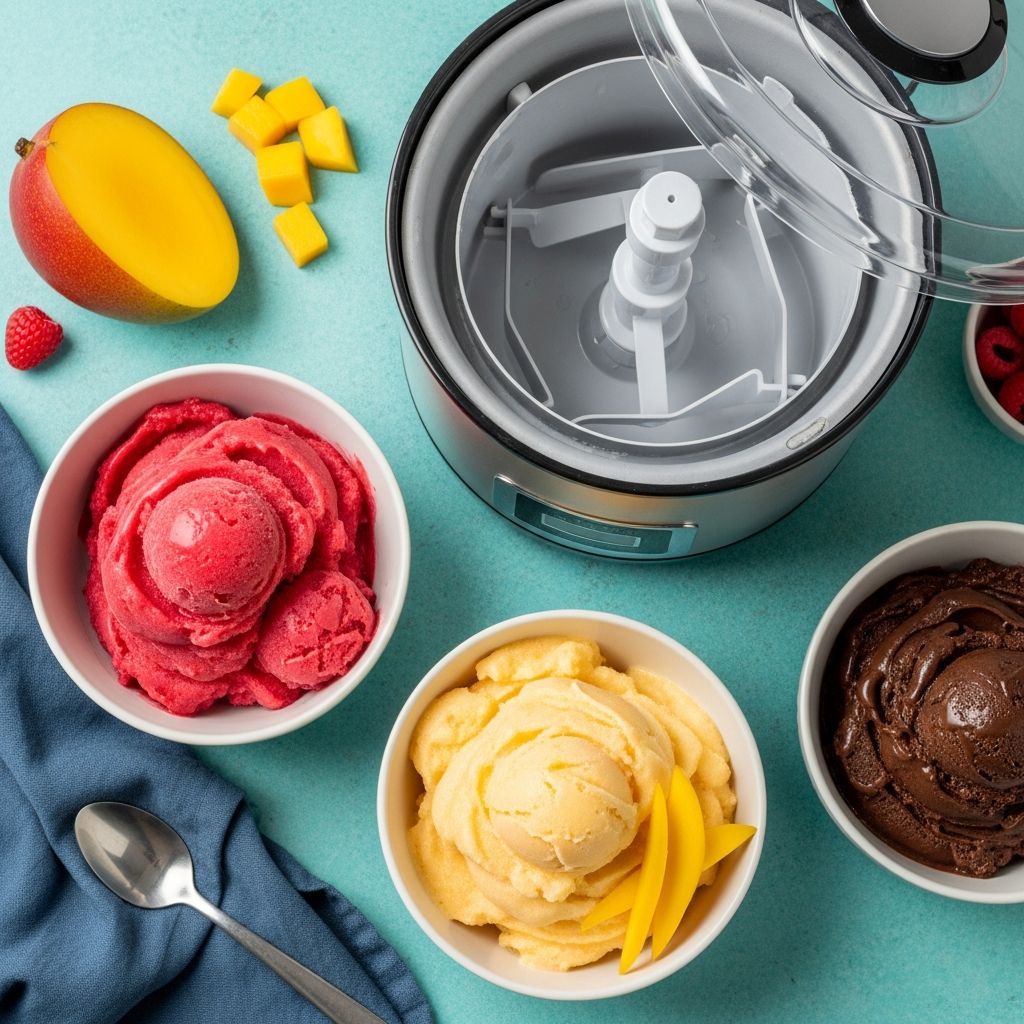
Using Ice Cream Makers to Make Sorbet and Sherbet: What Changes and What Stays the Same
Home ice cream makers are not just for traditional ice cream. They are equally powerful tools for making bright, fruit-forward sorbets and lightly creamy sherbets. The base ingredients and textures change, but the core freezing and churning science remains similar: a moving dasher incorporates air while preventing large ice crystals from forming, creating a smooth, scoopable dessert.
Table of Contents
- Overview: Ice Cream Makers, Sorbet, and Sherbet
- Sorbet vs Sherbet: Core Definitions
- What Stays the Same in the Ice Cream Maker
- What Changes When You Make Sorbet or Sherbet
- Choosing and Preparing Your Ice Cream Maker
- Step-by-Step: Making Sorbet in an Ice Cream Maker
- Step-by-Step: Making Sherbet in an Ice Cream Maker
- Key Ratios, Sugar Levels, and Texture Control
- Common Problems and Fixes
- Table: Sorbet vs Sherbet vs Ice Cream in a Maker
- Frequently Asked Questions (FAQs)
- Conclusion
Overview: Ice Cream Makers, Sorbet, and Sherbet
Modern sorbet and sherbet are almost always churned in the same machines used for ice cream. These machines work by cooling a bowl while a paddle (dasher) constantly scrapes and stirs the mixture. This process adds air and interrupts crystal growth so the frozen dessert stays smooth rather than icy.
When you switch from ice cream to sorbet or sherbet in an ice cream maker, you are mainly changing:
- The ingredients (fruit and water vs cream and egg yolks)
- The amount and type of fat (none for sorbet, low for sherbet)
- The sugar concentration and acidity
- The way the base is prepped before churning
What does not change is the core churning mechanism: cold bowl, moving dasher, and gradual freezing.
Sorbet vs Sherbet: Core Definitions
To work effectively with an ice cream maker, it helps to understand what sorbet and sherbet are in terms of composition and law/industry practice.
Sorbet: Dairy-Free, Fruit-Forward
Sorbet is a dairy-free frozen dessert made primarily from fruit puree or juice, water, and sugar. It often has a very low fat content because there is no cream or milk. The emphasis is on the pure, intense flavor of the fruit.
- Typical ingredients: fruit puree or juice, water, sugar, sometimes a bit of alcohol or stabilizer
- Texture: smooth, refreshing, and intensely fruity when properly churned
- Diet suitability: naturally lactose-free and suitable for many vegan diets.
Sherbet: A Light Bridge Between Sorbet and Ice Cream
Sherbet (often spelled “sherbert” in casual use) is a fruit-based frozen dessert that includes a small amount of dairy—typically about 1–2% milkfat—making it creamier than sorbet but lighter than ice cream. The dairy softens the acidity and gives sherbet a light, creamy tang.
- Typical ingredients: fruit puree or juice, water, sugar, and a small amount of milk or cream
- Texture: creamier and richer than sorbet, but not as heavy as full ice cream
- Flavor profile: fruity with subtle dairy richness and often a pleasant tang.
What Stays the Same in the Ice Cream Maker
Despite the different ingredients, sorbet, sherbet, and ice cream rely on the same underlying freezing science when made in an ice cream maker.
- Churning is essential: The dasher keeps the mixture in motion, preventing large crystals and incorporating air for a smooth texture.
- Pre-chilled base: For all three, the base should be thoroughly chilled before churning to ensure proper freezing.
- Batch time: Sorbet, sherbet, and ice cream typically churn for 15–30 minutes, depending on the machine and batch size.
- Finish in freezer: All three are usually “soft serve” consistency straight from the machine and then firm up in the freezer for several hours.
- Importance of sugar: Sugar lowers the freezing point and helps achieve scoopable texture in sorbet, sherbet, and ice cream alike.
What Changes When You Make Sorbet or Sherbet
What you adjust when making sorbet or sherbet in the same machine used for ice cream is mostly about ingredient balance and base preparation.
- Fat content: Sorbet has no dairy fat; sherbet has a small amount; ice cream is high in fat. This dramatically affects richness, melt behavior, and stability.
- Fruit content: Sorbet often has a high proportion of fruit puree, which provides flavor, natural sugars, and some body.
- Dairy and emulsifiers: Sherbet includes milk or cream, sometimes stabilizers, but in smaller quantities than ice cream.
- Acidity: Many sorbets and sherbets include citrus juice to brighten flavor; acidity affects perceived sweetness and freezing behavior.
- Sugar calibration: Sorbet often needs slightly higher sugar (often including glucose or corn syrup) to avoid being too icy, especially with low-sugar fruits.
- Overrun (air incorporation): Sorbet usually has less air than ice cream; sherbet is intermediate. The same machine will incorporate different amounts based on viscosity.
Choosing and Preparing Your Ice Cream Maker
Almost any home ice cream maker can handle sorbet and sherbet. The main types are:
- Freezer-bowl machines (bowl pre-frozen for 12–24 hours)
- Compressor machines (self-refrigerating, no pre-freezing)
- Manual or rock-salt churns (less common but effective)
For the smoothest sorbet and sherbet:
- Ensure the bowl is fully frozen (for freezer-bowl models).
- Chill the base to refrigerator temperature before churning.
- Avoid overfilling; keep batches to 1/2–2/3 of the stated capacity so the mixture can expand and aerate.
Step-by-Step: Making Sorbet in an Ice Cream Maker
Sorbet is structurally simple but sensitive to sugar and water balance. Proper churning in an ice cream maker is key to avoiding large ice crystals.
1. Plan Your Sorbet Base
Standard sorbet bases contain three core elements:
- Fruit puree or juice
- Water (when needed, depending on the fruit)
- Sugar (granulated sugar plus, optionally, corn syrup or honey)
High-pectin fruits (mango, berries) naturally yield smoother sorbets; very watery fruits (melon, citrus) may need more sugar or a bit of stabilizer for body.
2. Prepare the Fruit
- Wash, peel, and core as needed.
- Blend the fruit until completely smooth; strain for a finer texture if the fruit has many seeds (raspberry, blackberry).
- Measure the puree so you can control fruit-to-sugar ratios.
3. Dissolve Sugar and Adjust Flavor
Sugar must fully dissolve to maintain a uniform texture.
- Warm water and sugar together just enough to dissolve, then cool; or
- Blend sugar directly into juicy fruits until completely dissolved.
- Taste and adjust with lemon or lime juice to balance sweetness and acidity.
4. Chill the Sorbet Base
Before churning, refrigerate the sorbet base until it is very cold—at least several hours or overnight. This ensures the ice cream maker can quickly bring the mixture to freezing temperatures before the bowl warms up.
5. Churn in the Ice Cream Maker
- Start the machine with the cold bowl in place.
- Pour in the chilled sorbet base while the dasher is already turning.
- Churn until the sorbet thickens and resembles a soft, slushy gelato; this usually takes 15–25 minutes depending on the machine.
At this stage, the sorbet will be soft-serve consistency with a smooth, spoonable texture.
6. Harden in the Freezer
- Transfer the sorbet to a shallow, freezer-safe container.
- Press plastic wrap or parchment directly onto the surface to minimize ice formation.
- Freeze for 2–4 hours to allow the sorbet to firm up.
Step-by-Step: Making Sherbet in an Ice Cream Maker
Because sherbet adds dairy to a fruit base, it behaves more like a light ice cream. The ice cream maker treats it very similarly to both sorbet and ice cream, but you must emulsify the dairy and fruit properly.
1. Decide on the Dairy Level
Sherbet typically uses a small percentage of dairy, around 1–2% milkfat, which keeps it lighter than ice cream but richer than sorbet. You can achieve this by using:
- Whole milk
- Half-and-half for slightly richer sherbet
- A small splash of cream added to milk
2. Build the Fruit and Sugar Base
- Prepare fruit puree or juice as for sorbet.
- Fully dissolve the sugar either in the dairy (gently warmed) or blended directly with the fruit.
- Balance with citrus juice to maintain a bright, tangy flavor that complements the dairy.
3. Combine Dairy and Fruit
For a stable sherbet base:
- Whisk or blend dairy into the fruit-sugar mixture until completely homogeneous.
- If you gently warm the dairy to dissolve sugar, chill thoroughly before churning.
- A short rest (several hours in the refrigerator) helps flavors meld and improves texture.
4. Churn in the Ice Cream Maker
- Ensure the sherbet base is fully chilled.
- Start the ice cream maker and pour in the base while the dasher is spinning.
- Churn until it reaches a thick, creamy consistency, similar to soft ice cream.
Because of the small dairy content, sherbet often stabilizes faster and feels creamier at the same temperature compared with sorbet.
5. Harden in the Freezer
- Transfer to a freezer-safe container, smoothing the top.
- Cover the surface and lid tightly to avoid freezer burn.
- Freeze for several hours before serving.
Key Ratios, Sugar Levels, and Texture Control
One of the main differences between sorbet, sherbet, and ice cream in an ice cream maker is how you use sugar and fat to control texture.
Sugar Considerations
Sugar does two critical jobs: sweetening and controlling the freezing point. For sorbet in particular, the absence of dairy fat makes sugar balance crucial.
- Too little sugar: the sorbet or sherbet freezes too hard and becomes icy.
- Too much sugar: it may never fully freeze in the machine and remains slushy.
- Mixed sugars: using a blend of granulated sugar and glucose, honey, or corn syrup can improve body and reduce iciness.
Fat and Dairy Levels
- Sorbet: essentially fat-free; relies on fruit solids and sugar for body.
- Sherbet: small amount of milk or cream (often 1–2% milkfat) adds creaminess without the heaviness of ice cream.
- Ice cream: higher fat content (often 10–20% fat) gives a very rich, slow-melting texture.
Acidity and Flavor Balance
Citrus and other acids brighten flavor and balance sweetness. They also slightly alter the freezing point and perceived texture, but in home recipes this effect is mostly about taste rather than major structural change.
Common Problems and Fixes
Using the same ice cream maker, you can still encounter different issues with sorbet and sherbet. Here is how to address the most common ones.
- Problem: Sorbet is icy or grainy.
Likely causes: too little sugar, high water content, or insufficient churning.
Fix: Increase the sugar slightly, add a spoonful of corn syrup or honey, ensure the base is fully chilled, and churn in a well-frozen bowl. - Problem: Sherbet is too hard in the freezer.
Likely causes: low sugar, very low fat, or long storage time.
Fix: Serve after a 5–10 minute temper on the counter, and slightly increase sugar or dairy in the next batch. - Problem: Mixture never thickens in the machine.
Likely causes: bowl not frozen, base too warm, or sugar content too high.
Fix: Fully freeze the bowl, chill the base overnight, and reduce added sugars or alcohol next time. - Problem: Bland flavor after freezing.
Likely causes: under-seasoned base; cold dulls sweetness and aroma.
Fix: Make the base taste slightly sweeter and more intense than you want at room temperature; add a bit of lemon juice to sharpen fruit flavors.
Table: Sorbet vs Sherbet vs Ice Cream in a Maker
| Feature | Sorbet | Sherbet | Ice Cream |
|---|---|---|---|
| Main ingredients | Fruit, water, sugar | Fruit, sugar, small amount of milk/cream | Milk/cream, sugar, often egg yolks |
| Dairy content | None (dairy-free) | Low (around 1–2% milkfat) | High (10–20% fat typical) |
| Texture | Light, refreshing, smooth when well churned | Creamier, tangy, lighter than ice cream | Rich, creamy, dense |
| Role of ice cream maker | Churns to prevent iciness and incorporate small amount of air | Churns to create light creaminess with fruity character | Churns to build body, overrun, and ultra-smooth creaminess |
| Best suited for | Lactose-free, vegan-friendly, intense fruit flavor seekers | Those wanting a fruity dessert with light creaminess | Classic rich dessert lovers |
Frequently Asked Questions (FAQs)
Q1: Can I use the same ice cream maker for sorbet, sherbet, and ice cream?
Yes. Any standard home ice cream maker can churn sorbet, sherbet, and ice cream. The machine’s basic job—freezing while churning—remains the same; you only change the recipe and base preparation.
Q2: Does sorbet need dairy or eggs to work in an ice cream maker?
No. Sorbet is traditionally dairy-free and egg-free. The ice cream maker relies on sugar content and churning to create a smooth texture rather than on fat and egg yolks.
Q3: How is sherbet different from low-fat ice cream in the machine?
Sherbet gets most of its character from fruit with just a small amount of dairy, while low-fat ice cream is dairy-based with less fruit. In an ice cream maker, sherbet behaves more like a fruity sorbet with added creaminess than like a traditional ice cream.
Q4: Why does my sorbet freeze harder than my ice cream?
Sorbet lacks the cushioning effect of fat and often has a higher water content. If sugar levels are not carefully balanced, sorbet can freeze harder and feel icier than ice cream. Increasing sugar slightly, using mixed sugars, and allowing sorbet to temper before scooping all help.
Q5: Is sorbet always healthier than sherbet or ice cream?
From a fat standpoint, sorbet is usually lower because it contains no dairy. However, all three can be high in sugar. Health comparisons depend on portion size, total sugar, and overall diet, not just fat content.
Conclusion
Using an ice cream maker to produce sorbet and sherbet highlights the balance between changing ingredients and stable technique. The equipment does the same essential work no matter which frozen dessert you choose: it freezes the mixture while churning to build body, incorporate air, and reduce ice crystal size. What changes are the levels of fruit, water, sugar, and dairy that you put into the machine.
Sorbet uses the ice cream maker to turn fruit, water, and sugar into a clean, refreshing dessert with intense fruit flavor and no dairy. Sherbet stands between sorbet and ice cream, adding a modest amount of milkfat for a creamier, tangier version that still centers fruit. Both rely on careful sugar balance, a fully chilled base, and proper churning to reach their potential.
Understanding what stays constant—the churning process, freezing dynamics, and importance of pre-chilling—and what you must adjust—ingredient ratios, sugar, and fat—allows you to confidently adapt your ice cream maker to any fruit-based frozen dessert you want to explore.
Similar Articles



Read full bio of Sneha Tete