When a Home Ice Cream Maker Truly Makes Sense: Lifestyle, Diet, and Usage Patterns
A practical guide to deciding if a home ice cream maker fits your lifestyle, diet goals, kitchen space, and long-term dessert habits.
When Does It Make Sense to Own a Home Ice Cream Maker?
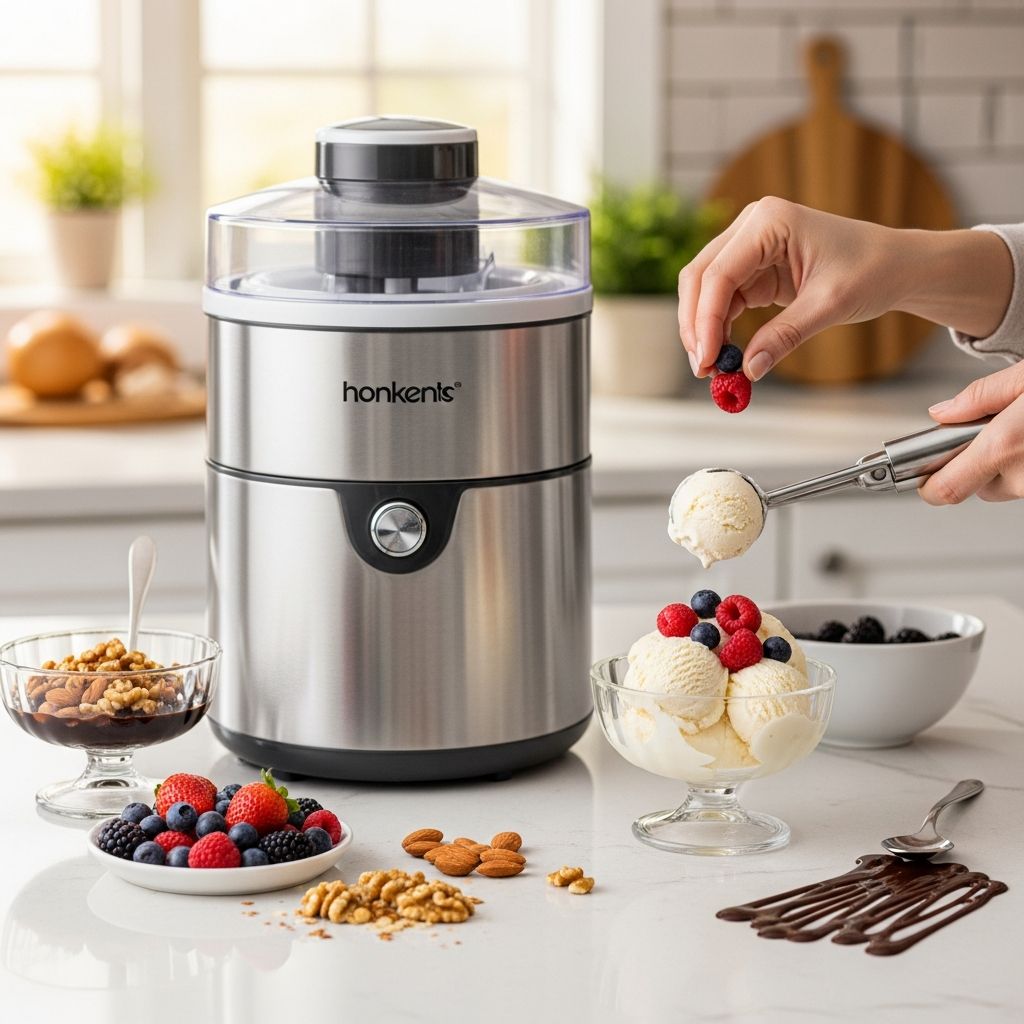
Buying a home ice cream maker can be a fun idea, but it is not automatically a smart purchase for every household. Whether it makes sense depends on your lifestyle, diet priorities, budget, kitchen space, and how often you will realistically use it. This article walks through those factors in depth so you can decide with confidence.
Table of Contents
- Overview: What a Home Ice Cream Maker Really Offers
- Main Types of Home Ice Cream Makers
- Lifestyle Factors: Who Benefits Most?
- Diet, Ingredients, and Health Considerations
- Usage Patterns: How Often Will You Use It?
- Cost, Value, and Long-Term Savings
- Space, Noise, and Maintenance Practicalities
- Pros and Cons of Owning an Ice Cream Maker
- Decision Framework: A Simple Ownership Checklist
- Frequently Asked Questions (FAQs)
- Conclusion
Overview: What a Home Ice Cream Maker Really Offers
A home ice cream maker is a countertop appliance that chills and churns a mixture of dairy or non-dairy ingredients into ice cream, gelato, sorbet, or frozen yogurt. Some models use a pre-frozen bowl, while others rely on an internal compressor freezer to chill the mixture continuously.
The core benefits are the ability to customize flavors and ingredients, enjoy fresher ice cream, and turn dessert into a creative activity. Homemade ice cream also lets you avoid many additives and stabilizers commonly found in commercial brands.
However, machines vary widely in cost, footprint, and convenience, and research on domestic ice cream makers shows that more expensive compressor units do not automatically make better-quality ice cream than simpler pre-freeze bowl models. For many buyers, the real question is not “Can I make ice cream?” but “Will I use this enough to justify the trade-offs?”
Main Types of Home Ice Cream Makers
Before deciding whether ownership makes sense, it helps to understand the common machine types and how they align with different usage patterns.
1. Freezer-Bowl (Pre-Freeze) Ice Cream Makers
These machines use a removable bowl filled with a freezable fluid. You store the bowl in your freezer for many hours (often overnight), then attach it to the base when you are ready to churn.
- Typically more affordable and accessible for beginners.
- Produce very good quality ice cream when the bowl is thoroughly frozen.
- Require advance planning and freezer space for the bowl.
- Usually limited to one batch per day unless you own extra bowls, because the bowl must be re-frozen between batches.
2. Compressor (Self-Freezing) Ice Cream Makers
These models include a built-in compressor that freezes the mixture directly in the machine.
- Allow back-to-back batches with minimal waiting time, ideal for frequent use or entertaining.
- More convenient because you do not have to pre-freeze a bowl.
- Tend to be much more expensive and significantly larger and heavier.
- Domestic compressors are often underpowered; they do not necessarily produce better ice cream than cheaper models.
- More components mean more potential maintenance and repair issues over time.
3. No-Machine and Alternative Methods
It is also possible to make ice cream without a dedicated machine by using a freezer, a stand mixer, or manual methods.
- Very low cost and no extra appliance to store.
- Flexible flavors but often less consistent texture and more manual effort.
- Best for occasional experiments rather than frequent, high-volume use.
| Type | Upfront Cost (Approx.) | Convenience | Best For |
|---|---|---|---|
| Freezer-bowl machine | Low to moderate | Requires pre-freezing, one batch per frozen bowl | Families and hobbyists who make ice cream periodically |
| Compressor machine | Moderate to high | On-demand, multiple batches, larger footprint | Serious enthusiasts, frequent hosts, small catering |
| No dedicated machine | Minimal | More manual steps, variable texture | Very occasional use, budget-conscious households |
Lifestyle Factors: Who Benefits Most?
Your lifestyle is the single most important predictor of whether a home ice cream maker will be used regularly or end up in storage. Certain patterns almost always favor ownership.
Frequent Ice Cream Eaters
If you or your family eat ice cream weekly or more, a machine can align closely with your habits. Some guides note that even people who make ice cream once a year may find value, but the case for ownership is strongest for those who truly enjoy ice cream as a regular dessert.
- Regular use spreads the cost of the machine across many batches.
- You can standardize a handful of favorite flavors, making them easy to reproduce.
- You are more likely to experiment with healthier or more creative recipes over time.
Families with Children or Multi-Generational Households
Homes with children often get more value from an ice cream maker because it becomes both a dessert tool and an activity.
- Making ice cream can be a shared weekend or holiday ritual.
- Each family member can customize mix-ins and flavors, creating a sense of involvement.
- Portions can be better controlled than with large store-bought tubs.
Frequent Hosts and Entertainers
For people who love to host dinners and parties, a home ice cream maker can support more ambitious desserts and unique flavor offerings.
- Compressor models support multiple batches in one evening, ideal for events.
- You can pair desserts with seasonal ingredients or themed menus.
- Freshly churned soft ice cream or gelato has a special appeal that store-bought tubs lack.
Culinary Hobbyists and Tinkerers
If you already bake bread, ferment foods, or experiment with sous-vide cooking, an ice cream maker may fit naturally into your kitchen hobby set.
- You gain a new medium for exploring flavor, texture, and technique.
- More advanced machines can accommodate precise recipes with controlled overrun and fat content.
- The time required to develop bases, chill mixtures, and test iterations feels rewarding rather than burdensome.
Who Probably Does Not Need One
On the other hand, if you rarely eat dessert, prefer simple fruit, or value a very minimal kitchen, a dedicated ice cream maker may not align with your lifestyle.
- Occasional cravings can be met by store-bought pints or no-machine recipes.
- The appliance may sit unused between holidays or special events.
- Space and cleanup requirements may outweigh the enjoyment.
Diet, Ingredients, and Health Considerations
Another major reason people consider a home ice cream maker is dietary control. Homemade ice cream offers full oversight of sweeteners, fats, and additives.
Control over Additives and Preservatives
Commercial ice creams often contain emulsifiers, stabilizers, and flavoring agents that improve shelf life and texture but are not necessary for homemade versions.
- With a home machine, you can use whole ingredients such as cream, milk, egg yolks, fresh fruit, and natural vanilla.
- You can avoid artificial colors and flavors, as well as certain gums and stabilizers.
- For people sensitive to particular additives, this control can be a key motivation.
Managing Sugar and Fat Intake
Homemade ice cream is not automatically low in sugar or calories, but it does give you the option to adjust recipes.
- Reduced-sugar recipes or alternative sweeteners can be used, though texture may change.
- You can experiment with lower-fat bases or yogurt-style recipes instead of full cream.
- Batch size and serving size are under your control, which supports mindful eating.
Special Diets: Vegan, Dairy-Free, Keto, and Allergen-Sensitive
For people with specific dietary needs, a home ice cream maker can be especially valuable.
- Vegan or dairy-free eaters can use coconut milk, oat milk, almond milk, or cashew bases.
- People on keto or low-carb diets can craft high-fat, low-sugar frozen desserts that are hard to find in stores.
- Those with food allergies (nuts, gluten, eggs) can ensure safe ingredient sourcing and preparation.
In these cases, the ability to customize recipes can matter more than the financial cost savings compared with specialty store-bought pints.
Usage Patterns: How Often Will You Use It?
Even a budget-friendly machine has an opportunity cost: it uses your money, your cabinet space, and your cleaning time. Mapping your expected usage pattern helps clarify whether the trade-off is worthwhile.
Occasional Use: A Few Times per Year
If you envision using the machine mainly for holidays, birthdays, or special events a few times per year, you are in the “occasional user” category.
- A simple freezer-bowl model is usually sufficient and more cost-effective.
- You may be satisfied with no-machine recipes instead, which eliminate storage needs.
- The main risk is that the appliance feels like clutter between rare uses.
Moderate Use: Monthly or Seasonal
Many households fall into a moderate pattern, making ice cream in warmer months or as part of a monthly cooking ritual.
- Freezer-bowl machines work well, especially if you plan ahead to keep the bowl frozen.
- Owning an extra bowl can support two flavors in a weekend or small gatherings.
- The machine is likely to earn its place if you routinely look forward to using it.
Heavy Use: Weekly or More
For heavy users, the convenience of a compressor machine becomes more compelling.
- Frequent batches benefit from on-demand freezing and back-to-back churning.
- The time savings and flexibility can offset the higher purchase price.
- However, reviews note that compressor models are larger, heavier, and do not always produce higher-quality ice cream than simpler machines.
If you do not see yourself using the machine at least a couple of times per month, a premium compressor model may be excessive.
Cost, Value, and Long-Term Savings
Price is often a deciding factor. Entry-level freezer-bowl machines are relatively affordable, while high-end compressor units can be a serious investment.
Upfront Costs vs. Store-Bought Ice Cream
Homemade ice cream typically has a higher upfront cost due to the appliance but can be cheaper per serving in the long run, especially if you use it regularly.
- Freezer-bowl machines: usually the lowest initial cost; great starting point for most households.
- Compressor machines: higher price point; better suited to those dedicated to the hobby or serving many people.
- Ingredient costs: cream, milk, sugar, eggs, and flavorings can be comparable or lower than premium store brands on a per-serving basis.
When Does It Financially Make Sense?
It tends to make financial sense to own a machine if at least one of the following is true:
- You frequently buy premium or specialty pints that are expensive per serving.
- You have dietary needs that make commercial products significantly pricier.
- You make enough batches per year that the cost per use drops to a comfortable level compared with store-bought alternatives.
On the other hand, if you buy ice cream only a few times per year and usually opt for basic supermarket tubs, financial savings alone are unlikely to justify a dedicated machine.
Space, Noise, and Maintenance Practicalities
Beyond money and usage, practical constraints such as storage, cleaning, and noise can determine whether an ice cream maker is a good fit.
Kitchen Space and Storage
- Freezer-bowl machines require both cabinet space for the base and freezer space for the bowl.
- Compressor machines are much larger and heavier, taking up significant countertop or storage real estate.
- In small kitchens, the size and weight of compressor units can be a major drawback.
Cleaning and Maintenance
All ice cream makers require some level of cleaning after each use. Certain designs make this easier than others.
- Bowls and dashers must be washed carefully; some machines have gaps or holes where diluted mix can seep in and harden, potentially causing smell or gear issues over time.
- Proper cleaning prevents build-up that can stress the drive system, especially in areas where hardened mix increases friction.
- Machines with more parts, such as compressor units, may have additional surfaces and seals to maintain.
Noise and Operation Time
- Most domestic machines take around 20–30 minutes to churn a batch.
- Noise levels vary; larger compressor models can be loud enough to be noticeable during gatherings.
- If you are sensitive to noise or have an open-plan living area, this may influence your choice.
Pros and Cons of Owning an Ice Cream Maker
The decision becomes clearer when you weigh the main advantages against the common drawbacks.
Key Advantages
- Customization of flavors, textures, and mix-ins tailored to your preferences.
- Control over ingredients, including sugar, fats, and additives, which is helpful for health-conscious or allergen-sensitive eaters.
- Potential cost savings per serving compared with premium store-bought brands over time.
- Fun, interactive activity for families and guests, turning dessert into an experience.
- Convenience of on-demand, freshly churned ice cream if you plan ahead or own a compressor model.
Key Drawbacks
- Initial purchase cost, especially for compressor machines.
- Space and storage demands, including freezer space for bowls or countertop area for large units.
- Maintenance and cleaning requirements, including issues with trapped mix if not washed carefully.
- Planning needs: pre-chilling bases and bowls, which can discourage spontaneous use.
- Risk of underuse if your enthusiasm fades or your lifestyle changes, turning the machine into idle clutter.
Decision Framework: A Simple Ownership Checklist
To decide whether it makes sense to own a home ice cream maker, consider the following checklist. If you answer “yes” to many of these, ownership is more likely to be worthwhile.
- Do you or your household eat ice cream or frozen desserts at least a few times per month?
- Do you enjoy cooking projects and do not mind planning ahead for chilling mixtures and bowls?
- Do you have enough cabinet and freezer space (for a bowl machine) or counter space (for a compressor machine)?
- Do you value control over ingredients for health, dietary, or ethical reasons?
- Do you often buy premium, specialty, or dietary-specific ice creams that are costly per serving?
- Would a hands-on dessert activity enhance your family time or entertaining style?
If you answered “no” to most of these questions, you may be better served by store-bought ice cream or occasional no-machine recipes.
Frequently Asked Questions (FAQs)
Is a compressor ice cream maker always better than a freezer-bowl model?
No. Domestic compressor machines are more convenient but do not necessarily produce better ice cream than freezer-bowl units. They are typically larger, more expensive, and more complex.
How much planning does a freezer-bowl machine require?
You generally need to freeze the bowl for many hours or overnight and chill your base mixture for several hours before churning. This means spontaneous, same-hour cravings are harder to satisfy unless you keep the bowl permanently in the freezer.
Can a home ice cream maker really save money?
It can, especially if you frequently buy premium or specialty pints. Over time, homemade batches can cost less per serving than high-end store brands, though the machine’s upfront price must be considered.
Is homemade ice cream always healthier?
Not automatically. Homemade recipes can be just as rich in sugar and fat as commercial ice cream, but you have the option to reduce sugar, change fats, or use alternative ingredients to align with your goals.
What if my kitchen is very small?
In a small kitchen, a compact freezer-bowl machine or no-machine recipes are usually more practical than a large compressor unit. Space constraints alone may tip the decision against owning a bulky machine.
Conclusion
Owning a home ice cream maker makes the most sense when your lifestyle, diet priorities, and kitchen setup all support regular, enjoyable use. People who eat ice cream frequently, enjoy cooking projects, and care about ingredients or dietary customization are the ones who tend to get lasting value from these machines. For them, the ability to craft tailored flavors and control every component of the dessert can be genuinely rewarding.
On the other hand, if you seldom eat ice cream, have very limited space, or prefer minimal cleanup and planning, a dedicated machine may offer more novelty than long-term satisfaction. In such cases, store-bought options or occasional no-machine recipes can meet your needs without adding another appliance to your home.
A thoughtful decision comes from realistically assessing how often you will use the machine, how much you value customization, and whether the practical trade-offs fit your daily life. When those elements align, a home ice cream maker can shift from impulse buy to well-used, well-loved kitchen tool.
Similar Articles




Read full bio of Sneha Tete