Air Fryer Cooking Basics: Getting Started, Controls, and Key Settings Guide
Learn how to set up, control, and use common air fryer settings for crisp, reliable results every time.
Introduction to Air Fryer Cooking Basics
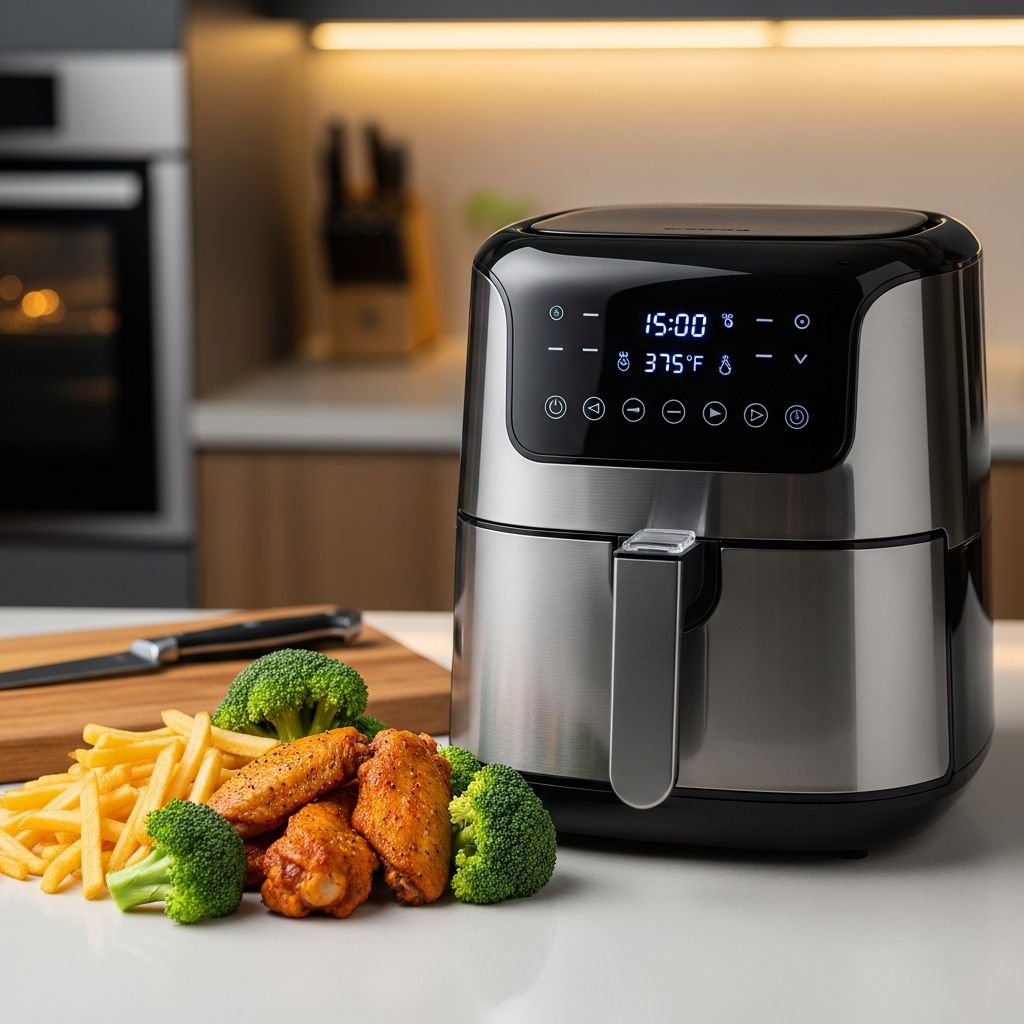
Air fryers have become one of the most popular small appliances because they deliver crispy, browned food with a fraction of the oil used in deep frying. At their core, air fryers are compact convection ovens that circulate very hot air around food placed in a basket or tray, creating a crunchy exterior and tender interior. This guide explains how to get started, how to understand and use the controls, and how to choose the right settings for common foods.
If you are new to air frying, learning the fundamental settings, safety rules, and best practices will help you get consistent, reliable results from day one.
Table of Contents
- How Air Fryers Work
- Getting Started with Your Air Fryer
- Control Panel and Common Buttons
- Understanding Temperature and Time
- Presets and Common Cooking Settings
- Essential Air Fryer Cooking Principles
- Safety, Cleaning, and Maintenance
- Beginner-Friendly Foods and Sample Settings
- Troubleshooting Common Problems
- Frequently Asked Questions (FAQs)
- Conclusion
How Air Fryers Work
An air fryer uses a powerful heating element and a high-speed fan to move hot air rapidly around your food. Food sits in a perforated basket or tray so that hot air can reach all surfaces, allowing it to brown and crisp more efficiently than in a standard oven.
This design has several important implications for how you cook:
- Food cooks faster than in a conventional oven, so recipes often need reduced time.
- Less oil is required; a light coating or spray is usually enough for crisp results.
- Good airflow is crucial; overcrowding the basket can prevent even browning.
Getting Started with Your Air Fryer
Initial Setup and First Use
Before cooking your first batch of food, you should unpack, clean, and run the appliance once while empty, as many manufacturers recommend.
- Unbox the fryer and remove all packaging materials from inside and around the basket.
- Wash removable parts (basket, crisper plate, tray) in warm soapy water and dry thoroughly.
- Place the unit on a flat, heat-safe, stable surface with space around it for ventilation.
- Plug the appliance into a properly grounded outlet and ensure the basket is fully inserted.
Running a Burn-Off Cycle
New air fryers sometimes emit a light odor from manufacturing residues during the first run. Many experts recommend a short, high-temperature cycle with an empty basket to help burn off these residues.
- Set the temperature to about 400°F (200°C).
- Set the time for 10–15 minutes.
- Allow it to run with an empty basket, then cool completely before wiping the interior with a damp cloth.
Basic First-Time Cooking Steps
Once the initial setup is complete, you are ready to cook:
- Prep your ingredients (cut to even size, pat dry, and lightly oil and season if desired).
- Place food in the basket in a single layer, avoiding overcrowding.
- Set temperature and time or select an appropriate preset for the food.
- Start the cooking cycle and shake or flip as needed for even browning.
- Check doneness with a food thermometer for meats to ensure safe internal temperatures.
Control Panel and Common Buttons
Control layouts vary by brand, but most modern air fryers use a digital touchscreen or a combination of buttons and dials. Recognizing each control helps you avoid mistakes and use the appliance efficiently.
Typical Buttons and Indicators
- Power button: Turns the unit on or off and may start or stop a cycle.
- Temperature control: Buttons or a dial to increase or decrease cooking temperature.
- Time control: Buttons or a dial to set or adjust the cooking duration.
- Preset programs: Icons for fries, chicken, fish, steak, vegetables, and more; each applies pre-set time and temperature.
- Start / pause: Begins or pauses a cooking cycle without turning off the unit completely.
- Preheat indicator: Some models preheat automatically and display a prompt such as “Add Food” when ready.
Analog vs Digital Controls
| Control Type | Characteristics | Best For |
|---|---|---|
| Analog (dials) | Simple knobs for time and temperature; fewer presets; easier to operate but less precise. | Users who prefer basic, manual control and minimal menus. |
| Digital (touchscreen) | Buttons, display, multiple presets, timer countdown, preheat prompts, and sometimes shake reminders. | Users who want accuracy, flexibility, and guided programs. |
Understanding Temperature and Time
Time and temperature are the two most important controls for getting good results from an air fryer.
Typical Temperature Range
Most basket-style air fryers allow settings from about 175–400°F (80–200°C). Lower temperatures are used for reheating, dehydrating, or more delicate foods, while higher temperatures are used for roasting and crisping.
Adjusting Oven Recipes for Air Frying
When converting a conventional oven recipe to an air fryer, a common rule of thumb is:
- Reduce the temperature by about 25°F (roughly 10–15°C).
- Start checking for doneness about 20–30 percent earlier than the original oven time.
Because air fryers circulate air more efficiently in a small space, food often browns and cooks faster than in a full-sized oven.
Typical Time and Temperature Ranges by Food Type
The following table gives example ranges often used in air fryer recipes; you should always consult your manual and specific recipes for precise guidance.
| Food Type | Approx. Temperature | Approx. Time | Notes |
|---|---|---|---|
| Frozen fries | 375–400°F (190–200°C) | 10–18 minutes | Shake halfway for even browning. |
| Chicken wings | 375–400°F (190–200°C) | 18–25 minutes | Flip halfway; cook to safe internal temperature. |
| Chicken breasts | 360–380°F (180–193°C) | 15–20 minutes | Time varies with thickness; check internal temperature. |
| Fish fillets | 350–375°F (175–190°C) | 8–12 minutes | Use a light oil spray for crisp coating. |
| Vegetables (e.g., Brussels sprouts) | 375–400°F (190–200°C) | 10–18 minutes | Toss in a little oil; shake basket midway. |
| Reheating pizza | 350°F (175°C) | 3–6 minutes | Preheat first for best results. |
Presets and Common Cooking Settings
Many air fryers include preset buttons that automatically choose a time and temperature combination for popular foods. While these can be helpful starting points, you can always customize time or temperature manually to suit your tastes or particular recipe.
Typical Preset Programs
- Fries / chips: High heat (around 390–400°F) for 10–20 minutes, often with a shake reminder midway.
- Chicken: Medium-high heat (around 360–380°F) with enough time to reach safe internal temperature.
- Fish: Slightly lower temperature and shorter time to prevent drying out.
- Steak / meat: High temperature with shorter time windows; internal temperature monitoring is still essential.
- Vegetables: High heat with moderate time; shaking ensures even caramelization.
Manual vs Preset Control
Some experienced users prefer manual settings for greater precision, especially as you learn how your specific model behaves. Presets are helpful when you are just starting, but not all foods or batch sizes will match the preset assumptions, so you should still visually check the food and adjust as needed.
Essential Air Fryer Cooking Principles
Regardless of brand, several basic techniques make the difference between soggy and crisp results.
Do Not Overcrowd the Basket
For the best texture, food should be in a single, loosely spaced layer so air can move around each piece. Overcrowding traps steam and can cause uneven or pale results.
Shake or Flip Halfway Through
For small items like fries or Brussels sprouts, shaking the basket midway through cooking exposes new surfaces to the hot air and promotes uniform browning. For larger items such as pork chops or chicken, flipping halfway helps both sides cook evenly.
Dry Food Before Adding Oil
Moisture on the surface of foods reduces crisping. Pat ingredients dry with a kitchen towel or paper towel before adding oil and seasonings. This is especially important for items like marinated meats or vegetables that have been rinsed.
Use the Right Amount of Oil
Air fryers are designed to work with little or no oil, but a small amount of fat improves browning and flavor. Excess oil, especially in fatty foods like bacon, can smoke if the temperature exceeds the fat’s smoke point. A thin coating, spray, or brush of oil is usually sufficient.
Preheating Considerations
Some models automatically preheat, while others require you to set a separate preheat cycle. Preheating can improve browning and reduce overall cooking time, especially for foods that need a crisp exterior. If you skip preheating, you may need to add a few extra minutes to the cooking time and may see slightly less browning.
Safety, Cleaning, and Maintenance
Safe Placement and Operation
- Operate the air fryer on a flat, heat-resistant surface with open space around the exhaust.
- Do not place it directly against a wall; hot air must vent freely.
- Keep cords away from hot surfaces and ensure children cannot pull or tip the unit.
- Do not fill the basket with oil; air fryers are not designed for deep frying.
Managing Smoke and Grease
Greasy foods can generate smoke if fat drips and burns or if temperatures exceed the fat’s smoke point.
- Cook high-fat foods like bacon at slightly lower temperatures (for example, around 350°F) to reduce smoke.
- Empty accumulated fat from the drawer between batches.
- Avoid placing the unit directly under low cabinets where smoke and steam can accumulate.
Cleaning After Use
Regular cleaning preserves performance and minimizes odors.
- Unplug and allow the fryer to cool completely after use.
- Wash the basket, tray, and other removable parts in warm soapy water or in the dishwasher if the manual states they are dishwasher-safe.
- Wipe the interior and heating element area gently with a damp cloth or nonabrasive sponge, following your manual’s instructions.
- Dry thoroughly before reassembling to prevent rust and maintain nonstick coatings.
Beginner-Friendly Foods and Sample Settings
Starting with simple convenience foods helps you build confidence before moving to more complex recipes.
Easy First Recipes
- Frozen French fries or potato wedges.
- Frozen chicken nuggets or tenders.
- Simple roasted vegetables (such as carrots, broccoli, or Brussels sprouts).
- Reheated pizza slices or leftover fries.
Example Basic Workflow for Frozen Fries
- Preheat the fryer to 380–400°F if recommended by your manual.
- Add fries in a single layer in the basket; lightly spray with oil if desired.
- Cook for about 10–15 minutes, shaking halfway.
- Check for color and crispness and add a few minutes if needed.
Example Basic Workflow for Roasted Vegetables
- Cut vegetables into even pieces and pat dry.
- Toss with a small amount of oil, salt, and seasonings.
- Air fry at about 375–400°F for 10–18 minutes, shaking once or twice for even browning.
- Check tenderness with a fork; continue cooking if needed in small increments.
Troubleshooting Common Problems
Food Is Not Crispy Enough
- Reduce crowding in the basket; cook in smaller batches.
- Increase temperature slightly or add a few extra minutes, checking frequently.
- Ensure food is well dried before adding oil and that a light coating of oil is used.
Food Is Browning Too Fast
- Lower the temperature by 10–25°F and increase time slightly so the inside can cook without burning the exterior.
- Shake or flip earlier in the cycle to redistribute heat.
Uneven Cooking or Pale Spots
- Shake or flip food halfway through cooking, and for larger batches, more than once.
- Make sure food pieces are similar in size and thickness.
- Confirm that the basket or tray is correctly seated so air can circulate properly.
Smoke or Burning Smell
- Check for excess grease in the drawer and clean if needed.
- Reduce temperature for high-fat foods such as bacon or sausages.
- Ensure you are not using aerosol sprays that contain propellants not recommended for nonstick surfaces.
Frequently Asked Questions (FAQs)
Q: Do I have to preheat my air fryer every time?
A: Many instruction manuals recommend preheating for best results, but some models preheat automatically and others allow you to skip it. Skipping preheat may slightly extend cooking time and can reduce browning, so you can test both methods and follow the one that matches your model and preferences.
Q: Can I open the basket while the air fryer is running?
A: Yes, most basket-style air fryers allow you to pull out the basket at any time to check food, shake, or flip it; the unit usually pauses automatically and resumes when the basket is reinserted.
Q: What kinds of cookware or liners can I use in an air fryer?
A: Manufacturers often recommend using the perforated basket or tray supplied with the unit to ensure proper airflow. Heat-safe, oven-safe dishes that fit within the basket can sometimes be used, but solid-bottom pans may slow down crisping. Many users also use parchment liners designed for air fryers, making sure they do not block vents.
Q: Can I cook battered foods in an air fryer?
A: Loose, wet batters tend to drip through the basket and can cause sticking or burning. Coated or breaded foods work better when the coating is pressed on and lightly sprayed with oil, while very wet batters are usually better suited to traditional deep frying.
Q: Is an air fryer healthier than deep frying?
A: Air fryers typically use significantly less oil than deep fryers while still producing crispy textures, which can reduce overall fat intake for similar foods. However, health impact also depends on what you cook and how often you eat fried-style foods.
Conclusion
Mastering air fryer cooking begins with understanding how the appliance works, how to set temperature and time, and how to use presets or manual controls to your advantage. With a fan and heating element that rapidly circulate hot air around a perforated basket, air fryers deliver crisp, browned results using much less oil than traditional frying.
New users benefit from simple, repeatable routines: preheating when recommended, avoiding crowded baskets, shaking or flipping food during cooking, and cleaning the appliance after each use. As you experiment with different temperatures, times, and food types, you will learn how your specific model behaves and how to adjust recipes to suit your taste.
A thoughtful, informed approach to settings, safety, and maintenance will help you use your air fryer with confidence, producing consistent results whether you are cooking frozen snacks, roasting vegetables, or reheating leftovers.
Similar Articles






Read full bio of Sneha Tete