All-Purpose Cleaners and Disinfection: Understanding the Key Differences
Learn how all-purpose cleaners, sanitizers, and disinfectants differ so you can choose and use them safely and effectively at home.
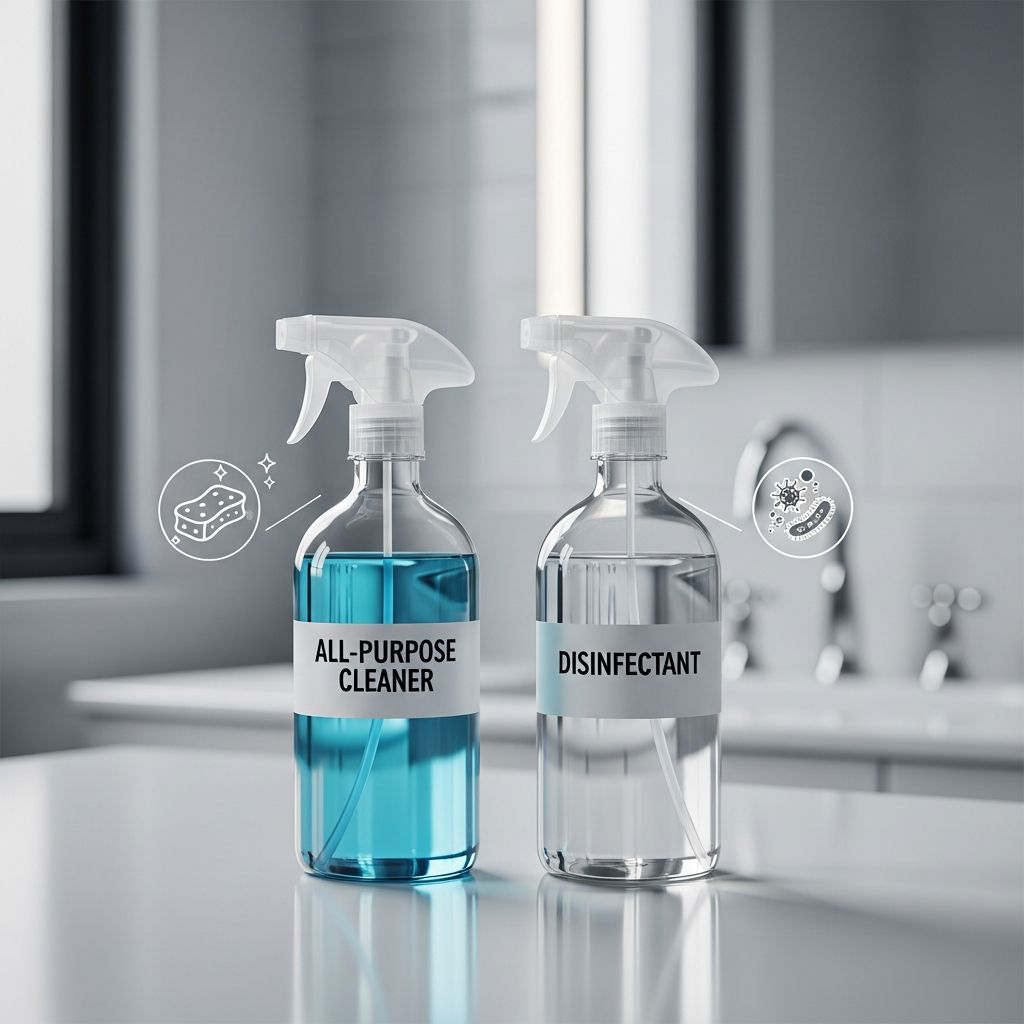
All-Purpose Cleaners and Disinfection: Understanding the Difference
Keeping homes, workplaces, and public spaces healthy depends on using the right products for the right job. Many people use the terms cleaning, sanitizing, and disinfecting interchangeably, but they are not the same. According to guidance from health and regulatory agencies, cleaners remove dirt and most germs, sanitizers reduce bacteria to safer levels, and disinfectants kill a wider range of viruses and bacteria on surfaces.
This article explains how all-purpose cleaners differ from sanitizing and disinfecting products, when each approach is appropriate, and how to use them safely and effectively as part of an overall hygiene strategy.
Table of Contents
- Cleaning vs. Sanitizing vs. Disinfecting
- What Are All-Purpose Cleaners?
- What Is Disinfection?
- Sanitizing Explained
- Key Differences at a Glance
- When to Use Cleaners, Sanitizers, or Disinfectants
- How to Use These Products Correctly
- Health and Environmental Considerations
- A Practical Home Cleaning and Disinfection Routine
- Frequently Asked Questions (FAQs)
- Conclusion
Cleaning vs. Sanitizing vs. Disinfecting
Understanding the distinction between cleaning, sanitizing, and disinfecting is the foundation for choosing the right product.
Cleaning
Cleaning is the process of physically removing dirt, organic matter, and many germs from surfaces using soap or detergents and water.
- Uses: all-purpose cleaners, detergents, soap and water.
- Action: loosens and lifts away dirt, grease, and many microbes so they can be wiped or rinsed off.
- Effect on germs: removes most germs but does not specifically kill them.
Cleaning is recommended as the first step before any sanitizing or disinfecting, because dirt and organic material can block chemical products from reaching microbes.
Sanitizing
Sanitizing lowers the number of microorganisms on surfaces to levels considered safe by public health standards.
- Target: primarily bacteria on non-porous surfaces; not designed to kill viruses.
- Performance: products marketed as sanitizers must reduce bacteria by at least 99.9% under test conditions.
- Regulation: in the United States, surface sanitizers are registered and regulated by the Environmental Protection Agency (EPA).
Disinfecting
Disinfecting uses chemicals to kill a broader range of microorganisms, including both bacteria and viruses, on hard surfaces.
- Target: bacteria and many viruses; some products are also tested against fungi, mold, and mildew.
- Performance: subject to more rigorous testing and must meet higher effectiveness standards than sanitizers.
- Regulation: surface disinfectants are EPA-registered antimicrobial pesticides.
Health authorities recommend disinfecting targeted surfaces when someone is sick or when people at higher risk of severe illness are present.
What Are All-Purpose Cleaners?
All-purpose cleaners are versatile products formulated to remove dirt, oils, and many germs from a variety of common household surfaces. They are primarily designed for cleaning, not necessarily for disinfection.
How All-Purpose Cleaners Work
Most all-purpose cleaners contain surfactants (soaps or detergents) that loosen soil and allow it to be wiped or rinsed away.
- They break up grease and grime so it detaches from surfaces.
- They help lift away dust, allergens, and many microbes along with visible dirt.
- They may contain solvents, builders, or mild acids/alkalis for specific soil types.
Cleaning alone can remove most harmful viruses and bacteria from surfaces when combined with proper scrubbing and rinsing.
What All-Purpose Cleaners Do Not Do by Default
Unless specifically formulated and labeled as a sanitizer or disinfectant, an all-purpose cleaner:
- Does not make claims about killing viruses.
- Is not tested or registered with the EPA as an antimicrobial pesticide.
- Should be assumed to remove, not necessarily kill, germs.
Some products combine cleaning with disinfection, but this must be clearly indicated on the label with an EPA registration number and specific germ claims.
Typical Uses of All-Purpose Cleaners
- Everyday cleaning of kitchen counters, tables, and cabinets.
- Bathroom sinks, exterior of toilets, and tubs when disinfection is not specifically required.
- Floors, walls, and other high-touch but not high-risk areas.
For most routine situations where no one is ill, health guidance indicates that thorough cleaning with soap and water or non-disinfectant cleaning products is sufficient.
What Is Disinfection?
Disinfection is a more intensive step that follows cleaning and is intended to kill pathogens that remain on surfaces.
How Disinfectants Work
Disinfectants contain active ingredients such as bleach (sodium hypochlorite), quaternary ammonium compounds (quats), alcohols, hydrogen peroxide, or other biocidal agents.
- They damage cell membranes, proteins, or genetic material of pathogens.
- Each disinfectant is tested against specific bacteria and viruses, which are listed individually on the product label.
- No single disinfectant kills all types of microorganisms; users must match the product to the target germ when possible.
Dwell Time (Contact Time)
Disinfectants are only effective if they remain visibly wet on the surface for the amount of time stated on the label, known as dwell time or contact time.
- Some products require 1 minute of wet contact; others require up to 10 minutes or more.
- Wiping surfaces dry too soon can prevent the disinfectant from achieving its claimed level of germ kill.
Regulation and Labeling
In the United States, surface disinfectants are regulated as antimicrobial pesticides by the EPA.
- They must pass strict laboratory tests showing effectiveness against specified organisms.
- Labels list active ingredients, organisms killed, required contact time, safety precautions, and directions for use.
Sanitizing Explained
Sanitizing is a middle step between basic cleaning and full disinfection.
What Sanitizers Do
Surface sanitizers are designed to reduce bacteria on surfaces by a defined percentage, typically at least 99.9% under specific conditions.
- They are not primarily designed to inactivate viruses.
- They are often used in food service, childcare settings, and other environments where reducing bacterial contamination to a safe level is required.
Where Sanitizers Are Commonly Used
- Food-contact surfaces such as cutting boards, utensils, and countertops (using food-safe sanitizers).
- Non-porous surfaces in childcare centers and schools.
- Environments that require regular reduction of bacteria but where full disinfection is not always necessary.
Key Differences at a Glance
| Action | What it does | Typical products | Regulation | When it is recommended |
|---|---|---|---|---|
| Cleaning | Removes dirt, organic matter, and many germs from surfaces. | All-purpose cleaners, soap and water, detergents. | Not regulated by EPA unless making sanitizing or disinfecting claims. | Everyday housekeeping and first step before sanitizing or disinfecting. |
| Sanitizing | Lowers the number of bacteria to public health standards; not targeted at viruses. | Surface sanitizers, some food-contact sprays and solutions. | EPA-registered antimicrobial pesticides. | Food-prep areas, childcare settings, and other areas requiring reduced bacterial levels. |
| Disinfecting | Kills bacteria and viruses on surfaces using chemicals. | Bleach solutions, quats, disinfectant sprays and wipes. | EPA-registered antimicrobial pesticides with higher testing requirements. | When someone is sick, after bodily fluid spills, or in high-risk settings. |
When to Use Cleaners, Sanitizers, or Disinfectants
Choosing between an all-purpose cleaner, sanitizer, or disinfectant depends on the situation, the type of surface, and who is using the space.
When All-Purpose Cleaning Is Enough
For most day-to-day situations, cleaning alone is adequate to maintain a healthy environment.
- No one in the home or workplace is sick.
- Surfaces are not visibly contaminated with blood, bodily fluids, or raw meat juices.
- Users are generally healthy and not at high risk of severe illness.
Regular cleaning removes most germs and the dirt, dust, and oils that harbor them. This approach minimizes unnecessary exposure to stronger chemicals.
When Sanitizing Is Appropriate
- Routine treatment of food-contact surfaces where safe bacterial levels are important, using an appropriate food-safe sanitizer.
- Childcare environments, especially items that children frequently touch or put in their mouths (following product label directions).
- Shared spaces where reducing bacteria is important but full disinfection is not needed.
When Disinfecting Is Recommended
Disinfection is an additional step used selectively, not continuously, in most households.
- When someone in the home is sick with an infectious disease.
- When caring for individuals with weakened immune systems or high risk of complications.
- After cleaning blood, vomit, or other bodily fluid spills.
- On high-touch surfaces in high-traffic public settings, according to institutional protocols.
Even in these cases, surfaces should be cleaned first, then treated with an appropriate EPA-registered disinfectant following label instructions.
How to Use These Products Correctly
Proper technique is as important as product choice. Misuse can reduce effectiveness or increase risks.
Step-by-Step: Using an All-Purpose Cleaner
- Read the label for surface compatibility and dilution instructions.
- Remove loose crumbs and debris from the surface.
- Apply the cleaner directly or onto a cloth or sponge.
- Scrub the surface to loosen soil and residues.
- Wipe away with a clean cloth; rinse if the label recommends it, especially on food-contact areas.
This process removes dirt, many allergens, and most germs from the surface.
Step-by-Step: Cleaning and Disinfecting
- Clean first with an all-purpose cleaner or soap and water to remove visible dirt.
- Rinse or wipe away any cleaner residue if the product label requires it.
- Apply an EPA-registered disinfectant to the precleaned surface.
- Ensure the surface remains visibly wet for the full labeled contact time.
- Allow to air dry or wipe if the label allows; for food-contact surfaces, follow any required rinse directions before use.
Reading Product Labels
Key details to look for on cleaner, sanitizer, and disinfectant labels include:
- Whether the product is a cleaner only or also a sanitizer/disinfectant.
- EPA registration number for products that sanitize or disinfect surfaces.
- List of organisms (bacteria and viruses) the product is proven to control.
- Required contact time to achieve those claims.
- Surface types (porous vs non-porous) and materials for which use is approved.
- Safety precautions, such as ventilation, gloves, and eye protection.
Health and Environmental Considerations
While disinfectants are effective, overuse and misuse can have downsides.
Potential Risks of Overusing Disinfectants
- Repeated use of harsh chemicals can irritate skin, eyes, and respiratory systems.
- Some disinfectants contain quaternary ammonium compounds (“quats”), which are pesticides and have been associated with respiratory irritation and other health concerns.
- Overuse of certain disinfectants may contribute to the emergence of microbes that are harder to kill.
Public health guidance emphasizes prioritizing cleaning and reserving disinfection for times when it is truly needed, such as illness or high-risk situations.
Safer Practices
- Favor regular cleaning with all-purpose cleaners or soap and water for routine maintenance.
- Ventilate spaces well when using strong products.
- Follow dilution instructions exactly; more product is not necessarily better and can be more hazardous.
- Store all chemicals out of reach of children and pets and in original containers.
A Practical Home Cleaning and Disinfection Routine
Combining everyday cleaning with targeted disinfection can maintain a healthy home without unnecessary chemical exposure.
Everyday Routine
- Kitchen: Wipe counters, tables, and stove surfaces with an all-purpose cleaner after food preparation. Clean sinks regularly.
- Bathroom: Use all-purpose cleaner for sinks, counters, and the outside of toilets. Clean showers and tubs on a schedule based on usage.
- Living areas: Dust and clean high-touch surfaces such as doorknobs, remotes, and light switches with a cleaner unless someone is sick.
- Floors: Sweep or vacuum and then mop with an appropriate floor or all-purpose cleaner where suitable.
During Illness or Higher-Risk Situations
- Continue regular cleaning with all-purpose products.
- After cleaning, disinfect high-touch surfaces in the sick person’s area, such as bed rails, bedside tables, and bathroom fixtures, following product labels carefully.
- Handle tissues, laundry, and waste according to public health recommendations, washing hands thoroughly afterward.
Frequently Asked Questions (FAQs)
Q: Is an all-purpose cleaner the same as a disinfectant?
A: No. An all-purpose cleaner is designed to remove dirt and many germs from surfaces, but it does not necessarily kill bacteria or viruses unless the label clearly states sanitizing or disinfecting claims and includes an EPA registration number.
Q: Do I need to disinfect my home every day?
A: For most households, daily disinfection is not necessary. Public health guidance indicates that regular cleaning with soap and water or non-disinfectant cleaners is enough for routine situations, and disinfection is recommended mainly when someone is sick or at higher risk of severe illness.
Q: Can I clean and disinfect in a single step?
A: Some products are formulated and registered as both cleaners and disinfectants, but they must be used exactly as directed, including respecting the specified contact time. If a product is only labeled as a cleaner, it should not be assumed to disinfect.
Q: Is sanitizing enough for cutting boards and kitchen counters?
A: In many food-preparation settings, the recommended approach is to clean first and then sanitize with an appropriate food-contact sanitizer. Sanitizers are designed to reduce bacteria to safe levels on non-porous food-contact surfaces.
Q: Are natural or green all-purpose cleaners effective?
A: Many non-disinfectant or “green” cleaners are effective at removing dirt and most germs, especially with thorough scrubbing and rinsing. However, unless they are EPA-registered and labeled as sanitizers or disinfectants, they should be considered cleaners only and not relied upon to kill specific pathogens.
Conclusion
All-purpose cleaners, sanitizers, and disinfectants each play distinct roles in maintaining safe and healthy environments. All-purpose cleaners excel at removing dirt, organic material, and many germs, making them suitable for routine household maintenance. Disinfectants and sanitizers, in contrast, are specialized tools for reducing or killing microbes to defined levels and should be used purposefully and according to label instructions.
Using these products effectively starts with recognizing that cleaning is the essential first step: it removes the debris that can shield germs from chemical action. Sanitizing and disinfecting then build on that foundation, particularly when illness is present, higher-risk individuals are involved, or regulatory requirements call for more intensive microbial control.
A balanced approach that emphasizes regular cleaning with all-purpose products, combined with targeted use of sanitizers and disinfectants when conditions warrant, supports both health protection and reduced chemical exposure. Understanding the differences enables more informed decisions about which product to choose, how to apply it safely, and when a simple thorough cleaning is all that is needed.
Similar Articles



Read full bio of Sneha Tete