Blending Techniques for Better Results: Mastering Layering, Liquid Ratios, and Timing
Understand how layering, liquid ratios, and timing work together to create smoother, cleaner, and more controlled blended artwork in any medium.
Blending Techniques for Better Results: Layering, Liquid Ratios, and Timing
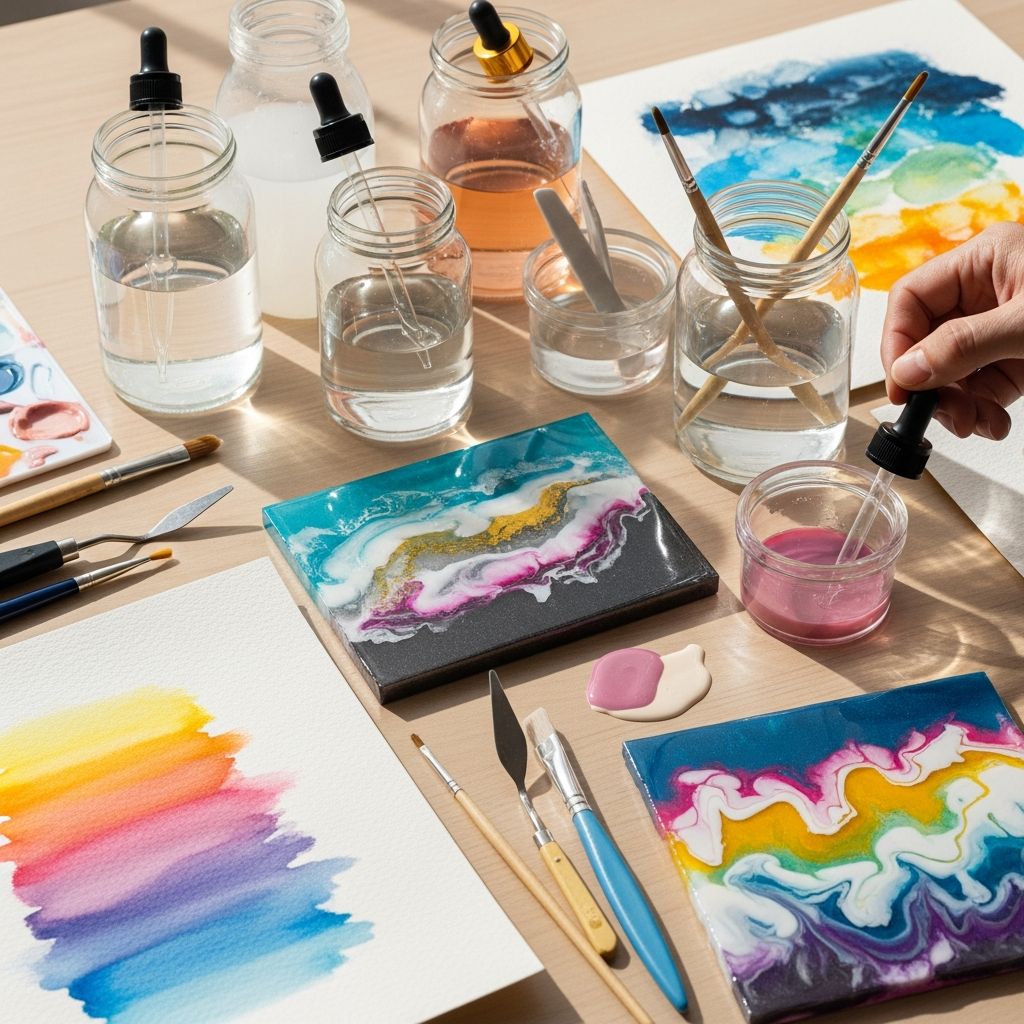
Blending is at the heart of many visual art styles, from soft watercolor skies and creamy acrylic gradients to polished colored pencil portraits. Effective blending depends on three core elements working together: thoughtful layering, appropriate liquid ratios, and precise timing. Mastering how these factors interact will dramatically improve the smoothness, control, and consistency of your blends across different mediums.
Table of Contents
- Overview: Why Blending Quality Depends on Process
- Layering Fundamentals: Building Smooth Transitions
- Liquid Ratios: Controlling Flow, Coverage, and Transparency
- Timing: Working With Drying and Working Time
- Medium-Specific Approaches to Blending
- Common Blending Mistakes and How to Fix Them
- Practice Frameworks and Step-by-Step Exercises
- Frequently Asked Questions (FAQs)
- Conclusion
Overview: Why Blending Quality Depends on Process
Blending is more than rubbing two colors together. It is a controlled process that balances pigment, moisture or medium, and time. In painting, the ratio of water or medium to paint significantly affects working time, opacity, and how smoothly colors merge. In drawing media such as colored pencil or pastel, layering density, pressure, and timing of burnishing or solvent use serve a similar role to liquid ratios in paint.
Across mediums, three factors consistently determine blending quality:
- Layering: How many layers you build, how light or heavy each layer is, and the order of colors.
- Liquid ratios: The proportion of water or medium to pigment in paints and inks, or solvent-to-pigment in some dry media.
- Timing: When you blend (wet-on-wet, wet-on-dry, semi-dry) relative to the working and drying time of the material.
Understanding each component separately, then combining them intentionally, gives you repeatable, predictable blending instead of accidental results.
Layering Fundamentals: Building Smooth Transitions
Layering is the process of applying multiple passes of color or tone, gradually moving from one value or hue to another. In many blending methods, especially in colored pencil or glazing with paint, layering itself creates the blend without heavy smudging or aggressive mixing.
Core Principles of Effective Layering
- Work from light to dark: Lighter colors are easier to overwhelm; starting with them gives you more control and cleaner transitions.
- Use light pressure for early layers: Whether with brush or pencil, lighter applications avoid streaks and allow more layers without muddying.
- Increase saturation gradually: Build up intensity with several thin or transparent layers instead of one thick pass.
- Overlap generously: Let each new color slightly overlap the previous one to create a soft gradient rather than a harsh boundary.
- Change direction between layers: In drawing, altering stroke direction between layers helps fill gaps and unify texture.
Layering in Paint-Based Blending
In acrylics and oils, layering often combines with glazing or scumbling to create depth. Light, semi-transparent layers allow underlying colors to show through, producing smooth optical blends. Thick, opaque layers create more immediate coverage but require careful timing to avoid lifting or muddying the paint beneath.
Layering in Dry Media
For colored pencils or pastels, layering is the primary blending mechanism. Artists often use many light layers rather than a few heavy ones, building the blend through repeated passes of nearby hues. Once the paper tooth fills, burnishing or a solvent can fuse the layers into a more paint-like surface.
Liquid Ratios: Controlling Flow, Coverage, and Transparency
Liquid ratios describe how much water or medium you add to paint. The ratio strongly influences working time, viscosity, transparency, and how easily colors mix or blend. Too much liquid and the pigments can separate or become streaky; too little and the paint can drag, skip, or be difficult to blend.
Typical Ratio Ranges and Effects
| Consistency | Approximate Ratio (Liquid : Paint) | Characteristics | Best Uses in Blending |
|---|---|---|---|
| Thick / Paste | 0–10% liquid | High coverage, strong brush marks, limited flow | Impasto accents, minimal blending, textured edges |
| Creamy | 10–30% liquid | Good coverage, smooth brushwork, controllable blending | General soft blending, gradients, layering |
| Milky / Fluid | 30–50% liquid | Translucent, flows easily, softer edges | Glazing, subtle overlays, wet-on-wet transitions |
| Watery / Wash | 50%+ liquid | Very transparent, staining potential, less control | Underpainting, atmospheric washes, watercolor effects |
Finding the Right Starting Ratio
For many acrylic and watercolor applications, a starting point of roughly 20% liquid to 80% paint is commonly recommended for general smooth blending. From there, you adjust based on your desired effect:
- Increase liquid for softer, more transparent transitions.
- Decrease liquid for more opaque, controlled blends with clean edges.
- Use dedicated mediums instead of plain water when working heavily diluted with acrylics, to maintain binder strength and avoid fragile films.
Media-Specific Liquid Considerations
Different mediums react differently to liquid ratios:
- Acrylics: Too much water can weaken the paint film; acrylic mediums extend working time and transparency more safely.
- Watercolor: The paint is designed to be heavily diluted; varying water-to-pigment ratios creates distinct consistencies often described as thick, creamy, milky, or watery.
- Oils: Liquid refers to solvents and mediums; too much solvent can make paint chalky, while too much oil can lead to wrinkling or very slow drying. The “fat over lean” rule governs layering.
- Colored pencil and pastel: “Liquid” may be a solvent or blending fluid; use sparingly to avoid damaging paper or over-saturating pigment.
Timing: Working With Drying and Working Time
Timing determines whether your blend relies on mechanical mixing (wet-on-wet) or optical layering (wet-on-dry). Each medium has a different working time before it sets or becomes difficult to manipulate.
Key Timing Concepts
- Working time: The period during which the paint or medium remains workable on the surface.
- Setting time: When the surface becomes touch-dry or resistant to further blending.
- Wet-on-wet: Blending colors while both are still wet or fluid.
- Wet-on-dry: Applying and blending a new layer over a fully or mostly dry layer.
How Timing Affects Blending Style
- Early (very wet) blending: Produces soft, broad merges but can become muddy if overworked.
- Semi-dry blending: Allows more control; you can soften edges without completely mixing the colors.
- Fully dry blending: Relies on glazing, scumbling, or adding new layers rather than smearing existing ones.
Adjusting Timing in Practice
- Use slower-drying mediums or retarders with acrylics to extend working time for large gradients.
- Work in smaller sections if your paint or ink dries quickly.
- Switch to glazing (thin transparent layers over dry paint) when the surface is no longer workable wet-on-wet.
- In dry media, begin blending or burnishing only after establishing sufficient layers of pigment; too early and you flatten the texture before achieving depth.
Medium-Specific Approaches to Blending
Each medium requires adjustments to layering, liquid ratios, and timing. The principles stay the same, but the implementation changes.
Acrylic Paint
- Layering: Use multiple thin layers; start with a light base layer for easier blending.
- Liquid ratios: Aim for creamy to milky consistencies for blending; add small amounts of water or acrylic medium to extend working time.
- Timing: Acrylics dry quickly; blend in small sections or use slow-dry mediums for larger areas.
- Useful techniques:
- Horizontal or vertical wet-on-wet strokes for skies and gradients.
- Circular blending for round forms like sun, moon, or orbs.
- Double-load blending (two colors on one brush) for texture in grass, water, or foliage.
Watercolor
- Layering: Use transparent washes, building slowly with glazes once each layer is dry.
- Liquid ratios: Water control is critical; watery mixes for broad washes, creamy or milky mixes for controlled edges and overlays.
- Timing: Blend while paper is damp, not dripping; wet-on-wet for soft blends, wet-on-dry for sharp shapes with later softening.
- Useful techniques:
- Graded washes that shift from intense to diluted color.
- Charging in a second color while the first wash is still moist.
- Glazing with milky mixes over dry layers to unify colors.
Oil Paint
- Layering: Work from lean (less oil) to fat (more oil) layers to avoid cracking.
- Liquid ratios: Adjust solvent and medium to control flow; thicker paint for underlayers, richer medium for top glazes.
- Timing: Long working time allows extensive on-canvas mixing and softening; allow sufficient drying between glazes.
- Useful techniques:
- Soft brush or finger blending for smooth transitions.
- Scumbling: lightly dragging lighter opaque paint over darker dry layers.
- Glazing with transparent colors to adjust hue and depth.
Colored Pencils and Pastels
- Layering: Many light layers are more effective than a few heavy ones for smooth blends.
- “Liquid ratios”: Solvents (like odorless mineral spirits for some pencils) act as your liquid, dissolving binder and fusing layers.
- Timing: Apply solvent only after building sufficient pigment; let it dry completely before adding more layers.
- Useful techniques:
- Burnishing with a colorless blender or light-colored pencil.
- Solvent blending for a paint-like finish on rich layers.
- Soft tools or fingers for pastel blending, followed by fixative as needed.
Common Blending Mistakes and How to Fix Them
Most blending problems come from imbalances in layering, liquid ratios, or timing. Recognizing the cause makes the fix straightforward.
Over-Blending and Muddy Colors
- Problem: Colors lose vibrancy and turn gray or brown.
- Causes:
- Too much mechanical mixing on the surface.
- Using complementary colors directly together without planning.
- Working into paint that is already partially set.
- Fix:
- Stop earlier and rely more on layered glazes instead of prolonged scrubbing.
- Choose neighboring colors on the color wheel for smoother blends.
- Let areas dry completely, then adjust with transparent overlays.
Streaky or Patchy Blends
- Problem: Visible stripes, brush marks, or uneven coverage.
- Causes:
- Paint too thick or too dry for the blending area.
- Too few layers to fully cover the surface.
- Inconsistent pressure or direction in strokes.
- Fix:
- Increase liquid slightly to achieve a creamy or milky consistency.
- Add more thin layers, changing the direction of each pass.
- Use a softer, clean brush for final smoothing while paint is still workable.
Cauliflower Blooms and Backruns (Watercolor)
- Problem: Unintended blossoms or tide marks in washes.
- Causes:
- Adding a wetter wash into an area that is drying but still damp.
- Uneven water distribution on the paper.
- Fix:
- Either work into very wet areas or wait until fully dry before re-wetting.
- Keep a tissue or dry brush handy to lift excess water at the edges of washes.
Lifted or Damaged Underlayers
- Problem: New blending lifts or scratches previous layers.
- Causes:
- Working too aggressively on partially dry acrylic or watercolor.
- Pressing too hard too early with colored pencils.
- Fix:
- Allow full drying time before glazing or additional blending.
- Reduce pressure until enough pigment is built on the surface.
- Use softer tools or blending mediums instead of heavy scrubbing.
Practice Frameworks and Step-by-Step Exercises
Deliberate, structured practice is the most reliable way to understand how layering, liquid ratios, and timing interact. The following exercises create a controlled environment to test different combinations.
Exercise 1: Layered Gradient Bars (Any Paint Medium)
- Choose two colors that sit next to each other on the color wheel (for example, blue and green).
- Draw several long rectangles on your surface.
- In each rectangle, create a gradient from Color A to Color B using different liquid ratios (for example, thick, creamy, milky).
- Note how coverage, smoothness, and drying time change with each consistency.
- After drying, add glazes on top to refine transitions and observe how layering affects depth.
Exercise 2: Timing Strips (Fast-Drying Paint or Ink)
- Paint a solid band of one color.
- At set intervals (for example, 30 seconds, 1 minute, 3 minutes), attempt to blend a second color into the first band.
- Observe when blending is easiest, when it starts to drag, and when only glazing is effective.
- Record approximate working time for your paint and environment.
Exercise 3: Dry Media Layering and Burnishing (Colored Pencils)
- Pick two compatible colors, such as red and orange.
- In one test area, apply heavy pressure immediately and try to blend the two colors.
- In a second area, apply multiple light layers, alternating colors and direction.
- Once several layers are down, use a colorless blender or a light pencil to burnish.
- Compare smoothness, control, and color richness between the two methods.
Frequently Asked Questions (FAQs)
Q1: How much water or medium should I add to my paint for blending?
There is no single perfect ratio, but a common starting point for smooth blending is around 20% liquid to 80% paint for acrylics or gouache, adjusted as needed. If you want softer, more transparent blends, increase the liquid gradually until you reach a milky consistency. If you need stronger coverage and sharper edges, keep the mix closer to creamy with less added liquid.
Q2: Is it better to blend while the paint is wet or after it dries?
Both approaches work, but they create different looks. Wet-on-wet blending gives very soft, diffused transitions and is ideal for skies, clouds, and atmospheric effects. Wet-on-dry blending relies on layering and glazing, producing more controlled and often more vibrant results. Many artists combine both, starting wet-on-wet for broad shapes, then refining with glazes once layers are dry.
Q3: How do I avoid muddy colors when blending?
Use colors that are close on the color wheel, limit the number of hues involved in a single blend, and avoid overworking the same area. If you need strong contrast, separate complements with a middle color or a layer of neutral instead of mixing them aggressively on the surface. Allow layers to dry before adjusting hues with transparent glazes rather than continuous scrubbing.
Q4: What is the best way to practice layering for smoother blends?
Practice controlled gradient studies: choose two colors and repeatedly create bars that transition from one to the other, focusing on light pressure, multiple layers, and consistent stroke direction. Over time, add variations in liquid ratio and timing so you can see exactly how each variable changes the result.
Q5: Can the same blending techniques be used for all mediums?
The underlying principles of layering, controlling fluidity, and timing are universal, but the exact methods vary by medium. For example, watercolor depends heavily on water and paper wetness, acrylics benefit from mediums that slow drying, oils offer long working times, and colored pencils rely on pressure and solvent rather than water. Adapting the core ideas to your chosen medium is the key to success.
Conclusion
Consistently smooth, controlled blends do not come from a single special brush or secret product, but from understanding how layering, liquid ratios, and timing work together. When you deliberately control how thick or thin your paint is, how many layers you build, and exactly when you blend relative to drying, your results become predictable rather than accidental.
Across painting and drawing mediums, the same pattern emerges: lighter early layers, carefully chosen moisture or medium levels, and attention to working time create cleaner gradients and richer color. By practicing simple exercises that isolate each factor, you build an intuitive sense of how they interact and learn to adjust quickly as conditions change.
Over time, this combination of structural layering, calibrated liquid ratios, and purposeful timing forms a reliable framework you can apply to any subject or style, allowing your ideas to be expressed with greater clarity and refinement in every blended passage of your artwork.
Similar Articles






Read full bio of Sneha Tete