
Boiler Flues and Venting Explained: Types, Safety Essentials and Placement Rules
Understand boiler flue types, venting categories, safety requirements and placement rules so your heating system stays efficient and code-compliant.
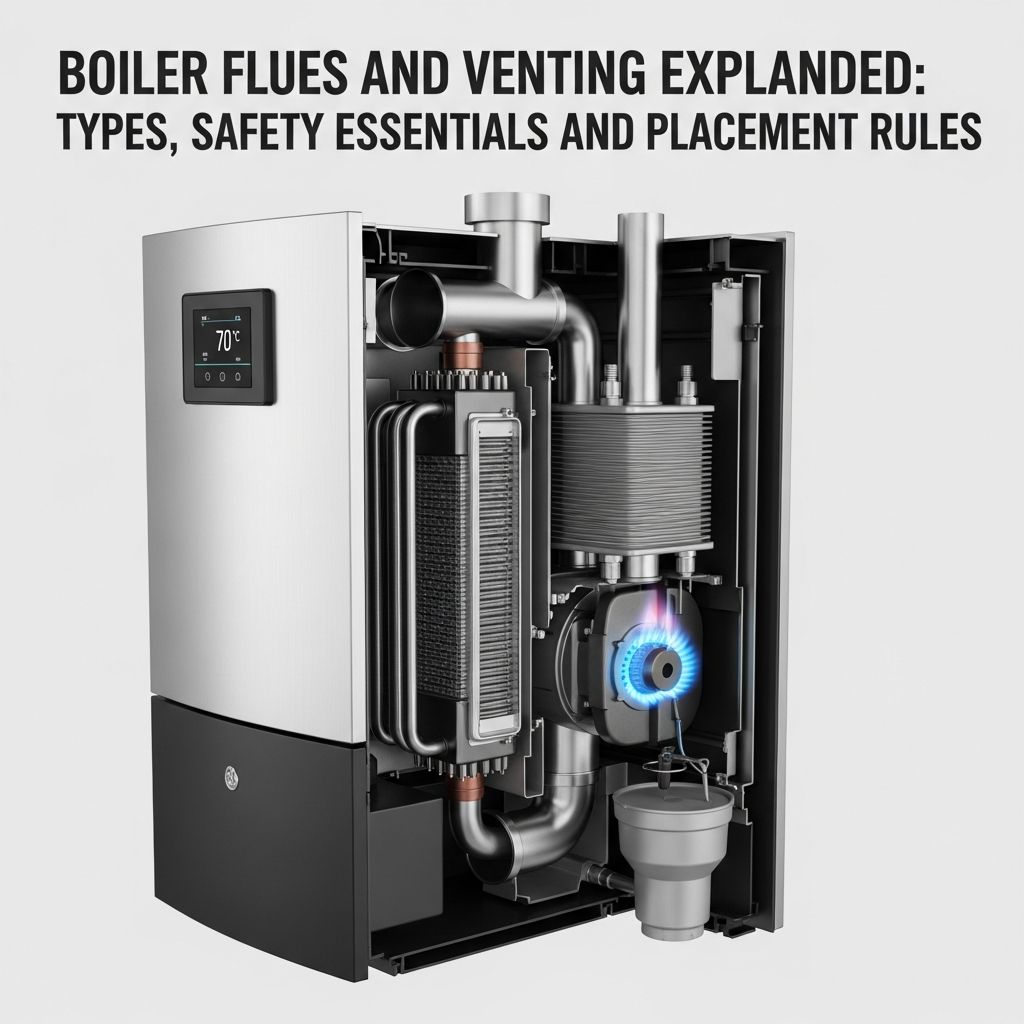
Boiler Flues and Venting Explained
Boiler flues and venting systems are critical safety components that remove combustion gases, moisture and by-products from a boiler to the outside atmosphere. The flue is typically a pipe or duct that connects the boiler’s combustion chamber to the outdoors, safely discharging gases such as carbon monoxide that must never accumulate indoors. Proper design, materials and placement are essential to efficiency, equipment life and occupant safety.
Table of Contents
- What Is a Boiler Flue?
- How Boiler Flues and Venting Systems Work
- Flue Types by Orientation: Horizontal vs Vertical
- Open, Closed, Balanced and Fanned Flues
- Twin-Flue and Direct Vent Arrangements
- Boiler Vent Categories (I–IV) and Typical Uses
- Flue Materials for Condensing and Non-Condensing Boilers
- Placement Rules and Clearance Requirements
- Key Safety Risks and How to Reduce Them
- Inspection, Maintenance and Warning Signs
- Choosing the Right Flue and Venting Approach
- Conclusion
- Frequently Asked Questions (FAQs)
What Is a Boiler Flue?
A boiler flue is a dedicated passage that carries hot combustion products and water vapour from the boiler burner to a safe discharge point outside the building envelope. In most modern domestic systems, the flue is a rigid or semi-rigid pipe that passes through an external wall or roof and terminates with a terminal or cowl that directs gases away from the building.
Key functions of a boiler flue include:
- Safely removing combustion gases (including carbon monoxide and nitrogen oxides) from living spaces.
- Protecting the boiler from re-circulation of flue gases, which can damage components and reduce efficiency.
- Maintaining stable combustion by controlling draft and air supply to the burner.
- Managing condensate in condensing boilers so acidic moisture is drained and does not corrode the vent system.
How Boiler Flues and Venting Systems Work
Boiler venting systems operate either by natural draft, induced draft or forced draft, depending on appliance design and vent category.
Basic steps in flue operation:
- The burner combusts gas or oil, producing hot gases and water vapour inside the combustion chamber.
- These gases enter the flue, which may be a single pipe or a concentric/twin-pipe system.
- Draft (natural buoyancy or fan-assisted pressure) moves gases through the vent to outdoors.
- In condensing boilers, heat exchangers cool the gases below the dew point, causing water vapour to condense; condensate is drained via a separate line and the cooler exhaust is vented through corrosion-resistant materials.
Natural-draft systems rely on the temperature difference between hot flue gases and cooler outdoor air to create upward movement, while fan-assisted (fanned) systems use a mechanical fan to push or pull gases through the flue, allowing longer runs and more flexible routing.
Flue Types by Orientation: Horizontal vs Vertical
Flues are often described by how they exit the building: horizontally through a wall or vertically through a roof. The core function is the same; only the routing and termination differ.
| Aspect | Horizontal Boiler Flue | Vertical Boiler Flue |
|---|---|---|
| Typical route | Through an external wall behind or near the boiler. | Upward through ceilings and roof to outside. |
| Common use | Most standard wall-hung domestic boilers on external walls. | Boilers in internal rooms, basements or where wall exit is impractical. |
| Complexity | Usually simpler and cheaper to install. | More complex, may require roof flashings and extra support. |
| Draft behavior | Often fan-assisted in modern room-sealed boilers. | Can support natural draft in some systems; often also fan-assisted. |
Horizontal flues are generally preferred for straightforward installations due to ease of routing and inspection. Vertical flues are common on oil boilers, external boilers and internal plant rooms, or where regulations prevent a low-level side-wall terminal.
Open, Closed, Balanced and Fanned Flues
Flues are also classified by how they interact with the combustion air supply and the room.
Open (Conventional) Flues
An open or conventional flue draws combustion air from the room containing the appliance and uses a draught diverter to channel combustion products into a flue that vents outdoors.
- Air for combustion is taken from the boiler’s surroundings, so permanent ventilation openings are required in the room.
- Insufficient ventilation can lead to incomplete combustion and carbon monoxide production.
- These systems rely heavily on natural draft and correct chimney/flue sizing.
Closed (Room-Sealed) Flues
Closed or room-sealed flues draw combustion air from outdoors and discharge exhaust gases to outdoors through a sealed system, isolating the combustion process from indoor air.
There are two main types of closed flues:
- Balanced flues generally use a dual-pipe arrangement (concentric or parallel): one for combustion air intake and one for exhaust, with the pressure balanced by natural draft and temperature differences.
- Fanned flues use an integrated fan to force air into the boiler and expel exhaust gases, supporting longer flue runs and more complex routing.
Most modern domestic gas boilers, particularly combi boilers, are room-sealed and use balanced or fanned flues for safety and efficiency.
Twin-Flue and Direct Vent Arrangements
Many contemporary boilers use either concentric (coaxial) flues or separate twin-pipe systems, both of which may be part of a direct-vent setup.
Twin-Flue Systems
A twin-flue boiler system uses two separate pipes: one for combustion air supply and one for exhaust gases.
- The pipes can be routed independently, giving more freedom to place terminals where regulations allow adequate clearances.
- Twin-flue designs are especially useful for awkward sites, such as basements or long distances from external walls.
- The system remains room-sealed, as both air intake and exhaust are sealed to the outdoors.
Direct Venting
Direct-vent systems are sealed combustion designs that draw all combustion air from outside and send all exhaust directly outdoors, typically via horizontal or vertical terminals.
- They reduce the risk of backdrafting and carbon monoxide entering the living space.
- They enable more flexible placement of the boiler, as the room does not need separate combustion air openings.
- Many high-efficiency condensing boilers are direct-vent, either concentric or twin-pipe.
Boiler Vent Categories (I–IV) and Typical Uses
In North American practice, gas and oil appliances are grouped into vent categories I through IV based on flue gas temperature, condensing behavior and pressure in the vent.[10]
| Category | Pressure | Condensing? | Typical Appliance / Vent |
|---|---|---|---|
| I | Negative (natural draft). | Non-condensing (gases stay above dew point). | Conventional gas boilers and furnaces using Type B vent; masonry chimneys with liners. |
| II | Negative. | Condensing (cooler flue gas, risk of condensate). | Less common boilers with low-temperature exhaust that still rely on negative draft; require corrosion-resistant vent. |
| III | Positive (fan-assisted).[10] | Non-condensing. | High-temperature, fan-assisted appliances vented through sealed metal vents; leakage will push flue gas into the room if joints fail.[10] |
| IV | Positive (forced draft). | Condensing (gases can fall below dew point). | High-efficiency condensing boilers and water heaters using corrosion-resistant venting (PP, stainless, often plastic). |
Category I systems typically use double-wall Type B vent to keep flue gases hot enough to avoid condensation in the vent. Category IV condensing boilers generate acidic condensate and require special materials and drainage design.
Flue Materials for Condensing and Non-Condensing Boilers
Flue material must withstand both temperature and chemical exposure. Choosing the wrong material can lead to corrosion, leakage and premature failure.
Non-Condensing Boiler Flues
- Typically operate with high flue gas temperatures above the dew point, so condensation inside the vent is not expected.
- Commonly use double-wall Type B metal vent for gas appliances and Type L for specific oil appliances.
- The double wall helps maintain internal temperature and minimize external surface temperature.
Condensing Boiler Flues
Condensing boilers intentionally cool exhaust gases below the dew point to recover latent heat, producing a significant volume of acidic condensate.
- Flue materials must resist acid, moisture and low temperatures while remaining gas-tight under positive pressure.
- Common options include:
- PVC (polyvinyl chloride) – sometimes allowed by specific manufacturers for condensing boiler exhaust; temperature ratings are typically around 60–70°C and not all jurisdictions list PVC for Category II/IV venting.
- CPVC (chlorinated PVC) – higher temperature rating (around 82°C) and better chemical resistance, but also not universally listed for all condensing categories.
- Polypropylene (PP) – widely used for condensing boiler venting, with temperature ratings up to around 82°C; it is specifically listed for Category II and IV appliances in many standards.
- Stainless steel – suitable for higher temperatures and corrosive condensate; often used in commercial condensing systems or when re-lining older chimneys.
- Existing metal flues from non-condensing systems can corrode rapidly if reused with a condensing boiler, due to the acidic condensate.
- Condensing systems require a dedicated condensate drain; in many regions, condensate must be neutralized before discharge to protect drainage pipes and the environment.
Placement Rules and Clearance Requirements
Flue terminals must be positioned to prevent combustion gases from entering buildings, affecting neighbours or exposing people to hazardous plumes. Regulations vary by country and code, but common principles include minimum clearances to openings and property features.
Common Clearance Considerations
- Distance from windows, doors and air vents: Many rules require the terminal to be a minimum horizontal and vertical distance from any opening that can be opened, to avoid re-entry of gases.
- Distance to adjacent buildings or boundaries: Side-wall terminals generally must not discharge too close to neighboring properties or walkways.
- Height above ground or balcony: Terminals are often required to be above head height to reduce risk of flue gas exposure and damage from people or vehicles.
- Clearance from roof surfaces: Vertical flues must terminate above roof level by specific amounts and distances from roof windows, ridges or adjacent walls, depending on pitch and construction.
- Avoiding recirculation zones: Flues should be located away from corners, alcoves, or roof overhangs that may trap or recirculate exhaust.
Twin-Flue and Difficult Locations
In challenging layouts, such as basements or internal plant rooms, twin-flue systems allow more flexibility. The intake and exhaust pipes can exit at different locations to meet clearance rules without relocating the boiler.
- Horizontal twin-pipe venting may route intake and exhaust to separate wall terminals at compliant distances.
- Vertical twin-pipe arrangements permit both air intake and exhaust through the roof when suitable wall positions are unavailable.
- Split venting may allow the exhaust to exit via the roof while the combustion air terminal is on a side wall.
Always follow the boiler manufacturer’s specific placement diagrams and the relevant mechanical or gas installation codes, which define exact clearance measurements.
Key Safety Risks and How to Reduce Them
Poorly designed, installed or maintained flues present serious hazards, particularly from carbon monoxide and moisture damage.
Carbon Monoxide (CO) Exposure
- Incomplete combustion or blocked flues can cause CO-rich gases to spill into living spaces.
- Backdrafting is more likely in open-flue appliances, but can occur in any system with improper venting or negative building pressure.
- In positive-pressure Category III and IV systems, leaks at joints may push gases directly into rooms if not sealed correctly.[10]
Risk reduction measures include:
- Using room-sealed, direct-vent boilers where appropriate.
- Ensuring adequate combustion air and avoiding excessive depressurization from exhaust fans.
- Installing and regularly testing carbon monoxide detectors near sleeping areas and boiler rooms.
- Having flues inspected and serviced by qualified professionals at recommended intervals.
Condensate and Corrosion
- Condensing appliances produce acidic condensate that can corrode unsuitable metals.
- If condensate drainage is blocked or improperly sloped, water can accumulate in the flue and boiler, causing failures.
- In cold climates, external condensate pipes can freeze if not protected or properly sized.
Mitigation strategies:
- Use only manufacturer-approved, corrosion-resistant vent materials for condensing boilers.
- Provide proper slope toward the appliance or a drain point so condensate flows freely.
- Install condensate traps, neutralizers and frost-protection measures as recommended.
Fire and Overheating Hazards
- High-temperature vents for non-condensing boilers must maintain clearance from combustible materials and be supported correctly, as required by code.
- Improperly routed flues may overheat adjacent construction or roof materials.
Inspection, Maintenance and Warning Signs
Regular inspection and maintenance help ensure that flues remain safe and effective throughout the boiler’s service life.
Routine Checks by Professionals
- Visual inspection of the flue run for damage, disconnection, corrosion or staining.
- Verification that terminations are unobstructed and clear of debris, ice or vegetation.
- Checking supports, joints and gaskets in positive-pressure systems to confirm gas-tightness.[10]
- Testing draft or fan operation and confirming combustion settings.
- Inspecting and cleaning condensate traps, drains and neutralizers on condensing boilers.
Warning Signs of Flue Problems
- Sooting, scorch marks or discoloration around the boiler case or flue joints.
- Persistent condensation on nearby windows or a musty smell in the boiler area.
- Visible rust streaks or water leaks from the flue or around its roof/wall penetration.
- Frequent boiler lockouts, unusual noises from the fan or signs of poor combustion (yellow or unstable flame in visible burners).
- Activation of carbon monoxide alarms.
Any suspected flue defect should be treated as urgent. The boiler should be shut down and inspected by a qualified technician before being returned to service.
Choosing the Right Flue and Venting Approach
Selecting an appropriate flue system is a matter of matching the boiler type, building layout and local code requirements.
Key Decision Factors
- Appliance category and efficiency: Non-condensing Category I appliances will typically use chimney or Type B vent, while condensing Category IV boilers require corrosion-resistant, sealed venting.
- Boiler location: External wall positions usually suit horizontal room-sealed flues; internal rooms or basements may require vertical or twin-flue options.
- Run length and routing: Long or complex routes favor fanned flues, direct-vent systems and possibly twin-pipe configurations to maintain performance.
- Regulatory clearances: Where space near windows, doors or boundaries is limited, twin-flue or split-vent solutions can help meet clearance rules without relocating the appliance.
- Existing infrastructure: When replacing older boilers, chimney liners or existing vents must be evaluated; some may need re-lining or replacement to suit the new category.
Conclusion
Boiler flues and venting systems do far more than simply carry smoke outside. They are engineered pathways that control draft, manage combustion air, discharge hazardous gases and handle condensate, all while complying with strict safety rules. Understanding the basic distinctions between open and room-sealed flues, horizontal and vertical routing, and the four vent categories clarifies why different boilers require specific materials and layouts.
Condensing technology and direct-vent designs have greatly improved efficiency and reduced indoor air risks, but they also demand careful attention to flue materials, joint integrity and condensate handling. Placement rules around windows, doors, roofs and boundaries exist to prevent exhaust from re-entering buildings or affecting occupants nearby, and they strongly influence where a boiler can be sited and which flue configuration is practical.
Thoughtful flue design starts with the manufacturer’s instructions and the relevant codes, then adapts to the building’s constraints using suitable options such as twin-flue or vertical venting. When installation, inspection and maintenance are carried out by competent professionals, a properly vented boiler operates quietly in the background, delivering reliable heat with minimal risk to people or property.
Frequently Asked Questions (FAQs)
Do all boilers need a flue?
Almost all fuel-burning boilers require a flue or chimney to discharge combustion products safely outdoors. Only certain electric boilers, which do not burn fuel, operate without a flue.
What is the difference between a flue and a chimney?
A chimney is the overall structure that conveys combustion gases from one or more appliances to the outside, often made of masonry or metal, while a flue is the individual passage or liner within that structure that carries gases for a specific appliance.
Can I reuse an existing chimney for a new condensing boiler?
In many cases an existing chimney or metal flue for a non-condensing boiler is unsuitable for condensing operation because acidic condensate can corrode the materials quickly. Re-lining with approved materials or installing a new vent system is commonly required.
How close can a boiler flue be to a window?
Specific distances depend on local codes and manufacturer instructions, but regulations typically require a minimum horizontal and vertical separation to prevent flue gases from entering through openable windows or vents. The installer must follow the stated clearance dimensions for the particular boiler and jurisdiction.
Why do some modern boilers use plastic flue pipes?
High-efficiency condensing boilers have relatively low flue gas temperatures and produce condensate, so they can often use corrosion-resistant plastic materials such as polypropylene or sometimes PVC/CPVC, as allowed by the manufacturer and local regulations.
Similar Articles





Read full bio of Sneha Tete