
Choosing a Water Heater for Warm or Tropical Climates: Efficiency, Placement, and Noise
A practical guide to selecting, sizing, and installing quiet, efficient water heaters in warm and tropical regions.
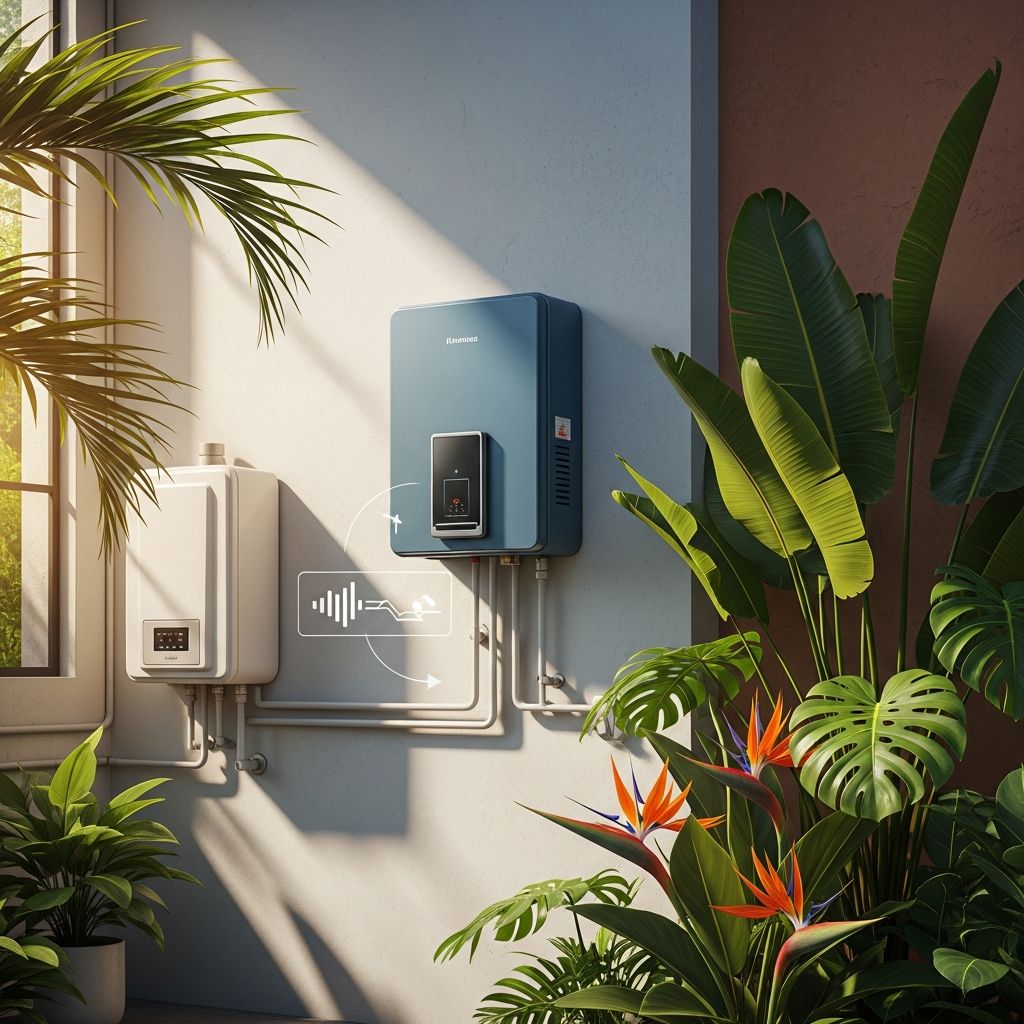
Warm and tropical climates create unique opportunities and challenges when it comes to water heating. Higher ambient temperatures and humidity can dramatically improve the performance of certain technologies, especially heat pump and solar water heaters, but they also raise specific questions about placement, noise, corrosion, and sizing. This guide explains how to choose the right system and install it wisely so you get reliable hot water with minimal energy use and disruption.
Table of Contents
- Understanding Warm and Tropical Climate Considerations
- Water Heater Types Suited to Warm and Tropical Regions
- Energy Efficiency and Operating Costs
- Optimal Placement and Installation in Warm Climates
- Noise Levels and How to Reduce Them
- Sizing a Water Heater in Tropical Conditions
- Comparison Table: Best Options for Warm and Tropical Climates
- Maintenance, Durability, and Corrosion Resistance
- Frequently Asked Questions (FAQs)
- Conclusion
Understanding Warm and Tropical Climate Considerations
In warm and tropical regions, outdoor air temperatures and humidity are higher for most of the year. This has a direct impact on which water heater technologies perform best and how you should size and locate them.
Key climate characteristics include:
- High average ambient temperature, often from 24°C to over 30°C.
- High humidity levels, especially in coastal and rainforest regions.
- Generally warmer groundwater and incoming mains water.
- In many areas, strong and consistent solar radiation.
Heat pump water heaters operate more efficiently as ambient temperature and humidity increase, often achieving significantly higher coefficients of performance (COP) in tropical conditions than in colder climates. Solar systems also benefit from strong sunlight, while conventional electric resistance heaters gain little advantage beyond slightly lower heat loss.
Water Heater Types Suited to Warm and Tropical Regions
Several types of water heaters can work in warm climates, but some are particularly well suited thanks to their ability to exploit higher ambient temperatures and sunlight.
Conventional Storage (Tank) Water Heaters
These units store hot water in an insulated tank and can be powered by electricity, gas, or other fuels.
- Pros: Simple, relatively low upfront cost, widely available.
- Cons: Lower efficiency than other options; standby heat losses from the tank; in warm climates, they may contribute unwanted indoor heat.
- Best use case: Situations where upfront cost is the main priority and space or power constraints limit other technologies.
Tankless (On-Demand) Water Heaters
Tankless units heat water only when a tap is opened, eliminating large storage tanks.
- Pros: Compact; virtually no standby losses; can provide continuous hot water when correctly sized; good fit for small homes or apartments.
- Cons: Higher installation cost; flow rate limits; gas models need ventilation; electric models may require upgraded electrical service; performance can drop if several fixtures run simultaneously.
- Best use case: Homes with limited space and moderate simultaneous hot water demand, or homeowners focused on reducing standby energy losses.
Heat Pump (Hybrid) Water Heaters
Heat pump water heaters move heat from the surrounding air into the water instead of generating heat directly. They are especially well matched to warm and tropical climates because they operate more efficiently at higher ambient temperatures and humidity.
- Pros: Very high energy efficiency (often several times more efficient than resistance heaters); substantial operating cost savings; perform best in warm, humid climates like Florida or tropical coastal regions.
- Cons: Higher initial cost; require adequate space and airflow; can be noisier than standard electric tanks; cool the surrounding air, which may or may not be desirable.
- Best use case: Warm and tropical areas where owners prioritize long-term energy savings and can provide adequate space and ventilation.
Solar Water Heaters
Solar water heaters use collectors mounted on the roof or ground to capture solar energy and heat water, usually with a backup electric or gas heater.
- Pros: Very low operating costs in sunny regions; long service life; substantial reduction of grid energy use; ideal in locations with abundant sunshine.
- Cons: Higher upfront cost; installation complexity; performance depends on solar availability; usually requires a backup heater for cloudy periods.
- Best use case: Tropical and subtropical regions with strong solar resources and homeowners interested in sustainability and long-term savings.
Energy Efficiency and Operating Costs
Efficiency is one of the most important factors in warm climates because high ambient temperatures and humidity can greatly enhance the performance of certain systems, especially heat pumps.
Why Heat Pumps Excel in Tropical Conditions
Heat pump water heater efficiency is measured by COP (coefficient of performance) and typically rises as ambient temperature and humidity increase. In tropical conditions, heating output can increase by around 30% while COP can increase by over 25% compared with milder climates. This means:
- Higher hot water output from the same unit size.
- Lower electricity consumption per unit of hot water produced.
- Faster return on investment due to reduced running costs and smaller plant requirements.
Solar Efficiency in Sunny Regions
In sun-rich tropical and subtropical areas, solar water heaters can cover a large share of hot water energy needs. A properly sized system in a high-sun location can significantly reduce or almost eliminate the energy used for water heating on clear days. Over the lifespan of the system, this can offer substantial cost savings, especially when energy prices are high.
Comparing Typical Efficiency Levels
Typical relative efficiency characteristics for warm climates:
- Electric resistance tank: Baseline efficiency; almost all electrical energy converts to heat but with ongoing standby losses.
- Gas storage: Moderate efficiency; combustion losses and flue heat loss reduce overall performance.
- Tankless gas or electric: Higher efficiency from eliminating standby losses; performance depends on correct sizing and usage.
- Heat pump: High efficiency, especially in warm humid climates; can be three or more times more efficient than resistance units.
- Solar: Very high effective efficiency when solar input is strong, though dependent on collector area and climate.
Optimal Placement and Installation in Warm Climates
Where you place a water heater in a warm or tropical climate affects efficiency, comfort, and noise. The right location maximizes performance and minimizes unwanted heat and sound.
General Placement Principles
- Keep hot water runs short to reduce heat loss and wait times.
- Protect equipment from direct weather extremes, especially heavy rain, intense sun, and salt-laden coastal air.
- Provide adequate ventilation, especially for gas and heat pump units.
- Ensure easy access for maintenance, inspection, and repairs.
Placement for Heat Pump Water Heaters
Because heat pumps draw heat from the surrounding air and exhaust cooler air, placement in warm climates should leverage this behavior:
- Install in areas with consistently warm air, such as garages, utility rooms, or semi-outdoor spaces.
- Provide sufficient airflow volume; manufacturers specify minimum room size or ducting requirements.
- Consider that the unit will cool the room where it is located; in hot climates, this can be neutral or slightly beneficial, but avoid small, conditioned rooms where cooling is undesirable.
- In coastal areas, protect metal components from salt air with appropriate coatings and materials.
Placement for Solar Water Heaters
Solar systems depend on collector placement:
- Orient collectors toward the equator (south-facing in the northern hemisphere, north-facing in the southern hemisphere) with an angle appropriate for the latitude.
- Avoid shading from trees, buildings, or other structures, especially during peak sun hours.
- Locate the storage tank as close as practical to the collectors and major hot water loads to reduce piping heat losses.
Indoor vs. Outdoor Installation
In many warm regions, both indoor and outdoor installations are common:
- Outdoor tankless or storage units: Free up indoor space and avoid indoor heat build-up; require weatherproof housing and protection from storms.
- Indoor units: Protected from weather; must address ventilation, noise, and potential heat gain to living spaces.
Noise Levels and How to Reduce Them
Noise is often overlooked until a new water heater is installed near a bedroom or living area. In tropical climates where windows may stay open and equipment is often installed near occupied spaces, managing noise is especially important.
Typical Noise Sources
- Heat pump compressors and fans: The main source of ongoing operational noise.
- Gas burners: Combustion noise during operation, especially for high-output tankless units.
- Water flow noise: High-velocity flow through tankless heaters and piping can create noticeable sound.
- Expansion and contraction: Tanks and pipes may creak or tick as they heat and cool.
Choosing Quieter Technologies and Models
To prioritize low noise levels:
- Consider storage electric heaters if noise is a critical concern and energy costs are manageable.
- Choose heat pump units with published low decibel ratings and sound-insulated compressors.
- For tankless systems, look for modulating burners and models advertised as low-noise or quiet operation.
Placement Strategies to Reduce Noise
- Locate the water heater away from bedrooms, nurseries, and quiet workspaces.
- Use utility rooms, garages, or exterior walls where sound is less intrusive.
- Avoid installation on lightweight interior walls that transmit vibration easily.
Construction Techniques and Accessories
- Install vibration-isolating pads under heat pump units.
- Use flexible connectors for water lines to reduce vibration transfer.
- Add acoustic insulation in walls adjacent to the unit if noise transmission is a concern.
Sizing a Water Heater in Tropical Conditions
Correct sizing ensures you have enough hot water without overspending on equipment and energy. In warm and tropical climates, the incoming water is usually warmer, and many occupants prefer slightly cooler showers, which can reduce the required temperature rise and system size.
Storage Tank Sizing Basics
Sizing storage tanks depends on household size, usage patterns, and desired recovery rate. Larger families or homes with multiple bathrooms may need higher capacities. Typical guidelines often link tank size to number of occupants and peak-hour demand, adjusted for any local preferences for cooler showers or shorter use times.
Tankless Heater Sizing: Flow Rate and Temperature Rise
Tankless units are sized based on required flow rate (gallons per minute, or liters per minute) and temperature rise (difference between incoming water temperature and desired outlet temperature).
- Estimate the maximum number of fixtures likely to run simultaneously (for example, shower plus sink plus washing machine).
- Add their flow rates to determine the total required flow in GPM or L/min.
- Calculate temperature rise as the difference between incoming cold water and desired hot water temperature.
In tropical regions, incoming water might be 25°C instead of 10°C, so the temperature rise required to reach a typical 40–49°C mixed or stored temperature is smaller, allowing for smaller or more efficient systems.
Heat Pump Sizing in Warm Climates
In warm conditions, heat pumps often deliver more heating capacity for a given model compared with cooler climates, sometimes enabling smaller systems without compromising comfort. Because COP and output increase with higher ambient temperature, it may be possible to:
- Select a slightly smaller unit while still meeting demand.
- Achieve faster recovery times between draws.
- Improve return on investment due to lower plant and energy costs.
Comparison Table: Best Options for Warm and Tropical Climates
| Type | Typical Efficiency in Warm Climates | Ideal Household Size | Best Climate Fit | Noise Level | Key Advantages | Main Drawbacks |
|---|---|---|---|---|---|---|
| Electric Storage Tank | Low to medium | Small to medium | Any warm region | Low | Low upfront cost, simple | Higher running costs, standby losses |
| Gas Storage Tank | Medium | Medium | Areas with gas supply | Low to medium | Reasonable recovery, familiar technology | Combustion emissions, flue requirements |
| Tankless (Gas/Electric) | Medium to high | Small to medium | Warm regions with stable utilities | Medium | Compact, no standby losses, endless hot water when sized correctly | Higher installation cost, flow limits |
| Heat Pump | High (enhanced in tropical climates) | Medium to large | Warm and tropical, high humidity | Medium | Very low operating cost, strong ROI in warm climates | Higher upfront cost, needs space and airflow, some noise |
| Solar (with backup) | Very high where sun is strong | Medium to large | Sunny tropical and subtropical regions | Low (backup unit dependent) | Minimal energy use, environmentally friendly | High initial cost, roof space needed, weather dependent |
Maintenance, Durability, and Corrosion Resistance
In warm and tropical climates, maintenance and durability considerations often focus on humidity, salt exposure, and biological growth. Coastal regions, in particular, can be harsh on equipment.
Corrosion and Humidity
- High humidity and salt air accelerate corrosion of metal parts, especially in coastal locations.
- Choose models with corrosion-resistant components and protective coatings.
- Ensure proper drainage and avoid standing water near the installation site.
Routine Maintenance Tasks
- Inspect and replace sacrificial anode rods in tank-type heaters at recommended intervals.
- Flush tanks periodically to remove sediment buildup and maintain efficiency.
- Clean air filters and coils on heat pump water heaters to preserve airflow and performance.
- Check solar collectors and piping for leaks, insulation damage, and debris.
Lifespan Expectations
Typical lifespans vary by technology and environment:
- Tankless units may last 20 years or more with proper maintenance.
- Heat pump units often last 10–15 years, though tropical operation with good airflow can reduce strain.
- Quality solar collectors may exceed 20 years of service when maintained properly.
Frequently Asked Questions (FAQs)
Q1: Which water heater type is generally best for a warm or tropical climate?
Heat pump and solar water heaters are often the most efficient choices in warm and tropical climates. Heat pumps benefit from high ambient temperatures and humidity, delivering higher COP and lower running costs, while solar systems take advantage of abundant sunlight in many tropical regions.
Q2: Is a heat pump water heater noisy?
Heat pump units produce more noise than a typical resistance tank because of the compressor and fan, usually similar to a window air conditioner. Choosing low-decibel models, placing the unit in a utility space, and using vibration isolation can keep noise to a comfortable level.
Q3: Does a heat pump water heater cool the room it is in?
Yes. Because the heat pump extracts heat from surrounding air and rejects cooler air, it effectively cools the room. In hot climates this is often neutral or mildly beneficial, but the room must have sufficient volume or ventilation to avoid becoming uncomfortably cool.
Q4: How does a tropical climate affect sizing of a tankless water heater?
Warmer incoming water means a smaller temperature rise is required to reach a comfortable hot water temperature. This can either allow a smaller tankless unit to meet your needs or provide extra capacity from a given size, as less energy is needed per liter of water.
Q5: Are solar water heaters reliable during cloudy or rainy seasons?
Solar water heaters are typically paired with a backup heater, such as an electric or gas unit, to handle cloudy periods and high-demand days. In tropical climates, where clouds and rain can be seasonal, this backup ensures consistent hot water year-round.
Q6: What should I consider if I live near the coast?
Near the coast, prioritize corrosion resistance and local installation expertise. Choose units with protective coatings, stainless or specially treated components, and follow local best practices for placement and maintenance to withstand salt-laden air and high humidity.
Conclusion
Choosing a water heater for a warm or tropical climate is not just about picking a fuel type or tank size. It requires aligning technology with the advantages of your environment: high ambient temperatures, abundant sunlight, and often warm incoming water. Heat pump and solar systems stand out in these conditions, frequently delivering the lowest operating costs and strongest long-term value when sized and installed correctly.
Placement and noise management are equally important. Locating the system for good airflow, short piping runs, and minimal disturbance to living spaces will help you enjoy quiet, dependable hot water. Factoring in corrosion resistance and service access ensures that your investment continues to perform despite humidity and, in coastal areas, salt exposure.
The most thoughtful choice balances efficiency, upfront budget, available space, sound tolerance, and local climate realities. By considering these elements together, homeowners in warm or tropical regions can select a water heater that is efficient, durable, and comfortable to live with over many years.
Similar Articles






Read full bio of medha deb