
Condensation vs True Leaks on and Around a Water Heater: Full Diagnostic Guide
Learn how to tell harmless condensation from true leaks on and around your water heater to prevent damage and costly failures.
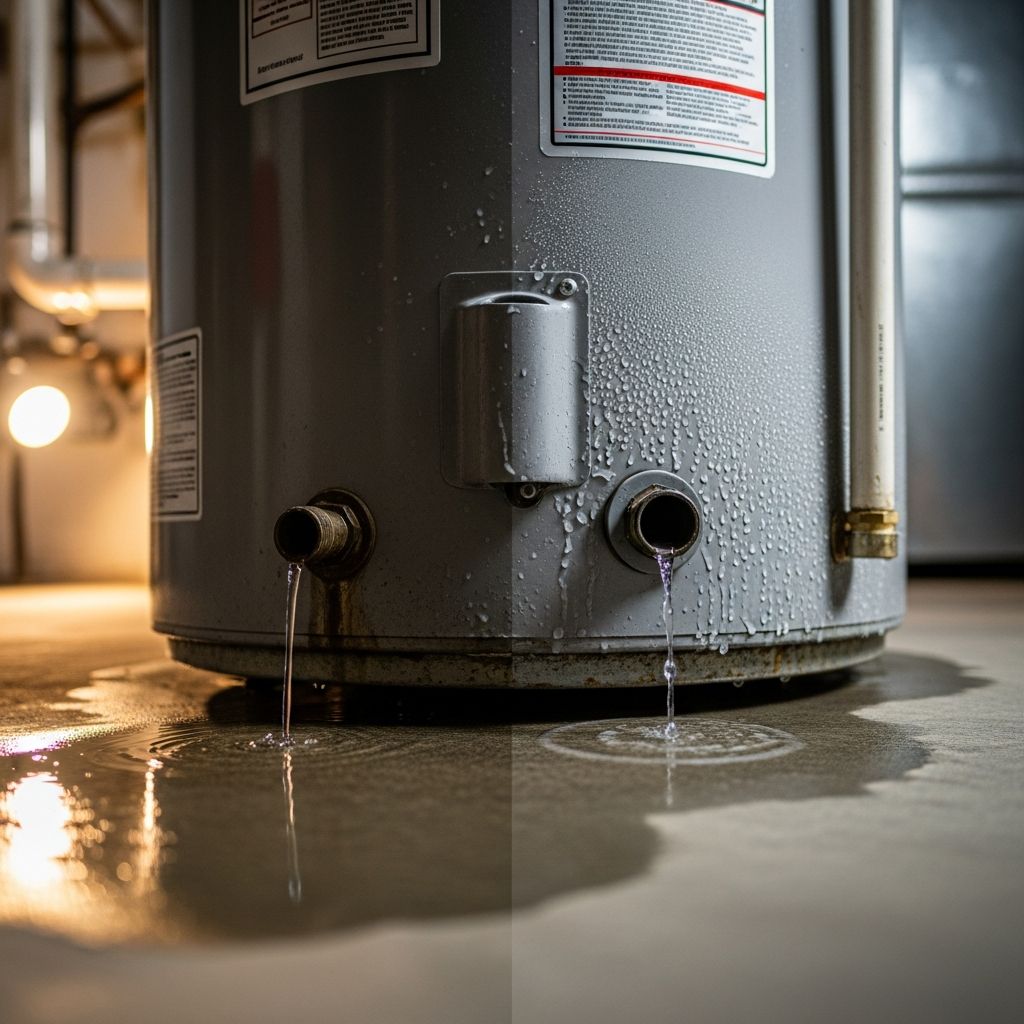
Condensation vs True Leaks on and Around a Water Heater
Moisture around a water heater can be alarming, but not all water on or near the tank signals a serious problem. In many homes, harmless condensation is mistaken for a true leak, and in others, a slow but dangerous leak is ignored as “just sweating.” Knowing the difference protects your home from water damage and helps you decide when a simple adjustment is enough and when urgent repair or replacement is needed.
Table of Contents
- Overview: Why Water Appears Around a Water Heater
- How Condensation Forms on Water Heaters
- Signs It Is Condensation, Not a Leak
- Signs of a True Leak and Common Leak Sources
- Step-by-Step Diagnosis: Condensation vs Leak
- Why Location, Fuel Type, and Conditions Matter
- Risks of Ignoring True Leaks
- Prevention and Maintenance Tips
- Quick Comparison: Condensation vs True Leak
- Frequently Asked Questions (FAQs)
- Conclusion
Overview: Why Water Appears Around a Water Heater
Water heaters operate with significant temperature changes and pressurized water, so moisture can appear for two broad reasons:
- Condensation caused by temperature and humidity differences, often temporary and harmless when managed.
- True leaks caused by failing components, corrosion, cracks, or faulty connections, which usually worsen over time and can damage the heater and surrounding structure.
Distinguishing between these two involves looking at where the water is, how it behaves over time, and what conditions are present when you notice the moisture.
How Condensation Forms on Water Heaters
Condensation is simply water vapor turning back into liquid when it touches a colder surface. Around a water heater, several scenarios can create this effect:
- Cold inlet water cooling the tank: When very cold water enters a tank in a warm or humid room, the outer shell or adjacent cold piping can cool enough for moisture to bead up.
- Initial startup or refilling: Newly installed or recently refilled tanks filled with cold water can sweat noticeably until temperatures stabilize, especially in warm seasons.
- Gas water heater operation: In gas units, water vapor is a combustion byproduct. In normal units, condensation is mostly inside the flue at startup, but unusual conditions (low temperature setting, long off periods, or very cold water) can increase internal condensation.
- High room humidity: Basements or utility rooms with poor ventilation or damp air increase the chance of tank and pipe sweating because the dew point is higher.
According to plumbing and HVAC sources, condensation is especially common when cold water first hits a cooler tank or when humidity is high; this may produce visible droplets and even small puddles that disappear once temperatures level out.
Signs It Is Condensation, Not a Leak
Several practical checks help you decide whether you are seeing condensation rather than a true leak.
Visual and Pattern Clues
- Fine, even droplets spread over large areas of the tank or exposed pipes, not a distinct stream from a single point.
- No obvious source point: The moisture appears as a general “sweat” on the surface instead of water emerging from a seam, fitting, or valve.
- Puddles that come and go after large hot water draws, startup, or during strong temperature swings, then dry when conditions stabilize.
Behavior Over Time
- Appears mainly during temperature changes, such as after showers, laundry, or first use of the day.
- Stops or greatly reduces once the tank temperature and room temperature stay more constant.
- Does not steadily worsen or increase in volume; may even diminish over days with a new or recently refilled tank.
Simple Paper Towel Test
Many plumbing guides recommend a quick diagnostic test:
- Dry the tank, nearby pipes, and floor around the water heater thoroughly with a towel.
- Place dry paper towels or rags around the base and under suspicious fittings.
- Observe for several hours through at least one heating cycle.
If towels stay dry or only show light, evenly distributed dampness that does not repeat from one exact spot, condensation is the likely cause. Repeated wetness in a specific location points toward a true leak.
Signs of a True Leak and Common Leak Sources
True leaks arise from wear, corrosion, failed seals, or excess pressure. Unlike condensation, they tend to get worse, not better, over time.
General Signs of a True Leak
- Water reappears in the same spot after being dried, often near a seam, valve, or fitting.
- Obvious dripping or a visible stream from a joint, pipe, or valve outlet.
- Persistent puddles that keep growing, regardless of room temperature or recent hot water use.
- Corrosion or mineral deposits (white, green, or rust-colored buildup) near fittings, valves, or at the tank bottom, indicating long-term moisture.
Top-of-Tank Leaks: Inlet and Outlet Piping
Water at the top of the heater usually comes from the cold water inlet, hot water outlet, or their fittings.
- Loose connections from thermal expansion and contraction can let water seep out.
- Corroded fittings or galvanized to copper transitions may develop pinhole leaks or weak joints.
Often, these leaks can be repaired by gently tightening or replacing fittings, but significant corrosion can require more extensive work.
Side Leaks: T&P Valve and Heating Elements
- Temperature and pressure relief (T&P) valve: This safety valve discharges water when temperature or pressure exceed safe limits.
- Intermittent dripping may mean system pressure is too high or the water is overheated.
- Continuous leaking often signals a failing valve or chronic overpressure that needs correction.
- Electric heating elements and gaskets: On electric water heaters, failed element gaskets or loose elements can leak from behind the side access panels.
Bottom Leaks: Tank Failure and Drain Valve Issues
Persistent water at the bottom of the heater is often serious.
- Sediment-related damage: Mineral buildup at the bottom traps water that “sizzles” as it heats, promoting cracking, metal fatigue, and rust at the base of the tank.
- Tank corrosion and pinholes: Over time, the glass or plastic lining cracks due to temperature cycling, exposing steel to water and electrolytic corrosion until holes form.
- Leaking drain valve: The plastic or brass drain cock at the bottom may drip past the internal seat or around threads. Handles not fully closed, damaged washers, or brittle plastic bodies are common culprits.
When the tank shell itself is leaking, replacement is generally the only long-term solution, because repairing a corroded, pressurized vessel is neither reliable nor safe.
Internal and Hidden Leaks
Some leaks are inside the tank or inside the insulation jacket and may appear only as slow seepage at the base.
- Internal corrosion after an anode rod has been consumed exposes steel, leading to internal leaks.
- Leaks between inner tank and insulation can mimic slow bottom seepage, sometimes initially misidentified as condensation on newer installations.
Step-by-Step Diagnosis: Condensation vs Leak
Use this practical sequence to differentiate between condensation and a true water heater leak.
Step 1: Ensure Safety First
- For gas heaters, check for gas smell or signs of backdrafting; if present, contact a professional.
- Keep electrical connections and controls dry and avoid standing in water while working.
Step 2: Dry Everything Thoroughly
- Turn off nearby faucets and stop hot water use for a short period.
- Wipe the tank, all visible connections, and the floor around the heater completely dry.
- Place paper towels under suspected areas: under the tank lip, by the T&P discharge line, under inlet/outlet pipes, and near the drain valve.
Step 3: Observe One Full Heating Cycle
- Run hot water to force the heater to fire (or energize) and then stop usage.
- Watch the tank during and after the cycle.
- Even sweating over surfaces that dries as the tank warms is characteristic of condensation.
- Drips or beads forming at one exact joint or seam indicate a leak.
Step 4: Note When Moisture Appears
- Appears only after large draws or startup and then stops once the unit warms and the room stabilizes: likely condensation.
- Appears regardless of use, day or night, and puddles re-form after cleanup: likely a true leak.
Step 5: Check Specific Components
- Top connections: Look for active drips around the inlet/outlet.
- If dry now but previously wet only during use, a minor connection leak may need tightening.
- T&P valve and discharge pipe:
- Moisture at the discharge termination suggests pressure/temperature problems or a failing valve.
- Drain valve:
- Check for dripping at the spout or around threads. A cap or replacement valve may be required.
- Tank body and bottom edge:
- Rust streaks, bubbling paint, or water emerging from the jacket bottom often point to internal tank leaks, not condensation.
Step 6: Draw a Conclusion
- If moisture is minor, appears as general sweat, and stops when temperatures stabilize, you are likely dealing with condensation.
- If moisture is recurring from a defined point, accompanied by corrosion or increasing volume, treat it as a true leak and plan repair or replacement.
Why Location, Fuel Type, and Conditions Matter
Several environmental and design factors influence the likelihood of condensation or leaks.
Installation Location
- Basements and crawlspaces are typically cooler and more humid, making surface condensation more likely.
- Closets and tight utility rooms may lack ventilation, allowing humidity to build and persist.
Fuel Type: Gas vs Electric
- Gas water heaters can experience condensation in the flue and combustion chamber during startup or when filled with very cold water.
- Electric water heaters do not produce combustion moisture, so surface condensation is mainly due to cold water and humid air; leaks more often show up at element gaskets or fittings.
Incoming Water Temperature and Humidity
- Very cold well or municipal water in spring and summer can chill the tank quickly, encouraging heavy external condensation.
- High indoor dew points make it easier for “sweating” to occur on any cool plumbing surface.
Risks of Ignoring True Leaks
While minor condensation is mostly a comfort and cosmetic issue, true leaks impact safety, efficiency, and building integrity.
- Structural damage: Continuous leaks can rot framing, subfloors, and supports, and promote mold growth behind walls and under floors.
- Electrical hazards: On electric units, water intrusion can reach wiring and controls, increasing shock and fire risks.
- Efficiency loss and energy waste: Hot water leaks force the heater to run more often, increasing fuel or electricity usage.
- Catastrophic tank failure: Weak or corroded areas, especially at welded seams, may rupture under pressure, potentially releasing large volumes of scalding water.
Prevention and Maintenance Tips
Some moisture is unavoidable in certain climates, but regular care minimizes both condensation issues and true leaks.
Limiting Condensation
- Maintain consistent room temperature and reduce extreme swings when possible.
- Improve ventilation or use a dehumidifier in damp basements or utility rooms to lower humidity.
- Insulate cold water lines and near-tank piping to reduce surface cooling and sweating.
Reducing Leak Risk
- Flush the tank periodically to remove mineral sediment that accelerates bottom damage and overheating.
- Inspect the anode rod on schedule; replacing it before it is fully consumed extends tank life and delays corrosion.
- Check connections at least annually for signs of corrosion, mineral buildup, or dampness at the top and around valves.
- Test the T&P valve carefully in accordance with manufacturer instructions and address any constant dripping or failure to reseal.
Quick Comparison: Condensation vs True Leak
| Feature | Condensation | True Leak |
|---|---|---|
| Appearance | Fine, even droplets or light sweating on surfaces | Drips, streams, or water from a specific point |
| Pattern Over Time | Often temporary, improves as temperatures stabilize | Persists or worsens, puddles re-form after cleanup |
| Trigger Conditions | Temperature swings, cold water entry, high humidity | Component failure, corrosion, pressure issues |
| Location | Across tank surface or cold pipes | At fittings, valves, seams, tank bottom, or from jacket |
| Associated Signs | Usually no corrosion or mineral buildup | Rust, mineral deposits, noise, or performance issues |
| Risk Level | Low, mostly comfort/aesthetic issue | Moderate to high, with risk of damage or failure |
Frequently Asked Questions (FAQs)
Q1: Is it normal to see water around a brand-new water heater?
Light moisture around a newly installed or just-filled heater can be normal condensation, especially if very cold water enters a cold tank in a humid space. However, any persistent dripping from a specific point or increasing puddles should be treated as a potential leak and investigated further.
Q2: How can I quickly tell if the water at the base is from condensation or a leak?
Dry the area and place paper towels at the base and under key fittings, then run the heater through a cycle and wait. Even, light dampness that does not reappear at one point suggests condensation; water that consistently wets one location or appears as drips from a joint indicates a true leak.
Q3: My T&P valve is dripping—does that mean the water heater is leaking?
A dripping T&P valve is a leak, but often a symptom rather than a tank failure. It may indicate high pressure, overheating, or a failing valve. The cause should be evaluated promptly because the T&P valve is a critical safety device.
Q4: Can condensation damage my water heater?
Occasional, mild condensation usually does not harm the tank itself but can contribute to surface rust on legs, straps, or nearby metal. In very damp environments, persistent condensation on adjoining piping and surfaces can encourage corrosion and mold, so improving ventilation and humidity control is still worthwhile.
Q5: When is it clearly time to replace the water heater instead of repairing leaks?
Replacement is usually recommended when the tank shell or welded seams are leaking, when bottom leaks are tied to heavy corrosion and sediment damage, or when age and multiple symptoms (rusty water, noise, repeated valve leaks) indicate the tank is nearing the end of its service life.
Conclusion
Water near a water heater can mean either benign condensation or a genuinely failing system. By examining how the moisture appears, where it comes from, and how it behaves over time, you can reliably tell the difference between harmless sweating and a true leak that needs attention.
Condensation tends to be diffuse, temporary, and strongly tied to cold water, temperature swings, and humidity, while true leaks recur from specific locations and are often accompanied by corrosion, staining, or growing puddles. Understanding these patterns, along with basic checks of valves, fittings, and the tank body, equips you to protect your home and plan timely maintenance or replacement instead of reacting only after serious damage occurs.
Similar Articles






Read full bio of Sneha Tete