
Countertop and Compact Wine Refrigerators: Suitability, Limits, and Best Uses
Understand when compact and countertop wine refrigerators make sense, where they fall short, and how to use them most effectively.
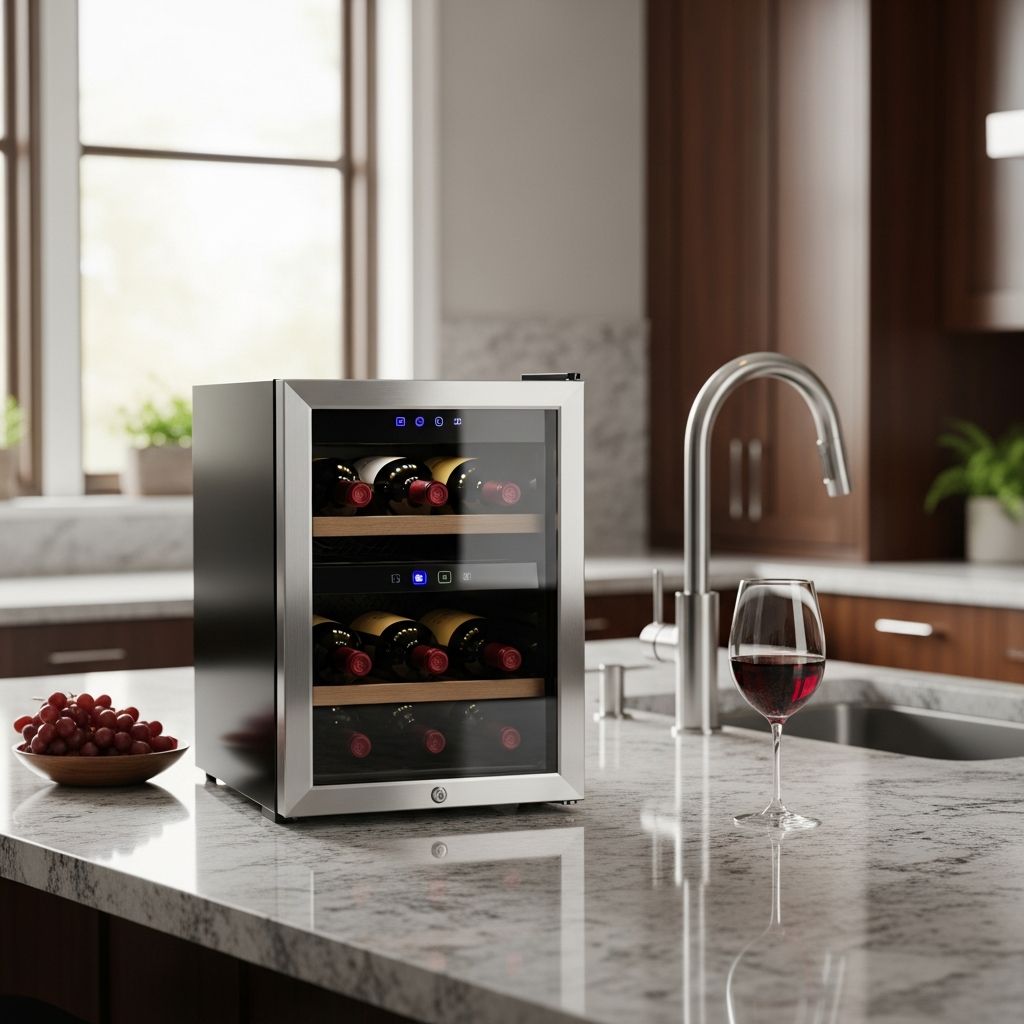
Countertop and Compact Wine Refrigerators: Suitability, Limitations, and Best-Use Scenarios
Countertop and compact wine refrigerators have become increasingly popular as more wine drinkers look for space-efficient ways to store bottles at ideal serving temperatures. According to major wine appliance brands, compact and countertop wine coolers are designed to fit where full-size cellars cannot, such as in apartments, condos, offices, and small kitchens. They offer targeted temperature control, easy installation, and stylish bottle display, but they also come with real limitations in capacity, noise, vibration, and long-term storage performance compared with larger, dedicated wine cellars.
This article explains what these small wine refrigerators do well, where they fall short, and how to decide whether a compact or countertop model is right for your space and your wine habits.
Table of Contents
- What Are Compact and Countertop Wine Refrigerators?
- How Compact and Countertop Wine Refrigerators Work
- Key Benefits and Suitability
- Common Limitations and Trade-Offs
- Best-Use Scenarios for Compact and Countertop Wine Coolers
- How to Choose the Right Compact or Countertop Wine Fridge
- Care, Placement, and Optimal Usage Tips
- Comparison: Countertop vs Other Wine Storage Options
- Frequently Asked Questions (FAQs)
- Conclusion
What Are Compact and Countertop Wine Refrigerators?
Compact and countertop wine refrigerators are small, electrically cooled appliances built specifically to store wine bottles at controlled temperatures. Many models hold between 6 and 24 bottles, with some slightly larger units stretching into the 30–40 bottle range while still being considered compact.
Typical Characteristics
- Designed for small spaces such as countertops, under cabinets, dorms, RVs, or office corners.
- Usually classified as small capacity, typically 1–18 bottles for most countertop models, and up to around 40 bottles for larger compacts.
- Available as freestanding units that require no installation, often just a standard outlet.
- Offered in single-zone or dual-zone versions, allowing one or two different temperature ranges.
- Often feature glass doors, LED lighting, and wire or contoured shelves to display bottles attractively.
Where They Differ from Standard Refrigerators
Unlike a typical kitchen refrigerator, a wine refrigerator is engineered to maintain a narrower and more stable temperature range that is appropriate for wine, and to minimize vibration and temperature swings. Many models also include UV-protected glass to shield bottles from light, which can prematurely age wine.
How Compact and Countertop Wine Refrigerators Work
Most compact and countertop wine refrigerators use either a compressor cooling system or a thermoelectric system.
Compressor-Based Compact Wine Fridges
Compressor models work similarly to a standard refrigerator, using a refrigerant and a compressor to move heat from inside the cabinet to the outside.
- Capable of reaching lower temperatures and maintaining them even in warmer ambient rooms.
- Often better for larger capacities or dual-zone designs.
- Can produce some noise and vibration, a consideration if placed in quiet living spaces.
Thermoelectric Countertop Wine Coolers
Thermoelectric coolers use a solid-state heat pump, with no moving compressor parts, relying instead on an electric current to move heat.
- Generally quieter and with fewer vibrations, an advantage for open-plan living or bedroom placement.
- Often more energy-efficient and suited for smaller, countertop-sized units.
- Performance is more sensitive to room temperature; they usually work best when the ambient temperature is moderate.
Key Benefits and Suitability
When used appropriately, compact and countertop wine refrigerators can offer excellent value. Several manufacturers highlight three core benefits: space efficiency, cost-effectiveness, and ease of use.
1. Space Efficiency for Small Homes and Apartments
- Designed to fit under cabinets, on countertops, or in narrow gaps where full-size fridges will not fit.
- Often weigh under 50 pounds and have a slim footprint, making them practical for renters who may move frequently.
- Ideal for urban dwellers, condos, or secondary rooms like dens and offices.
2. Lower Upfront Cost Compared With Full-Size Wine Cellars
- Compact wine fridges generally cost significantly less than large, built-in wine cellars or high-capacity units.
- Many models come with basic warranties of 1–3 years for parts and labor.
- Countertop wine coolers are often marketed as energy-efficient options that consume less power than standard refrigerators, which helps manage running costs over time.
3. Convenience for Everyday Drinking
- Keep a small selection of bottles at ready-to-serve temperatures for reds, whites, or sparkling wines.
- Digital touch controls and internal LED lighting make it easy to monitor and adjust settings.
- Some models have removable or sliding shelves for easier access to bottles and flexible storage of larger formats.
4. Aesthetic and Entertaining Appeal
- Glass doors, stainless steel trims, and interior lighting add a decorative element to kitchens or home bars.
- Compact coolers can serve as a focal point during small gatherings, wine and cheese nights, or informal tastings.
5. Suitable Use Cases
Based on manufacturer guidance and user reviews, compact and countertop units are especially suitable for:
- Casual wine drinkers who typically keep between 6 and 24 bottles on hand.
- Beginners building their first wine collection in a small space.
- Entertainers who want serving-ready white, rosé, or sparkling wines in the kitchen or dining area.
- Secondary storage for entertaining or overflow, even in homes that have a larger cellar elsewhere.
Common Limitations and Trade-Offs
Despite their advantages, compact and countertop wine refrigerators are not ideal for every collector or environment. Understanding their limitations helps set realistic expectations.
1. Limited Capacity
- Most countertop units are classified as small-capacity coolers, storing 1–18 bottles.
- Even larger compact fridges that can hold around 30–40 bottles may become cramped with mixed bottle shapes (Champagne, Burgundy, or larger-format bottles).
- Collectors who regularly keep 50–100+ bottles will likely find these units insufficient on their own.
2. Not Ideal for Long-Term Cellaring
Wine experts and testing organizations note that while small fridges can manage serving temperatures, they are not always optimized for long-term aging of fine wines.
- Temperature can be more susceptible to ambient changes, especially in thermoelectric models.
- Some units lack consistent humidity control, which is a factor for long-term cork health.
- Vibration from compressor models, while modest, may be undesirable for very delicate, age-worthy bottles.
3. Temperature Range and Stability
- Single-zone units maintain one temperature, making them less flexible for storing both reds and whites at their ideal ranges simultaneously.
- Thermoelectric units might struggle in hot rooms, since their cooling performance depends heavily on ambient temperature.
- Some budget compact models may have wider temperature fluctuations than premium, full-size cellars.
4. Noise and Vibration
- Compressor-based mini fridges can produce audible hum and occasional cycling noise, something to consider for bedrooms or ultra-quiet spaces.
- Thermoelectric models are quieter but may still emit some fan noise.
5. Ventilation and Placement Constraints
- Many compact units are designed as freestanding appliances that require clearance around the sides and back for proper ventilation.
- Improper placement (for example, enclosed tightly in cabinetry without airflow) can reduce cooling efficiency and shorten the unit’s lifespan.
- Countertop placement must consider heat from nearby cooktops, ovens, or direct sunlight.
Best-Use Scenarios for Compact and Countertop Wine Coolers
For the right user and context, these small wine refrigerators are highly practical. Below are common scenarios where they excel.
1. Small Homes, Condos, and Apartments
- Residents with limited floor space can use a compact cooler instead of a full-size wine cabinet.
- Units designed for countertop or narrow space installation can slide into tight areas that standard fridges cannot.
- They are also suited to renters who cannot install built-in appliances.
2. Enthusiasts Focused on Ready-to-Drink Wines
- Perfect for storing an active rotation of everyday reds, whites, and sparkling wines at serving temperature.
- Single-zone compact fridges work well for drinkers who mainly enjoy one wine style, such as red blends or Sauvignon Blanc.
- Dual-zone compact units allow separate temperature settings for reds and whites in the same footprint.
3. Secondary or Satellite Storage
- Wine collectors with a larger cellar can use a compact cooler in the kitchen or bar as a convenient “ready-to-pour” station.
- Offices, guest houses, and entertainment rooms can each have small fridges dedicated to specific beverage types.
4. Occasional Entertaining and Events
- Compact units can chill a set of bottles in advance of holidays, parties, or tasting events.
- Some portable mini wine coolers are designed for mobility, suitable for picnics, boat trips, or RV travel, using either standard power or 12-volt connections.
5. Gift or Starter Solution for New Wine Drinkers
- For people just beginning to explore wine, a compact fridge provides a lower-cost entry point.
- Beginner-friendly units often feature simple digital controls and clear temperature guidance.
How to Choose the Right Compact or Countertop Wine Fridge
Choosing the right model comes down to aligning capacity, technology, and placement with how you drink and store wine.
1. Capacity and Bottle Type
- Estimate your usual bottle count, then add some margin for growth.
- Check whether the shelves accommodate larger bottles such as Champagne or broad-shouldered reds; many units are optimized for standard 750 ml bottles.
- Removable shelves increase flexibility when storing mixed bottle sizes.
2. Cooling Technology
- Choose a compressor-based model if your space is warm, you need a wider temperature range, or you want higher bottle capacity.
- Choose a thermoelectric model if you prioritize low noise, low vibration, and energy efficiency, and your environment stays fairly temperate.
3. Single-Zone vs Dual-Zone
- Single-zone units are simpler and often less expensive, ideal if you mainly drink one style or plan to use the fridge for serving rather than complex storage.
- Dual-zone units are valuable if you routinely keep both reds and whites and want each zone at a different target temperature.
4. Placement and Ventilation
- Confirm whether the model is freestanding only or suitable for built-in placement; many countertop and compact units are designed for freestanding use.
- Allow the manufacturer-recommended clearance at the back and sides to ensure proper airflow.
- Keep the fridge away from direct heat sources and prolonged direct sunlight.
5. Energy Use and Noise
- If energy efficiency is a priority, look for compact coolers marketed as low-consumption or thermoelectric; several retailers emphasize that countertop models generally use less power than full-size refrigerators.
- Check user reviews and product specifications for decibel or noise descriptions, particularly if the unit will be in a bedroom, studio, or quiet office.
6. Build Quality and Features
- Look for UV-protected glass, solid door seals, and sturdy shelves designed to support full bottles.
- Features like locks, reversible doors, and touchscreen controls add convenience and security.
- Consider warranty terms and support from established brands or retailers.
Care, Placement, and Optimal Usage Tips
Proper use and maintenance extend the life of your compact or countertop wine refrigerator and improve its performance.
Placement Best Practices
- Set the unit on a stable, level surface to minimize vibration and ensure the door seals properly.
- Allow sufficient clearance around vents, especially for freestanding compressor models where rear or side vents are essential for cooling.
- Avoid placing the fridge next to ovens, dishwashers, or large windows that receive strong sunlight.
Operating Tips
- Give a new unit several hours to reach the target temperature before loading all bottles.
- Aim for around 45–50°F for whites and sparkling wines, and 55–65°F for reds, depending on style and preference.
- Try not to overload shelves; tight packing can impede airflow and cause uneven temperatures.
Cleaning and Maintenance
- Unplug the unit before cleaning. Wipe interior and exterior surfaces with a damp cloth and mild detergent, as many manufacturers recommend.
- Periodically check door seals for damage or debris that could affect temperature stability.
- Inspect vents and fans occasionally and clear any dust build-up to maintain efficient cooling.
Usage Boundaries
- Do not use compact wine fridges as full replacements for climate-controlled cellars if you are storing valuable wines for decades.
- Use them primarily as serving-temperature appliances or short- to medium-term storage for everyday drinking and entertaining.
Comparison: Countertop vs Other Wine Storage Options
| Storage Option | Typical Capacity | Best For | Main Advantages | Main Limitations |
|---|---|---|---|---|
| Countertop / Small Compact Wine Fridge | 1–18 bottles (sometimes up to ~24) | Small spaces, beginners, serving temperatures | Space-saving, relatively affordable, easy to install, energy-efficient options | Limited capacity, less ideal for long-term aging, more sensitive to room temperature |
| Larger Compact / Undercounter Wine Fridge | 19–39 bottles or more | Enthusiasts with modest collections | More capacity, often dual-zone, can be built-in under counters | Higher cost than countertop units, requires better ventilation planning |
| Full-Size Wine Refrigerator or Cellar | 40–75+ bottles | Serious collectors, long-term storage | Stable conditions, better suited to aging, higher-quality humidity and temperature controls | Larger footprint, higher purchase and operating costs, often requires dedicated space |
| Regular Kitchen Refrigerator | Varies | Short-term chilling of a few bottles | Already available, no extra appliance required | Too cold and dry for wine, vibration, frequent door opening and temperature swings |
Frequently Asked Questions (FAQs)
Q: Are countertop wine coolers suitable for serious collectors?
A: Countertop and compact wine refrigerators are typically best for casual drinkers or as secondary storage for ready-to-drink bottles. While they can hold and protect wine for the short to medium term, serious collectors who plan to age wine for many years usually rely on larger, more stable cellars or full-size wine fridges for their most valuable bottles.
Q: Can I store both red and white wine in a single-zone compact fridge?
A: Yes. Many users set a single, middle-ground temperature, often around the mid-50s Fahrenheit, which is acceptable for both red and white wine storage. However, you may need to let reds warm slightly or whites chill briefly before serving if you want them at their ideal serving temperatures.
Q: Are countertop wine coolers expensive to run?
A: Countertop wine coolers are generally more energy-efficient and consume less power than standard, full-size refrigerators, especially thermoelectric models. Actual running costs depend on room temperature, how often the door is opened, and the unit’s efficiency rating.
Q: How long can I keep wine in a compact refrigerator?
A: For most everyday wines, keeping them in a compact fridge for months or even a few years is usually fine, provided temperature remains reasonably stable. However, for long-term aging of premium wines over many years, specialized cellars or higher-end, full-size wine refrigerators with better environmental control are generally recommended.
Q: Do compact wine fridges need professional installation?
A: Most countertop and compact wine coolers are designed for easy, plug-and-play setup and do not require professional installation. You typically just place the unit on a stable surface, ensure proper ventilation clearance, and plug it into a standard outlet.
Conclusion
Countertop and compact wine refrigerators provide a practical, space-conscious way to keep a modest number of bottles at appropriate temperatures. They are particularly well suited to smaller homes, apartments, and offices, and they excel as convenient stations for ready-to-drink wines used in everyday meals and casual entertaining.
Their limitations are real: modest capacity, less robust environmental control compared with full-size cellars, and in some designs, sensitivity to ambient temperature or added noise. These trade-offs make them better tailored to short- and medium-term storage than to decades-long cellaring of high-value wines.
A thoughtful decision begins with clarifying your goals: how many bottles you typically keep, whether you aim to age wine or mainly keep it at serving temperature, where the unit will live, and how sensitive you are to noise and energy use. For many modern wine drinkers, especially those in compact living spaces, a well-chosen compact or countertop wine refrigerator strikes an effective balance between practicality, cost, and enjoyment.
Similar Articles







Read full bio of medha deb