
Deep Cleaning an Ice Cream Maker: Remove Residue, Odors, and Build-Up Safely
Learn how to deep clean your ice cream maker to eliminate stubborn residue, lingering odors, and build-up for safer, smoother frozen treats.
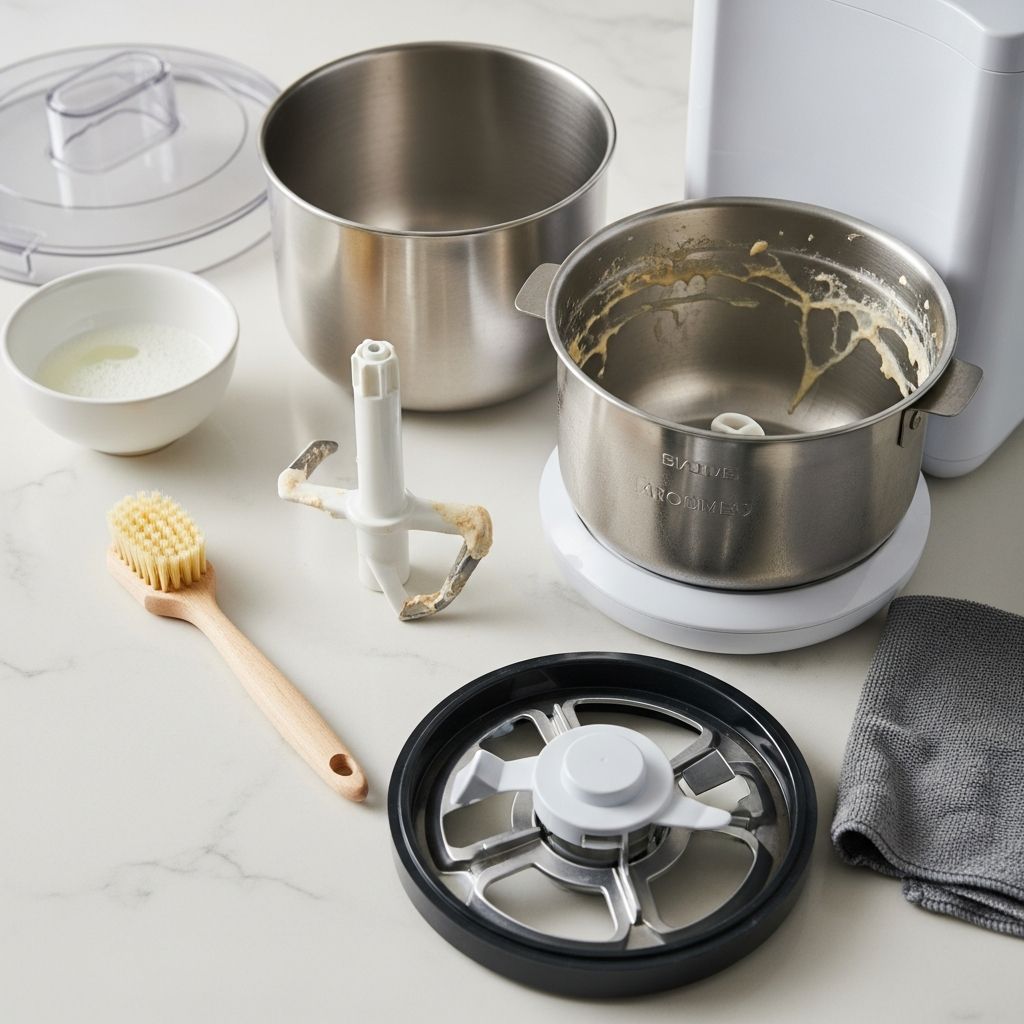
Deep Cleaning an Ice Cream Maker: Removing Stubborn Residue, Odors, and Build-Up
Ice cream makers handle rich mixtures full of dairy, sugar, and fat, which can leave behind film, hardened residue, and sour odors if not cleaned properly after use. Over time, this build-up can affect flavor, texture, and even the safety of your homemade ice cream. A regular quick wash is not always enough; every machine benefits from a thorough, methodical deep clean to reach hidden crevices, seals, and interior surfaces that daily cleaning often misses.
This guide explains how to deep clean both home ice cream makers and small soft-serve or batch machines, focusing on safely removing stubborn residue, eliminating odors, and preventing long-term build-up. The steps align with common manufacturer recommendations and food-service cleaning practices, emphasizing disassembly, soaking, scrubbing, and careful drying.
Table of Contents
- Why Deep Cleaning an Ice Cream Maker Matters
- Know Your Ice Cream Maker Type
- Safety, Preparation, and Supplies
- Pre-Clean: Emptying and Cooling the Machine
- Step-by-Step Disassembly for Deep Cleaning
- Deep Cleaning Removable Parts
- Cleaning the Interior Freezing Chamber and Hard-to-Reach Areas
- Cleaning the Exterior, Base, and Motor Area
- Removing Odors and Persistent Off-Smells
- Tackling Mineral Scale, Grease Film, and Butterfat Build-Up
- Drying, Reassembly, and Post-Clean Checks
- Ongoing Maintenance Schedule: How Often to Deep Clean
- Troubleshooting Common Cleaning Problems
- Frequently Asked Questions (FAQs)
- Conclusion
Why Deep Cleaning an Ice Cream Maker Matters
Every batch of ice cream leaves behind traces of dairy, sugar, and emulsifiers that cling to barrels, paddles, seals, and dispensing parts. If not removed, they harden, attract bacteria, and cause off-flavors and textural issues.
Key reasons deep cleaning is essential include:
- Food safety: Residual dairy and sugar support bacterial growth and can violate health codes in commercial settings.
- Flavor quality: Old residue and absorbed odors can make fresh ice cream taste sour, rancid, or “stale.”
- Texture and performance: Butterfat build-up and dried mix can interfere with freezing, cause clogs, and strain the motor.
- Longevity of the machine: Routine, correct cleaning reduces wear on seals, scraper blades, and moving parts.
Know Your Ice Cream Maker Type
Before deep cleaning, identify what kind of ice cream maker you own, as the process and level of disassembly vary by design.
| Type of Ice Cream Maker | Common Features | Deep-Cleaning Focus |
|---|---|---|
| Freezer-bowl home unit | Removable insulated bowl, plastic dasher, simple lid. | Soaking bowl exterior only, scrubbing dasher, lid crevices, and seals. |
| Compressor (self-freezing) home unit | Built-in compressor, removable metal bowl, paddles. | Wiping fixed freezing chamber, cleaning bowl, paddles, vents. |
| Pod-style (e.g., pint-and-blade design) | Pint containers, removable spindle assembly, auto-processing head. | Hidden channels around spindle, lid mechanisms, pint rims and threads. |
| Soft-serve / commercial counter-top | Freezing barrels, hoppers, scraper blades, O-rings, dispensing handles. | Scraper blades, barrels, hoppers, seals, and dispensing nozzles. |
Always consult the owner’s manual for model-specific restrictions (such as parts that must not be immersed in water or limitations on chemical cleaners).
Safety, Preparation, and Supplies
Proper preparation keeps both you and the machine safe during a deep cleaning session.
Safety steps before cleaning
- Unplug the machine and allow any freezer components to fully warm to room temperature to avoid burns or condensation-related damage.
- Ensure the motor and electrical components remain dry; never immerse the base or motor housing in water.
- Protect your hands when handling sharp scraper blades or metal paddles, especially in soft-serve or commercial units.
Recommended cleaning supplies
- Mild dish soap and warm to hot water for removing fats and sugars.
- Soft sponges or non-abrasive brushes to avoid scratching plastic or coated metal surfaces.
- Small brushes, toothbrushes, or cotton swabs for crevices, grooves, and around seals.
- Microfiber cloths or lint-free towels for drying and wiping the exterior.
- Food-safe descaling or acidic cleaner for scale and heavy build-up, used according to manufacturer guidance.
- White vinegar and baking soda to neutralize odors and loosen light build-up inside bowls and containers.
Pre-Clean: Emptying and Cooling the Machine
Before you disassemble anything, clear the remaining mix and let the machine stabilize.
- Dispense or scoop out any remaining ice cream or soft serve from the chamber or hoppers.
- For commercial or soft-serve units, run a short cycle with warm water to flush out most of the remaining mix until the water runs mostly clear; this is a pre-rinse, not the full cleaning.
- Turn the machine off and unplug it. Allow all freezing surfaces and bowls to come up toward room temperature to prevent cracking from sudden temperature changes.
Step-by-Step Disassembly for Deep Cleaning
Thorough cleaning requires breaking the machine down into accessible parts as recommended by the manufacturer.
Typical components to remove include:
- Mixing bowl or freezer bowl insert.
- Churning blade / dasher / beater assemblies, including scraper blades on soft-serve machines.
- Lids, covers, and feed doors or chutes.
- Dispensing handles, nozzles, and spouts on soft-serve units.
- Seals, O-rings, rear seals, and gaskets where accessible.
- Pint containers and blade cartridges on pod-style machines.
As you disassemble, keep parts grouped by section or side of the machine and note the orientation of seals and blades to make reassembly easier later.
Deep Cleaning Removable Parts
Removable components carry most of the visible residue and are usually safe to immerse in water unless the manual states otherwise.
1. Soak in warm, soapy water
- Fill a sink, tub, or large basin with warm to hot water and add mild dish soap until the water is sudsy.
- Place bowls, paddles, lids, nozzles, and seals into the solution and soak for about 10–15 minutes, or as recommended by your manufacturer or detergent instructions.
- Soaking loosens dried dairy and sugar so that scrubbing is more effective and less abrasive.
2. Scrub each piece carefully
- Use a soft sponge or non-abrasive brush on large surfaces to remove films and greasy residue.
- Employ small brushes, toothpicks, or cotton swabs to reach into grooves, corners, threads, and around seals and O-ring channels where mix often hides.
- For stubborn spots, re-apply soapy water and gently scrub in a circular motion instead of using metal scouring pads that may scratch surfaces.
3. Rinse thoroughly
- Rinse under running warm water until all visible soap, foam, and loosened residue are gone.
- Pay extra attention to hollow handles, spouts, and threaded connectors where detergent can remain trapped.
4. Address lingering smells on parts
- If parts retain a dairy or flavor odor, soak them briefly in a mixture of one part white vinegar to three parts warm water, then rinse thoroughly to remove any vinegar scent.
- For plastic bowls or lids that have absorbed strong flavors, a paste of baking soda and water gently rubbed on the surface can help deodorize before rinsing.
Cleaning the Interior Freezing Chamber and Hard-to-Reach Areas
The interior barrel or freezing chamber is where butterfat build-up and hardened residue often cause the most trouble, especially at the rear corners and seams.
Home machines with removable bowls
- If the bowl is fully removable, clean the interior of the bowl as part of the removable parts step, avoiding submerging any electronic or non-immersible components attached to it.
- For compressor-style units where a fixed metal chamber remains in the base, wipe the interior with a soft cloth dipped in warm, soapy water, wrung out to avoid excess liquid.
- Use a small brush or cloth-wrapped spatula to reach into corners and around any fixed probes or posts.
Soft-serve and commercial-style machines
- After pre-rinsing with warm water, prepare a hot detergent solution specified for food equipment, or a suitable acid cleaner for scale removal if allowed by the manufacturer.
- Pour or circulate this solution through the freezing chamber and use brushes to scrub the interior surfaces, especially seams and the back of the barrel where butterfat tends to accumulate.
- Drain the solution completely and flush repeatedly with hot water until no detergent remains.
Pod-style and specialty designs
- Check around the spindle, processing head, and any drain holes for hidden gunk, cleaning with a toothbrush or narrow brush.
- Run a cleaning cycle using a pint filled with hot water and a drop of dish soap if recommended, then follow with a plain water cycle to rinse.
Cleaning the Exterior, Base, and Motor Area
The exterior of your ice cream maker may not directly touch food, but grease, dust, and spills can attract dirt and impact airflow or heat dissipation.
- Wipe down the outer surfaces with a damp cloth and a bit of mild dish soap to remove splatters and sticky residue.
- Spot-clean stubborn marks using a slightly stronger soapy solution, taking care not to drip liquid into vents, buttons, or electrical openings.
- Gently clean the base and motor housing with a barely damp cloth, then immediately dry to prevent moisture intrusion.
- For machines with condenser coils or vents, brush away dust and lint with a soft brush to support efficient cooling.
Removing Odors and Persistent Off-Smells
Odors in an ice cream maker usually come from old dairy residue, trapped moisture, or absorbed flavors in plastic components.
- Ensure every food-contact surface, including seals and O-ring grooves, has been cleaned and rinsed thoroughly; even a thin milk film can sour over time.
- Deodorize bowls, lids, and removable components with a dilute white vinegar soak, followed by a clear water rinse and full air drying.
- Use baking soda sprinkled into dry bowls or containers and let it sit for several hours before rinsing out to absorb residual smells.
- Always store the machine dry with the lid slightly ajar or components separated to prevent musty odors from trapped moisture.
Tackling Mineral Scale, Grease Film, and Butterfat Build-Up
Deep-seated build-up appears as cloudy films, waxy deposits, or hard scale on interior surfaces and moving parts.
- For butterfat and greasy films, hot water with proper detergent is essential; fats dissolve more effectively at higher temperatures, within the safe range for your parts.
- In areas with hard water, mineral scale may form a chalky layer; a food-safe acidic cleaner or a vinegar solution can help, provided the manufacturer does not prohibit acids on specific metals.
- Pay special attention to barrel corners, backs of the freezing chamber, and around scraper blades, where residue tends to accumulate and harden.
- Replace worn scraper blades, seals, and O-rings on schedule to maintain a good cleaning surface and prevent leakage of mix into inaccessible spaces.
Drying, Reassembly, and Post-Clean Checks
Thorough drying and correct reassembly protect your machine from corrosion, mold, and mechanical problems.
- Air-dry removable parts on a clean rack or towel, or pat dry with a lint-free cloth until no moisture remains, especially around joints and seals.
- Inspect parts for cracks, worn edges, or damaged seals and replace if needed, especially in frequently used commercial machines.
- Reinstall seals, O-rings, and rear seals in their original orientation, followed by paddles, blades, and bowls according to the manual.
- Confirm that all locking mechanisms, latches, and alignment marks are correctly seated to avoid leaks or scraping noises when the machine runs.
- For soft-serve units, many operators perform a short rinse or sanitizer cycle (where allowed and required by local code) before adding fresh mix.
Ongoing Maintenance Schedule: How Often to Deep Clean
The right cleaning frequency depends on how often and in what context you use your ice cream maker.
- Home machines used occasionally benefit from a basic cleaning after each use and a thorough deep cleaning every few uses or whenever odors or residue appear.
- Commercial or soft-serve machines are typically cleaned at least daily, with a full breakdown and deep cleaning in line with health department regulations and manufacturer guidance.
- Regardless of setting, immediate cleaning after use makes deep cleaning easier by preventing residue from hardening.
Troubleshooting Common Cleaning Problems
Even with careful cleaning, some issues can persist. Here are common problems and practical responses.
- Persistent sour smell: Re-check seals, O-ring grooves, and hidden crevices. Perform another cleaning focusing on these areas, use a vinegar rinse, then fully air-dry disassembled parts.
- Visible streaks or flakes in fresh ice cream: This may indicate old mix or scale breaking loose, or deteriorating scraper blades. Deep clean the freezing chamber, inspect blades, and replace worn parts.
- Machine struggles to churn or freezes unevenly: Built-up residue or ice on the bowl or chamber walls can interfere with heat transfer. Repeat deep cleaning on interior surfaces and verify that the condenser and vents are clear of dust.
- Leaks around the rear or at the dispensing head: Inspect and replace worn O-rings and seals, ensuring proper lubrication if the manufacturer specifies a food-grade lubricant.
Frequently Asked Questions (FAQs)
How often should I deep clean my ice cream maker?
For occasional home use, clean thoroughly after each batch and perform a full deep clean every few uses or whenever you notice residue or odors. In commercial settings, a complete deep clean and breakdown is typically required at least daily, with frequency guided by your health department and the manufacturer.
Can I put my ice cream maker parts in the dishwasher?
Some paddles, lids, and bowls are labeled dishwasher-safe, but many manufacturers still recommend hand washing with warm, soapy water to protect coatings, seals, and finishes. Always check your specific manual before putting any part in the dishwasher.
Is running hot water through the machine enough to clean it?
No. Running hot water alone only rinses away loose mix and does not remove fats, dried proteins, or scale. Proper cleaning requires disassembling, soaking in detergent solution, scrubbing, and thorough rinsing.
What cleaners are safe to use on my ice cream maker?
Use mild dish soap for everyday cleaning and only use specialized acid or descaling cleaners that are explicitly approved for food equipment and your machine materials. Avoid harsh abrasives and strong chemicals that can pit metal or degrade plastic.
How do I prevent odors from returning?
Clean immediately after use, ensure every part is fully dry before storage, leave lids slightly open to allow airflow, and periodically use gentle deodorizing methods such as vinegar soaks or baking soda treatments on odor-prone parts.
Conclusion
Deep cleaning an ice cream maker goes beyond a quick rinse. It means breaking the machine down into removable parts, soaking and scrubbing away butterfat and sugar, carefully cleaning interior barrels and corners, and finishing with thorough drying and correct reassembly. Following this process helps your machine consistently produce ice cream that tastes fresh and clean.
By aligning your cleaning routine with your machine type and usage level, and by paying attention to hidden crevices, seals, and build-up-prone areas, you greatly reduce the risk of off-flavors, bacterial growth, and mechanical wear. Over time, these habits keep your ice cream maker reliable, efficient, and ready for the next batch whenever you are.
Similar Articles





Read full bio of Sneha Tete