
Early Warning Signs That Your Water Heater May Soon Need Replacement
Learn how to spot the earliest warning signs that your water heater is nearing failure so you can plan a safe, cost-effective replacement.
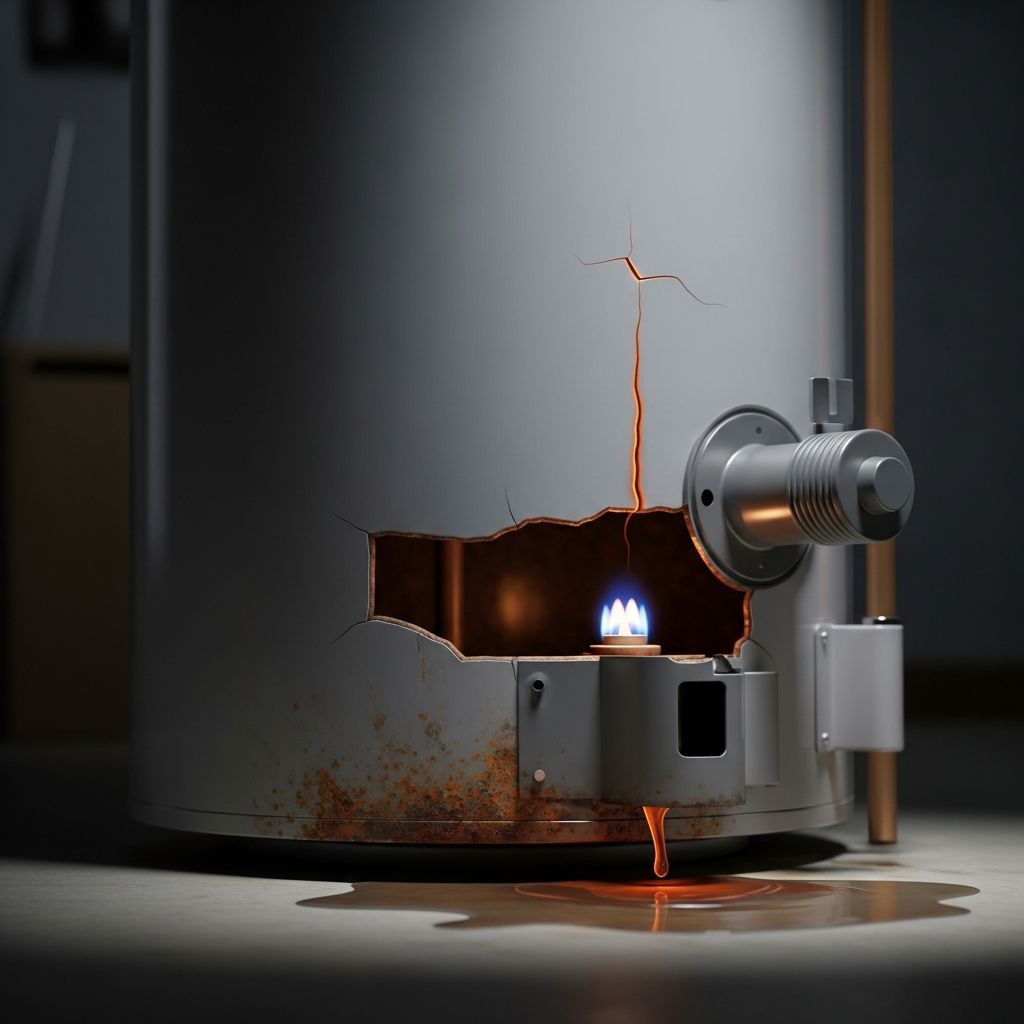
Early Warning Signs That a Water Heater May Soon Need Replacement
A water heater is easy to ignore when it is working well, but a failing unit can cause sudden cold showers, expensive energy bills, and even major water damage. Recognizing early warning signs gives you time to repair issues when possible and plan a safe, budget-friendly replacement before a breakdown occurs.
This guide explains the most common early symptoms of a failing water heater, how to interpret them, and when it is usually smarter to replace the unit instead of continuing to repair it.
Table of Contents
- How Your Water Heater Works and Why Early Signs Matter
- 1. Advanced Age of the Water Heater
- 2. Inconsistent or Insufficient Hot Water
- 3. Strange Noises from the Tank
- 4. Rusty, Discolored, or Smelly Hot Water
- 5. Water Around the Base or Persistent Moisture
- 6. Visible Corrosion or Rust on the Heater
- 7. Frequent Repairs and Component Failures
- 8. Rising Energy Bills and Declining Efficiency
- 9. Reduced Water Flow or Pressure from Hot Taps
- 10. Safety-Related Warning Signs
- Repair vs. Replace: How to Decide
- Typical Lifespan: Tank vs. Tankless Units
- Preventive Maintenance to Delay Replacement
- Frequently Asked Questions (FAQs)
- Conclusion
How Your Water Heater Works and Why Early Signs Matter
Most homes use either a traditional storage tank water heater or a tankless (on-demand) model. Tank units heat and store a specific volume of hot water, while tankless systems heat water as it flows through the unit. In both cases, components like heating elements, burners, thermostats, valves, and internal linings wear down over time.
Ignoring small symptoms often leads to sudden failure, emergency calls, and, with tank models, the risk of a ruptured tank and flooding. Paying attention to early warning signs lets you:
- Schedule replacement on your own timeline
- Compare high-efficiency options instead of rushing into a purchase
- Reduce the risk of water damage, mold, and safety hazards
- Avoid repeatedly paying for short-term repairs on a dying unit
1. Advanced Age of the Water Heater
Age is one of the clearest predictors that a water heater is approaching the end of its useful life. Many plumbing and manufacturer sources note that conventional tank-style heaters typically last around 8–12 years, while tankless units can often reach 15–20 years under good conditions.
How to check your water heater’s age
- Look for a manufacturer label or sticker on the side of the tank.
- Locate the serial number, which usually encodes the manufacturing date.
- Check the manufacturer’s website or documentation for how to read the code.
If your tank water heater is over ten years old and showing any other warning signs—such as leaks, rust, or temperature problems—replacement is generally more cost-effective and safer than continuing to repair it.
Age vs. risk of failure: quick comparison
| Unit Type | Typical Service Life | When to Start Planning Replacement |
|---|---|---|
| Standard tank water heater | 8–12 years | Around year 8–10 |
| High-quality tank water heater | 10–15 years | Around year 10 |
| Tankless water heater | 15–20 years (sometimes more) | Around year 15 |
2. Inconsistent or Insufficient Hot Water
Fluctuating or weak hot water performance is a classic early sign that the heater is struggling.
Common symptoms
- Showers turn cold unexpectedly.
- Water never gets as hot as it used to, even at the same thermostat setting.
- Hot water runs out quickly, especially when multiple fixtures are used.
- Occasional bursts of extremely hot water mixed with lukewarm or cold.
Possible causes
- Sediment buildup at the bottom of a tank, reducing capacity and insulating water from the heat source.
- Failing heating elements or burner issues that cannot keep up with demand.
- Thermostat malfunction causing uneven or incorrect water temperatures.
- Aging components losing efficiency after years of use.
If flushing the tank, adjusting the thermostat, or replacing individual parts does not restore reliable hot water, these symptoms often signal that the unit is near the end of its life and replacement should be considered.
3. Strange Noises from the Tank
Unusual noises coming from a water heater are one of the earliest and most obvious signs of trouble. Homeowners often report popping, rumbling, banging, or crackling sounds, especially as the unit heats.
What the noises usually mean
- Popping or rumbling: Typically caused by sediment and mineral buildup in the bottom of the tank. As water heats and boils through the sediment, it creates popping and rumbling sounds.
- Crackling or hissing: Sometimes associated with moisture around electric elements or scale on gas burners.
- Loud banging or knocking: Can indicate water hammer in the plumbing system or expanding and contracting metal if the tank is stressed.
While flushing a tank can temporarily reduce noise by removing some sediment, repeated loud rumbling, especially in an older heater, often means the tank is heavily scaled and nearing failure. At this stage, replacement is usually more sensible than repeated cleaning.
4. Rusty, Discolored, or Smelly Hot Water
Rusty or discolored water from hot taps is a serious early warning sign of internal corrosion in a water heater.
How to recognize water quality issues
- Brown, reddish, or murky water when the hot water tap is opened.
- Metallic taste or odor in the hot water.
- Rotten egg (sulfur) smell, often linked to bacteria reacting with the anode rod and minerals inside the heater.
What rusty or discolored water indicates
- Internal tank corrosion when discoloration occurs only with hot water, not cold.
- Failing anode rod, which is designed to sacrifice itself to protect the tank from rust.
- Corroded pipes if both hot and cold water are affected (in that case, the plumbing, not just the heater, may need attention).
Once the inner lining of a tank starts to break down, rust and leaks usually follow. In most cases, a severely corroded tank cannot be repaired safely; replacement is the standard recommendation.
5. Water Around the Base or Persistent Moisture
Even a small amount of water around the base of a water heater is a red flag that should never be ignored.
Signs of impending leaks
- Puddles or damp spots near the base of the tank.
- Visible dripping from the tank or connecting pipes.
- Moisture around the temperature and pressure relief (T&P) valve or drain valve.
- Rust streaks where water has slowly leaked and dried.
Why leaks are so serious
- They can indicate a cracked inner tank caused by years of expansion and contraction.
- Cracks tend to worsen, turning small leaks into sudden and severe flooding.
- Standing water can damage flooring, walls, and nearby belongings and can promote mold growth.
Some small leaks may come from loose fittings or valves that a professional can repair. However, when water is seeping from the tank body itself—especially on an older unit—replacement is almost always necessary to prevent a major rupture.
6. Visible Corrosion or Rust on the Heater
Corrosion visible on the outside of the heater is often a sign that internal deterioration has already begun.
Where corrosion often appears
- Around hot and cold water connections at the top of the unit.
- Near the T&P relief valve and drain valve.
- On seams, welds, or edges of the tank casing.
- On exposed metal parts of gas burners or electrical connections.
According to plumbing professionals, visible rust and pitting on or near a tank are early warnings that the protective internal lining may be compromised and that leaks are likely to develop. The more widespread the corrosion, the stronger the case for planning replacement soon.
7. Frequent Repairs and Component Failures
Needing occasional maintenance on a water heater is normal, but recurring problems are a sign that the unit is near the end of its service life.
Patterns to watch for
- Calling for professional service more than once a year.
- Repeated failures of thermostats, heating elements, burners, or igniters.
- Regular pilot light outages on gas models.
- Multiple minor leaks or valve replacements within a short time.
Each repair may seem manageable on its own, but costs add up quickly. Many plumbing experts recommend comparing the cost of a significant repair to the price of a new, more efficient heater: if a repair is approaching half the cost of replacement and the unit is aging, replacement usually provides better long-term value.
8. Rising Energy Bills and Declining Efficiency
An older heater often loses efficiency and uses more energy to provide the same amount of hot water. You may notice this as a gradual rise in utility bills without any change in your usage patterns.
Signs of energy loss
- Longer heating cycles: the heater runs for extended periods to reach set temperature.
- Constant operation, especially on older or poorly insulated units.
- Uneven water temperature, indicating the heater is struggling to maintain settings.
While maintenance such as flushing sediment and insulating exposed pipes can help, there comes a point where aging components and internal scaling permanently reduce efficiency. Modern high-efficiency or ENERGY STAR-certified models typically consume less energy and can offset their upfront cost through lower monthly bills.
9. Reduced Water Flow or Pressure from Hot Taps
Another subtle early warning sign is a noticeable drop in water flow or pressure from hot taps, even though cold water flow remains strong.
Common causes of reduced hot water flow
- Scale and mineral buildup inside the tank or heat exchanger restricting water pathways.
- Partially clogged hot water outlet or internal passageways.
- Debris caught in aerators and showerheads fed by heavily scaled heaters.
In tankless units, reduced flow is a particularly important warning that internal components are becoming clogged or deteriorated. Some restrictions can be resolved by descaling and flushing, but chronic flow issues in older units often point toward the need for replacement.
10. Safety-Related Warning Signs
Alongside performance issues, some signs directly relate to safety and should prompt immediate professional evaluation.
Key safety-related symptoms
- Burning or scorching smells near the heater.
- Signs of overheating, such as scorching on the tank or nearby surfaces.
- Frequent T&P valve discharge, suggesting temperature or pressure problems.
- Gas odor or suspected gas leaks near gas water heaters.
Some of these issues can be repaired, but on an older heater they may be symptoms of broader failure. A professional can advise whether a repair is safe or whether a full replacement is the more responsible option.
Repair vs. Replace: How to Decide
Not every problem means you must replace your water heater immediately. However, certain patterns strongly suggest that replacement is the wiser long-term choice.
Factors that favor repair
- The unit is relatively new (well under its expected lifespan).
- The problem is isolated (for example, a single faulty thermostat or valve).
- There are no signs of tank corrosion or structural damage.
- The cost of repair is low compared to replacement.
Factors that favor replacement
- The heater is approaching or beyond its expected lifespan.
- There are multiple symptoms at once (leaks, noise, rusty water, temperature swings).
- Repairs are frequent or increasingly expensive.
- There is evidence of internal tank corrosion or cracking.
- You want improved efficiency and lower energy consumption going forward.
Typical Lifespan: Tank vs. Tankless Units
Understanding typical lifespans helps you decide when to start watching more closely for early warning signs.
Average lifespans
- Standard tank water heaters: Often 8–12 years, sometimes up to 15 with ideal maintenance.
- Tankless water heaters: Commonly 15–20 years, though performance can decline without regular descaling.
Manufacturers and plumbing experts often recommend beginning replacement planning around year ten for conventional tanks, especially if you notice any of the warning signs covered above.
Preventive Maintenance to Delay Replacement
While no water heater lasts forever, regular maintenance can slow wear and help you catch early issues while they are still manageable.
Helpful maintenance habits
- Flush the tank annually (or as recommended) to remove sediment that causes noise, inefficiency, and reduced capacity.
- Inspect the anode rod every few years and replace it before it is fully consumed to delay internal corrosion.
- Check the T&P valve for proper operation to maintain safe pressure and temperature levels.
- Visually inspect connections, valves, and the tank exterior for early signs of leaks or rust.
- Schedule professional inspections, particularly as the unit ages or if you notice subtle changes in performance.
Frequently Asked Questions (FAQs)
How do I know if my water heater is about to fail?
Common signs include advanced age (over ten years for most tank units), rumbling or popping noises, rusty or discolored hot water, water around the base of the unit, inconsistent water temperatures, and frequent repairs. When several of these symptoms appear together, it usually indicates that failure is approaching.
Are small leaks always a sign that I need a new water heater?
Small leaks from fittings or valves can sometimes be repaired. However, if water appears to seep from the tank itself or from cracks in the body—especially on an older heater—replacement is typically necessary, as the inner tank cannot be safely patched.
Can flushing the tank fix noisy operation?
Flushing can remove some sediment and may temporarily reduce popping or rumbling sounds. Over time, though, heavy mineral buildup and internal wear limit how much improvement you will see, particularly on older units. Persistent noise after maintenance usually suggests that replacement is not far off.
Is rusty water always caused by the water heater?
No. If both hot and cold taps produce rusty water, the issue may be in the plumbing pipes. If the discoloration is limited to hot water, internal tank corrosion is likely, and you should have the heater evaluated for possible replacement.
When should I start planning to replace my water heater?
For a typical tank water heater, many experts advise beginning to plan replacement around year eight to ten, even if there are no major problems yet. If you notice any of the early warning signs discussed in this guide, it is wise to schedule a professional inspection and review replacement options.
Conclusion
Water heaters rarely fail without giving early hints. Changes in water temperature, unexplained noises, rusty or discolored water, moisture around the tank, and steadily rising energy bills all provide useful clues that the unit is nearing the end of its life. Age, visible corrosion, and a growing list of repairs further strengthen the case for planning a replacement rather than waiting for an emergency.
By paying attention to these signals and understanding how they relate to the typical lifespan of both tank and tankless heaters, you can make a calm, informed decision about when to replace your water heater. This approach helps you avoid sudden loss of hot water, limit the risk of leaks and water damage, and choose a modern unit that offers improved efficiency and reliability.
Thoughtfully evaluating performance trends, maintenance history, and safety concerns allows you to balance repair and replacement decisions in a way that protects both your home and your long-term budget.
Similar Articles






Read full bio of Sneha Tete