
Flushing a Tank Water Heater: Why It Matters, How Often, and Key Steps
Learn why flushing a tank water heater prevents sediment problems, how often to do it, and the essential high-level steps for a safe DIY flush.
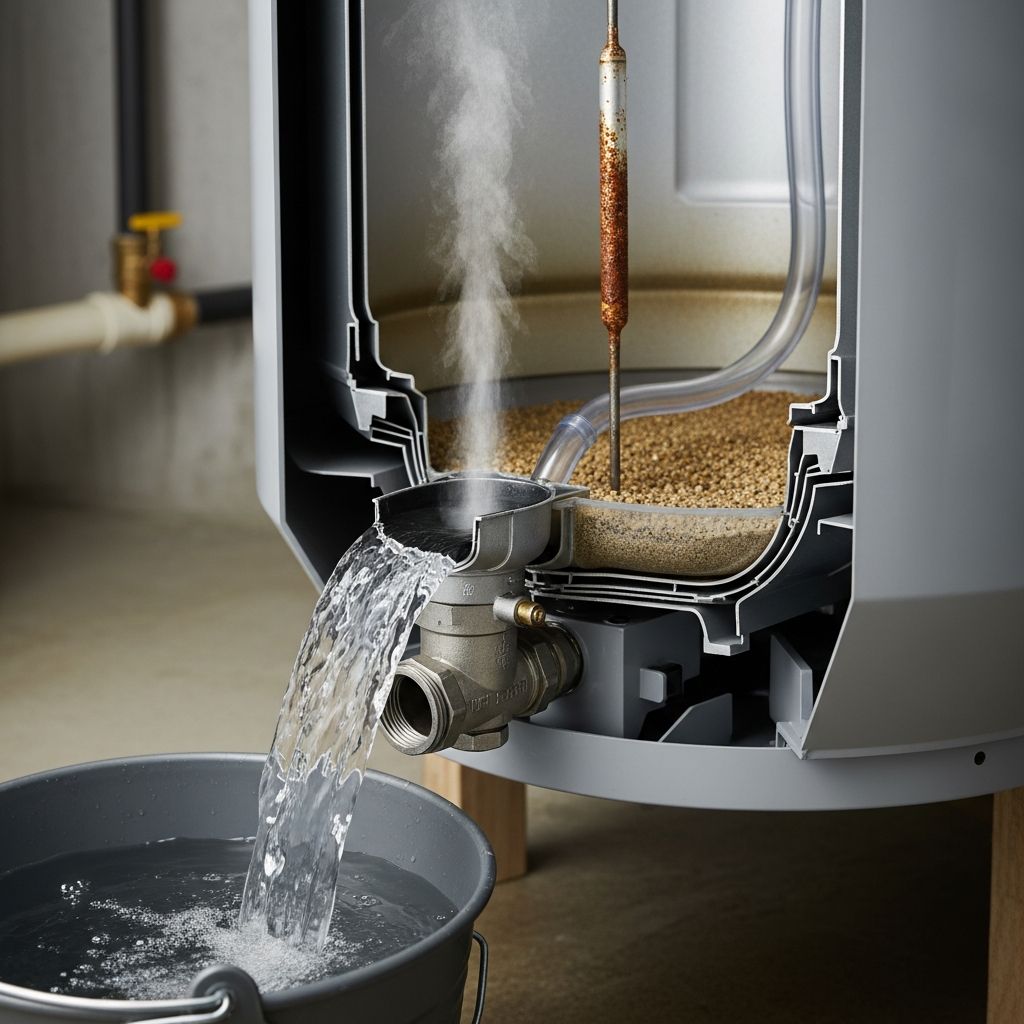
Flushing a Tank Water Heater: Why, How Often, and High-Level Steps
Tank-style water heaters quietly handle one of the most important jobs in your home: delivering hot water for bathing, cleaning, cooking, and laundry. Over time, however, minerals and debris in your water supply settle at the bottom of the tank as sediment. Regularly flushing the tank helps control this buildup, improve heater performance, and extend the life of the unit.
This guide explains clearly why flushing matters, how often you should do it, and the high-level steps involved. It is focused on traditional tank water heaters (gas or electric), not tankless systems.
Table of Contents
- Why Flushing a Tank Water Heater Matters
- How Often Should You Flush a Tank Water Heater?
- Signs It Is Time to Flush Your Water Heater
- Safety and Preparation Before You Flush
- High-Level Steps to Flush a Tank Water Heater
- Post-Flush Checks and Restarting the Heater
- Gas vs. Electric: Key Differences When Flushing
- Additional Maintenance Tips to Extend Heater Life
- Frequently Asked Questions (FAQs)
- Conclusion
Why Flushing a Tank Water Heater Matters
Most municipal and well water supplies contain dissolved minerals such as calcium and magnesium. When water is heated inside the tank, these minerals settle at the bottom as sediment. Over time, the sediment layer can grow thick enough to interfere with how the heater operates.
Flushing the tank periodically removes much of this sediment. The benefits include:
- Improved efficiency: Sediment acts as an insulating blanket between the burner (gas) or heating elements (electric) and the water, meaning the heater has to work harder and run longer to reach the set temperature.
- Lower energy bills: When the heater does not run as long to heat water, it uses less gas or electricity.
- Reduced noise: Sediment can trap steam bubbles that collapse suddenly, creating rumbling, popping, or banging sounds. Flushing often reduces or eliminates these noises.
- More consistent hot water: A heavily sedimented tank may provide less usable hot water because part of the tank volume is filled with accumulated debris.
- Reduced risk of damage: Excess sediment can cause overheating at the bottom of the tank, stress the metal, and increase the risk of leaks or premature tank failure.
- Cleaner water quality: Sediment can make hot water appear cloudy or slightly discolored; flushing helps keep it clearer.
For most households, flushing a tank water heater is one of the most impactful and cost-effective preventive maintenance tasks you can perform.
How Often Should You Flush a Tank Water Heater?
Most manufacturers and plumbing professionals recommend that a standard tank water heater be flushed about once every 6 to 12 months, depending on your water quality and usage.
Key factors that influence how often you should flush include:
- Water hardness: The harder your water (higher mineral content), the faster sediment accumulates. Hard water areas often benefit from flushing every 6 months.
- Household size and hot water use: Larger families typically use more hot water, which can speed up the rate of sediment buildup.
- Age of the heater: Older heaters with years of unflushed sediment may need more frequent attention initially to restore performance.
- Manufacturer guidance: Always review your heater’s user manual; many specify recommended maintenance intervals.
If you have never flushed your tank and it is very old (for example, more than 10 years), consult a professional. In some cases, heavy sediment buildup can clog the drain valve, or flushing could reveal leaks that have been hidden by deposits.
Signs It Is Time to Flush Your Water Heater
Even if you are not on a set schedule, certain symptoms suggest your tank is overdue for a flush.
- Rumbling, popping, or banging noises when the burner or heating elements are running. These sounds often come from water trapped under sediment layers rapidly turning to steam and collapsing.
- Hot water runs out faster than it used to, or you notice inconsistent water temperature.
- Visible sediment or cloudy water from hot taps, especially when you first open them.
- Reduced water flow from hot water faucets only, which can indicate sediment has partially blocked internal pathways.
- Higher energy bills without any obvious change in usage, sometimes due to a less efficient, sediment-choked heater.
Any combination of these signs makes flushing a logical next step, assuming the heater is otherwise in good condition.
Safety and Preparation Before You Flush
Flushing a water heater involves hot water, electricity or gas, and pressurized plumbing. A few basic safety steps reduce the risk of burns, leaks, or damage. Multiple guides from manufacturers and home improvement experts highlight the same core precautions.
Tools and Supplies You May Need
- Standard garden hose long enough to reach a floor drain, utility sink, or outdoor area
- Flathead screwdriver (if the drain valve uses a slotted head instead of a handle)
- Bucket (optional, but helpful if you do not have a nearby floor drain)
- Work gloves and possibly safety glasses, for handling hot water lines and valves
- Towels or rags, in case of small spills
Key Safety Steps Before Flushing
- Turn off the heat source:
- For a gas heater, set the gas control to “Pilot” or “Off,” or close the gas shutoff valve per manufacturer instructions.
- For an electric heater, switch off the circuit breaker supplying the unit.
- Shut off the cold water supply to the heater using the valve on the cold inlet above the tank.
- Allow the water to cool if possible. Flushing can be done with hot water, but working with cooler water significantly reduces burn risk; some guides recommend waiting at least an hour after turning the heater off.
- Identify a safe drain location for the discharged water and sediment. Common choices include a floor drain, utility sink, or outdoors away from foundations and plants.
- Check the pressure relief valve area and nearby piping to ensure there are no active leaks before you start.
High-Level Steps to Flush a Tank Water Heater
Different guides present slightly different methods, but the core process is the same: power down, isolate water, drain, flush, then refill and restart.
The following are high-level steps, not every minor detail. Always adapt to the specific instructions in your heater’s manual.
| Step | Action | Purpose |
|---|---|---|
| 1 | Turn off power or gas | Prevent heating while the tank is drained; reduce burn risk. |
| 2 | Shut off cold water supply | Stop new water from entering so the tank can drain. |
| 3 | Open a hot faucet in the house | Relieve pressure and let air into the system for smoother draining. |
| 4 | Attach hose to drain valve | Direct hot water and sediment safely to a drain or suitable location. |
| 5 | Open drain valve to empty tank | Drain most of the water and sediment from the tank. |
| 6 | Turn cold water on briefly to flush | Stir and push out remaining sediment until water runs clear. |
| 7 | Close drain valve and remove hose | Prepare the tank to refill and return to normal operation. |
Step 1: Turn Off the Heating Source
Turn off the electricity at the breaker (for electric heaters) or set the gas control to “Pilot” or “Off” (for gas heaters), as recommended by the manufacturer. This prevents the heating elements or burner from operating while the tank is partly or fully empty, which could cause damage.
Step 2: Shut Off Cold Water to the Tank
Locate the cold water shutoff valve on the pipe entering the top of the heater and close it. If the heater does not have a dedicated shutoff valve, you may need to shut off the main water supply to the house.
Step 3: Open a Hot Water Faucet
Open a hot water tap at a nearby sink or tub. Keeping this faucet open while you drain the tank helps relieve internal pressure and allows air to enter, which helps the water flow out more smoothly.
Step 4: Connect a Garden Hose to the Drain Valve
Attach one end of a garden hose to the drain valve, usually located near the bottom of the tank. Run the other end of the hose to your chosen drain point or outside.
Some professionals recommend a brief “quick flush” first: open the drain valve for a few seconds, then close it. This can help clear sediment lodged in the valve so the tank drains more freely afterward.
Step 5: Open the Drain Valve and Empty the Tank
Carefully open the drain valve using the handle or a flathead screwdriver, depending on the design. Hot water and sediment will begin flowing through the hose.
- The draining process can take several minutes or longer, depending on tank size (often 30 to 75 gallons) and how clogged the valve is.
- If the flow starts strong and then slows to a trickle, sediment may be blocking the valve. Gently closing and reopening the valve or briefly turning on the cold water supply in short bursts can help dislodge debris.
- If you cannot get the tank to drain at all, many manufacturers recommend calling a licensed plumber instead of forcing the valve.
Step 6: Flush with Fresh Cold Water
Once the tank is mostly drained, leave the drain valve open and momentarily turn the cold water supply back on. This sends fresh water into the tank, stirring up remaining sediment and pushing it out through the drain hose.
- Some guides recommend flushing in several short bursts, turning the cold inlet on for 10 to 15 seconds, letting it drain, then repeating until the discharge runs clear.
- Watch the water coming from the hose. Continue flushing until you no longer see visible sediment or discoloration.
Step 7: Close the Drain Valve and Remove the Hose
When the water runs clear, turn off the cold water inlet. Close the drain valve fully and disconnect the hose. If you were draining into a bucket, empty it safely.
Leave the hot water faucet you opened earlier on for now; it will help bleed air out when the tank refills.
Post-Flush Checks and Restarting the Heater
After flushing, you need to refill the tank completely and restore power or gas safely.
Refill the Tank
- With the drain valve closed, open the cold water supply valve to the heater.
- Allow the tank to fill. As it fills, air will be forced out through the open hot water faucet. Once water flows steadily from the faucet without spurting, the lines and tank are largely purged of air.
- Turn off the hot faucet.
Restore Power or Gas
- For electric models, turn the circuit breaker back on only after the tank is completely full. Energizing electric elements in a dry tank can burn them out.
- For gas models, set the gas control back to your normal temperature setting and relight the pilot if required, or open the gas valve according to the manufacturer’s procedure.
Once the unit is running, check carefully around the drain valve, hose connection, and cold and hot connections for leaks. If you see a slow drip at the drain valve, gently tightening the valve may solve it; persistent leaks may require valve replacement by a professional.
Gas vs. Electric: Key Differences When Flushing
The overall flushing process is similar for gas and electric tank heaters, but there are a few important differences related to the heat source.
| Feature | Gas Tank Water Heater | Electric Tank Water Heater |
|---|---|---|
| Heat Source | Burner under the tank; controlled by gas valve and thermostat. | One or more electric heating elements inside the tank. |
| How to Turn Off | Set control to “Off” or “Pilot”; may close gas supply valve. | Switch off dedicated breaker at electrical panel. |
| Special Caution | Ensure no open flame or burner is operating while tank is empty. | Never energize elements before the tank is completely refilled. |
| Flushing Steps | Largely the same as electric: shut off cold supply, drain, flush, refill. | Same as gas, but extra emphasis on verifying the tank is full before turning power on. |
Hybrid electric water heaters with storage tanks generally use a very similar flushing procedure to conventional electric tanks: shut off power and water, attach hose, drain until clear, then flush with cold water and refill.
Additional Maintenance Tips to Extend Heater Life
Flushing is one of several routine tasks that support a longer service life and more reliable performance.
- Anode rod inspection: The sacrificial anode rod helps protect the tank from internal rusting. Inspecting and replacing it when heavily corroded can significantly extend tank life. Many homeowners have a plumber perform this during periodic maintenance.
- Temperature setting: Keeping the thermostat around 120°F (or as recommended by your manufacturer) balances safety, energy use, and tank longevity. Higher temperatures increase mineral precipitation and sediment formation.
- Check the temperature and pressure (T&P) relief valve: Periodically operate the valve according to the manufacturer’s instructions to ensure it moves freely and does not leak afterward. This valve is a critical safety device.
- Watch for leaks: Any persistent moisture around the base of the heater, fittings, or the tank shell could indicate aging or internal corrosion. Flushing cannot fix a leaking tank; replacement is usually required.
- Keep the area clear: Maintain adequate clearance around the heater to ensure proper airflow (especially for gas units) and easy access to valves and controls.
Frequently Asked Questions (FAQs)
Do I really need to flush my water heater every year?
Most experts suggest flushing at least once a year, and every 6 months in areas with very hard water. If your heater is quiet, efficient, and less than a couple of years old, you might stretch the interval somewhat, but waiting many years can allow heavy sediment to accumulate.
What happens if I never flush my tank water heater?
Over time, sediment can reduce efficiency, shorten the available hot water supply, increase noise, and put extra stress on the tank. This often leads to higher utility bills and can contribute to premature tank failure that may require a full replacement.
Can I flush the heater myself, or should I hire a professional?
Many homeowners can safely perform a basic flush if they follow instructions carefully and are comfortable working around hot water, valves, and simple plumbing tasks. If your heater is old, has signs of heavy sediment, or any valves seem stuck or corroded, hiring a licensed plumber is the safer choice.
Will flushing fix low hot water pressure?
If low flow is caused by sediment partially blocking the tank outlet or internal passages, flushing may help. However, low hot water pressure can also result from plumbing issues elsewhere in the home, aging pipes, or clogged aerators, which flushing alone will not resolve.
Is it safe to flush when the water is still hot?
Many guides demonstrate flushing with hot water, but it increases the risk of burns and scalding. Turning off the heater and allowing some cooling time before flushing is safer, especially for DIY work. Always handle hoses and valves carefully.
Conclusion
Flushing a tank water heater is a straightforward maintenance task that plays an outsized role in how well your system performs over time. By periodically draining and rinsing out accumulated sediment, you help the heater run more efficiently, reduce operating noise, and lower the stress that can lead to leaks and early failure.
For most households, planning a flush every 6 to 12 months, while watching for clear warning signs like rumbling, cloudy hot water, or reduced capacity, provides a practical and protective routine. Combining this with basic safety steps, careful refilling, and occasional professional inspections keeps your tank water heater in better condition for longer.
Whether you choose to perform the flush yourself or work with a licensed plumber, understanding why it matters, how often to do it, and the high-level steps involved allows you to make informed decisions about caring for one of your home’s most important systems.
Similar Articles






Read full bio of Sneha Tete