Frozen Foods in an Air Fryer: What Works Well and What Doesn’t
A complete guide to which frozen foods shine in the air fryer, which disappoint, and how to get crisp, safe, reliable results every time.
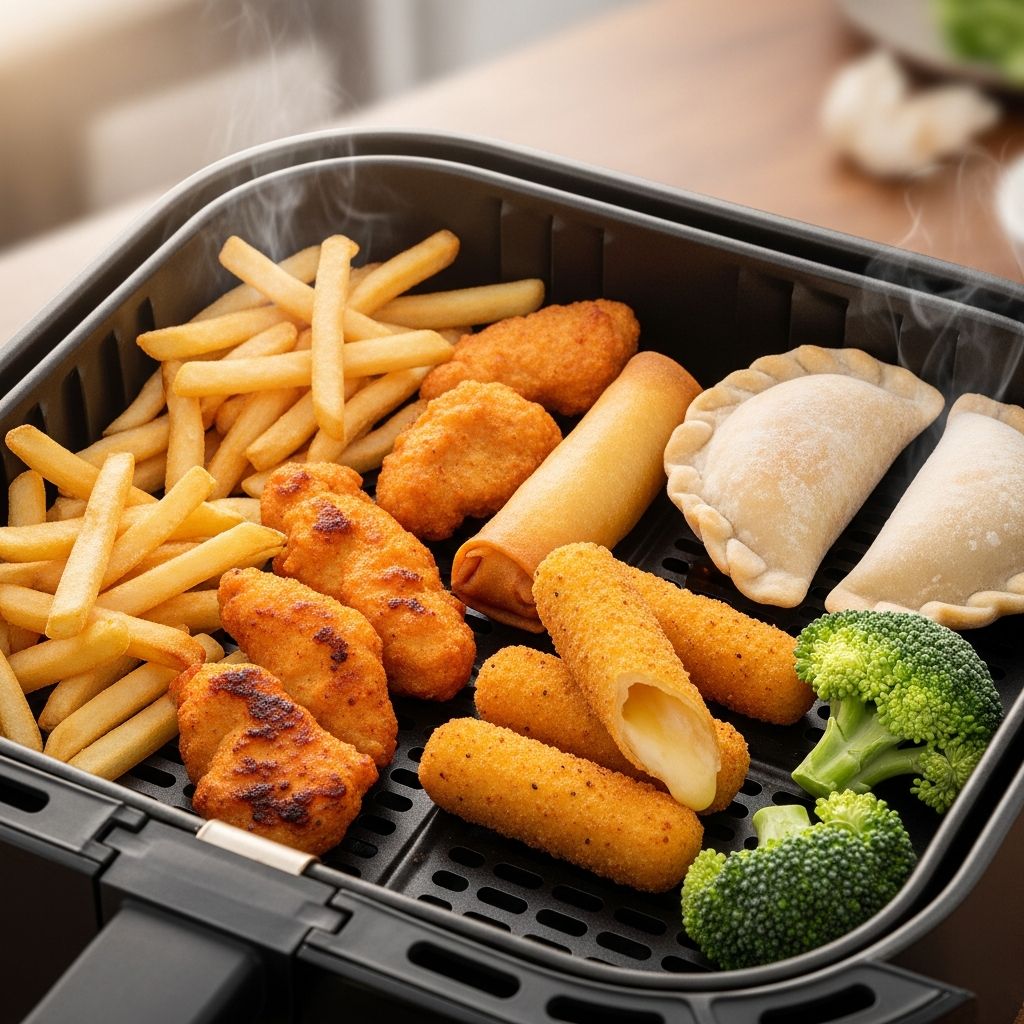
Air fryers have become a favorite tool for cooking frozen foods because they deliver a crispy texture in less time and with far less oil than deep frying. Air circulation around the food helps it cook quickly and evenly, often without thawing first, which makes weeknight dinners and snacks faster and more convenient.
However, not every frozen item behaves the same way in an air fryer. Some foods turn out beautifully crisp, while others end up dry, unevenly cooked, or soggy. Understanding what works and what does not will help you choose the best frozen foods and cook them safely and effectively.
Table of Contents
- Why Air Fryers Are Great for Frozen Food
- General Rules for Air Frying Frozen Food
- Frozen Foods That Work Really Well
- Frozen Foods That Can Work with Extra Care
- Frozen Foods That Often Don’t Work Well
- Sample Time and Temperature Cheat Sheet
- Food Safety and Quality Considerations
- Advanced Tips and Tricks
- Frequently Asked Questions (FAQs)
- Conclusion
Why Air Fryers Are Great for Frozen Food
Air fryers cook by circulating very hot air around the food, similar to a small convection oven. This method is especially effective for frozen foods that are breaded or designed for oven or deep-fryer use.
- Crispy texture with less oil: Rapid air circulation produces a crunchy exterior without submerging food in oil, making items like fries or chicken nuggets lighter but still crisp.
- No need to thaw most items: Many frozen products can go directly from freezer to basket, saving time and effort.
- Even, quick cooking: The compact chamber and fan help heat penetrate quickly and evenly, often reducing cook times compared with a traditional oven.
- Easy cleanup: Non-stick baskets and trays simplify cleaning, especially compared with deep frying.
General Rules for Air Frying Frozen Food
Although every appliance and product is slightly different, several core guidelines apply to almost all frozen foods in an air fryer.
Preheat the air fryer
Preheating for about 3–5 minutes helps the food start cooking in a hot environment, which promotes crisping and prevents soggy results.
Do not overcrowd the basket
Air needs to circulate freely. Keep pieces in a single layer whenever possible and avoid filling a basket more than about two-thirds full.
Adjust oven instructions for air frying
Oven directions on the package usually need modification. A good starting point is to reduce the temperature by about 15–25 degrees Fahrenheit (7–15 degrees Celsius) and cut the oven cook time roughly in half, then check and adjust as needed.
Shake or flip halfway
For many foods, especially fries, nuggets, and small snacks, shaking the basket or flipping items halfway through promotes even browning and prevents sticking.
Use a light oil spray if needed
While many frozen foods already contain oil in the coating, a light spritz of oil can improve color and crispness, especially for vegetables or low-fat items.
Monitor closely near the end of cooking
Because air fryers tend to cook faster than conventional ovens, check food a few minutes early to avoid over-browning or drying out.
Frozen Foods That Work Really Well
Many popular frozen items are essentially made for air frying. They typically have a coating or batter and are intended for a crispy finish.
1. Frozen French fries and potato products
Fries, tater tots, hash brown patties, and potato wedges are among the best matches for air fryers. They are usually par-fried before freezing, so they crisp up quickly.
- Arrange in a single layer or shallow pile.
- Shake the basket once or twice during cooking.
- Season with salt or spices immediately after cooking for best adherence.
2. Chicken nuggets, tenders, and strips
Breaded chicken products cook efficiently and brown nicely in the air fryer. They are often fully cooked or par-cooked before freezing, which improves reliability.
- Lay pieces in one layer without overlapping.
- Flip or shake halfway through for even crispness.
- Check internal temperature for larger or raw products to confirm doneness.
3. Breaded fish fillets and fish sticks
Battered or breaded fish fillets and sticks generally crisp well and stay moist inside when not overcooked.
- Use a tray or lined basket to catch crumbs and oil.
- Do not overcrowd to prevent steaming instead of crisping.
4. Frozen snacks and appetizers
Many frozen snack foods were designed with fast, high-heat cooking in mind, which makes them strong candidates for air frying.
- Examples that usually work well:
- Mozzarella sticks
- Mini egg rolls and spring rolls
- Pizza snack rolls and pockets
- Mini bagel pizzas
- Onion rings
- Frozen pierogies (with a light oil spray)
- Items with cheese or sauce may benefit from using parchment or foil under them to reduce sticking and mess.
5. Frozen vegetables meant for roasting
Some frozen vegetables, especially those labeled for roasting or with a bit of oil already added, can turn into crisp, flavorful sides in the air fryer.
- Toss plain vegetables lightly with oil and seasoning before air frying for better flavor and browning.
- Use moderate temperatures so the outside does not burn before the inside heats through.
6. Precooked meatballs and similar items
Fully cooked frozen meatballs and similar products reheat well and can develop a browned exterior in an air fryer.
- A baking or roasting setting works well for reheating and browning.
- Shake or turn once to prevent sticking.
Frozen Foods That Can Work with Extra Care
Some types of frozen food can succeed in an air fryer, but they require more attention to moisture content, thickness, and safety.
1. Larger cuts of frozen chicken
Frozen bone-in thighs, drumsticks, or large breasts can be air fried, but they need careful handling to reach a safe internal temperature without burning the exterior.
- Cook at a slightly lower temperature or for a longer time to let heat penetrate.
- Check internal temperature with a food thermometer to ensure it reaches a safe level.
- Consider partially thawing in the refrigerator for thick pieces.
2. Frozen raw burgers and patties
Frozen burgers and patties can be air fried, but fat content and thickness affect results.
- Leave space around each patty to allow air circulation and fat drainage.
- Monitor closely to avoid smoke from dripping fat.
- Rotate or flip to ensure even cooking.
3. Frozen raw breaded items
Items like raw breaded shrimp or chicken may cook nicely if the layer is not too thick and the timing is adjusted.
- Check frequently during the first attempt to find the right time and temperature.
- Use a thermometer to ensure safe internal temperature for poultry and seafood.
4. Frozen baked goods and pastries
Croissants, puff pastry snacks, and similar items can cook in an air fryer but are more delicate.
- Use a lower temperature compared with savory snacks to avoid burning the exterior.
- Line the tray or basket with parchment to catch any filling or melted sugar.
Frozen Foods That Often Don’t Work Well
Certain categories of frozen food are less suited to air frying because of their moisture content, structure, or cooking requirements.
1. Wet batters and very loose coatings
Foods dipped in a wet batter (like tempura-style items) before freezing often fail in an air fryer because the batter can drip or blow off, and it does not set in hot oil as it would in a deep fryer.
- Pieces may fuse to the basket or tray and lose their coating.
- For these foods, deep frying or traditional oven methods are often more reliable.
2. Very saucy or liquid-heavy dishes
Frozen meals with sauces, stews, or loose components are typically designed for microwaves or ovens, not air fryers.
- Liquid can splatter or drip into the heating element.
- The food may heat unevenly, with dried-out edges and cold centers.
3. Dense casseroles and large frozen meals
Thick lasagnas, family-size casseroles, and similar dishes usually require long, even heating that suits an oven better than a compact air fryer chamber.
- The top may burn before the middle is hot.
- Containers may not be designed for the airflow and proximity to the heating element.
4. Large roasts and whole poultry from frozen
Very large, dense pieces of frozen meat are risky in an air fryer because it is difficult to bring the center to a safe temperature before the outside overcooks.
- Partial or full thawing in a refrigerator is generally safer for such items.
- Conventional oven roasting is often more effective for even cooking.
5. Delicate leafy vegetables from frozen
Thin, leafy vegetables like spinach or some greens tend to dry out or blow around in the basket, leading to uneven cooking or burnt edges.
- Heavier vegetables or those cut into chunks are usually better suited to air frying.
Sample Time and Temperature Cheat Sheet
The following examples provide starting points for common frozen foods. Always adjust based on your specific appliance and the thickness or brand of the product, and check for doneness.
| Frozen Food | Approximate Time | Approximate Temperature | Notes |
|---|---|---|---|
| French fries | 14–18 minutes | 400°F (about 200°C) | Shake halfway through for even crispness. |
| Chicken nuggets | 10–12 minutes | Around 400°F (about 200°C) | Single layer in basket; flip or shake once. |
| Battered fish fillets | 10–16 minutes | Around 400°F (about 200°C) | Use a tray; avoid overcrowding. |
| Mozzarella sticks | 6–8 minutes | About 400°F (about 200°C) | Line basket if cheese leakage is a concern. |
| Mini egg rolls | 8–12 minutes | High heat air fry setting | Turn once for even browning. |
| Onion rings | 8–10 minutes | High heat air fry setting | Spread in a single layer for best crunch. |
| Mini bagel pizzas | 6–8 minutes | High heat air fry setting | Use tray; check for melted cheese and crisp edges. |
These times are approximate reference points and may vary by model and capacity. Start at the lower end of the time range and add a few minutes as necessary.
Food Safety and Quality Considerations
Safety and quality go hand in hand when working with frozen foods.
- Avoid partial cooking: Do not stop cooking halfway and return food to the refrigerator or freezer; cook items through once they are started.
- Check internal temperature: Especially for poultry, pork, and seafood, use a food thermometer for thicker cuts or raw items to confirm safe temperatures.
- Use proper containers: Only use accessories that are heat safe and suitable for an air fryer, such as certain metal or oven-safe dishes that do not block airflow excessively.
- Handle leftovers properly: Once cooked, cool leftovers promptly and refrigerate. Reheat in the air fryer with a slightly lower temperature to avoid drying out.
Advanced Tips and Tricks
Once you are comfortable with basic frozen items, you can refine your technique for even better results.
- Batch cooking for crowds: Cook in multiple small batches instead of overfilling a single one to maintain crispness when feeding several people.
- Layered cooking: In models with more than one tray, rotate trays halfway through so food on top and middle racks cook evenly.
- Seasoning strategies: For plain frozen vegetables or potatoes, toss with oil and spices before cooking so flavors adhere and bloom during cooking.
- Reheating leftovers: Leftover pizza, fries, and fried chicken can be revived in an air fryer at moderate temperatures until heated through and re-crisped.
- Using foil or parchment: For cheesy or sticky foods, a small piece of perforated parchment or foil can help reduce sticking and simplify cleanup, while still allowing air to circulate.
Frequently Asked Questions (FAQs)
Can I cook frozen food in an air fryer without thawing?
Many frozen foods, especially fries, nuggets, and breaded snacks, can be cooked directly from frozen without thawing. This is one of the main advantages of using an air fryer for frozen products.
Do I need to add oil when air frying frozen foods?
Most commercially prepared frozen snacks already contain some oil in the coating, so additional oil is optional. A very light spray can improve color and texture for some items, especially vegetables and lower-fat foods.
How do I convert oven directions to air fryer settings?
A typical approach is to lower the oven temperature by about 15–25°F (7–15°C) and reduce the listed oven time by roughly half, then check for doneness and adjust if needed.
Why do some frozen foods turn out soggy in the air fryer?
Sogginess usually results from overcrowding, insufficient preheating, or foods that release a lot of moisture. Preheating, smaller batches, and choosing lower-moisture products help prevent this.
Is it safe to cook large frozen meats in an air fryer?
Very large or thick frozen meats can be challenging because the outside may darken before the inside reaches a safe temperature. For big pieces such as whole poultry or large roasts, thawing first and using a conventional oven is generally safer and more reliable.
Conclusion
Air fryers are particularly effective for frozen foods that are breaded, par-fried, or designed for oven or fryer preparation. Items such as fries, chicken nuggets, fish sticks, onion rings, and many snack-style appetizers routinely emerge crisp and evenly cooked when you preheat the appliance, avoid overcrowding, and shake or flip halfway through.
Other frozen foods can still work, but they call for extra attention to thickness, moisture, and safety. Large cuts of meat, saucy entrees, densely packed casseroles, and delicate or heavily battered items often give uneven or disappointing results and may be better suited to more traditional cooking methods. Matching the food type to the strengths of the air fryer is the key to dependable outcomes.
By starting with reliable frozen products, using time-and-temperature guidelines as a reference, and adjusting for your own appliance, you can quickly learn which frozen foods deliver the best texture and flavor in an air fryer and which ones are better left to the oven, stovetop, or microwave.
Similar Articles





Read full bio of medha deb