How Long Do Air Purifiers Last? Lifespan, Filters, and Replacement Timing Explained
Understand how long air purifiers and their filters really last, and when to repair, maintain, or replace for consistently clean indoor air.
How Long Do Air Purifiers Last? Lifespan and Replacement Timing
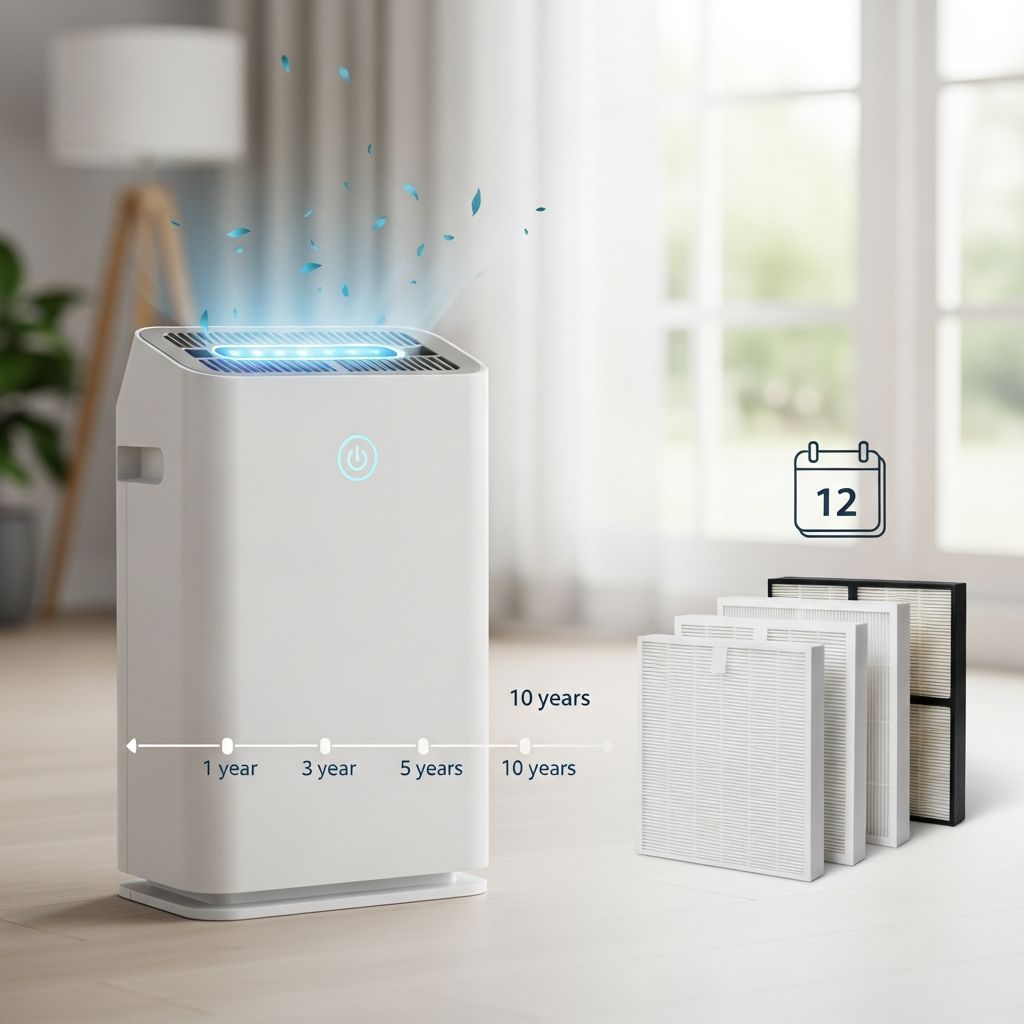
Air purifiers are an effective way to improve indoor air quality, but they are not built to last forever. Their internal components wear over time and, more importantly, their filters gradually lose efficiency. Knowing how long air purifiers and their filters last helps you plan maintenance, avoid wasted energy, and ensure you are still getting clean air.
On average, most consumer air purifiers last about 3 to 10 years, depending on build quality, usage, environment, and how well they are maintained. Filters, in contrast, usually require replacement every few months to a few years, depending on type and conditions. This article explains what determines lifespan, how often to replace different filters, and clear signs it is time to repair or replace your unit.
Table of Contents
- Overview: Typical Lifespan of Air Purifiers
- Key Factors That Affect Air Purifier Lifespan
- How Long Do Different Filters Last?
- When Should You Replace Filters and Units?
- How to Extend the Life of Your Air Purifier
- Repair vs. Replace: Making the Right Decision
- Quick Reference Table: Lifespans and Intervals
- Frequently Asked Questions (FAQs)
- Conclusion
Overview: Typical Lifespan of Air Purifiers
There is no single fixed lifespan that applies to all air purifiers. However, several ranges are commonly cited for residential and commercial systems:
- Many residential air purifiers last about 3 years before users consider replacing them, especially cheaper models.
- Higher-quality home units commonly last around 5 to 10 years with proper care.
- Some commercial or heavy-duty purifiers can exceed 20 years when well maintained.
These ranges assume that filters are replaced according to manufacturer recommendations and that the unit is not subjected to unusual abuse or damage. In practice, performance is often limited by filter condition and motor wear long before the casing or basic electronics fail.
Key Factors That Affect Air Purifier Lifespan
The same model of air purifier may last just a few years for one user but over a decade for another. Several core factors explain this difference.
Build Quality and Brand
The materials, motor quality, and design of the purifier strongly influence lifespan:
- High-quality motors and fans handle continuous operation and high resistance from clogged filters better.
- Durable housing and seals prevent air leaks and physical wear.
- Units from reputable manufacturers often come with better warranties and parts availability.
Filtration Technology and System Design
Different technologies age at different rates:
- HEPA-based purifiers rely on replaceable media filters that clog over time.
- Activated carbon filters gradually saturate and lose their ability to adsorb gases and odors.
- UV systems use bulbs that must be replaced after a set number of operating hours.
- Electrostatic or ionizing systems may last longer mechanically but still require periodic cleaning or component replacement.
Frequency and Pattern of Use
How often and how hard the purifier works has a direct impact on component wear and filter life.
- Running the unit 24/7 provides continuous filtration but shortens filter lifespan and adds stress to the motor.
- Using the purifier about 10–12 hours per day is a common design assumption for filter life ratings.
- Operating at high fan speeds continuously can wear out motors faster than running at lower speeds.
Indoor Environment and Air Quality
The dirtier the air, the faster filters clog and the harder the purifier has to work.
- Homes with pets, smokers, or heavy cooking generate more particles and odors, reducing filter life.
- Dusty or polluted outdoor environments (e.g., near busy roads or in wildfire-prone regions) increase particulate load.
- Industrial, laboratory, or workshop settings can be extremely demanding and may require more frequent maintenance.
Maintenance Habits
Regular maintenance is one of the most important determinants of lifespan.
- Replacing filters on schedule reduces pressure on the fan and motor.
- Cleaning pre-filters and grills preserves airflow and efficiency.
- Following the maintenance schedule in the manual is often required to keep warranties valid.
Age, Warranty, and Obsolescence
Even a well-kept purifier eventually reaches a point where replacement makes more sense than repair.
- When a unit is beyond its typical life range (for example, over 10 years for many home models) and out of warranty, replacement becomes more attractive.
- If replacement parts or filters are no longer available, the unit’s practical lifespan is over, even if the motor still runs.
How Long Do Different Filters Last?
Filter replacement timing is one of the most critical aspects of air purifier maintenance. While the purifier’s body can last years, filters are consumables with much shorter life spans. Actual life depends on usage and environment, but several typical ranges are widely referenced.
1. Pre-Filters
Pre-filters capture large particles such as hair, lint, and coarse dust before air reaches more expensive filters.
- Typical lifespan: around 3 to 6 months before replacement, with regular cleaning in between.
- Some pre-filters are washable or vacuumable and can last longer if not physically damaged.
By trapping larger debris, pre-filters extend the life of HEPA and carbon filters further down the line.
2. HEPA and True HEPA Filters
HEPA filters remove fine particles such as pollen, fine dust, and many allergens. Their lifespan varies by design and sealing quality.
- Consumer HEPA filters: commonly last about 6 to 12 months under typical conditions.
- Non-sealed HEPA elements: often rated for 6–12 months of use.
- True HEPA (sealed) elements: may last 2 to 5 years in some systems, depending on use and pollutant levels.
- In specialized lab or biosafety equipment, average HEPA filter life around 7 years has been reported, though this is environment-specific.
Clogged HEPA filters increase resistance, reduce airflow, strain the motor, and may even re-release captured particles if heavily overloaded.
3. Activated Carbon Filters
Activated carbon removes gases, odors, and many volatile organic compounds (VOCs). Unlike HEPA filters, which clog with particles, carbon filters slowly saturate and lose adsorption capacity.
- Typical lifespan: often cited as around 6 to 12 months for many consumer units.
- Some high-capacity or deeper carbon filters may last 2 to 5 years, especially in lower-load environments.
Once saturated, an activated carbon filter no longer meaningfully reduces odors or gases, even if airflow remains normal.
4. UV Lamps and Bulbs
UV-C systems are designed to inactivate microorganisms that pass through the purifier.
- UV bulbs typically last about 5,000 to 9,000 hours, equal to roughly 7 to 12 months of continuous operation.
- Some manufacturers recommend replacement every 12 months for consistent germicidal output.
Even if the lamp still glows, its ultraviolet intensity may have dropped below effective levels, so time-based replacement is important.
When Should You Replace Filters and Units?
Because usage and conditions vary widely, manufacturer intervals are general guidelines. You also need to watch for signs that performance is declining.
Signs Filters Need Replacement
Common indicators that your filters are due for replacement include:
- Noticeably reduced airflow at the same fan setting.
- Persistent dust on surfaces despite running the purifier regularly.
- Increase in allergy or asthma symptoms compared with earlier performance.
- Lingering odors that used to be removed effectively.
- Visible darkening, dust buildup, or discoloration on the filter media.
- Filter replacement indicator lights turning on, if your unit has them.
Signs the Entire Purifier May Need Replacement
At some point, replacing the whole device may be more sensible than replacing more filters or repairing components.
- The purifier is past its expected lifespan (for example, older than 5–10 years for many home units) and cleaning or new filters no longer restore performance.
- The unit has excessive noise, rattling, or vibration due to worn bearings or fan blades.
- There is irreparable damage to the motor, circuitry, or housing (cracks, burnt components).
- Filters or critical parts are discontinued and no longer obtainable.
- Energy use is high compared with newer, more efficient models, making replacement cost-effective in the long run.
How to Extend the Life of Your Air Purifier
Thoughtful maintenance and operation can significantly lengthen both filter life and overall purifier lifespan.
Follow the Manual and Warranty Conditions
- Read and follow the manufacturer’s schedule for filter replacement and cleaning.
- Keep purchase receipts and note the warranty period. Many warranties require proof of proper maintenance.
Maintain Filters Properly
- Clean or vacuum pre-filters regularly if they are designed to be reused.
- Replace HEPA and carbon filters according to recommended intervals, or sooner if air is heavily polluted.
- Never wash a non-washable HEPA or carbon filter; moisture can permanently damage the media.
Use Sensible Operating Schedules
- Use auto or lower-speed modes when air quality is good to reduce wear.
- Run at higher speeds during events that increase pollution, such as cooking, cleaning, or pollen peaks.
- Avoid blocking air inlets and outlets to prevent overheating and airflow restrictions.
Protect from Harsh Conditions
- Keep the unit in a dry, shaded location away from direct sunlight and moisture.
- Avoid placing it where it may be hit, knocked over, or exposed to corrosive chemicals.
Repair vs. Replace: Making the Right Decision
Deciding whether to repair an aging air purifier or replace it involves weighing costs, performance, and expected future life.
When Repair Makes Sense
- The unit is relatively new and under warranty, and the issue is covered.
- The problem is minor, such as a fan imbalance, loose housing, or switch issue, with affordable parts.
- Replacement filters and components are readily available and reasonably priced.
When Replacement Is More Practical
- The unit is older than its typical lifespan range and has multiple issues.
- The cost of repair plus new filters approaches or exceeds the price of a new, more efficient purifier.
- Filters or key parts are no longer manufactured.
- You need better filtration technology (for example, upgrading to true HEPA and a deeper carbon stage) than the old unit can offer.
Quick Reference Table: Lifespans and Intervals
| Component / System | Typical Lifespan Range | Notes |
|---|---|---|
| Residential air purifier unit | Approx. 3–10 years | Cheaper models around 3 years; higher-quality units often 5–10 years with maintenance. |
| Commercial / heavy-duty purifier | 10–20+ years | Long life with professional maintenance; designed for continuous use. |
| Pre-filter | 3–6 months | Often washable or vacuumable; extends HEPA and carbon filter life. |
| HEPA filter (consumer) | 6–12 months | Shorter life in dusty or high-pollution environments. |
| True HEPA (sealed) | 2–5 years | Longer life in some designs, especially with good pre-filtration. |
| Activated carbon filter | 6–12 months (up to 2–5 years in some systems) | Lifespan depends heavily on gas and odor load. |
| UV-C lamp | 5,000–9,000 hours (about 7–12 months continuous) | Should be replaced based on hours, not visible light alone. |
Frequently Asked Questions (FAQs)
Q1: How long do most home air purifiers last?
Most residential air purifiers last between about 3 and 10 years, depending on build quality, maintenance, and operating conditions. Cheaper models often have shorter lifespans, while robust systems can last longer, especially if filters are replaced on time.
Q2: Does running an air purifier all day wear it out faster?
Many purifiers are designed for continuous operation, but running them 24/7 does increase total operating hours, which can shorten filter life and add wear to the motor. Using auto modes or lower speeds when air is clean can extend lifespan while still maintaining good air quality.
Q3: How often should I change my HEPA filter?
For most home air purifiers with consumer HEPA filters, a replacement interval of about 6 to 12 months is typical under average conditions. If you have pets, live in a dusty or polluted area, or suffer from strong allergies, you may need to replace it more frequently.
Q4: Can I wash my HEPA or carbon filter to make it last longer?
Unless the manufacturer explicitly labels them as washable, HEPA and activated carbon filters should not be washed. Water can damage the filter media, reduce effectiveness, and potentially promote microbial growth. Pre-filters are more commonly washable or vacuumable.
Q5: What happens if I do not replace filters on time?
Overused filters clog, reduce airflow, and force the motor to work harder, which can increase noise, reduce cleaning performance, and shorten the overall life of the purifier. Saturated carbon filters also stop removing odors and gases effectively, even if air still passes through them.
Q6: Is it worth replacing an old purifier, or should I buy a new one?
If your purifier is relatively new, repairable, and filters are easily available, replacement of parts can be worthwhile. If it is older than its typical lifespan, noisy, inefficient, or lacks available parts, investing in a new, more efficient unit is often the better long-term choice.
Conclusion
Air purifiers are long-term tools for improving indoor air quality, but both the units and their filters have finite lifespans. Most home purifiers can deliver reliable service for several years, and well-built systems can last up to a decade or more when their filters are maintained correctly. Filter life, by contrast, is measured in months to a few years, depending on the type of filter and the demands of your environment.
Understanding typical lifespans and the factors that shorten or extend them helps you plan a maintenance schedule that keeps your air cleaner and your equipment running efficiently. By paying attention to signs of reduced performance, following manufacturer guidelines, and weighing repair costs against the age and condition of your purifier, you can make informed decisions about when to replace filters and when it is time for a new unit.
Ultimately, a thoughtful approach that balances realistic lifespan expectations, regular upkeep, and timely upgrades will help you maintain healthier indoor air while getting the most value from your air purification system.
Similar Articles




Read full bio of Sneha Tete