How to Load a Front-Load Washing Machine for Cleaner Laundry and Less Wear
Learn the correct way to load a front-load washer to boost cleaning performance, protect fabrics, and extend machine life.
How to Load a Front-Load Washing Machine Correctly for Best Cleaning and Low Wear
Loading a front-load washing machine looks simple: open the door, stuff in laundry, add detergent, and press start. In reality, how you load the drum has a major impact on cleaning performance, fabric wear, cycle times, and even the lifespan of your washer. Proper loading helps clothes tumble freely, allows detergent and water to reach every fiber, reduces strain on the motor and bearings, and minimizes tangling and friction.
This guide explains, in a clear step-by-step way, how to sort, prepare, and load laundry in a front-load washer so you get the best cleaning with the least wear on both fabrics and machine.
Table of Contents
- Why Proper Loading Matters in a Front-Load Washer
- Understanding How Front-Load Washers Clean
- Step-by-Step: How to Load a Front-Load Washer
- How Full the Drum Should Be
- Protecting Clothes from Excess Wear
- Detergent, Additives, and Dispenser Use
- Balancing Loads and Preventing Vibration
- Special Load Types: Bulky, Delicates, and Small Items
- Common Loading Mistakes to Avoid
- Frequently Asked Questions (FAQs)
- Conclusion
Why Proper Loading Matters in a Front-Load Washer
Front-load washers use less water and rely on clothes tumbling through a shallow pool of water and detergent. This design is efficient, but only if the load is sized and arranged correctly.
Correct loading helps you achieve:
- Better soil removal and more even cleaning from garment to garment.
- Less fabric wear due to reduced friction, tangling, and snagging.
- Shorter wash times because the machine does not struggle to rebalance or repeat spins.
- Lower energy and water use because cycles complete as intended.
- Reduced stress on bearings, suspension, and motor, extending appliance life.
Understanding How Front-Load Washers Clean
To load a front-load washer correctly, it helps to understand how it works. Instead of an agitator, the drum rotates, lifting laundry up and dropping it through water and detergent in a tumbling action.
Key points about front-load washer operation:
- The drum should be able to lift and drop items freely; tightly packed loads cannot tumble.
- Low water levels mean clothes depend on movement and rubbing against each other for cleaning, not being fully submerged all the time.
- Spin speeds are high, so unbalanced or very heavy loads can cause vibration or incomplete spins.
Step-by-Step: How to Load a Front-Load Washer
The steps below combine manufacturer recommendations and laundry best practices for front-load machines.
1. Sort Laundry Before You Load
Sorting before loading is essential for both cleaning and fabric care.
- Separate by color: whites, lights, darks, and bright colors to reduce dye transfer.
- Separate by fabric type: heavy items (towels, jeans) away from very light or delicate fabrics when possible.
- Separate by soil level: heavily soiled garments apart from lightly soiled ones to avoid re-depositing dirt and to choose appropriate cycles.
- Separate by care label: group items with similar temperature and cycle requirements.
2. Check and Empty Pockets
Before anything goes into the drum, check every pocket.
- Remove coins, keys, pens, tissues, paper, and small objects that can damage the drum, tear fabrics, or clog the drain.
- Take out electronics and receipts to avoid water damage and lint mess.
3. Prepare Garments to Reduce Wear
A few seconds of preparation reduces snagging, pilling, and stretching.
- Close all zippers and fasten hooks or clasps to prevent them from catching other fabrics.
- Unbutton shirts to reduce strain on button threads and plackets during tumbling.
- Turn dark-colored items inside out to limit abrasion and fading on the visible side.
- Place very small or delicate items (underwear, baby socks, lace garments) in a mesh laundry bag.
4. Add Detergent and Additives in the Right Place
Front-load washers typically use a dispenser drawer with separate compartments.
- Use only high-efficiency (HE) detergent, and measure according to load size, soil level, and water hardness.
- Pour liquid chlorine bleach only into the bleach compartment, never directly on fabrics.
- Add fabric softener to the designated compartment if you use it, without overfilling.
Follow your detergent packaging and machine manual for exact quantities; too much detergent can cause residue, odors, and poor rinsing, while too little can reduce cleaning.
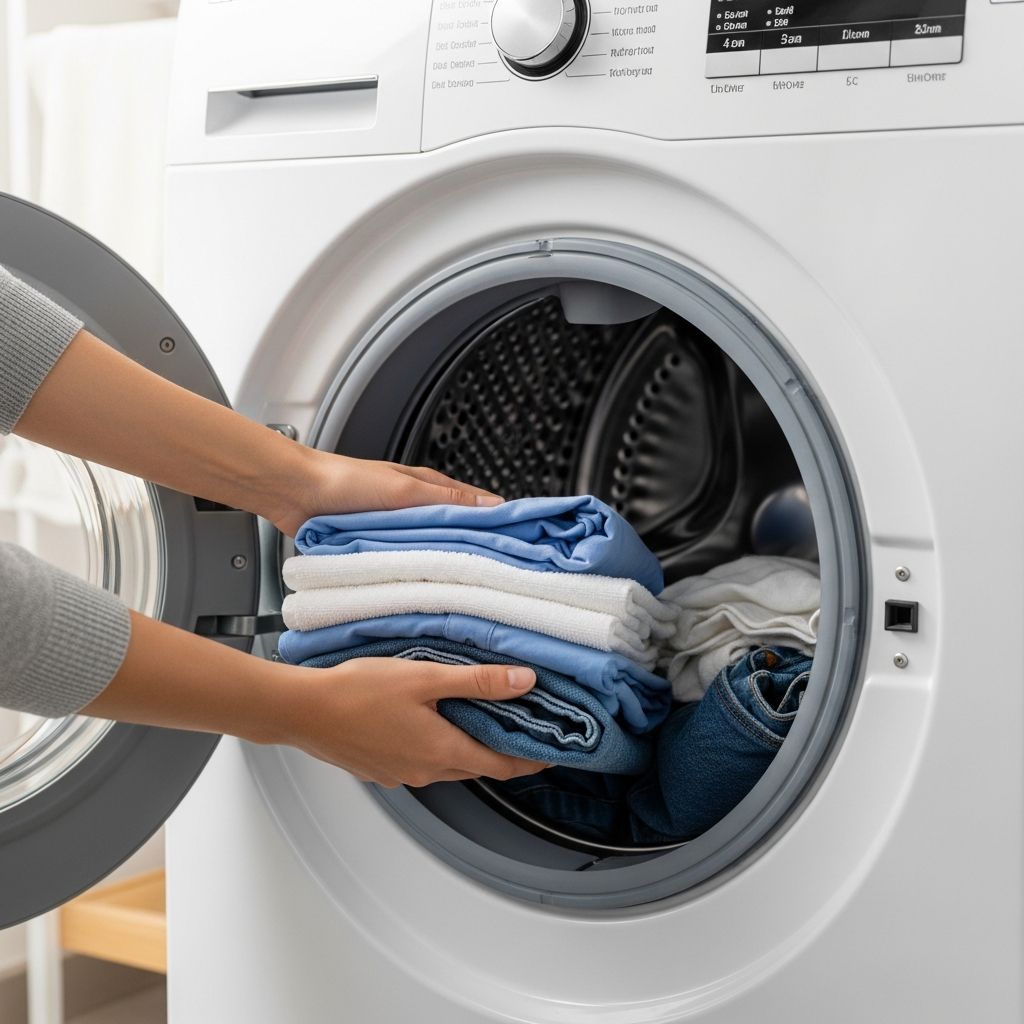
5. Load the Drum with Clothes
How you place clothing in the drum affects performance more than many users realize.
- Loosely drop items into the drum; do not cram, stomp, or press down on them.
- Mix large and small items within a load, placing larger items toward the back or bottom first.
- Avoid washing a single small item, which can cause balance issues and noise.
- For bulky items like blankets, follow the machine’s capacity guidance and do not add so many extras that tumbling is restricted.
6. Select the Appropriate Cycle and Options
Once loaded, choose cycle and settings that match your items.
- Use delicate or gentle cycles for lace, silk, and lightly structured garments.
- Choose heavy-duty or towels setting for sturdy, highly soiled items like workwear or bath linens.
- Adjust temperature based on care labels and soil level: warm or hot for heavily soiled colorfast items, cold for darks and delicates.
7. Close the Door and Start the Wash
Check that nothing is caught in the door gasket and that the drum is not overstuffed. Close the door firmly until it latches, then press start. If your machine requires holding the start button briefly, do so according to the instructions.
How Full the Drum Should Be
One of the most common questions is how much laundry a front-load washer should hold. Guidance varies slightly, but manufacturers and service professionals generally recommend leaving enough space for free tumbling.
| Loading Approach | What It Looks Like | Effect on Cleaning and Wear |
|---|---|---|
| Underloaded | Only a few items in a large drum | May cause imbalance, noisy spin, and inefficient water and energy use. |
| Optimal load | Drum visually about 40–75% full, items loose and movable | Allows effective tumbling, good cleaning, and reduced mechanical stress. |
| Overloaded | Drum tightly packed, door hard to close | Poor cleaning and rinsing, more wear on fabrics and machine, longer or incomplete cycles. |
Practical rules of thumb from manufacturers and experts include:
- Fill the drum no more than about three-quarters full with loose items; the door should close easily without compressing the load.
- Some technicians recommend aiming for roughly 40–60% of the drum volume for ideal tumbling, especially in larger-capacity machines.
- Do not push down on clothes to squeeze more in; this prevents items from circulating properly.
Protecting Clothes from Excess Wear
Good loading habits directly affect how long your clothes look and feel new.
- Group fabrics of similar weight so heavy garments do not constantly beat against delicate ones.
- Use mesh bags for small or delicate items, bras with hooks, and garments with embellishments.
- Avoid frequent washing of lightly worn items; wait until you have a properly sized load of similar fabrics.
- Follow care labels for maximum spin speed and temperature; do not override them with more aggressive settings.
Maintaining some space in the drum also reduces fabric-to-fabric friction and stress on seams, which helps limit pilling, stretching, and thinning over time.
Detergent, Additives, and Dispenser Use
Correct loading also includes using the right products, in the right places, in the right amounts.
- Always use HE detergent designed for high-efficiency washers, which produce fewer suds and rinse more cleanly.
- Measure detergent based on load size, soil level, and water hardness; many loads, especially lightly soiled ones, need less than the maximum dosage.
- Place chlorine bleach, oxygen bleach, and fabric softener only in their designated compartments so the washer can dispense them at the correct time in the cycle.
- Avoid pouring undiluted bleach directly onto fabrics, which can cause holes or discoloration.
Using too much detergent or softener can leave residue on clothing and inside the machine, contributing to odors, stiff fabrics, and even more wear due to build-up between fibers.
Balancing Loads and Preventing Vibration
Front-load washers automatically sense and adjust for imbalance, but how you load can make this easier and gentler on the machine.
- Distribute items loosely and evenly around the drum rather than piling them all in one spot.
- When washing a single heavy item (like a coat or blanket), add one or two towels to help even out the weight.
- Combine a mix of large and small items so the drum does not repeatedly drop a single heavy piece in the same way.
- Follow the recommended capacity for heavy or bulky loads; avoid filling to the same level as a regular mixed-fabric load.
Balanced loads reduce excessive vibration and noise and minimize strain on the suspension and bearings, which helps the washer last longer.
Special Load Types: Bulky, Delicates, and Small Items
Certain types of loads benefit from small adjustments in how you prepare and load them.
Bulky Items (Blankets, Comforters, Jackets)
- Check the washer’s manual for maximum size and weight of bulky items.
- Load one large bulky piece and, if recommended, a couple of towels to help balance the drum.
- Use a bulky/blanket or gentle cycle as directed by the care label.
Delicates and Lightweight Fabrics
- Use delicate cycles with low spin speeds.
- Place fragile items in mesh bags to prevent stretching and snagging.
- Do not mix delicates with heavy items like jeans or towels.
Very Small Items
- Wash socks, baby clothes, lingerie, and other small pieces in mesh bags so they do not get trapped in the door seal or drain pump.
- Count small pieces when loading; if you see one missing at unloading, check the gasket and drum before starting another cycle.
Common Loading Mistakes to Avoid
Many problems with cleaning or wear trace back to a few frequent loading errors.
- Overstuffing the drum until clothes are tightly packed, which prevents proper tumbling and rinsing.
- Underloading with a single light item, leading to out-of-balance spins and possible cycle interruptions.
- Mixing extremely heavy and very delicate fabrics in one load, causing damage to fragile items.
- Ignoring pockets, leading to stains, torn fabrics, or damage from forgotten objects.
- Forcing the door shut when it resists, which is often a sign the load is too large.
Frequently Asked Questions (FAQs)
Q1. How much clothing is too much in a front-load washer?
Most front-load washers can be fully loaded but not tightly packed. A good rule is to fill the drum so it is about three-quarters full with loose items; the door should close easily and you should be able to see some space at the top for clothes to move.
Q2. Can I wash a single item in a front-load machine?
Manufacturers generally advise against washing a single small item because it can cause the machine to become unbalanced and make noise or fail to spin properly. For a single heavy item, add one or two towels to help balance the load.
Q3. Should I push clothes down to make more room?
No. Pressing clothes down compresses the load, prevents tumbling, and can lead to poor cleaning, extra wear on fabrics, and strain on the washer. Items should sit loosely in the drum without being forced.
Q4. Do I need to use mesh bags in a front-load washer?
Mesh bags are recommended for small items, delicates, and garments with hooks or embellishments. They help prevent tangling, snagging, and loss in the drum or door seal, which protects fabrics and the washer.
Q5. What happens if I overload my front-load washer?
Overloading can cause clothes to come out less clean, increase wrinkling, leave detergent or soil residue, and make the washer work harder to spin and balance the load. Over time, this can contribute to increased wear on both garments and machine components.
Conclusion
Loading a front-load washing machine correctly is less about filling every inch of the drum and more about creating the right conditions for tumbling, rinsing, and balanced spinning. Sorting by color, fabric, and soil level, preparing garments by closing zippers and using mesh bags, and keeping the drum only about half to three-quarters full all work together to improve cleaning and reduce wear.
When laundry is loosely and evenly arranged, detergent is measured and added to the proper dispensers, and cycles are chosen based on care labels, clothes come out cleaner and last longer, and the washer runs more quietly and efficiently. Thoughtful loading turns each wash into an effective, fabric-friendly cycle that preserves both your wardrobe and your appliance.
Similar Articles







Read full bio of Sneha Tete