How to Remove Common Carpet Stains with a Carpet Cleaner Safely and Effectively
Step-by-step methods, tools, and pro tips to tackle the most common carpet stains using household or machine carpet cleaners.
How to Remove Common Carpet Stains with a Carpet Cleaner
Carpet is comfortable, quiet, and attractive, but it is also vulnerable to stains from daily life. Using a carpet cleaner the right way makes the difference between a faint mark and a permanent eyesore. This guide explains step-by-step how to remove common carpet stains with a carpet cleaner, including general best practices, stain-specific methods, and when to call a professional.
Table of Contents
- Understanding Carpet Stains and Carpet Cleaners
- Essential Tools and Supplies
- General Step-by-Step Process for Any Fresh Stain
- Removing Water-Based Stains (Coffee, Juice, Soda)
- Removing Food and Dye Stains (Sauce, Berries, Ketchup)
- Removing Pet Stains and Odors
- Removing Grease, Oil, and Makeup Stains
- Removing Gum, Wax, and Sticky Residue
- Dealing with Old or Set-In Carpet Stains
- How to Use a Machine Carpet Cleaner on Stains
- Prevention and Routine Maintenance Tips
- Frequently Asked Questions (FAQs)
- Conclusion
Understanding Carpet Stains and Carpet Cleaners
Not all carpet stains are the same, and not all carpet cleaners work the same way. Knowing what you are dealing with helps you choose the right method.
Types of Common Carpet Stains
- Water-based stains: coffee, tea, juice, soda, mud, and some food spills. These typically respond well to mild detergent and water-based carpet cleaners.
- Protein- or biological-based stains: blood, milk, eggs, and pet accidents. These often require enzyme-based cleaners to break down organic material.
- Grease and oil stains: cooking oil, butter, salad dressing, makeup, motor oil. These need degreasing detergents or solvent-based spot removers.
- Dye or tannin stains: red wine, berries, ketchup, colored drinks. These may need oxidizing or specialty stain removers in combination with a carpet cleaner.
- Sticky substances: chewing gum, wax, adhesive. These are best treated by freezing or softening and then lifting, before using a carpet cleaner for residue.
Types of Carpet Cleaners
- Portable spray carpet cleaners: Ready-to-use or concentrated solutions applied directly to the stain, then blotted and rinsed. Many are designed for specific stain categories (pet, high-traffic, etc.).
- Machine carpet cleaners (extractors): Upright or portable machines that spray cleaning solution and immediately extract it with suction. These are very effective for larger areas or stubborn stains.
- DIY cleaning solutions: Mixtures of dishwashing detergent, white vinegar, baking soda, hydrogen peroxide, club soda, or borax can be used where appropriate, typically followed by blotting and extraction with a carpet cleaner.
Essential Tools and Supplies
Having the right tools ready allows you to treat stains quickly, which is crucial to prevent permanent damage.
- White microfiber cloths or paper towels (non-printed)
- Dull knife or spoon for scraping solid material
- Small soft-bristled brush
- Spray bottle for homemade cleaning solutions
- Mild clear dishwashing detergent
- White vinegar (distilled)
- Baking soda and/or borax for deodorizing and stain lifting
- 3% hydrogen peroxide for some light-colored carpets (spot test first)
- Enzyme-based pet stain and odor remover
- Machine carpet cleaner or wet/dry extractor (optional but highly effective)
General Step-by-Step Process for Any Fresh Stain
Most carpet stains should be treated with the same first-response steps. Quick, correct action greatly improves your results.
Four Essential First Steps
- Act immediately
Begin treatment as soon as you notice the stain. Stain removal becomes harder as it dries or is walked on. - Remove solids carefully
Use a spoon or dull knife to lift away solids, working from the outside toward the center to avoid spreading. - Blot, do not scrub
Place a clean white towel on the spill and gently blot. Avoid rubbing, which can distort fibers and push the stain deeper. - Use minimal liquid at first
Start with a small amount of water or cleaner, just enough to dampen the fibers, not soak the backing. Over-wetting can cause wicking and mold.
Basic Cleaning Sequence Before Using a Machine
- Test any cleaner on an inconspicuous area first to check for discoloration or damage.
- Apply the cleaning solution to a cloth, then dab onto the stain, rather than pouring it directly on the carpet.
- Work from the outer edges inward, blotting and lifting the stain.
- Rinse the area with clean water applied to a cloth and blot to remove detergent residue.
- Once the visible stain is reduced, use your carpet cleaning machine (if available) to deep clean, rinse, and extract remaining residue.
Removing Water-Based Stains (Coffee, Juice, Soda)
Water-based stains are common and usually respond well to mild detergent solutions and carpet cleaners when treated quickly.
Recommended Cleaning Solution
- Mix about 1/4 teaspoon of clear dishwashing detergent with 1 cup of warm water and stir gently.
Step-by-Step Method
- Blot up as much of the liquid as possible with a white towel.
- Apply a small amount of the detergent solution to a clean cloth, then blot the stained area. Avoid soaking.
- Continue blotting, turning the cloth frequently so you are always using a clean section.
- Rinse by blotting with a cloth dampened with clean water to remove detergent residue.
- Use your carpet cleaner with plain water or a compatible cleaning solution to rinse and extract any remaining residue.
- Blot dry and place an absorbent towel on top, weighed down with a colorfast object, until the area is fully dry.
For Coffee and Tea Stains
- If a yellow or brown tint remains, apply a mixture of 1/2 cup white vinegar and 1 cup lukewarm water, then blot and rinse.
- For older stains, an oxygen-based cleaner or hydrogen peroxide on light-colored carpet may help, followed by extraction with a carpet cleaner (test first).
Removing Food and Dye Stains (Sauce, Berries, Ketchup)
Food stains often combine grease, sugar, and dyes, which may need a combination of detergent and specialty treatments.
General Food Spills (Non-Greasy)
- Scrape up excess food with a spoon, working toward the center.
- Blot any liquid with a white towel.
- Apply dishwashing detergent solution as described for water-based stains and blot.
- Rinse thoroughly and blot dry.
- Finish with a pass of your carpet cleaner over the area to remove residue.
Tomato Sauce and Ketchup
- Act quickly, because dried tomato-based stains are difficult to remove.
- Blot up as much as possible, then sprinkle a small amount of salt to help draw out remaining liquid; vacuum once dry.
- Follow with detergent solution and, if needed, a very diluted vinegar solution, blotting and rinsing thoroughly.
- Use your carpet cleaner to deep clean and help lift any remaining color.
Berry and Colored Drink Stains
- Blot immediately, then apply detergent solution and blot again.
- For persistent color, a dilute hydrogen peroxide solution may be used on light carpets (spot test first), followed by extraction with a carpet cleaner.
Removing Pet Stains and Odors
Pet stains (urine, vomit, feces) are both biological and odorous. They require thorough cleaning and odor neutralization to prevent repeat accidents.
Immediate Response
- Blot up as much liquid as possible with paper towels, applying firm pressure.
- Remove solids carefully with a spoon.
- Avoid using steam heat directly on fresh urine stains at first, as heat can set odors.
Cleaning with an Enzyme Cleaner and Carpet Cleaner
- Use an enzyme-based cleaner designed for pet stains to break down proteins and odor-causing compounds.
- Apply according to label instructions, ensuring it fully contacts the contaminated area.
- Allow the recommended dwell time so enzymes can work effectively.
- Blot up excess moisture with towels.
- Follow with your carpet cleaning machine using warm water and a pet-safe carpet cleaning solution to rinse and extract.
- Allow the carpet to dry completely; use fans or open windows for faster drying.
Dealing with Lingering Odors
- Once dry, sprinkle baking soda over the area to absorb residual odors, let sit for several hours, then vacuum.
- For severe or recurring odors, multiple enzyme treatments plus professional cleaning may be needed.
Removing Grease, Oil, and Makeup Stains
Grease and oil stains resist water, so you need surfactants (detergents) or solvents to break them down before extraction.
Initial Degreasing Method
- Blot any excess oil with a dry towel, avoiding rubbing.
- Sprinkle cornstarch or baking soda over the stain and let it sit for several hours to absorb oil, then vacuum thoroughly.
- Apply a small amount of dishwashing detergent solution to a cloth and dab the area.
- Blot with a clean, damp cloth to rinse.
- Use a carpet cleaner with a compatible solution to rinse and extract remaining residue.
Iron and Towel Technique (Some Grease Stains)
- Place a plain paper towel or white cloth over a fresh grease stain.
- Use a warm (not hot) iron over the towel briefly; the grease may transfer to the towel.
- Move the towel to a clean area and repeat as needed, then follow with carpet cleaner extraction.
Removing Gum, Wax, and Sticky Residue
Sticky materials need to be either frozen or softened so they can be scraped off before you clean the remaining residue.
Chewing Gum
- Place ice cubes in a plastic bag and set it on the gum until it is hard (about 15 minutes).
- Gently chip away the frozen gum with a dull knife, being careful not to damage fibers.
- Vacuum loose pieces.
- Apply a small amount of detergent solution, blot, and then use your carpet cleaner with clean water to rinse and extract.
Candle Wax
- Allow wax to harden, then carefully break and scrape off as much as possible.
- Place a paper towel or plain brown paper over the wax and pass a warm iron briefly on top. The wax will melt and transfer to the paper.
- Replace the paper as needed until no more wax lifts.
- Clean remaining residue with your detergent solution and finish with a carpet cleaner pass.
Dealing with Old or Set-In Carpet Stains
Old stains can be more stubborn, as they have often bonded to fibers or wicked up repeatedly. Patience and layered methods are important.
General Strategy for Old Stains
- Vacuum the area to remove loose dirt and debris.
- Pre-treat with a suitable cleaner, such as a detergent solution, vinegar solution, or enzyme cleaner depending on stain type.
- Allow the solution to sit (5–15 minutes) to penetrate the stain.
- Gently agitate with a soft brush if the carpet type allows.
- Blot thoroughly, then rinse with a carpet cleaner using warm water and an appropriate cleaning solution.
Examples of Effective DIY Pre-Treatments
| Stain Type | DIY Pre-Treatment | Notes |
|---|---|---|
| Coffee, tea, general water-based | Dish detergent solution, followed by vinegar solution if needed | Always rinse thoroughly before machine cleaning. |
| Light-colored carpet stains | Equal parts water and 3% hydrogen peroxide (spot test first) | Use only on colorfast, light carpets; avoid overuse. |
| Deep-set pet stains | Enzyme cleaner allowed to dwell 10–15 minutes or longer | Multiple treatments may be required for odor removal. |
| Stubborn general stains | Borax solution (equal parts borax and warm water) lightly applied | Rinse and extract thoroughly to avoid residue. |
How to Use a Machine Carpet Cleaner on Stains
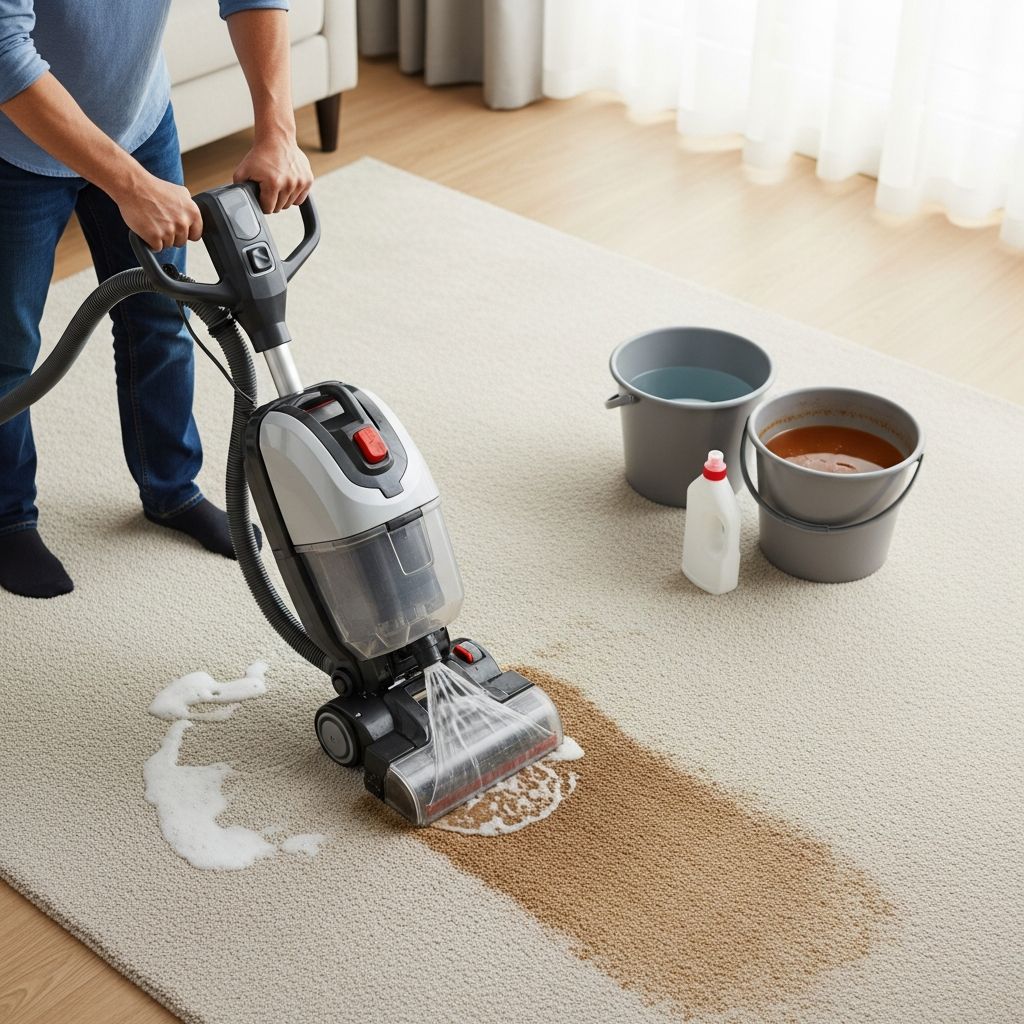
Carpet cleaning machines are powerful tools when used correctly. They spray solution into the carpet and immediately extract it, helping remove soil, residues, and moisture.
Preparation
- Vacuum the carpet thoroughly to remove loose dirt.
- Pre-treat noticeable stains using the appropriate manual methods described above.
- Check the manufacturer’s instructions for your machine and cleaner; use the recommended dilution.
Spot-Cleaning Technique with a Machine
- Fill the machine tank with hot or warm water (as recommended) and the correct amount of carpet cleaning solution.
- Position the machine over the stained area.
- Press the trigger to apply solution while slowly moving the machine forward over the stain.
- Release the trigger and make additional passes over the same area to extract as much moisture and solution as possible.
- Repeat until the stain is no longer visible or significantly improved.
- Avoid over-wetting; it is better to make several light passes than saturate the carpet.
Drying
- After cleaning, blot any remaining moisture with towels placed on the area.
- Use fans, open windows, or HVAC to speed drying.
- Avoid walking on the area until it is fully dry to prevent re-soiling.
Prevention and Routine Maintenance Tips
Good habits help minimize new stains and make any cleaning with a carpet cleaner more effective over time.
- Use doormats at entrances and remove shoes to reduce soil tracked onto carpet.
- Vacuum regularly to prevent abrasive dirt from embedding and dulling fibers.
- Spot-clean spills immediately rather than waiting for a full-room cleaning.
- Schedule periodic deep cleaning with a carpet cleaner or professional service, especially in high-traffic areas.
- Consider applying a carpet protector product after cleaning to help resist future stains.
Frequently Asked Questions (FAQs)
Q: Should I always use hot water in my carpet cleaner?
Hot water improves cleaning power for many stains, but very high heat can set protein stains (like blood or milk) and some dyes. Lukewarm water is safer for delicate or unknown stains, and you should always follow your machine and cleaner manufacturer’s guidance.
Q: Can I use bleach in my carpet cleaner?
Chlorine bleach is generally not recommended on residential carpet because it can remove color and weaken fibers. Some sources mention very diluted bleach solutions in specific circumstances, but they are risky for dyed carpets and should be avoided unless a manufacturer explicitly approves them.
Q: Why is blotting better than scrubbing?
Blotting uses capillary action to pull the stain upward into the cloth, while scrubbing can spread the stain, distort carpet pile, and push soil deeper into the backing.
Q: How do I know if I should call a professional?
If the stain covers a large area, has a strong persistent odor, is caused by hazardous material, or remains visible after careful home treatment and carpet cleaning, a professional carpet cleaner with specialized equipment and solutions is recommended.
Q: Is it safe to mix different cleaning products?
No. You should never mix chemicals like ammonia and chlorine bleach, as dangerous fumes can result. Stick to one type of cleaner at a time, rinse thoroughly between treatments, and always read product labels.
Conclusion
Effective stain removal from carpet relies on two key factors: quick action and the right method for the specific stain. Starting with prompt blotting, using gentle but targeted cleaning solutions, and then finishing with a carpet cleaner for deep rinsing and extraction gives you the best chance of restoring the carpet’s appearance.
Water-based stains generally respond to mild detergent solutions, food and dye stains often need careful pre-treatment, pet stains require enzyme-based odor control, and grease or sticky residues benefit from absorption, freezing, or heat techniques before carpet cleaning. Supporting these approaches with regular maintenance and thoughtful product choices helps keep carpets cleaner, fresher, and more resilient over time.
By understanding your carpet type, recognizing the nature of each stain, and applying methods step-by-step instead of guesswork, you can handle most common carpet stains confidently and protect the long-term look and life of your flooring.
Similar Articles



Read full bio of medha deb