How Washing Machines Work: Plain-Language Guide to Wash, Rinse, Spin
Understand what really happens inside your washer during the wash, rinse, and spin cycles in simple, everyday language.
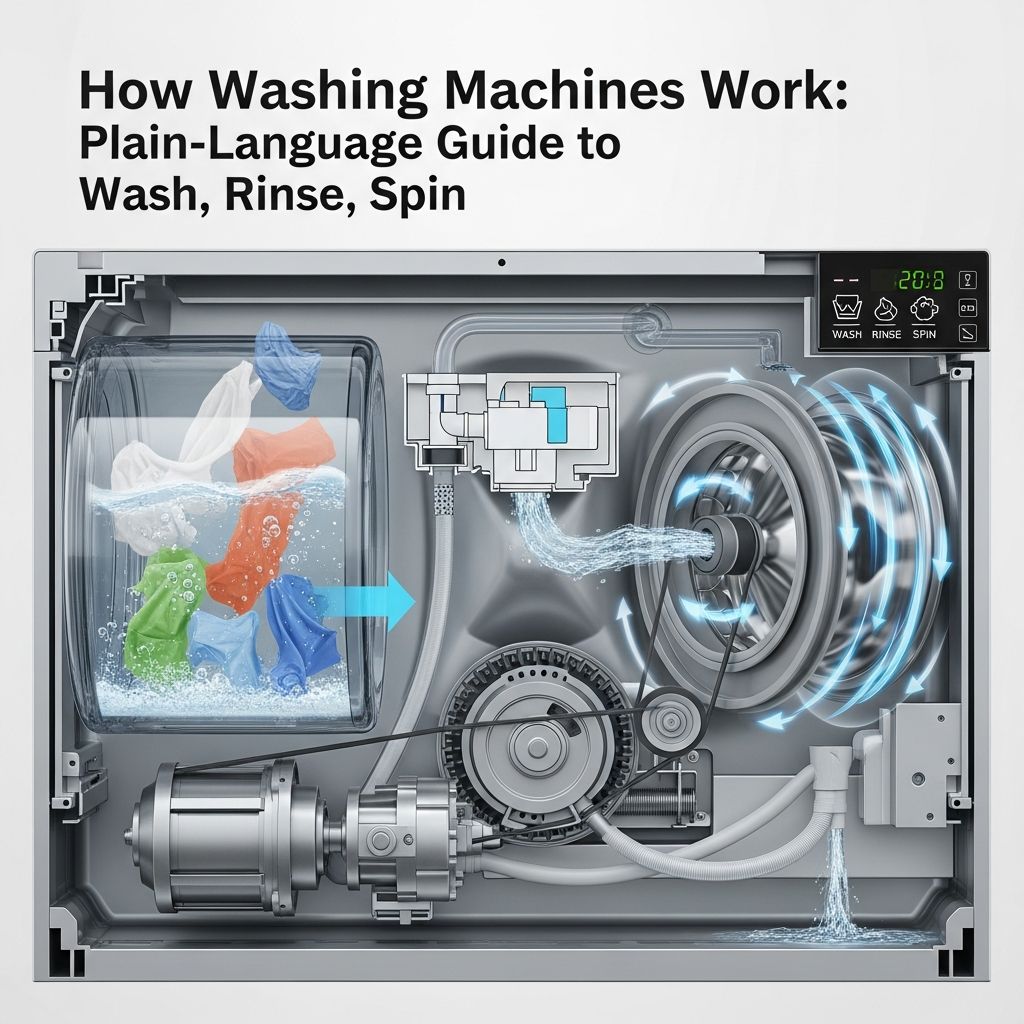
How Washing Machines Work: A Plain-Language Guide to Wash, Rinse, and Spin Cycles
Washing machines feel simple on the outside: you toss in clothes, add detergent, push a button, and come back to clean laundry. Inside, however, a lot happens in a careful sequence of wash, rinse, and spin cycles, controlled by sensors, valves, and a motor. This guide explains that process in everyday language so you can use any washer more confidently and effectively.
Table of Contents
- The Big Picture: What a Washing Machine Actually Does
- Main Parts of a Washing Machine in Plain Language
- Step-by-Step Overview of a Typical Wash Cycle
- Inside the Wash Cycle: How Clothes Get Scrubbed
- Inside the Rinse Cycle: Getting Soap and Dirt Out
- Inside the Spin Cycle: How Water Gets Flung Out
- Front Load vs Top Load: How Different Washers Move Clothes
- Common Wash Settings and What They Really Do
- Simple Care Tips to Keep Cycles Working Properly
- Frequently Asked Questions
- Conclusion
The Big Picture: What a Washing Machine Actually Does
At its core, a washing machine cleans clothes by combining four things in a controlled way:
- Water to carry detergent and rinse away soil
- Detergent to break up and dissolve dirt and oils
- Mechanical action (agitation or tumbling) to rub clothes and lift soils
- Time so the detergent and movement can do their work
These basics are divided into three core stages:
- Wash: Clothes move in soapy water to loosen and lift dirt
- Rinse: Clean water flushes out detergent and leftover soil
- Spin: Fast spinning removes most of the water so things dry more quickly
All modern machines, from basic top loaders to smart front loaders, follow this same basic pattern.
Main Parts of a Washing Machine in Plain Language
Understanding the main parts helps make sense of what happens during wash, rinse, and spin.
Key Mechanical Parts
- Drum or tub: The metal or plastic container that holds your clothes. It has small holes to let water in and out.
- Outer tub: A watertight shell around the drum that holds the water during cycles.
- Agitator or impeller (in many top-loaders): A central post (agitator) or low-profile plate (impeller) that moves clothes back and forth in the water.
- Motor: Powers the spinning and agitation of the drum.
- Suspension system: Springs or shocks that keep the machine stable during high-speed spin.
- Water pump: Circulates water and pushes used water out through the drain hose.
Water and Control Parts
- Water inlet valves: Little electrically controlled taps that open to let hot or cold water into the machine.
- Drain hose: The hose that carries dirty water out into your home's drain.
- Control panel: Knobs, buttons, or a display where you choose the program, temperature, and spin speed.
- Electronic control board (PCB): The “brain” that controls the order and timing of wash, rinse, and spin based on sensors and your settings.
- Lid or door lock: Safety lock that keeps the door closed when the drum is spinning or filled with water.
- Sensors in many modern models: measure load size, water level, drum balance, or water cloudiness to adjust the cycle.
Simple Parts Table
| Part | Plain-Language Role |
|---|---|
| Drum | Holds your clothes and spins or moves them in water |
| Water inlet valve | Opens to let hot or cold water into the washer |
| Pump | Pushes dirty water out after wash and rinse |
| Motor | Drives the drum for washing and spinning |
| Control board | Tells valves, motor, and pump when to turn on and off |
Step-by-Step Overview of a Typical Wash Cycle
Most washers follow a similar sequence from the moment you press start.
- You set up the load
- Sort clothes, add detergent (and softener if using), close the door, choose a cycle.
- Machine checks and locks
- The door or lid locks, and some models weigh the load or sense balance.
- Fill with water
- Inlet valves open to bring in hot, warm, or cold water, depending on your setting.
- Wash phase
- The drum agitates or tumbles, moving clothes through soapy water for a set time.
- Drain
- The pump removes the dirty, soapy water.
- Rinse
- The tub refills with clean water; clothes are moved again to flush out detergent.
- Final drain and spin
- Water drains; then the drum spins very fast to extract water before you dry items.
Depending on the cycle you choose, the washer may repeat parts of this (extra rinses, soak periods, slower or faster spins) to match the fabrics and soil level.
Inside the Wash Cycle: How Clothes Get Scrubbed
The wash cycle is where most of the real cleaning happens. It has three simple elements: soaking, movement, and time.
Step 1: Filling and Mixing Detergent
- Once the washer knows there is a load, it opens the water valves.
- Water flows in and mixes with the detergent in a drawer, a dispenser, or directly in the drum.
- Sensors check when the right water level is reached and then close the valves.
Step 2: Agitating or Tumbling Clothes
Next, the machine creates motion so clothes rub against water, detergent, and each other.
- Front-load washers: the drum turns slowly, lifting clothes up with interior fins and dropping them, creating a gentle tumbling action that scrubs the fabric.
- Top-load agitator washers: the central post twists back and forth, pulling clothes through the water to loosen soil.
- Top-load impeller washers: a low disc at the bottom creates currents that move clothes around in a more gentle manner.
This movement:
- Helps detergent reach all parts of the garments
- Encourages dirt to release from fibers
- Prevents clothes from just sitting in one spot
Step 3: Temperature and Time
- Hot water helps remove oily, greasy stains but can fade colors or shrink some fabrics.
- Warm water is a middle ground for many everyday loads.
- Cold water is gentler and saves energy, and modern detergents work well in it.
The machine keeps the drum moving for a set time (often 10–30 minutes), depending on the cycle and soil level you set.
Inside the Rinse Cycle: Getting Soap and Dirt Out
Once the wash part is over, you have dirty, soapy water in the machine. The rinse cycle removes this so your clothes are clean and comfortable to wear.
Step 1: Drain the Soapy Water
- The pump starts and pulls water from the bottom of the tub out through the drain hose.
- The drum may spin slowly to help push more water out of the clothes while draining.
Step 2: Refill with Clean Water
- The machine opens the inlet valves again and fills with fresh water, usually cold or cool.
- If you use fabric softener, many washers release it into this rinse water.
Step 3: Gentle Movement to Rinse
- The drum moves again (tumbling or gentle agitation) so clean water can flow through the fabric, flushing out leftover detergent and soil.
- Some machines repeat drain-and-refill more than once if you choose an extra rinse option.
A good rinse matters because extra detergent can make clothes feel stiff, irritate skin, or cause musty smells if left behind.
Inside the Spin Cycle: How Water Gets Flung Out
Even after rinsing, clothes hold a lot of water. The spin cycle removes most of this by spinning the drum like a fast centrifuge.
Step 1: Final Drain
- The pump removes the rinse water completely from the outer tub.
- The machine checks that the water has left before spinning at high speed.
Step 2: Balancing the Load
- The washer may slowly turn the drum to spread clothes evenly around the inside walls.
- If everything bunches on one side (for example, a single heavy towel), sensors may reduce the spin speed or try to rebalance.
Step 3: High-Speed Spin
- The drum spins much faster than during washing—hundreds to over a thousand revolutions per minute for many models.
- As it spins, water is forced out through the holes in the drum and into the outer tub, then pumped out.
- Faster spin speeds leave clothes drier but can be harsher on delicate items, so many cycles reduce the speed for fragile fabrics.
When the spin stops, the door unlocks and the clothes are ready for drying, either in a dryer or on a line.
Front Load vs Top Load: How Different Washers Move Clothes
The basic wash–rinse–spin pattern is the same, but machine types handle movement differently, which affects cleaning style and water use.
| Washer Type | How It Moves Clothes | Typical Traits |
|---|---|---|
| Front-load | Drum lies sideways and tumbles clothes, lifting and dropping them in shallow water. | Uses less water, gentle on fabrics, often longer cycles. |
| Top-load with agitator | Central post twists back and forth to move clothes through deeper water. | Faster cycles, strong cleaning action, may be rougher on some fabrics. |
| Top-load with impeller | Low disc at bottom creates currents that circulate clothes. | Uses less water than agitators, gentler action, larger usable drum space. |
Common Wash Settings and What They Really Do
Cycle names can sound complicated, but most of them adjust just a few things: wash time, water temperature, spin speed, and sometimes agitation strength.
Typical Cycle Options
- Normal / Regular
- Balanced for everyday mixed loads like t-shirts, jeans, and underwear.
- Moderate wash time, medium spin, medium agitation.
- Heavy Duty
- For heavily soiled items like work clothes or towels.
- Longer wash time, stronger agitation, often higher spin.
- Delicate / Gentle
- For fragile fabrics, lingerie, or items that stretch easily.
- Shorter wash, gentle movement, lower spin speed.
- Quick Wash
- Short cycle for lightly soiled clothes that just need freshening.
- Less wash time; may use more vigorous action and higher spin to compensate.
- Bedding / Bulky
- For large items like comforters or jackets.
- Focuses on more water and special drum motion to avoid tangling and ensure soaking.
Temperature and Spin Choices
- Temperature
- Hot: whites, sturdy cottons, heavily soiled items (if care labels allow).
- Warm: most everyday loads, mixed colors.
- Cold: dark colors, delicate fabrics, or energy saving.
- Spin speed
- High: towels, jeans, sturdy items.
- Medium: most mixed loads.
- Low or no spin: very delicate items or garments that can stretch out of shape.
When you choose a cycle, you're really choosing how intense the wash, rinse, and spin phases will be.
Simple Care Tips to Keep Cycles Working Properly
When a washer is not maintained, the wash, rinse, and spin stages can become less effective, leaving clothes dingy or overly wet.
- Do not overload: Too many clothes make it hard for water and detergent to circulate, and the spin cycle may not remove enough water.
- Use the right detergent type and amount: High-efficiency (HE) machines need HE detergent; too much soap can cause extra suds and poor rinsing.
- Clean the washer regularly: Use a washing machine cleaner or a cleaning cycle to remove residue and odors inside the drum and hoses.
- Check pockets and zippers: Hard objects can damage the drum or pump.
- Keep the door slightly open after use (front-loaders especially): Helps dry out moisture and reduce musty smells.
Frequently Asked Questions
Q1: Why does my washer sometimes repeat the spin cycle?
Many modern washers have sensors that check if the drum is balanced before and during spinning. If heavy items are bunched on one side, the machine may slow down, stop, and try to rearrange the load, then attempt to spin again. This prevents damage from excessive vibration.
Q2: What is the difference between wash and rinse water?
The wash water contains detergent and the loosened dirt, body oils, and stains that the detergent pulls from fabric. During rinsing, the machine drains that dirty water, then refills with clean water—without detergent—to flush away residues.
Q3: Why do some cycles take so long?
Front-loaders and high-efficiency top-loaders often use less water but extend the wash and rinse times to compensate. Extra time allows more tumbling and soaking, which improves cleaning while still saving water and energy overall.
Q4: Do I always need an extra rinse?
Not necessarily. An extra rinse can help if you have sensitive skin, use more detergent, or wash items that trap soap easily (like thick towels). For lightly soiled loads with the right amount of detergent, the standard rinse is usually enough.
Q5: Why are my clothes still very wet after the cycle?
This can happen if the spin speed is set low, the load is out of balance, the drain is partly blocked, or the washer stops the spin early for safety. Choosing a higher spin setting (when appropriate) and avoiding overloading can help the spin cycle remove more water.
Conclusion
Every washing machine, simple or advanced, follows the same basic pattern: clothes move in soapy water during the wash, clean water flushes out detergent and soil in the rinse, and fast rotation pulls out most of the remaining moisture in the spin. Once you see these three stages clearly, the different cycle names and buttons become much easier to understand.
Knowing how your machine handles wash, rinse, and spin—along with how water temperature, spin speed, and drum movement differ between front-load and top-load designs—helps you match each load to the right settings. That means cleaner clothes, less wear on fabrics, and fewer problems with residue or damp laundry.
By combining this plain-language understanding with simple habits like proper loading, using the right detergent, and periodic cleaning, you can let your washer's built-in cycles do their job more efficiently and enjoy predictable, reliable results from every load.
Similar Articles







Read full bio of Sneha Tete