
Leveling a Washing Machine to Reduce Vibration, Noise and Wear
Learn how correct leveling dramatically cuts washer vibration, noise and long-term wear for more reliable laundry days.
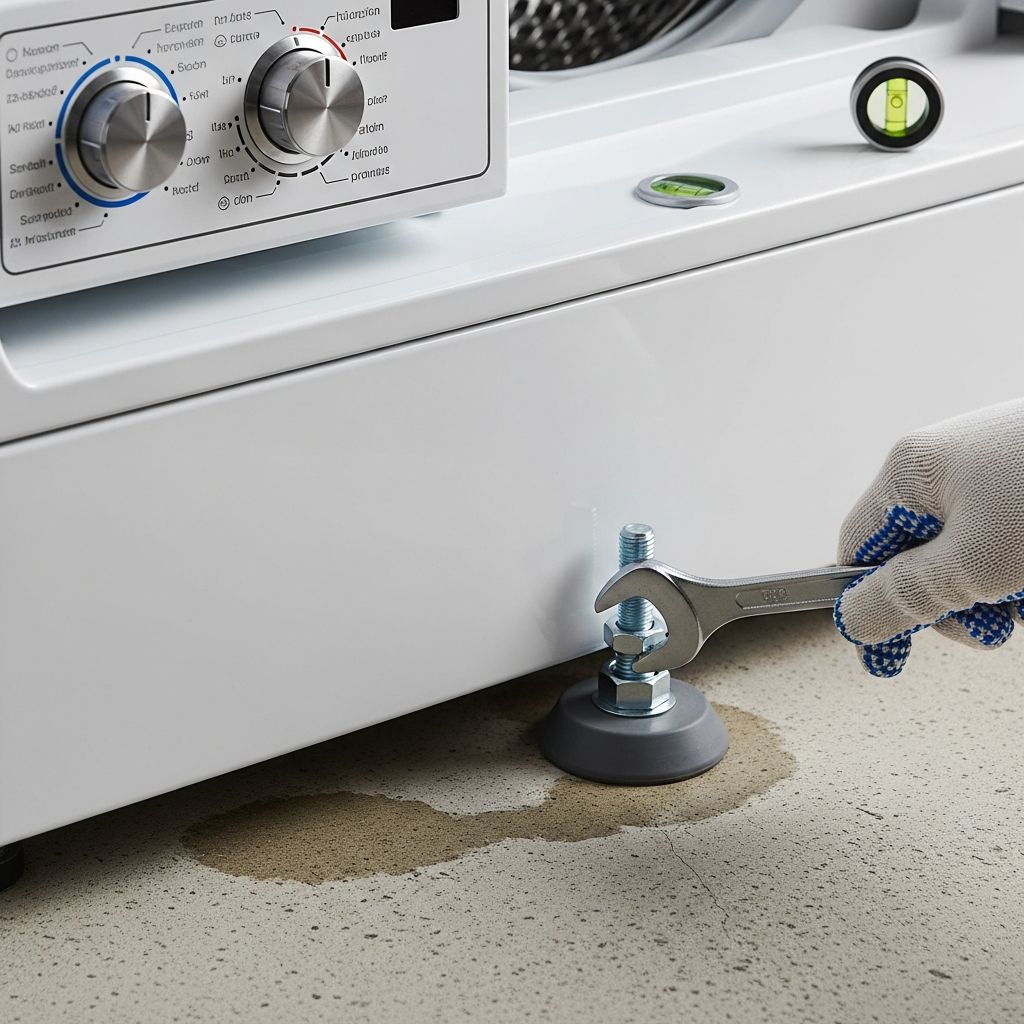
Leveling a Washing Machine to Reduce Vibration and Noise
A washing machine that shakes, walks across the floor, or thunders during the spin cycle is almost always a sign that the appliance is not level or not properly supported. Correctly leveling your washer is one of the simplest ways to reduce vibration and noise, protect your floors, and extend the life of the machine.
This guide explains why leveling matters, how to assess your current installation, and provides clear, step-by-step instructions for both front-load and top-load washers. It also covers floors that are not perfectly flat, accessories like pedestals and anti-vibration pads, and troubleshooting tips if problems persist.
Table of Contents
- Why Leveling a Washing Machine Matters
- Signs Your Washing Machine Is Not Level
- Tools and Materials You Will Need
- Preparing the Washer and Location
- How to Check If Your Washer Is Level
- Step-by-Step: Leveling a Front-Load Washer
- Step-by-Step: Leveling a Top-Load Washer
- Leveling a Washer on a Pedestal
- Dealing With Uneven or Flexible Floors
- Extra Tips to Reduce Vibration and Noise
- Safety Tips and Common Mistakes to Avoid
- Frequently Asked Questions (FAQs)
- Conclusion
Why Leveling a Washing Machine Matters
Leveling is not just about appearance. A washer that tilts or rocks can create a chain of issues that affect performance, comfort, and long-term reliability.
- Reduces vibration and noise: A level machine distributes weight evenly, so the drum spins smoothly instead of hammering against the cabinet.
- Prevents the washer from “walking”: Unbalanced forces during spin can cause the entire unit to creep across the floor.
- Improves cleaning performance: A stable tub helps maintain proper water levels, accurate spin speeds, and consistent wash action.
- Protects internal components: Excessive vibration stresses bearings, suspension parts, and electronic boards, potentially shortening the washer’s life.
- Protects floors and nearby structures: Intense vibration can damage tile, crack grout, loosen floorboards, and transmit noise through walls and ceilings.
Manufacturers explicitly state that washers must be on a solid, level surface and adjusted so all four feet are in firm contact with the floor before use.
Signs Your Washing Machine Is Not Level
If you notice one or more of the following, your washer likely needs leveling or better floor support.
- Loud banging, thumping, or knocking during the spin cycle
- The washer rocks when you push down on opposite corners
- The machine slowly moves or “walks” across the floor
- Visible tilt from front to back or side to side
- Excessive vibration you can feel through the floor in other rooms
- Frequent “unbalanced load” errors or aborted spin cycles
- Detergent or water splashing around the drawer or door area
Tools and Materials You Will Need
Most leveling adjustments require only basic household tools.
- Carpenter’s level or small torpedo level (or a reliable leveling app on your phone)
- Adjustable wrench or open-end wrench sized for the leveling feet lock nuts
- Pliers for plastic or hard-to-turn feet
- Work gloves for better grip and safety
- Wood block or shim to safely prop up the front if needed
- Optional: anti-vibration pads or rubber foot pads
- Optional: 19 mm (¾ in) plywood sheet if the floor is flexible or weak
Preparing the Washer and Location
Before making adjustments, prepare both the appliance and the area where it will sit.
- Verify installation location: Place the washer on a flat, solid surface, not on thick carpeting or soft subfloors whenever possible.
- Check shipping bolts: For front-load washers in particular, confirm that the shipping bolts or transit rods in the back have been removed; if left in, vibration and noise increase dramatically.
- Empty the washer: Ensure there are no clothes or water in the drum so weight is evenly distributed while leveling.
- Move into final position: Slide or walk the machine into the exact spot where it will be used before fine-tuning the feet.
- Loosen lock nuts: Most leveling legs have lock or jam nuts that must be loosened before you can raise or lower the legs.
How to Check If Your Washer Is Level
You will measure level and stability in two ways: by using a level tool and by physically rocking the machine.
- Place the level on top of the washer near the front edge and check side-to-side orientation.
- Turn the level 90 degrees to check front-to-back orientation.
- Note which direction the bubble moves; this indicates which side or corner is higher or lower than ideal.
- With the tool removed, push down firmly on opposite corners (front left and rear right, then front right and rear left). If the washer rocks, not all feet are contacting the floor.
A washer can appear visually straight and may even read level while still rocking if one foot is slightly off the floor. The rocking test ensures all four feet carry weight.
Step-by-Step: Leveling a Front-Load Washer
Front-load washers typically have four independently adjustable legs, each with a lock nut. Manufacturers note that shorter legs usually translate to less vibration, so avoid extending them more than necessary.
1. Access and loosen the front legs
- Gently tilt the machine back or have a helper raise the front a few centimeters and support it with a wood block.
- Locate the lock nuts on each front leg and loosen them with an adjustable wrench.
- Turn the legs clockwise to lower the washer and counterclockwise to raise it.
2. Rough-level side to side
- Set the washer back down on the floor.
- Place the level across the top front edge, left to right.
- Adjust first one front leg, then the other, until the bubble in the level is centered.
- As you adjust, keep both legs as short as reasonably possible while still achieving level.
3. Level front to back
- Rotate the level so it runs from the front edge to the back of the top panel.
- Adjust the rear legs as necessary. On some models, the rear legs self-level when you tilt the machine slightly and set it back down; on others, each rear leg is threaded and adjusted like the front.
- Turn the rear legs in or out in small increments until the bubble is centered front to back.
4. Eliminate rocking
- Remove the level and press on opposite corners of the washer.
- If the machine rocks, find the corner that lifts and unscrew that foot until it makes firm contact with the floor.
- Re-check both side-to-side and front-to-back level after any change.
5. Tighten the lock nuts
- Once the washer is level in both directions and does not rock, hold each leg in place and tighten the lock or jam nut snugly against the bottom of the washer cabinet.
- This prevents the legs from slowly turning out of adjustment over time due to vibration.
6. Test with a spin cycle
- Put a few medium-weight items (for example, several towels) into the drum.
- Run a spin-only or rinse-and-spin cycle and stand nearby.
- Listen and watch for excessive vibration, walking, or banging. A small amount of cabinet movement (about 6 mm to 7 mm) can be normal, but it should not be violent or loud.
- If vibration persists, repeat the leveling and rocking tests and check floor stiffness.
Step-by-Step: Leveling a Top-Load Washer
Top-load washers generally follow the same principles but may have slightly different leg designs or fewer adjustable legs depending on the model.
1. Loosen and reset the legs
- Slide the washer into its final position, leaving enough room to reach the legs with a wrench.
- Loosen all lock nuts on the adjustable legs.
- If your model allows, screw all legs fully into the base, then back them out as needed to reach the floor, keeping them as short as possible.
2. Level side to side
- Place the level across the front of the washer lid.
- Adjust one side’s legs until the bubble is centered.
- Ensure both front and rear legs on each side are making solid contact with the floor.
3. Level front to back
- Rotate the level so it runs front to back along the top panel or lid frame.
- Adjust the rear legs until the bubble centers.
4. Check for stability and tighten
- Rock the machine diagonally at the corners; adjust any corner that lifts until there is no wobble.
- Re-verify level in both directions.
- Tighten all lock nuts firmly against the washer base.
- Run a test spin cycle with a few items and listen for unusual vibration or noise.
Leveling a Washer on a Pedestal
Pedestals add height and storage but also introduce another set of adjustable feet. Both the pedestal and the washer must be level and securely joined.
- Place the pedestal in the final location and level it first using the same leg adjustment process as a washer.
- Tighten the pedestal leg lock nuts when it is level and stable.
- Securely attach the washer to the pedestal according to the manufacturer’s instructions.
- Move the combined unit into position and re-check level for the whole assembly.
- If necessary, fine-tune the pedestal legs again. Confirm there is no rocking.
Dealing With Uneven or Flexible Floors
Even a perfectly adjusted washer can vibrate if the floor is uneven or flexes during spin. Modern high-spin-speed models are especially sensitive to weak flooring.
1. Identify floor issues
- If you can feel vibration in another room or across the hall, the floor may be flexing too much.
- Look for sloping areas or gaps under one or more washer feet.
2. Improve floor support
- Install and secure a sheet of 19 mm (¾ in) plywood under the washer (and dryer) to create a single, stiff platform.
- Ensure the plywood itself is level before re-leveling the washer on top.
3. Use shims or pads where appropriate
- On slightly uneven floors, you can use thin wooden or composite shims under individual feet, but the primary adjustment should still be through the threaded legs.
- Anti-vibration pads or rubber foot cups can help both with minor leveling tweaks and with absorbing some vibration energy.
Extra Tips to Reduce Vibration and Noise
Leveling is the foundation, but a few additional habits and accessories can further reduce noise and vibration.
- Avoid overloading: Too many heavy items can create an unbalanced load that even a level washer cannot control.
- Distribute laundry evenly: Mix heavy and light items and spread large pieces (like blankets) around the drum to avoid a single dense clump.
- Use anti-vibration pads: Place these under each foot to absorb some movement and protect floors, especially on tile or thin wood.
- Keep legs short: Manufacturers recommend keeping leveling legs extended as little as possible (often less than about 20 mm) to minimize wobble.
- Recheck periodically: Inspect the washer’s level and leg tightness a few times per year or whenever you notice new vibration.
- Follow manufacturer’s spin-speed guidance: If repeated unbalanced load errors occur at the highest spin speed, consider selecting a slightly lower speed for very heavy items.
Safety Tips and Common Mistakes to Avoid
Working around large appliances requires basic precautions.
- Do not tip the washer excessively or place hands underneath an unsupported edge.
- Wear gloves when handling metal edges or using tools around the legs.
- Do not use stacks of loose bricks, blocks, or unstable objects under the feet.
- Never operate a washer with shipping bolts still installed; always remove them before use.
- Do not ignore persistent vibration; it can lead to leaks, component failure, and floor damage.
Frequently Asked Questions (FAQs)
How often should I check if my washing machine is level?
It is wise to check the level and stability when the washer is first installed, after it has been moved, and any time you notice new vibration, noise, or walking. A quick rocking test and a glance with a level every few months are usually sufficient.
Can I put something under the washer to level it instead of using the legs?
The primary adjustment should always be made using the built-in leveling legs. For minor corrections or uneven floors, you can add anti-vibration pads, rubber cups, or thin shims under the feet, but the washer still needs its legs correctly set and all feet firmly touching the floor.
Is some vibration normal even if the washer is level?
Yes, a small amount of cabinet movement during high-speed spin is normal, especially on high-efficiency front-load models. However, the movement should not be violent, excessively noisy, or cause the machine to move across the floor.
Why does my washer still vibrate after leveling it?
Possible causes include a flexible or weak floor, overloaded or poorly distributed loads, damaged suspension components, or shipping bolts left in place. Confirm the floor is solid and level, re-check leg tightness, and verify that shipping hardware has been removed.
Do anti-vibration pads really help?
When used with a properly leveled washer on a reasonably solid floor, anti-vibration pads can reduce transmitted noise and help keep the machine from sliding, especially on smooth tile or finished concrete. They are not a substitute for correct leveling but can be a useful supplement.
Conclusion
Correctly leveling a washing machine is one of the most effective and low-cost ways to cut vibration and noise, prevent the appliance from walking, and protect both the washer and the surrounding structure. Using a simple level, an adjustable wrench, and the built-in legs, you can bring the cabinet into proper alignment and ensure all four feet carry weight evenly.
For most homes, a careful one-time setup followed by occasional checks is enough to keep the washer running smoothly. When floors are uneven or flexible, reinforcing the surface with plywood and adding quality anti-vibration pads can make a noticeable difference.
A thoughtful, informed approach looks like this: confirm the location is solid, remove any shipping hardware, adjust and lock all leveling feet, verify stability with both a level and a rocking test, and periodically re-evaluate if operating conditions change. That combination of good installation and simple maintenance will keep vibration and noise under control through years of regular use.
Similar Articles








Read full bio of medha deb