
Preparing a Compressor Ice Cream Maker for First Use: Placement, Pre-Cooling, and Ventilation
Learn how to correctly place, pre-cool, and ventilate a compressor ice cream maker for reliable, consistent ice cream from the very first batch.
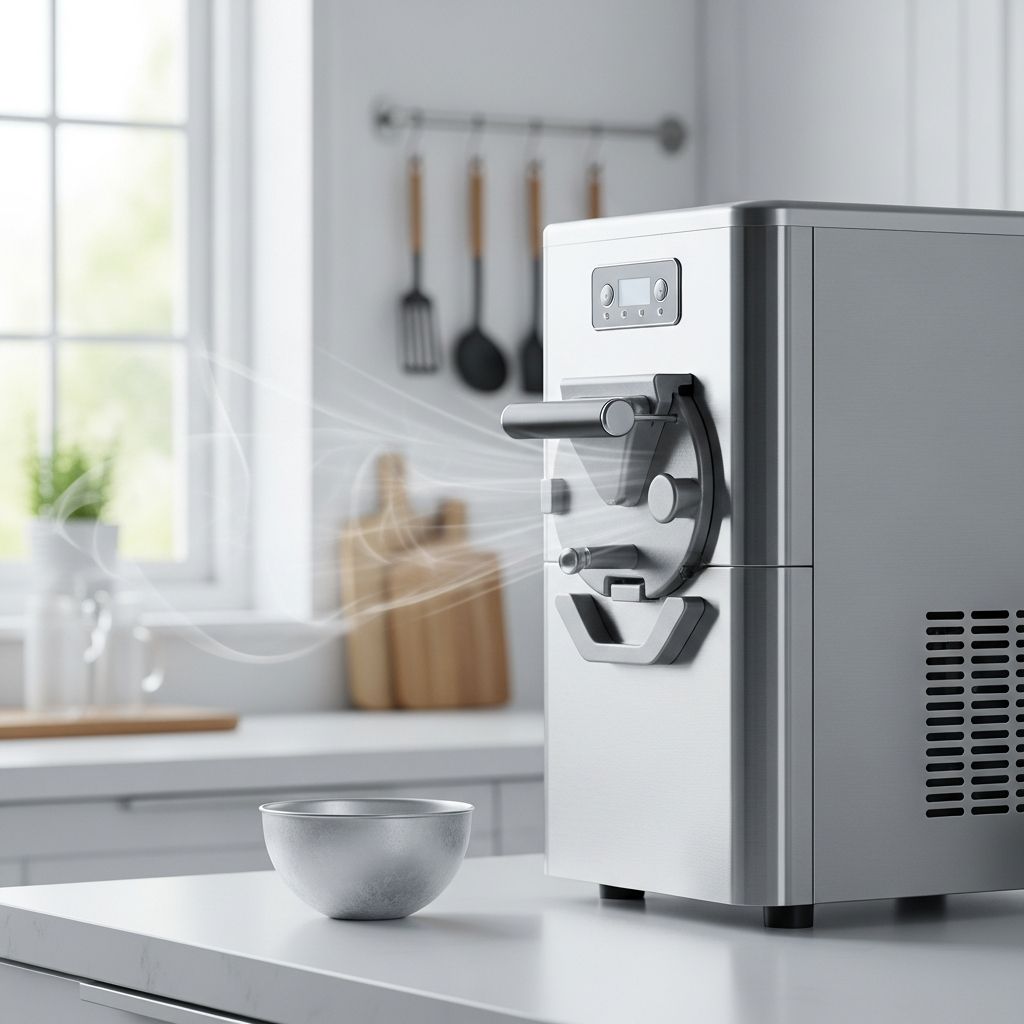
Compressor ice cream makers are self-refrigerating machines that freeze ice cream, gelato, or sorbet without the need to pre-freeze a bowl. Unlike freezer-bowl models, they contain an internal compressor and condenser that must be set up and ventilated correctly before first use to ensure safety, performance, and long-term reliability.
Table of Contents
- Understanding Compressor Ice Cream Makers
- Unboxing and Initial Inspection
- Placement Requirements and Surface Preparation
- Ventilation and Clearance Guidelines
- Electrical and Safety Preparation
- Cleaning Before First Use
- Pre-Cooling the Compressor Ice Cream Maker
- Pre-Chilling Ingredients for Better Results
- Step-by-Step First Use Procedure
- Common Mistakes to Avoid on First Use
- Maintenance Between Batches and After Use
- Frequently Asked Questions (FAQs)
- Conclusion
Understanding Compressor Ice Cream Makers
A compressor ice cream maker includes a built-in refrigeration system similar to a small freezer. The compressor circulates refrigerant, the condenser expels heat, and internal fans move air across coils. This design allows continuous operation without pre-frozen bowls, but requires correct placement, ventilation, and pre-cooling for optimal performance.
- Self-contained refrigeration system, no pre-frozen bowl needed.
- Typically controlled via a panel with power, timer, and mode buttons.
- Requires stable, level placement for proper compressor operation.
- Heat is expelled from the sides, back, or rear grille, making ventilation critical.
Unboxing and Initial Inspection
Before first use, unbox the unit carefully and examine all components. Manufacturers emphasize inspecting the appliance and reading the instruction manual before plugging it in.
- Remove packaging materials, films, and protective tapes around the housing, vent grilles, and control panel.
- Confirm that included parts are present, such as removable mixing bowl, churn blade (paddle), lid, and accessories.
- Inspect the power cord and plug for damage and ensure there are no dents in the housing that might affect ventilation.
- If the unit was transported on its side, let it stand upright for several hours so the compressor oil can settle, as with other refrigeration appliances (inferred from general refrigeration practice).
During this stage, identify where the air intake and exhaust vents are located; this will determine the minimum clearance needed around the machine.
Placement Requirements and Surface Preparation
Correct placement supports stable compressor operation, reduces noise, and prevents overheating. User manuals specify that the ice cream maker should be placed on a flat, level, and sturdy surface.
Key placement principles
- Level and stable surface: An uneven surface can cause vibration, increase noise, and stress the compressor. Manuals explicitly state to keep the machine flat on a level surface for proper operation.
- Indoor use only: Compressor ice cream makers are designed for dry, indoor environments; do not use outdoors or on wet surfaces.
- Away from heat sources: Do not place the unit near ovens, cooktops, dishwashers, radiators, or in direct sunlight, as these add heat load and reduce cooling efficiency.
- Avoid enclosed spaces: Do not locate the appliance inside cabinets or tight shelves with little airflow; hot air must escape freely.
Recommended surface characteristics
- Heat-resistant countertop such as stone, laminate, or stainless steel.
- Non-slip feet or a non-skid mat beneath the unit to help control vibration.
- Enough space around the unit for pouring, lifting the lid, and removing the bowl without moving the whole machine.
Ventilation and Clearance Guidelines
Because the compressor generates heat as it cools your ice cream, adequate ventilation is crucial. If vents are blocked or airflow is restricted, the unit may overheat, shut down early, or produce soft ice cream. Manufacturers specify minimum clearances around the unit.
| Aspect | Guideline | Reason |
|---|---|---|
| Side and rear clearance | At least about 5 inches (127 mm) around all sides is suggested. | Allows air circulation to cool compressor and condenser. |
| Overhead space | Leave room above for lid removal and not trapping hot air (inferred). | Prevents heat buildup and enables easy access. |
| Vent location | Keep air intake and exhaust grilles completely unblocked. | Maintains required airflow through the condenser. |
| Nearby objects | Avoid placing objects on top or draping towels over the unit. | Objects can trap heat and obstruct ventilation. |
Before first use, confirm that the machine sits with full clearance and that no walls, appliances, or utensils are limiting airflow. This single step is one of the most important for long-term compressor life.
Electrical and Safety Preparation
Compressor ice cream makers are electrical appliances with motors and refrigeration circuits. Manuals highlight several power and safety requirements.
- Dedicated grounded outlet: Plug the unit into an exclusive, grounded wall outlet. Do not use multi-plug adapters or daisy-chained power strips.
- Do not modify the plug: Never cut or remove the grounding prong or use ungrounded adapters.
- Dry conditions only: Do not operate the appliance with wet hands, on wet surfaces, or in wet environments to avoid electrical shock.
- Avoid extension cords: Long cords may cause voltage drop, affecting compressor performance; follow manufacturer guidance if extension cords are necessary (often discouraged).
- Keep cord accessible: Arrange the power cord so you can unplug the unit quickly in case of malfunction.
Do not plug the unit in until placement, ventilation, and cleaning are complete.
Cleaning Before First Use
Most manuals instruct users to clean removable components before making the first batch. This removes manufacturing residues, dust, and packaging particles.
- Wipe the exterior base with a soft, moist cloth; never immerse the base in water.
- Wash the removable mixing bowl, churn blade, and lid in warm, soapy water, then rinse and dry thoroughly.
- Avoid abrasive cleaners, scouring pads, or harsh chemicals that can scratch surfaces or damage coatings.
- Confirm that all parts are completely dry before assembly to avoid diluting the mixture with residual water or forming ice crystals.
Check that the bowl seats firmly in the base and that the paddle locks properly onto the motor axis, as described in typical compressor model manuals.
Pre-Cooling the Compressor Ice Cream Maker
Pre-cooling the machine (cooling the bowl and internal chamber before adding your mixture) helps achieve faster freezing and smaller ice crystals. Self-refrigerating models often include a cooling-only or pre-cool mode.
Why pre-cooling matters
- Reduces the time it takes for the mixture to reach freezing temperature.
- Encourages finer ice crystals and smoother texture.
- Decreases strain on the compressor during the main freezing cycle.
Typical pre-cooling steps
- Ensure the empty mixing bowl is properly seated in the base and the lid is locked into place.
- Plug in the machine; many models show a standby indicator such as “00” on the display.
- Select a cooling or ice cream mode without adding mixture yet, and run the machine for 5–15 minutes to chill the bowl (exact recommendations vary by manufacturer).
- After pre-cooling, pause the unit to add the chilled ice cream base through the opening as quickly as possible to avoid warming the bowl.
Some machines automatically transition into a keep-cool or extended cooling mode at the end of a cycle; this feature can also help keep the bowl cold between consecutive batches.
Pre-Chilling Ingredients for Better Results
While compressor machines eliminate the need to pre-freeze the bowl, they still benefit from cold ingredients. Many recipe developers and manufacturers emphasize that the ice cream base should be thoroughly chilled before churning.
- Refrigerate the base: After cooking or mixing, cool the base in an ice bath and then refrigerate it for several hours or overnight until very cold.
- Avoid pre-frozen ingredients: Some compressor manuals warn not to use pre-frozen ingredients, as they may cause the mixture to freeze prematurely and impede proper churning.
- Strain chunky ingredients: For mixtures with cooked flavorings, strain to remove solids before refrigerating; add mix-ins near the end of churning to protect the motor.
- Target temperature: Aim for refrigerator temperature (around 4 °C) for the base before it goes into the machine; colder bases shorten freezing time and improve texture.
Step-by-Step First Use Procedure
The following sequence combines common instructions from compressor ice cream maker manuals and best practices for first use.
- Prepare the location and outlet
- Place the machine on a flat, level, indoor countertop away from heat sources and water.
- Ensure at least about 5 inches of clearance on all sides for ventilation and locate a grounded wall outlet nearby.
- Clean and assemble components
- Wash the bowl, paddle, and lid in warm soapy water, rinse, and dry thoroughly.
- Insert the bare mixing bowl into the base, making sure it sits securely.
- Insert the churn blade onto the motor axis at the bottom of the bowl, ensuring it rests in the center.
- Install and lock the lid by rotating it into the locked position as shown in typical manuals.
- Plug in and pre-cool the unit
- Plug the appliance into the grounded outlet; the display usually shows “00” or a standby indicator.
- Select an ice cream or cooling mode and set an initial time (often around 10–15 minutes for pre-cooling, if not specified otherwise).
- Start the machine to begin cooling the empty bowl.
- Prepare and chill the ice cream base
- While the machine is pre-cooling, ensure your ice cream base is fully refrigerated and ready to pour.
- Transfer the base to a container that is easy to pour from, minimizing the time the lid is open.
- Add the base to the pre-cooled bowl
- Stop or pause the machine if the design requires it, or follow the manufacturer’s guidance on whether to add the base while the paddle is already turning.
- Open the lid or pour through the mix-in opening and add the chilled base promptly.
- Replace or close the lid securely so minimal warm air enters the bowl.
- Set timer and start the batch
- Use the timer buttons to select a freezing time between about 30 and 60 minutes, depending on recipe and machine specification.
- Press start; the compressor and mixing motor will now freeze and churn the base simultaneously.
- Monitor progress and texture
- Observe the mixture occasionally through the transparent lid; it should gradually thicken.
- Add mix-ins toward the end of churning, following recipe guidance and ensuring not to overload the paddle.
- When the set time expires, many models beep three times and may switch to an extended cooling or keep-cool mode to maintain firmness.
- Remove the ice cream
- Turn the unit off using the power button before disassembling.
- Unlock and remove the lid, lift out the mixing bowl, and remove the churn blade.
- Transfer the soft ice cream to a freezer-safe container for hardening, if a firmer texture is desired.
- Clean and dry components
- Wash the bowl, blade, and lid in warm soapy water promptly after use; rinse and dry completely.
- Wipe the exterior base unit with a soft, damp cloth and dry it thoroughly.
Common Mistakes to Avoid on First Use
Certain missteps can lead to poor freezing performance, overly soft ice cream, or unnecessary strain on the compressor.
- Blocking vents or ignoring clearance: Placing the unit flush against a wall or surrounding it with objects prevents adequate air circulation, risking overheating and shutoff.
- Operating on an uneven or unstable surface: This may cause noisy operation and stress internal components.
- Failing to pre-chill the base: Warm mixtures take longer to freeze and can result in larger ice crystals and a grainy texture.
- Filling the bowl beyond the maximum capacity line: Overfilling can cause overflow, uneven freezing, or motor strain.
- Using pre-frozen or partially frozen ingredients: Some compressor manuals explicitly advise against this, as the mixture can freeze in chunks and prevent proper churning.
- Removing the paddle during freezing: Manuals warn not to remove the churn blade while the appliance is freezing to avoid damage or safety issues.
- Restarting immediately for multiple batches without rest: Allow extra time between consecutive batches so the compressor can stabilize and cool.
Maintenance Between Batches and After Use
Thoughtful habits during and after your first use will help the compressor ice cream maker perform consistently over time.
Between consecutive batches
- Allow the unit to rest for several minutes between cycles to let the compressor equalize and cool; some manuals suggest unplugging and letting it rest for about 10 minutes before the next batch.
- Use keep-cool or extended cooling features, where available, to maintain low temperature without starting a full new cycle immediately.
- Ensure the bowl returns to a fully cold state before adding a new batch of base for consistent results.
After use
- Turn the unit off and unplug it from the outlet before cleaning or moving it.
- Wash the removable components as soon as possible to prevent residue from hardening.
- Inspect vent grilles occasionally and gently dust or vacuum around them to keep airflow unobstructed (avoid inserting tools into the vents).
- Store the machine in an upright position in a dry location with some space around it so vents are not pressed against walls or objects.
Frequently Asked Questions (FAQs)
Q: How much clearance does my compressor ice cream maker really need?
Many compressor ice cream maker manuals recommend allowing at least 5 inches (127 mm) of space around the appliance to provide proper air circulation for cooling the compressor and condenser. Following this guideline significantly reduces the risk of overheating.
Q: Do I need to pre-freeze the bowl with a compressor ice cream maker?
No. Compressor models are self-refrigerating and specifically designed so the bowl does not require pre-freezing in a separate freezer. Manuals even warn against using pre-frozen ingredients because they may freeze before the machine can churn them properly.
Q: Should I always pre-cool the machine before adding the ice cream base?
Pre-cooling is not always mandatory, but it is considered best practice for smoother texture and quicker freezing. Running the machine empty on a cooling or ice cream mode for a short period chills the bowl so the base starts freezing almost immediately when added.
Q: Can I run multiple batches back to back?
Yes, but manufacturers advise allowing extra time between consecutive batches for the compressor to stabilize. Some manuals suggest unplugging the unit and letting it rest for about 10 minutes before starting a second batch, and remind users that cooling performance can vary during repeated cycles.
Q: Is it safe to place the ice cream maker under low cabinets?
It can be placed under cabinets if there is enough clearance for airflow and lid removal, but avoid tight spaces that trap hot air. Ensure overhead and side clearance so exhaust heat can dissipate and vents are never blocked.
Q: Why is my ice cream too soft even after the full cycle time?
Common causes include insufficient ventilation around the machine, a base that was not fully chilled, a very warm room or location near a heat source, or overfilling the bowl. Confirm that vent clearances are respected, the mixture is well refrigerated, and the machine is not exposed to external heat sources.
Conclusion
Preparing a compressor ice cream maker correctly for first use centers on three technical fundamentals: thoughtful placement, thorough pre-cooling, and reliable ventilation. A level, indoor surface with generous clearance ensures that the compressor and condenser can work efficiently without overheating or excessive noise.
Cleaning removable parts, pre-chilling your ice cream base, and using an initial pre-cool phase align the machine’s internal temperature with your mixture for faster freezing and smoother texture. Respecting electrical and safety guidelines, along with avoiding blocked vents and repeated back-to-back cycles without rest, protects both performance and appliance longevity.
When these practices are combined, your first batch becomes a controlled test of the machine’s capabilities rather than a guess. Consistent placement, pre-cooling, and ventilation habits then form the foundation for dependable, repeatable results every time you churn a new recipe.
Similar Articles







Read full bio of medha deb