Preparing the Freezer-Bowl for Use: Freezing Time and Readiness Checks Explained
Learn exactly how long to freeze your ice-cream maker freezer-bowl and how to test if it is truly ready before churning.
Preparing the Freezer-Bowl for Use: How Long to Freeze and How to Check Readiness
Many modern ice-cream makers and frozen dessert machines use a removable freezer-bowl that must be thoroughly frozen before churning. If the bowl is not cold enough, your mixture will stay soupy, over-melt, or churn unevenly. This guide explains how long to freeze the bowl, how to check that it is ready, and how to solve common freezing problems so you get consistent, creamy results every time.
Table of Contents
- What Is a Freezer-Bowl and How Does It Work?
- Recommended Freezing Time: How Long to Freeze
- Freezer Settings, Temperature and Placement
- How to Check If the Freezer-Bowl Is Ready
- Step-by-Step: Preparing the Freezer-Bowl for Use
- Troubleshooting: When the Bowl Does Not Freeze Properly
- Safety, Handling and Long-Term Care
- Frequently Asked Questions (FAQs)
- Conclusion
What Is a Freezer-Bowl and How Does It Work?
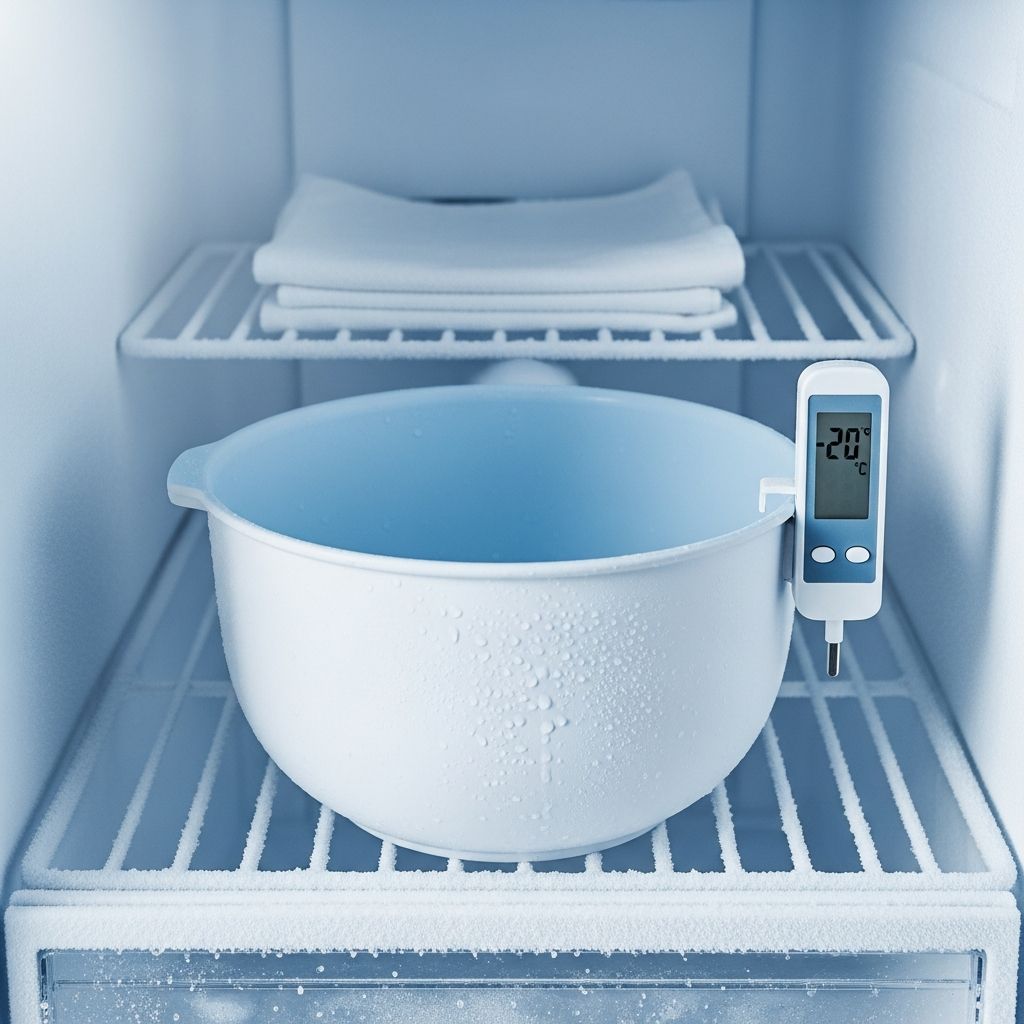
A freezer-bowl is a double-walled mixing bowl used in many home ice-cream makers and frozen dessert machines. The hollow cavity between the inner and outer walls contains a special liquid or gel that freezes solid and stores cold. During churning, this frozen core absorbs heat from the ice-cream base or frozen dessert mixture, allowing it to thicken and partially freeze.
Key characteristics of a typical freezer-bowl include:
- A double-wall construction with a freezable gel or liquid inside.
- Requires several hours in a freezer before use for best performance.
- Designed to be used immediately after removal from the freezer for efficient churn.
- Must not be filled with hot mixtures, which can crack the bowl or reduce performance.
Because the bowl itself provides the chilling power, its starting temperature directly determines how well and how quickly your mixture will freeze. Preparing it correctly is therefore one of the most important steps before making ice cream, gelato, sorbet, or frozen yogurt.
Recommended Freezing Time: How Long to Freeze
Exact freezing time varies by brand and freezer strength, but most manufacturers of gel-filled freezer-bowls recommend a minimum of 12 to 24 hours in a standard home freezer before use. In practice, especially for thicker bowls, deeper freezing and more reliable performance are achieved when you plan for at least one full day.
Typical Freezing Time Guidelines
| Freezer Temperature | Recommended Minimum Time | Best-Practice Time for Consistent Results |
|---|---|---|
| About -18°C (0°F) | 12–16 hours | 24 hours |
| Colder than -20°C (-4°F) | 10–12 hours | 18–24 hours |
| Warmer than -18°C (0°F) | 24 hours or more | 24–36 hours |
Key Timing Principles
- Do not rely on a few hours. Even if the outside feels cold, the internal gel may still be slushy.
- Freeze the bowl upright. This keeps the gel evenly distributed inside the walls.
- Plan ahead. If you want to churn in the evening, place the bowl in the freezer the previous morning or night before.
- Leave the bowl stored in the freezer long-term if you make frozen desserts frequently. This ensures it is always ready.
When in doubt, more time in a sufficiently cold freezer is safer than less time. Under-frozen bowls are the single most common cause of runny, under-set ice cream.
Freezer Settings, Temperature and Placement
The freezer’s actual temperature and how you place the bowl strongly influence freezing performance. Even if your dial is set correctly, frequent door openings or a packed freezer can raise the effective temperature around the bowl.
Ideal Freezer Temperature
- Set the freezer to about -18°C (0°F) or colder.
- If the bowl has previously struggled to freeze, temporarily turn the setting one step colder while preparing it.
- Use a simple freezer thermometer if you suspect your freezer runs warm; the display setting is not always accurate.
Best Placement in the Freezer
- Place the bowl on a flat, stable surface, usually a center shelf.
- Avoid the freezer door, which is exposed to warm air every time you open it.
- Keep the bowl away from vents that blow warm air during a defrost cycle.
- Ensure air can circulate around the bowl; do not tightly pack it between boxes or bags.
Managing Freezer Load
- Do not place large amounts of warm food into the freezer at the same time as the bowl.
- If you must freeze other items simultaneously, position the bowl as far from them as possible.
- Minimize door openings during the first 6–8 hours of freezing.
Good freezer management helps the gel in the bowl reach a deep, even freeze, which is vital for efficient churning and proper texture.
How to Check If the Freezer-Bowl Is Ready
You cannot see inside the double-walled bowl, so you must rely on external signs to judge readiness. There are several simple, practical tests you can perform before you commit your ice-cream base to the bowl.
1. Shake Test
This is one of the quickest ways to check.
- Lift the frozen bowl gently and give it a careful shake near your ear.
- If you hear sloshing, the inner gel has not fully frozen and the bowl is not ready.
- If you hear no movement and it feels completely solid, that is a good sign of readiness.
Note that some bowls use thicker gels that may not audibly slosh even when semi-frozen, so combine this test with others for best accuracy.
2. Touch and Frost Test
- The exterior of the bowl should feel very cold, almost painful to the touch after a second or two.
- You may see frost formation on the outer surface or rim, depending on humidity.
- If you gently touch the inside metal or lining, it should be uniformly very cold without warmer patches.
Uneven temperature or areas that feel slightly warmer can indicate incomplete freezing of the inner gel.
3. Time and Temperature Check
- Confirm how long the bowl has been in a freezer at about -18°C (0°F) or colder.
- If it has been less than 12 hours, it is unlikely to be fully ready.
- Between 12 and 24 hours, readiness depends on freezer performance; more time is safer.
Always combine this with the shake and touch tests for confidence.
4. Test with a Small Amount of Water
For a more direct functional check (before adding your actual mixture), you can do a quick test with water.
- Pour a small splash of cold water (a tablespoon or two) into the bowl.
- Swirl gently for 30–60 seconds.
- If the water begins to freeze or form ice crystals on the surface of the bowl, it suggests the bowl is well-frozen.
- If the water remains unchanged and simply warms the bowl, the bowl needs more time.
This test slightly warms the bowl, so only perform it if you are prepared to return the bowl to the freezer for additional time if it fails.
Step-by-Step: Preparing the Freezer-Bowl for Use
This section brings the guidance together into a clear, repeatable procedure you can follow each time you plan to make ice cream or other frozen desserts with a freezer-bowl machine.
Step 1: Clean and Dry the Bowl
- Ensure the bowl is completely clean from any previous use.
- Wash with mild dish soap and lukewarm water if needed, avoiding very hot water.
- Rinse thoroughly and dry fully with a soft towel; moisture on the exterior can freeze into rough ice layers.
Step 2: Prepare the Freezer
- Check the freezer setting and aim for about -18°C (0°F) or colder.
- Clear a flat area large enough to hold the bowl upright.
- Avoid placing a large amount of warm food into the freezer at the same time.
Step 3: Place the Bowl in the Freezer
- Put the bowl upright on a flat shelf, not at an angle.
- Ensure some space around it for air circulation.
- Close the freezer and avoid frequent door openings, especially in the first several hours.
Step 4: Freeze for 12–24 Hours
- Allow at least 12 hours of undisturbed freezing for a typical bowl in a properly cold freezer.
- For best reliability, especially if your freezer is often opened, freeze for a full 24 hours.
- If you intend to churn multiple batches back-to-back, consider freezing the bowl even longer or using two bowls.
Step 5: Check Readiness Before Use
- Perform the shake test: listen for any sloshing.
- Use the touch test: the bowl should feel uniformly very cold.
- If uncertain, use the water test with a tablespoon of cold water to see if it begins to freeze.
Step 6: Use Immediately After Removal
- Only remove the bowl from the freezer when everything else is ready (machine assembled, mixture chilled, tools at hand).
- Pour in your pre-chilled ice-cream base or dessert mixture promptly.
- Start the machine right away; do not allow the bowl to sit at room temperature.
The colder and more stable the bowl’s starting temperature, the faster your mixture will thicken, leading to a smoother texture and less ice crystallization.
Troubleshooting: When the Bowl Does Not Freeze Properly
Even with good preparation, you might sometimes find that your ice cream does not set or the bowl warms too quickly. Below are common symptoms and their likely causes along with corrective steps.
Symptom: Ice Cream Stays Soupy After Full Churning Time
- Probable cause: Bowl not fully frozen or mixture too warm.
- Solutions:
- Next time, freeze the bowl longer (aim for 24 hours or more).
- Chill the mixture thoroughly in the refrigerator before pouring (often several hours or overnight).
- Verify freezer temperature is at least -18°C (0°F).
Symptom: Ice Cream Starts to Freeze, Then Melts Back
- Probable cause: Bowl initially cold, but with insufficient stored cold to complete the batch.
- Solutions:
- Reduce the batch volume so the bowl’s capacity is not exceeded.
- Ensure the bowl is stored in the coldest part of the freezer and not near the door.
- Consider extending freezing time or lowering freezer temperature slightly.
Symptom: Freezer-Bowl Gel Never Seems to Fully Solidify
- Probable cause: Freezer not cold enough or bowl has been damaged.
- Solutions:
- Check the freezer with a thermometer; if warmer than -15°C (5°F), it may never freeze the bowl correctly.
- Inspect the bowl for cracks, bulging, or leaks; discontinue use if you see damage.
- Try a different, colder freezer if one is available.
Symptom: Frost Build-Up Outside the Bowl
- Probable cause: Moisture on the bowl when placed in the freezer, or a humid freezer environment.
- Solutions:
- Always dry the bowl thoroughly before freezing.
- Brush off any loose frost before use so it does not fall into your mixture or affect the fit in the machine.
Safety, Handling and Long-Term Care
Proper care of your fryer-bowl helps ensure both safety and performance over the long term. The gel inside is sealed and not meant to be exposed, so you must protect the bowl from extreme shock or damage.
Safe Handling Tips
- Do not strike or drop the bowl; a crack can lead to leaks of the inner gel.
- Avoid using metal utensils that might scratch or damage the inner surface.
- Do not place the bowl directly in a dishwasher unless your manufacturer specifically states it is dishwasher-safe.
- Never expose the frozen bowl to hot water or a hot oven; sudden temperature changes can damage it.
Cleaning After Use
- Allow the bowl to return gradually to room temperature before washing if it is heavily frosted.
- Use lukewarm water, mild detergent, and a soft cloth or sponge.
- Rinse thoroughly and dry completely before returning to the freezer.
Long-Term Storage
- If you make frozen desserts regularly, you can store the bowl permanently in the freezer, as long as it is clean and dry.
- If storing outside the freezer, keep it in a cool, dry place and avoid stacking heavy objects on top.
- Inspect the bowl periodically for signs of wear, cracks, or bulging; discontinue use if you find damage.
Frequently Asked Questions (FAQs)
How long do I really need to freeze the freezer-bowl?
For most home freezers at about -18°C (0°F), plan on 24 hours of freezing time to ensure the inner gel is completely solid. Shorter times may work in very cold, efficient freezers, but they are less reliable.
Can I speed up the freezing by using the freezer’s fast-freeze or turbo mode?
A fast-freeze mode can help initially lower the temperature more quickly, but it does not change the physics of how long the inner gel needs to solidify. You may still need close to a full day, though it can add a margin of safety if your freezer usually runs warm.
Is it okay to leave the freezer-bowl in the freezer all the time?
Yes, many people keep the freezer-bowl stored in the freezer permanently so it is always ready. Just be sure it is clean, dry, and placed so it will not be damaged by shifting items.
What happens if I use the bowl before it is fully frozen?
Your mixture will usually remain thin and slushy even after the full churn time. It may partially thicken, but it will not reach the intended soft-serve consistency, and the texture may be icy if you later freeze it in the freezer.
How can I tell if the internal gel is damaged or leaking?
Signs of damage include visible cracks, bulging walls, unexplained sticky or colored residue on the outside, or areas that feel soft or hollow instead of solid when frozen. If you see these, stop using the bowl and contact the manufacturer or replace it.
Can I refreeze the bowl immediately after one batch for a second batch?
Not usually. After one full batch, the bowl has absorbed a large amount of heat and needs a full cycle back in the freezer, often another 12–24 hours, before it can effectively freeze a second batch. For back-to-back batches, many home cooks own a second freezer-bowl.
Conclusion
A freezer-bowl only performs well when its inner gel is completely frozen, so careful preparation is essential. Freezing it for at least 12–24 hours in a sufficiently cold, well-organized freezer, positioned upright with good air circulation, provides the deep chill needed for smooth, efficient churning.
Simple checks such as the shake test, touch test, and optional water test help confirm readiness before you pour in your mixture. Combined with a well-chilled base and immediate use after removing the bowl from the freezer, these practices greatly reduce the risk of runny or poorly textured ice cream.
With consistent habits around freezing time, freezer temperature, and gentle care of the bowl, your ice-cream maker will deliver more reliable results and your freezer-bowl will remain effective for many seasons of homemade frozen desserts.
Similar Articles




Read full bio of Sneha Tete