
Essential Safety Checks to Perform Before Every Use of a Home Ice Cream Maker
Practical pre-use safety checks to keep your home ice cream maker, your kitchen, and your family safe every time you churn a batch.
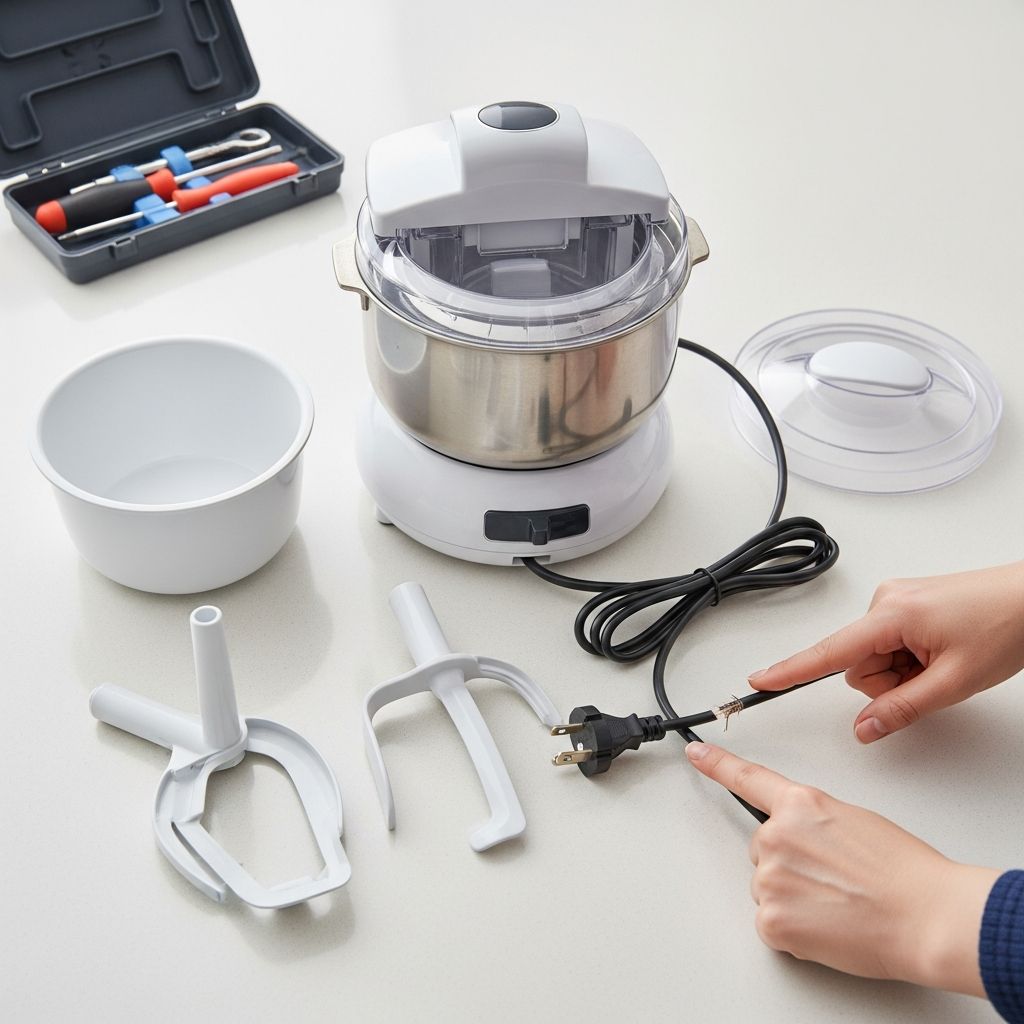
Safety Checks to Perform Before Each Use of a Home Ice Cream Maker
Using a home ice cream maker can be a fun way to create fresh desserts, but it also involves electricity, moving parts, and perishable ingredients. Performing a simple set of safety checks before every batch reduces the risk of electric shock, burns, mechanical injury, and foodborne illness, while also helping your machine last longer.
Table of Contents
- Understanding the Main Safety Risks
- Pre-Use Safety Check Overview
- Electrical Safety Checks
- Mechanical and Structural Checks
- Food Hygiene and Cleanliness Checks
- Safe Setup and Environment Checks
- Model-Specific Checks: Freezer Bowl vs. Compressor Units
- Quick Pre-Run Function Test
- Troubleshooting Early Warning Signs
- Printable Style Safety Checklist
- Frequently Asked Questions (FAQs)
- Conclusion
Understanding the Main Safety Risks
Before you churn, it helps to know what can go wrong and why checks matter. Home ice cream makers combine electrical components, motorized parts, and raw dairy or egg ingredients. According to appliance safety guidance, the main risks are:
- Electric shock and electrical fire from damaged cords, faulty plugs, overheating, or lack of residual current protection.
- Mechanical injury from contact with moving paddles, blades, or dispensers during operation.
- Foodborne illness caused by bacteria in poorly cleaned bowls, paddles, or warm mixtures.
- Equipment damage and leaks due to worn seals, O-rings, or misuse, which can also affect safety.
Most of these risks are manageable with a short, consistent routine before each use.
Pre-Use Safety Check Overview
Think of your pre-use routine as four quick stages:
- Electrical safety: plug, cord, socket, and protection devices.
- Mechanical and structural integrity: bowl, paddles, lid, seals, and body.
- Food hygiene: cleanliness, sanitization, and ingredient condition.
- Environment and setup: counter, airflow, stability, and supervision.
In many kitchens, this takes only a few minutes but can prevent equipment failures or unsafe food.
Electrical Safety Checks
Because home ice cream makers are electrical appliances used in kitchens, checking the power system is essential.
Inspect the Power Cord and Plug
Before plugging in, examine the cord and plug:
- Look for cracks, cuts, kinks, or exposed wires in the power cord.
- Check that the plug casing is intact with no loose pins or burn marks.
- Ensure there is no wobble or looseness where the cord meets the plug or appliance body.
If you notice damage, do not use the machine; contact the manufacturer or a qualified technician for repair or replacement.
Check the Socket and RCD Protection
Check the wall socket or extension lead before each use:
- Inspect the socket for burn marks, discoloration, buzzing, or crackling sounds during use.
- Ensure the socket is firmly mounted and not loose.
- Confirm that your home sockets are protected by an RCD (residual current device), or use an RCD plug or socket if not.
Electrical safety organizations emphasize that RCDs significantly reduce the risk of electric shock and electrical fire with appliances like ice cream makers.
Use the Correct Power Supply
Using the wrong type of plug adapter or voltage converter can be dangerous:
- Ensure your ice cream maker has a plug type appropriate for your country (for example, a UK plug in the UK).
- Do not use travel adapters as a permanent solution; seek advice from the retailer or manufacturer instead.
- Avoid using the appliance with damaged or overloaded extension cords.
Confirm the Appliance Is Switched Off Before Plugging In
Before you insert the plug into the socket:
- Check that the power switch is in the OFF position.
- Only then plug the unit into the outlet.
This reduces the chance of sudden movement of internal parts when the power is connected, which is especially important if children are nearby.
Mechanical and Structural Checks
Ice cream makers contain moving paddles, rotating freezer bowls, or internal compressors. A quick inspection limits the risk of mechanical injury and avoids damage to the machine.
Examine the Bowl, Paddles, and Lid
- Inspect the bowl for cracks, dents, or leaks that might worsen during churning.
- Check the paddle or dasher for bent parts, chips, or excessive wear.
- Ensure the lid is undamaged and that any locking mechanism engages fully.
A locking lid and secure parts are important in preventing splashes, spills, and access to moving parts during operation.
Verify Assembly Is Correct and Secure
Incorrect assembly can cause noise, vibration, jamming, or even damage. Before every use:
- Refer to the instruction manual to confirm the correct order for fitting the bowl, paddle, and lid.
- Ensure the paddle is firmly seated on its shaft and does not wobble excessively.
- Make sure any locking tabs click fully into place and the lid cannot be easily lifted while locked.
Check Seals, O-Rings, and Gaskets
Although many detailed guides focus on commercial machines, the same ideas apply to home models: seals and O-rings prevent leaks and contamination.
- Inspect any visible O-rings or gaskets for cracks, flattening, or stickiness.
- If your model requires it, make sure food-safe lubricant has been applied to seals according to the manufacturer’s guidance.
- Replace worn seals rather than forcing parts together; this helps avoid drips or product entering machine internals.
Confirm Moving Parts Are Accessible Only When Safe
Before starting the machine, review how the safety features work:
- Ensure you and other users never place hands or utensils inside while the machine is running.
- Verify the lid must be in place for operation if your model has an interlock.
- Plan to use only non-metal utensils such as a rubber spatula once the motor is off to avoid scratching the bowl.
Food Hygiene and Cleanliness Checks
Ice cream is a ready-to-eat product that often contains dairy and eggs. Poor hygiene can promote bacterial growth. Guidance for ice cream machines stresses thorough cleaning and hand hygiene before use.
Ensure All Removable Parts Are Clean and Dry
- Confirm that the bowl, lid, paddles, and dispensers were washed with warm soapy water after the last use and rinsed well.
- Check for residual film, dried product, or odours indicating incomplete cleaning.
- Allow washed parts to air-dry completely before reassembly to avoid diluted mixtures or standing moisture where bacteria can grow.
- Follow the manual to identify parts that are not dishwasher-safe, and hand-wash those as directed.
Wash and Dry Your Hands
Since the machine handles food that is eaten directly, operators should start with clean hands.
- Wash hands thoroughly with soap and water before touching ingredients or internal parts.
- Dry hands with a clean towel or disposable paper towel to avoid adding moisture or lint.
Check Ingredients and Mixture Temperature
To keep the product safe and help the machine work efficiently, check your ingredients before adding them:
- Ensure milk, cream, and eggs are within their use-by dates and have been stored at the correct refrigeration temperature.
- Confirm your ice cream base has been pre-chilled to refrigerator temperature (around 4 °C or 39 °F) before pouring into the machine; warm mix may not freeze properly and can promote bacterial growth.
- Avoid adding hard or oversized mix-ins (such as large nuts or frozen candy) that your manufacturer warns against, as they can jam the paddle.
Safe Setup and Environment Checks
The place where you use the machine is as important as the machine itself. Safety guidance for small appliances highlights stable positioning, adequate ventilation, and supervision, especially around children.
Choose a Stable, Heat-Free Surface
- Place the machine on a flat, level, non-slip surface to prevent movement or tipping.
- Keep the appliance away from hot surfaces such as stovetops, ovens, or direct sunlight, which can affect both safety and performance.
- Position the cord so it does not hang over the edge of the counter where it could be pulled by children.
Provide Adequate Ventilation
Compressor-style ice cream makers generate heat and require airflow:
- Ensure there is clear space around the vents as instructed in the manual so internal parts do not overheat.
- Avoid placing the appliance flush against a wall or surrounded by clutter that blocks air circulation.
Plan for Supervision and Safe Use Around Children
- Do not leave the ice cream maker unattended while running, particularly around children.
- Keep children away from the cord and moving parts; any involvement should be closely supervised and limited to safe tasks like adding toppings at the end.
Model-Specific Checks: Freezer Bowl vs. Compressor Units
Different designs require slightly different pre-use checks. Most home ice cream makers are either freezer-bowl models or self-refrigerating (compressor) units.
Freezer-Bowl Models
These have a removable bowl that must be pre-frozen:
- Verify the freezer bowl has been in the freezer as long as the manufacturer recommends (often 12–24 hours).
- Check the bowl is completely frozen (shake gently; you should not hear liquid sloshing).
- Do not expose the frozen bowl to hot water or a hot environment immediately before use, which can cause cracks.
- Avoid using sharp tools in the bowl to scrape hardened ice cream, as this can scratch or damage the lining.
Compressor-Based Models
These contain built-in refrigeration:
- Confirm the unit is on a stable, ventilated surface with enough clearance for air intake and exhaust.
- Check the cooling cycle starts smoothly when powered (during your pre-run test) and there are no unusual noises or vibrations.
- Avoid running the machine for excessively long continuous periods, which can lead to overheating and wear.
Quick Pre-Run Function Test
A short pre-run test allows you to detect problems before adding ingredients.
- With the bowl and paddle installed and lid locked, switch on the empty machine for 10–20 seconds.
- Listen for smooth, steady motor noise without grinding, squealing, or rattling.
- Check that the paddle rotates properly and does not catch on the bowl.
- If you detect a burning smell, unusual noise, or visible sparking, switch off immediately and unplug the machine.
Only once the test is satisfactory should you pour in the chilled mixture.
Troubleshooting Early Warning Signs
Manufacturer and safety organizations identify several warning signs that require immediate attention.
| Warning Sign | Possible Cause | Immediate Action |
|---|---|---|
| Burning smell or smoke | Overheating motor, electrical fault, blocked ventilation | Switch off, unplug, allow to cool, and contact manufacturer or a qualified technician. |
| Buzzing, crackling, or visible sparks at plug or socket | Loose connection, damaged plug or socket | Stop using the socket, unplug, and have the wiring inspected by an electrician. |
| Unusual grinding or knocking noises | Misaligned paddle, foreign object, worn internal parts | Switch off, unplug, disassemble, and check for obstructions or damage before reuse. |
| Leaking product from seals or under the machine | Damaged or dry O-rings, overfilling, cracks in bowl | Stop operation, clean and inspect seals and bowl; replace faulty parts before next use. |
| Repeated tripping of circuit breaker or blown fuses | Electrical overload, short circuit, or appliance fault | Do not reset repeatedly; consult an electrician or appliance technician. |
Printable Style Safety Checklist
The following simple checklist can be reviewed before every batch:
- Electrical safety
- Power cord and plug intact, with no cuts, burns, or looseness.
- Socket looks sound, no buzzing or burning smell when in use.
- RCD protection is available for the outlet used.
- Appliance switch is OFF before plugging in.
- Mechanical and assembly
- Bowl, paddle, and lid free from cracks or damage.
- Seals and O-rings inspected; no visible wear or cracking.
- All components correctly assembled and locked in place.
- No loose screws, rattling parts, or instability of the unit.
- Food safety and cleanliness
- All parts that touch food are freshly cleaned, rinsed, and dry.
- Hands washed thoroughly before handling ingredients.
- Ingredients in date, properly refrigerated, and visually normal.
- Ice cream base chilled to refrigerator temperature before use.
- Environment and operation
- Appliance on a stable, level, non-slip surface away from heat sources.
- Cord positioned to avoid tripping or pulling, especially by children.
- Ventilation gaps clear (especially for compressor models).
- Short pre-run test completed; no unusual noise, smell, or leaks.
Frequently Asked Questions (FAQs)
Q: Do I need to clean my home ice cream maker before every single use?
Yes. Any part that contacts the mixture or finished ice cream should be washed and rinsed before every batch to avoid bacterial growth and off-flavours.
Q: Is it safe to put all parts of my ice cream maker in the dishwasher?
Not always. Many manufacturers specify that certain components, such as the motor base or some freezer bowls, must not be placed in water or dishwashers. The instruction manual will identify which parts are dishwasher-safe and which must be cleaned by hand.
Q: Can I reach into the machine while it is running to scrape down the sides?
No. Safety instructions clearly advise avoiding contact with moving parts and keeping hands and utensils out of the bowl while the machine is operating, to prevent injury and damage to the appliance.
Q: How often should I check seals and O-rings on my ice cream maker?
Look at seals and O-rings whenever you disassemble the machine for cleaning and again before reassembly. If you see cracks, flattening, or stickiness, replace them and use food-safe lubricant where recommended.
Q: What should I do if my home ice cream maker trips the circuit breaker?
Stop using the appliance immediately. Repeated breaker trips can indicate an electrical fault with the machine or the circuit. Have the appliance and household wiring inspected by a qualified professional before using the machine again.
Conclusion
Safe use of a home ice cream maker depends far more on the user’s habits than on the appliance alone. A brief, consistent routine of electrical inspection, mechanical checks, and hygiene control before each batch reduces the risk of shocks, mechanical injuries, and foodborne illness while extending the life of the machine.
Focusing on a few essentials—sound power connections, intact and correctly assembled parts, thoroughly cleaned components, and properly chilled ingredients—creates a predictable, low-risk environment for making frozen desserts. When combined with attention to early warning signs such as unusual smells, noises, or leaks, these checks form a practical framework for safe, enjoyable ice cream making at home.
Similar Articles







Read full bio of medha deb