Mastering Savory and Spiced Popcorn in Popcorn Makers for Even Flavor
Learn how to use oil and powdered seasonings in popcorn makers for bold, even, savory flavor in every bite.
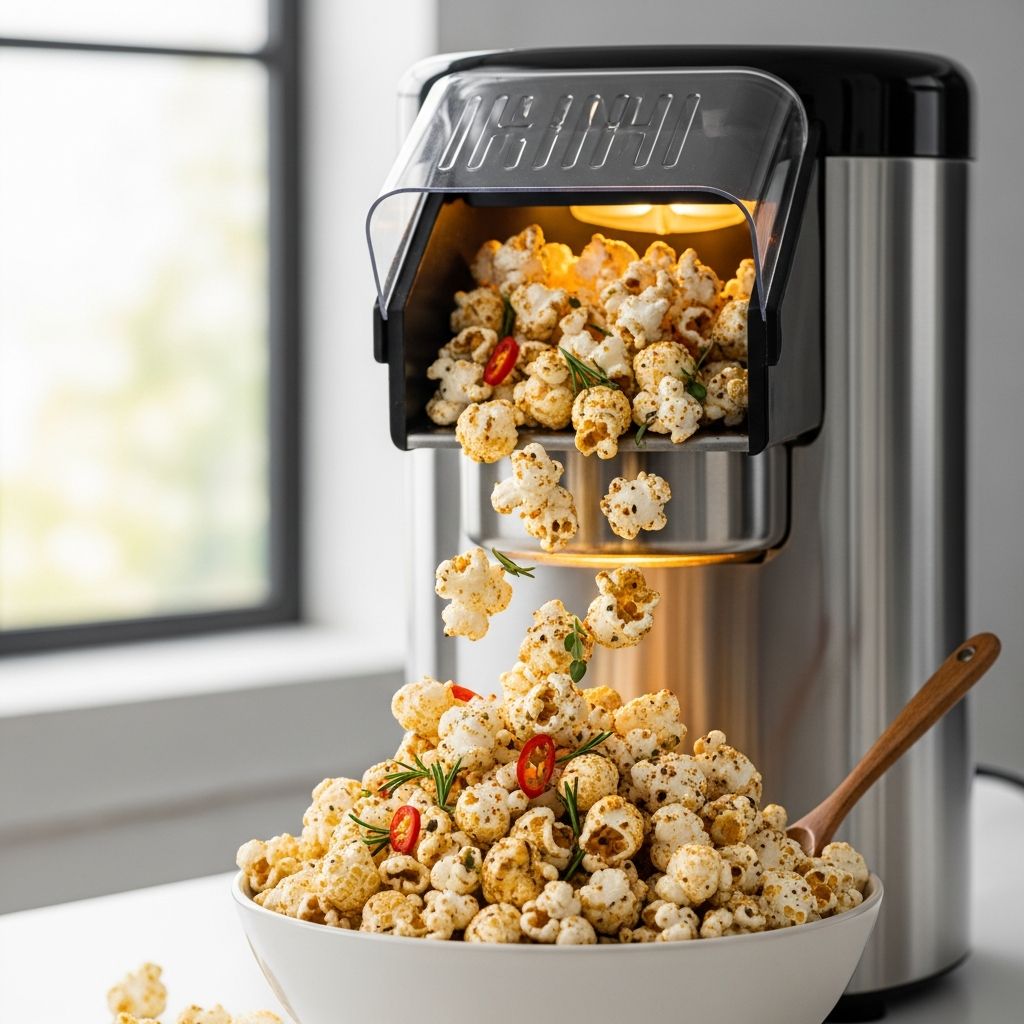
Making Savory and Spiced Popcorn in Popcorn Makers: Oil, Powdered Seasonings, and Flavor Distribution
Savory and spiced popcorn is one of the easiest snacks to customize, but when you use a popcorn maker it can be challenging to get seasonings and oil evenly distributed without soggy or bland kernels. This guide explains how to use oil and powdered seasonings effectively with different types of popcorn makers so you get bold, even flavor in every bite.
Table of Contents
- Understanding Different Popcorn Makers
- The Role of Oil in Savory Popcorn
- Working with Powdered Seasonings
- Techniques for Even Flavor Distribution
- Step-by-Step Methods by Popcorn Maker Type
- Savory and Spiced Flavor Ideas
- Troubleshooting Common Problems
- Frequently Asked Questions
- Conclusion
Understanding Different Popcorn Makers
How and when you add oil and seasonings depends heavily on the type of popcorn maker you use. The goal is always the same: crisp, fully popped kernels that carry seasoning on every surface, without sogginess or burnt spots.
| Popcorn Maker Type | How It Cooks | When to Add Oil | When to Add Seasonings |
|---|---|---|---|
| Hot air popper | Uses hot air; popcorn is very dry | After popping, on hot popcorn | After oil or spray, while popcorn is still warm |
| Stovetop hand-crank (e.g., Whirley-type) | Kernels pop in a covered pot with oil | In the pot before popping | Mainly after popping; some spices can go into oil |
| Electric kettle or theater-style | Built-in kettle with oil and kernels | In the kettle before popping | After popping, while corn is warm, often in bags or bowls |
| Microwave popper (oil-safe) | Microwave heats kernels with or without fat | Before or after, depending on design | Generally after popping, in a bowl or bag |
Air-popped popcorn is naturally lower in fat and calories, but it needs help from oil or another binder so powdered seasoning will stick.
The Role of Oil in Savory Popcorn
Oil does far more than add richness; it is essential for getting dry seasonings to cling to the popcorn surface. Used correctly, a light coating of fat gives you even flavor without greasiness.
Choosing the Right Oil
For high-heat popping and bold savory flavors, choose neutral or complementary oils:
- Neutral high-heat oils such as canola, refined coconut, sunflower, grapeseed or peanut oil for kettle and stovetop use
- Olive oil for Mediterranean, herb, and chili blends (best as a finishing oil rather than in the kettle)
- Ghee or clarified butter for buttery, savory popcorn with less risk of sogginess and burning
- Coconut oil for aromatic, slightly sweet, tropical or curry-style mixes
How Much Oil to Use
Approximate guidance for balanced texture and flavor:
- For popping in oil: about 1 to 3 tablespoons of oil per 1/2 cup of kernels, depending on maker and desired richness.
- For coating finished popcorn: 1 to 3 tablespoons of oil or melted fat for 8 to 10 cups of popped corn.
Using too much oil can make seasonings clump and popcorn heavy. Using too little can leave powders at the bottom of the bowl.
Butter vs. Clarified Butter vs. Spray Oils
- Whole butter adds flavor but contains milk solids that burn easily and can make popcorn soggy. It is best melted separately and drizzled lightly on hot popcorn.
- Clarified butter or ghee has milk solids removed; it resists burning and stays clearer and lighter, which is ideal for coating savory and spiced popcorn evenly.
- Oil sprays (olive, avocado, or neutral) are excellent for air-popped popcorn; they add just enough surface fat for dry seasonings to adhere without drenching the kernels.
Working with Powdered Seasonings
Powdered and finely ground seasonings are the easiest to distribute evenly across popped kernels. To avoid hot spots and bland patches, think about grind size, solubility, and when to apply them.
Best Types of Powdered Seasonings for Savory Popcorn
- Salt and flavored salts: fine sea salt or popcorn salt penetrate folds in the kernels more evenly than coarse salt.
- Herbs and aromatics: garlic powder, onion powder, dried herbs (thyme, rosemary powder, oregano), and herb blends add savory depth.
- Spices: paprika, smoked paprika, cumin, curry powder, chili powder, cayenne, turmeric, and black pepper for heat and complexity.
- Cheese powders: parmesan, cheddar, or nutritional yeast for cheesy flavor that does not require refrigeration when dry.
- Commercial popcorn seasoning blends: barbecue, ranch, chili-lime, or Cajun mixes, which combine salt, sugar, herbs, and spices for balanced flavor.
Preparing Seasoning Blends
Pre-mixing your spices helps prevent clumps and ensures each handful tastes consistent. Many recipes start by combining dry ingredients before they touch the popcorn.
- Stir or whisk all seasoning powders together in a small bowl until uniform.
- If your blend contains a sticky component like sugar or powdered cheese, break up any lumps with a spoon or by sifting.
- For strong spices (chili, cayenne, curry), start with less than you think you need and gradually add more to taste.
Dry vs. Wet Seasonings
- Dry powders (spice blends, herb rubs, cheese powder) cling best when applied right after a light coat of oil or melted fat.
- Wet seasonings (hot sauce, sriracha, chili oil, soy sauce) should be used sparingly and often thinned in fat; too much moisture will make popcorn soggy.
Many spicy popcorn recipes stir hot sauce or sriracha into melted butter or oil first, then drizzle that mixture over hot popcorn to combine flavor and fat in one step.
Techniques for Even Flavor Distribution
Even flavor distribution is the main challenge when making savory popcorn. The key is to manage heat, moisture, and movement.
Work While the Popcorn Is Hot
Most savory recipes call for seasoning popcorn immediately after popping while the kernels are still warm; this helps oil spread and powders stick well.
- Transfer popcorn to a large bowl or container as soon as it is popped.
- Drizzle warmed fat over the top instead of pouring it all in one spot.
- Season quickly and toss repeatedly while everything is still warm.
Use Large Containers and Layering
Shallow, wide containers make it easier to move popcorn around and distribute seasonings evenly.
- Use a large mixing bowl with extra space above the popcorn.
- Or use a deep pot with a lid that allows vigorous shaking after adding oil and seasonings.
- For theater-style or kettle poppers, transfer popcorn into a food-safe bag or covered container and shake vigorously after adding seasoning.
Layering popcorn, oil, and seasonings in stages also improves coverage. For example, add half the popcorn, half the butter, and some salt, then repeat and shake to distribute.
Small Amounts, Multiple Applications
Instead of dumping all the seasoning at once, apply in thin passes, tossing between each addition.
- Lightly spray or drizzle oil, toss.
- Apply part of the seasoning blend, toss.
- Repeat until you reach desired intensity, avoiding pockets of harsh spice or too much salt.
Baking to Set the Seasoning (Optional)
For some savory recipes, briefly baking seasoned popcorn improves crunch and helps flavors adhere.
- Spread seasoned popcorn in a single layer on a lined baking sheet.
- Bake at a low temperature (about 250F or 120150C) for 4 to 20 minutes, depending on recipe, until dry and crisp.
- Cool slightly before serving so seasonings set on the surface.
Step-by-Step Methods by Popcorn Maker Type
Air Popper: Light and Savory
Air-popped popcorn is ideal for those who want lower fat but still crave strong seasoning.
- Pop kernels in the air popper according to the manufacturers instructions.
- Transfer the hot popcorn to a large bowl or lidded pot.
- Lightly drizzle or spray oil (olive oil or neutral oil) over the top while tossing.
- Sprinkle your pre-mixed seasoning blend in stages, tossing or shaking between additions.
- Taste and adjust salt and spice level as needed.
- Optionally, spread on a baking sheet and bake a few minutes to set.
Stovetop Hand-Crank Popper: Rich and Evenly Coated
- Add oil to the popper and heat it according to instructions.
- Add kernels and begin cranking to keep them moving while they heat and pop.
- Optional: add a pinch of heat-resistant spices (like paprika or chili powder) to the oil for toasty aroma, but avoid delicate herbs that can burn.
- When popping slows, quickly pour finished popcorn into a large bowl.
- Drizzle clarified butter or additional oil while tossing.
- Sprinkle seasoning blend over the top and toss or shake to coat evenly.
Electric Kettle or Theater-Style Popper
- Preheat the kettle to recommended temperature.
- Add measured oil and kernels, then pop until the machine indicates you are done.
- Dump fresh popcorn into the holding area or into a large bowl.
- Immediately transfer to a food-safe bag or lidded container.
- Drizzle melted butter or oil over the popcorn in small amounts.
- Add dry seasoning to the bag, close it, and shake thoroughly until the popcorn is evenly coated.
Microwave Popcorn Maker
- Add kernels and, if your device allows, a small amount of oil.
- Microwave according to manufacturers directions.
- Move popped corn to a large mixing bowl.
- If you did not use oil in the microwave, spray or drizzle fat now, tossing quickly.
- Add dry seasoning blend in layers, tossing between each addition.
Savory and Spiced Flavor Ideas
The combinations of oils and spices are nearly endless. Here are several savory profiles that work particularly well on popcorn.
Spicy and Chili-Based Popcorn
- Spicy butter and hot sauce: melted butter mixed with hot sauce, cumin, garlic powder, and paprika, then drizzled over air-popped popcorn for a spicy, tangy flavor.
- Curry and chili popcorn: a mix of curry powder, paprika, cayenne, chili powder, and salt combined with melted butter and tossed with popcorn; often finished in a low oven for extra crunch.
- Chili-lime popcorn: olive oil with chili-lime seasoning and red pepper flakes tossed with hot popcorn for a zesty, savory kick.
- Spicy sriracha popcorn: hot popcorn lightly coated with Sriracha and salt, then baked briefly to keep it crisp.
Herb and Aromatic Popcorn
- Herb and garlic popcorn: olive oil with salt, black pepper, rosemary, thyme, and garlic powder for an aromatic savory snack.
- Garlic herb honey butter popcorn: melted butter, a touch of honey, garlic powder, and rosemary poured over hot popcorn for sweet-savory flavor.
Cheesy and Umami Popcorn
- Cheesy parmesan popcorn: fresh grated or powdered parmesan mixed with garlic salt, black pepper, and melted butter, then baked briefly to set the coating.
- Umami spice blends: combinations of nutritional yeast, dried mushroom powder, soy powder, or commercial umami seasonings add deep savory flavor without much additional fat.
Smoky and Barbecue-Style Popcorn
- BBQ popcorn: a mix of brown sugar, Cajun seasoning, garlic powder, onion powder, and chili powder sprinkled over popcorn coated with clarified butter and a few drops of liquid smoke.
Troubleshooting Common Problems
Seasoning Falls to the Bottom
- Use a finer grind of salt and spices.
- Increase oil slightly so there is enough surface fat to grab the powders.
- Apply seasoning in multiple thin layers instead of one heavy dump.
- Shake vigorously in a lidded pot or bag immediately after adding seasoning.
Popcorn Is Soggy
- Reduce the amount of melted butter or liquid seasonings.
- Use clarified butter instead of whole butter to avoid extra water content.
- Avoid pouring sauce directly onto popcorn; mix it with fat first and drizzle lightly.
- Spread seasoned popcorn on a baking sheet and dry it in a low oven for several minutes.
Flavor Is Too Mild or Harsh
- For mild flavor, gradually increase seasoning, tasting after each addition.
- For harsh or overly salty flavor, mix in a batch of unseasoned popcorn to dilute intensity.
- Balance heat from chili or cayenne with a little sugar or honey in the seasoning mix if desired.
Uneven Popping or Burnt Spices in the Maker
- Do not overload the kettle or air popper; follow capacity guidelines.
- Add delicate herbs and most spices after popping to prevent burning.
- In oil-based kettles, only add robust spices that tolerate heat and in small amounts.
Frequently Asked Questions
Can I put seasoning directly into my popcorn maker?
For air poppers, do not add seasonings or oil into the machine; apply both after popping. For oil-based stovetop or kettle poppers, you can add a small amount of robust spices to the oil, but most herbs and salts should go on the popcorn after it is popped to avoid burning and uneven coating.
How do I make popcorn spicy without making it soggy?
Use powdered chili, cayenne, or curry in a dry blend and combine them with a small amount of oil or clarified butter as your binder. Avoid pouring large amounts of liquid hot sauce directly on popcorn; instead, stir the sauce into melted butter or oil first and drizzle lightly over hot popcorn, then toss well and bake briefly if needed.
What is the best way to store savory and spiced popcorn?
Allow seasoned popcorn to cool completely, then store it in an airtight container or bag. Many recipes note that properly dried popcorn will keep its texture for several days, though it tastes best fresh within the first day or two.
Can I pre-make dry seasoning blends for popcorn?
Yes, most dry blends of herbs, salt, sugar, and spices can be mixed ahead and stored in airtight containers for weeks or months. You then pop fresh corn, add oil or butter, and sprinkle the blend over the hot popcorn, tossing to coat.
Is air-popped popcorn still good for savory recipes?
Air-popped popcorn has fewer calories and less fat than popcorn cooked in oil, but it takes on savory flavors very well when you add a light coating of oil or melted butter after popping, then toss with herbs and spices while it is still warm.
Conclusion
Making savory and spiced popcorn in a popcorn maker is mostly about timing and technique. Once you understand how your particular machine works, you can decide when to introduce oil, what form of seasoning to use, and how best to move the popcorn so every kernel gets coated.
Using the lightest effective layer of oil or clarified butter, applying fine powdered seasonings while the popcorn is warm, and tossing in large bowls or bags in several quick passes are the core practices that produce even, flavorful results. With those fundamentals, you can adapt recipes that use hot sauce, herbs, chili blends, cheese powders, or barbecue-style rubs to suit your maker, your taste, and your preferred texture.
Over time, adjusting quantities, experimenting with new flavors, and refining your process will give you a personal method for reliably producing crisp, evenly seasoned savory popcorn in any popcorn maker you use.
Similar Articles




Read full bio of Sneha Tete