Understanding Energy Use in Different Types of Ice Cream Makers for Home and Commercial Use
Learn how different types of ice cream makers consume energy, what really drives electricity use, and how to choose the most efficient machine.
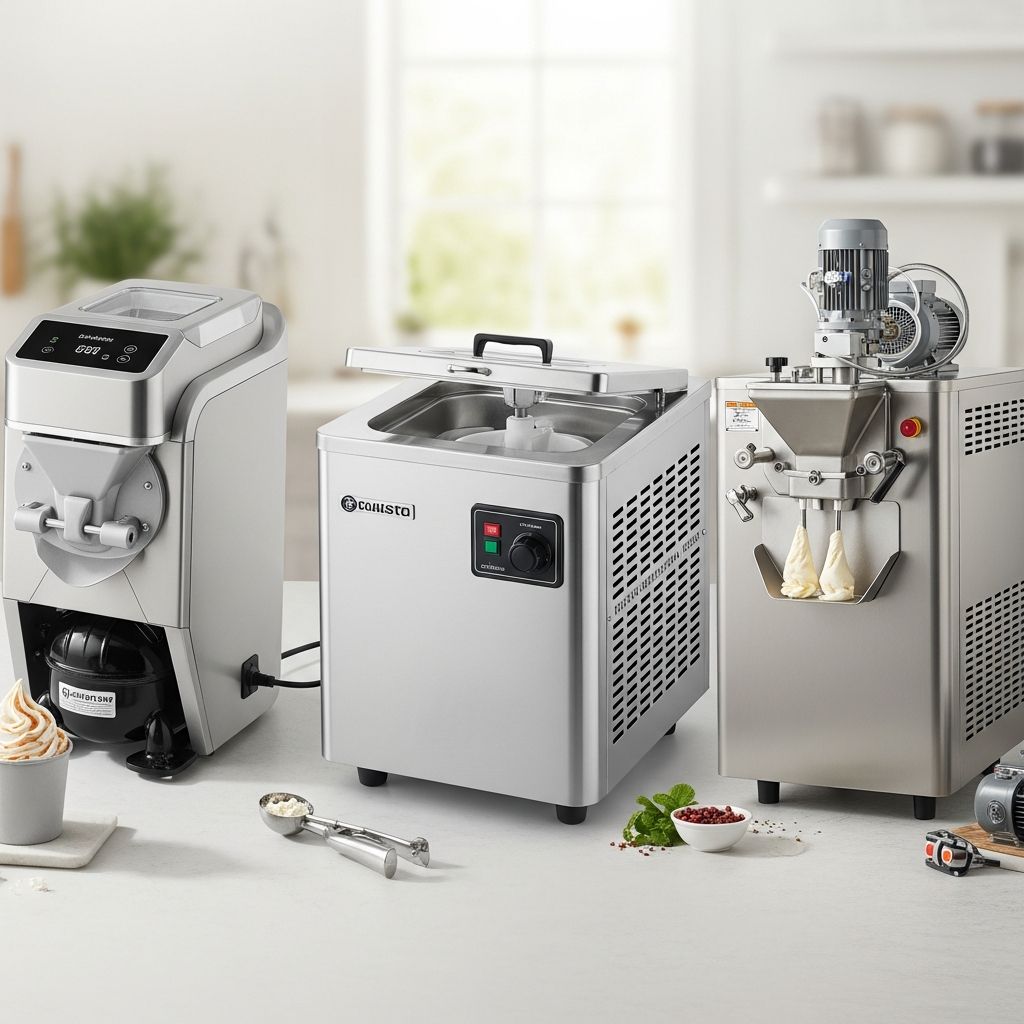
Understanding Energy Use in Different Types of Ice Cream Makers
Ice cream makers may look simple from the outside, but their internal freezing systems, insulation, and motors all influence how much electricity they draw every time you churn a batch. For both home users and commercial operators, understanding energy use is essential for controlling operating costs and reducing environmental impact.
This article explains how different types of ice cream makers consume energy, why some machines use far more electricity than others, and how design, size, and maintenance affect efficiency. It also offers practical tips to help you estimate energy costs and choose the right machine for your needs.
Table of Contents
- Overview of Energy Use in Ice Cream Makers
- Key Factors That Affect Energy Consumption
- Types of Ice Cream Makers and Their Typical Energy Use
- Commercial Soft-Serve and Vending Machines
- Design Features That Improve Energy Efficiency
- Choosing the Right Size and Capacity
- Maintenance and Its Impact on Energy Use
- How to Estimate Operating Costs (kWh and Money)
- Practical Energy-Saving Tips for Ice Cream Makers
- Conclusion
- Frequently Asked Questions (FAQs)
Overview of Energy Use in Ice Cream Makers
All ice cream makers rely on refrigeration to remove heat from the ice cream mix and freeze it. This process requires energy, usually in the form of electricity to power a compressor, motor, and controls. In some commercial systems, water is also used to carry away heat from the condenser, which adds to overall resource consumption.
Research on ice production shows that energy consumption rises as the product is cooled ever closer to its final low temperature: the colder the target, the more total energy must be extracted and the longer the machine needs to run. In practice, that means thicker, richer mixes and harder freezes demand more electricity per batch.
For commercial setups, newer high-efficiency models can reduce electricity and water use significantly compared with older machines. For example, modern high-efficiency series from established manufacturers are designed to cut electricity and water consumption by around 30% relative to their predecessors through improved components and smarter freezing programs. In some cases, optimized commercial machines can use over 90% less energy than traditional soft-serve units.
Key Factors That Affect Energy Consumption
Although wattage ratings provide a snapshot of electrical demand, real-world energy use depends on several interacting factors.
Machine Design and Technology
The basic design of an ice cream machine has a major influence on energy use.
- Whether it uses a built-in compressor or relies on pre-frozen bowls or external refrigeration.
- The efficiency of the compressor, condenser, and evaporator (heat exchangers).
- The quality of insulation around the freezing chamber.
- The presence of standby or smart modes that reduce power when not actively freezing.
Newer machines often incorporate more efficient cooling components and smarter controls, leading to lower electricity consumption per liter of ice cream compared with older models.
Size and Capacity
The physical size and batch capacity of a machine directly affect how much energy it uses per cycle.
- A machine that is too small for your production needs has to be run more often, increasing total kWh.
- A machine that is too large wastes energy by cooling unused space in the freezing cylinder or bowl.
Just like vehicles, oversizing or undersizing an ice cream machine leads to unnecessary energy and time costs.
Recipe and Product Characteristics
The composition of the ice cream mix also influences energy use.
- High-fat or high-sugar mixes are more energy-dense and require more cooling energy to reach the same final temperature.
- Higher solids and lower freezing point mixes may take longer to freeze, increasing runtime.
Richer recipes can therefore increase both electricity and water consumption in machines that use water cooling.
Operating Conditions
Environmental and installation conditions further shape energy consumption.
- Ambient room temperature: hotter rooms force compressors to work harder and longer.
- Cooling water temperature (for water-cooled systems): colder water can absorb more heat, reducing energy use; warmer water has the opposite effect.
- Ventilation around the machine: poor airflow around condensers increases power draw and may reduce lifespan.
Maintenance and Component Condition
Wear and tear affects how efficiently a machine can freeze ice cream.
- Worn mixer or scraper blades increase freezing time and energy consumption, by up to 50% more time and associated resources if not replaced.
- Dirty condensers, clogged air filters, and insufficient lubricant all drive up electricity use.
Regular maintenance is one of the simplest ways to keep energy use under control in the long term.
Types of Ice Cream Makers and Their Typical Energy Use
Different categories of ice cream makers rely on different technologies, which gives each type a characteristic pattern of power consumption. The table below summarizes typical behavior for home and small commercial units.
| Type of Ice Cream Maker | Typical Use Case | Power Draw (Approx.) | Energy Profile |
|---|---|---|---|
| Manual (ice-salt or hand crank) | Occasional home batches | Near zero electrical; uses ice/rock salt and manual effort | Low electrical use, but indirect energy in producing ice |
| Freezer-bowl (pre-frozen insert) | Entry-level home units | Small motor, often under 30–50 W; freezer energy used separately | Electric use mainly from household freezer and small motor |
| Compressor-based countertop | Frequent home use, prosumer | Roughly 150–300 W while freezing depending on model | Moderate power, continuous operation during batch |
| Batch commercial freezers | Ice cream shops, gelaterias | Much higher, often in kW range (varies widely) | Intensive energy use per cycle, optimized by capacity and scheduling |
| Commercial soft-serve machines | Cafés, fast food, vending | Traditional units: very high; modern efficient units: sharply reduced | Continuous or long-duty operation; high potential for savings |
Manual Ice and Salt Machines
Manual ice cream makers use ice and rock salt to draw heat out of the mix. There may be a small motor, but many are hand-cranked.
- Electrical energy use is minimal or zero.
- Indirect energy is consumed in producing and storing the ice used as the cooling medium.
- Best suited for occasional batches where precise control and speed are less critical.
Freezer-Bowl (Pre-Frozen Insert) Machines
These home machines use a double-walled bowl filled with a freezable fluid. The bowl is pre-frozen in a household freezer for many hours, then used to freeze a single batch.
- The machine itself typically runs a low-power motor to turn the dasher; the power draw is modest compared with compressor models.
- Most of the energy cost comes from your main freezer working to cool the bowl to a very low temperature ahead of time.
- These units are generally energy-efficient per batch if you already keep your freezer running and do not need multiple back-to-back batches.
Compressor-Based Countertop Ice Cream Makers
Countertop machines with built-in compressors provide their own refrigeration, eliminating the need to pre-freeze a bowl. They are popular among serious home users and small professional kitchens.
Independent testing and manufacturer data show that domestic compressor machines often operate in roughly the 150–300 watt range while freezing. For example:
- A popular compressor ice cream maker may be rated at around 150 watts for typical operation.
- Another smart compressor model may draw about 148 watts under light load, rising to a maximum near 288 watts when working with very thick ice cream.
- A third comparable unit might have a maximum power consumption around 180 watts.
These values demonstrate that power draw increases as the load becomes more challenging, such as when the ice cream becomes very viscous toward the end of the cycle.
Key energy characteristics of compressor-based makers include:
- Moderate power draw but relatively long run times (typically 20–40 minutes or more per batch).
- Ability to produce multiple batches back-to-back, which can increase total daily consumption if used intensively.
- Convenience and temperature control, which can justify the additional energy use for frequent makers.
Batch Commercial Ice Cream and Gelato Freezers
Commercial batch freezers are designed for high throughput and operate with significantly higher power than domestic units. Their energy use depends on:
- Drum or cylinder size (capacity per batch).
- Refrigeration system design and whether it is air- or water-cooled.
- Age and efficiency class of the machine, with newer high-efficiency models using around 30% less electricity and water than older equivalents.
In a professional environment, the per-liter energy cost can be optimized by carefully matching machine size to production volume, using efficient recipes, and investing in modern, well-insulated units with smart controls.
Commercial Soft-Serve and Vending Machines
Soft-serve machines and automated ice cream vending units run for long hours, sometimes continuously during business operations. This makes their energy profile especially important.
Traditional Soft-Serve Machines
Traditional soft-serve machines typically have:
- Powerful compressors to keep the mix at serving temperature throughout the day.
- Agitators and augers that run frequently to maintain texture.
- Substantial standby loads even when no product is being dispensed.
These machines are energy-intensive, especially if older or poorly maintained. Their continuous operation can represent a significant portion of a shop’s electricity bill.
Modern High-Efficiency Soft-Serve and Vending Units
New generations of soft-serve machines focus heavily on energy savings. According to industry data:
- High-efficiency units can reduce power bills by roughly 20–30% annually through improved compressors, insulation, and intelligent controls.
- Some specialized commercial vending machines have been measured at just 1,269 kWh per year, which can be around 50% less energy than typical impulse ice cream units, 90% less than scoop display units, and more than 95% less than traditional soft-serve machines.
In other words, modern optimized vending equipment can, in some cases, operate with an annual energy consumption similar to a single low-power light bulb, while still delivering frozen desserts.
Design Features That Improve Energy Efficiency
Several design features can dramatically reduce electricity use in both home and commercial ice cream machines.
High-Efficiency Compressors and Variable Speed Control
Energy-saving machines often use high-efficiency, inverter-driven, or variable-speed compressors. These systems adjust their cooling capacity to match the real-time demand rather than running at full power constantly.
- Lower energy draw during low-load or idle periods.
- Smoother temperature control, which improves ice cream texture.
- Reduced mechanical stress, which may extend equipment life.
Improved Insulation and Cabinet Design
Thick, well-designed insulation reduces heat gain from the surrounding environment. Multi-layer insulated cabinets and doors prevent cold air leakage and help the compressor run less frequently.
- Lower average compressor runtime per hour of operation.
- More stable product temperature, especially important for soft-serve.
Smart Standby and Idle Modes
Many modern machines include low-energy standby modes that reduce compressor activity when product is not being served.
- During off-peak hours, the machine maintains safe temperature with minimal energy.
- It can quickly ramp back to full capacity when demand increases.
These features are especially valuable for businesses with variable customer traffic across the day.
Choosing the Right Size and Capacity
Matching machine capacity to actual production is one of the most effective ways to avoid wasted energy.
Risks of Undersized Machines
If a machine is too small for your needs:
- You must run multiple cycles to produce the required volume, doubling or tripling runtime and energy use.
- Overloaded batches may freeze unevenly, leading to quality issues and repeated attempts.
For example, using an 8 kg capacity machine to meet a regular demand of 16 kg per flavor forces you to run it twice as often, consuming proportionally more water, electricity, and time.
Risks of Oversized Machines
If a machine is too large for your production:
- You may frequently run it partially loaded, wasting energy cooling unused space in the cylinder.
- The initial capital cost is higher, and the extra capacity may never be fully utilized.
This is comparable to using a large truck for small grocery runs: you move a lot of metal and space unnecessarily, and pay for it in fuel and operating costs.
Maintenance and Its Impact on Energy Use
Proper maintenance keeps energy use close to the design minimum and preserves product quality.
Condition of Scraper and Mixer Blades
The scrapers or agitator blades inside a batch freezer or soft-serve cylinder remove frozen ice cream from the inner wall so that new mix can freeze against the cold surface. When these blades are worn or damaged:
- They do not scrape efficiently, causing a thicker insulating layer of frozen product on the wall.
- The machine takes up to 50% more time to reach the desired consistency, directly increasing energy use.
Replacing these components in a timely manner can therefore yield substantial savings in both water and electricity over the life of the machine.
Cleaning and Heat Rejection
Regular cleaning of condensers, filters, and air passages is equally important:
- Dirty or blocked condensers make it difficult for the machine to reject heat, causing higher pressures, longer runtimes, and higher energy draw.
- Water-cooled systems with clogged lines or scaled heat exchangers use more water and electricity to achieve the same cooling effect.
How to Estimate Operating Costs (kWh and Money)
To estimate the energy cost of an ice cream maker, it is helpful to distinguish between power (watts) and energy (kilowatt-hours).
Basic Energy Calculation
- Power (W): Instantaneous draw; for example, 180 W while freezing.
- Energy (kWh): Power multiplied by time, divided by 1,000.
For example, if a compressor ice cream maker draws 180 W and runs for 30 minutes per batch, the energy for one batch is approximately:
180 W × 0.5 hours = 90 Wh = 0.09 kWh.
If electricity costs a given amount per kWh, multiplying 0.09 by that rate gives the cost per batch. Frequent use or long duty cycles, as in commercial soft-serve, will scale this cost up significantly over a month or year.
Annual Energy Use for Commercial Units
Some commercial units provide an annual energy consumption rating. For example, one modern vending-style ice cream machine has been measured at about 1,269 kWh per year. Compared with typical alternatives, this represents:
- About 50% less energy than a traditional impulse ice cream unit.
- About 90% less than a scoop display freezer or frozen drinks machine.
- Over 95% less than a traditional soft-serve machine.
These figures underscore the potential savings from choosing energy-optimized models in commercial environments.
Practical Energy-Saving Tips for Ice Cream Makers
Regardless of the type of ice cream maker, certain strategies can help reduce overall energy use.
- Match machine size to demand: Avoid significant over- or under-sizing. Plan production volume and choose capacity accordingly.
- Choose modern, efficient models: Look for high-efficiency compressors, good insulation, and smart standby modes, which can cut electricity and water consumption by roughly 20–30% or more compared with older models.
- Maintain your machine: Replace worn scraper blades, clean condensers, and ensure proper lubrication to avoid extended freezing times that increase energy use.
- Optimize recipes: Balance richness and texture with processing time; extremely dense or low-freezing-point mixes may require more cooling energy.
- Control ambient conditions: If possible, keep machines in cooler, well-ventilated areas so they do not work against high room temperatures.
- Use standby features correctly: Configure idle and night modes on soft-serve and vending machines so they reduce power when product is not being served, while still respecting food safety requirements.
Conclusion
Energy use in ice cream makers is shaped by technology (manual, freezer-bowl, compressor, or commercial), machine size, component efficiency, recipe, and operating conditions. Manual and freezer-bowl units have modest electrical footprints, while compressor-based domestic machines use more power but offer convenience and flexibility. Commercial batch freezers and soft-serve machines are the most energy-intensive, yet they also offer the largest opportunities for efficiency gains through careful sizing and modern design.
New high-efficiency commercial models and vending units can slash electricity and water use relative to older machines, in some cases by more than 90%, through advanced compressors, improved insulation, and intelligent standby modes. Regardless of scale, matching capacity to actual demand and maintaining components such as scraper blades and condensers can significantly shrink operating costs and environmental impact over time.
By understanding how different ice cream makers consume energy and what drives those differences, both home users and professionals can make informed choices. The most suitable machine will balance product quality, production volume, convenience, and long-term energy efficiency, rather than focusing on any single factor in isolation.
Frequently Asked Questions (FAQs)
Q: Which type of home ice cream maker uses the least electricity?
Manual ice-and-salt machines and freezer-bowl models generally use the least electricity, because they either rely on manual labor or offload most cooling to an existing household freezer. Compressor-based home machines draw more power (often around 150–300 W while running), but they offer better control and back-to-back batch capability.
Q: Are high-efficiency commercial soft-serve machines really worth the investment?
For businesses with significant soft-serve or frozen dessert sales, high-efficiency machines can reduce electricity and water usage by roughly 20–30% compared with older units, and some modern vending-style machines consume over 90% less energy than traditional soft-serve equipment. Over years of operation, these savings can offset higher upfront costs.
Q: How often should scraper blades or mixer parts be replaced to keep energy use low?
Replacement intervals depend on usage intensity and manufacturer guidance, but evidence shows that worn blades can increase freezing time and energy consumption by up to about 50%. Regular inspection and timely replacement are essential to maintain both product quality and energy efficiency.
Q: Does a richer ice cream mix always mean higher energy consumption?
Richer mixes with more fat and sugar are more energy-dense and have lower freezing points, so more heat must be removed and freezing may take longer. This generally increases energy use per batch, though the magnitude depends on machine design and operating conditions.
Q: How can I quickly estimate the electricity cost per batch on a home compressor machine?
Multiply the machine’s power rating (in watts) by the typical runtime (in hours), then divide by 1,000 to get kWh. For example, a 180 W unit running for 30 minutes uses about 0.09 kWh. Multiplying by your local electricity rate gives an approximate cost per batch.
Similar Articles




Read full bio of medha deb