Understanding Top-Load High-Efficiency Washers: Impellers, Water Levels, and Smart Sensing
A complete guide to how high-efficiency top-load washers clean with impellers, low water use, and advanced sensing technology.
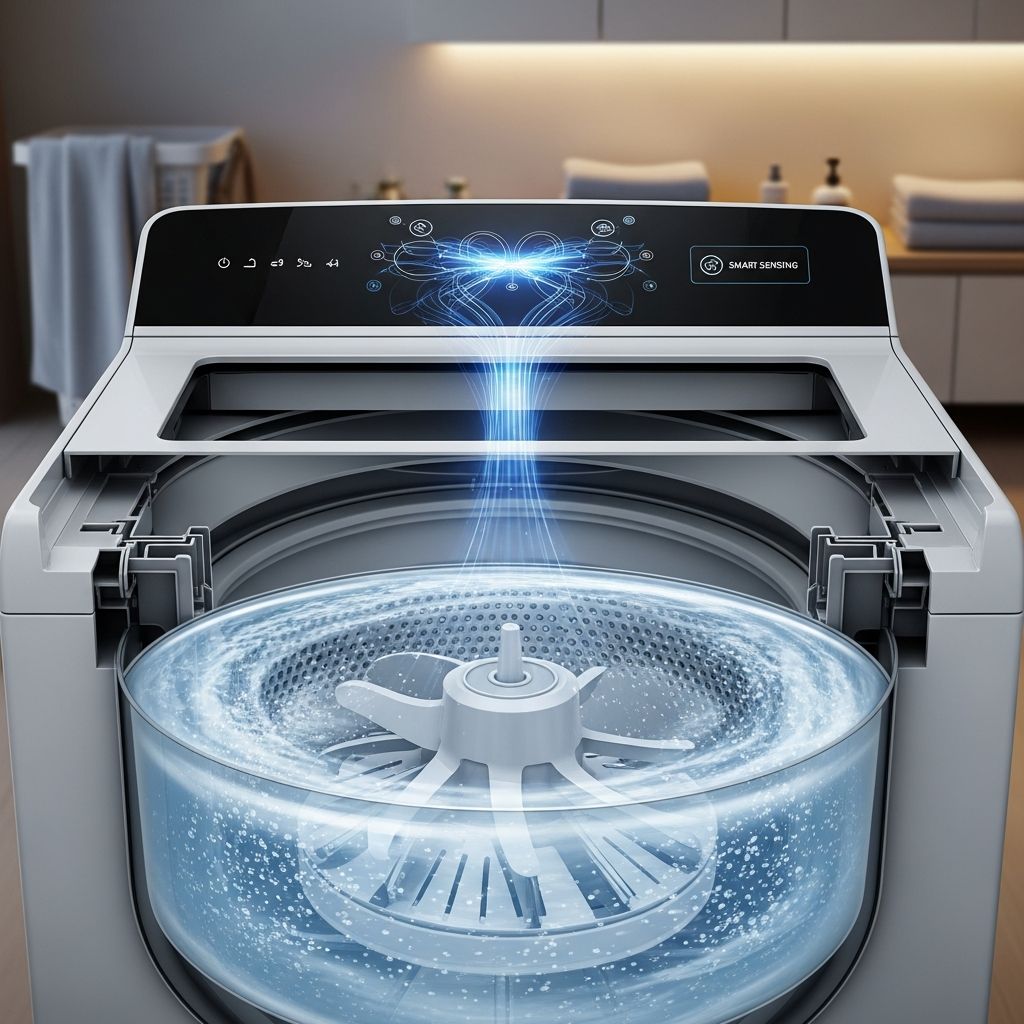
Understanding Top-Load High-Efficiency Washing Machines
Top-load high-efficiency (HE) washing machines are designed to clean effectively while using significantly less water and energy than traditional agitator models. They typically replace the tall center agitator with a low-profile impeller, rely on low-water wash techniques, and use advanced sensing systems to optimize every cycle. This guide explains how these technologies work together, what to expect in daily use, and how to decide if an HE top-load washer is right for your home.
Table of Contents
- What Is a High-Efficiency Top-Load Washer?
- Impellers vs. Agitators: How Washing Action Has Changed
- Low-Water Wash Technology
- Sensing Systems and Smart Wash Cycles
- Inside a Typical HE Top-Load Wash Cycle
- Cleaning Performance, Efficiency, and Fabric Care
- Detergent, Loading, and Use Tips
- Comparison: HE Top-Load vs Traditional Top-Load vs Front-Load
- Common Concerns and How to Address Them
- Frequently Asked Questions (FAQs)
- Conclusion
What Is a High-Efficiency Top-Load Washer?
A high-efficiency top-load washer is a top-opening washing machine engineered to meet modern energy and water efficiency standards while still offering large capacity and strong cleaning performance. Instead of filling the tub completely and churning clothes with a large agitator, it uses lower water levels, a high-speed spin drum, and an impeller or low-profile wash plate to move clothes through concentrated wash water.
Key characteristics of HE top-load washers include:
- Use of an impeller or low-profile wash plate instead of a tall agitator in most designs.
- Low water wash and rinse levels that rely on concentrated detergent rather than deep fills.
- Load-sensing systems that determine how much water and time are needed based on load size and conditions.
- Higher spin speeds than traditional agitator models, extracting more water to shorten dryer time.
- Compatibility with HE (high-efficiency) detergent, which is formulated to work with low-water systems.
Impellers vs. Agitators: How Washing Action Has Changed
In traditional top-load washers, a tall central agitator twists back and forth in a tub full of water, rubbing against fabrics to remove soils. High-efficiency top-load washers change this approach by using a low-profile impeller and reduced water depth.
What Is an Impeller?
An impeller is a low-profile cone or disc at the bottom of the wash basket. It does not move clothing by pushing from a central post; instead, it spins and uses fins or ridges to create currents that move clothes in a repeated pattern.
The cleaning action in an impeller washer primarily comes from:
- Clothes rubbing against each other as they circulate through the water.
- Directed water movement generated by the impeller’s rotation and wash motions.
- Multiple wash motions and speeds that vary by cycle and brand (for example, six different motion patterns in some LG models).
Impeller vs. Agitator: Key Differences
| Feature | Impeller (HE Top-Load) | Agitator (Traditional Top-Load) |
|---|---|---|
| Physical design | Low-profile cone or disc at bottom of basket | Tall central post with fins |
| Water level | Low, just enough to saturate and move items | Tub often fills to cover load |
| Cleaning action | Clothes rub against each other; dynamic water currents | Agitator rubs directly against fabrics |
| Fabric care | Generally gentler on clothes, less wear and tear | Can be rougher on delicate fabrics |
| Capacity | Often larger usable capacity due to no tall post | Central post takes up space |
| Efficiency | Designed for lower water and energy use | Typically uses more water and energy |
Low-Water Wash Technology
HE top-load washers achieve efficiency largely by using low water levels for both wash and rinse phases. Instead of submerging clothes in a full tub, they use just enough water to saturate the load and let the impeller move items through a concentrated detergent solution.
How Low-Water Washing Works
According to manufacturers and efficiency programs, modern HE machines typically use only a fraction of the water that older standard washers required. ENERGY STAR notes that certified clothes washers, including many top-load impeller models, use about 30% less water than conventional washers on average.
Key aspects of low-water washing include:
- Concentrated cleaning solution: Lower water levels mean detergent is more concentrated, which can improve soil removal when used correctly.
- Soak and saturation periods: The machine often pauses after adding water to allow the load to fully absorb it before agitation begins.
- Targeted spray systems on some models, such as jet sprays or smart rinse jets, help drive water and detergent through fabrics even when the tub is not visibly full.
Rinsing with Less Water
Rinse phases in HE top-load washers also use reduced water levels. In some designs, rinse cycles combine:
- Fill-and-agitate rinses at lower depths
- Powerful spray rinses as the tub spins to flush out residual detergent
- Multiple spin and spray stages to balance effective rinsing with low water use
Because water is used more strategically, you may notice that clothes are wet but not necessarily floating in water. This is normal for HE designs and does not indicate poor rinsing when used as intended.
Sensing Systems and Smart Wash Cycles
One of the most distinctive behaviors of HE top-load washers is the way they sense and adjust to the load before and during the cycle. This can look unfamiliar if you are used to older machines that fill immediately and start agitating right away.
Load Size and Balance Sensing
Many HE top-load models begin each cycle with a series of slow spins and pauses before any water is added. During this initial phase, the washer:
- Measures the weight and distribution of the dry load by monitoring motor resistance and basket movement.
- Identifies potential out-of-balance conditions so it can adjust spin patterns later to reduce vibration and noise.
- Determines the approximate water level required to saturate the load, based on programmed algorithms.
Ongoing Sensing During the Cycle
Sensing does not end after the first fill. Throughout the wash and rinse phases, the machine may:
- Add water in short bursts and pause to let clothing absorb it, repeating until the desired level is reached.
- Adjust wash time, agitation intensity, and spin speed based on how the load is moving and how balanced it remains.
- Change spin speeds in stages, with periods of acceleration and coasting, to reach maximum extraction while protecting fabrics and managing balance.
This smart sensing behavior improves efficiency and fabric care but also means wash cycles may sound and look different from what you expect: more pauses, intermittent water additions, and variable spin noises are common.
Inside a Typical HE Top-Load Wash Cycle
While models differ, a typical high-efficiency top-load cycle follows a recognizable pattern that you can learn to interpret.
1. Initial Sensing
- Basket turns slowly with a dry load and then pauses.
- System measures load size, distribution, and potential imbalance.
- No water may be visible for the first couple of minutes.
2. First Fill and Soak
- Washer adds a limited amount of water and briefly moves the impeller or wash plate.
- Cycle pauses to allow water to soak into fabrics, improving saturation with less water.
- Machine may repeat short spin, fill, and pause sequences until target saturation is reached.
3. Wash (Agitation) Phase
- Impeller rotates in various directions and patterns to move clothes from the center to the outer walls and back again.
- Clothes rub against each other in a rolling action under the water surface, which lifts soils and stains.
- Some machines use alternating wash motions to tailor cleaning to fabric type or soil level.
4. Drain and Spin
- Wash water drains through the hose, often accompanied by noticeable pump sounds.
- Basket gradually increases spin speed to remove soapy water from clothes.
- In HE models, spin speeds can be quite high to extract more moisture and reduce drying time.
5. Rinse and Final Spin
- Rinse phase can include low-level fills, spray rinses, or a combination.
- Washer may alternate short agitations and spins to flush detergent while using minimal water.
- Final spin progresses through stages of increasing speed, with pauses to maintain load balance.
Cleaning Performance, Efficiency, and Fabric Care
HE top-loaders aim to provide a balance of effective cleaning, gentle fabric care, and resource savings. Understanding their strengths can help you evaluate them against other washer types.
Cleaning and Rinsing
- Concentrated detergent and controlled mechanical action can deliver strong cleaning results for everyday loads when cycles and options are used correctly.
- Spray and jet-rinse systems help ensure thorough rinsing with lower water volumes.
- Some users may prefer deep-fill options offered on select models for heavily soiled or bulky items, trading some efficiency for extra water.
Efficiency Advantages
- ENERGY STAR certified washers use about 20% less energy and 30% less water than regular washers on average.
- Top-load impeller models improve significantly on older agitator designs, though front-load washers remain the most efficient overall by roughly another 25% in many cases.
- Higher spin speeds in HE top-loaders extract more water, potentially reducing dryer run time and energy use.
Fabric Care and Wear
- Impeller systems, combined with low-water washing, tend to be gentler on clothing than traditional agitator models because there is less direct twisting against a central post.
- Larger capacity and more flexible wash motions can help reduce tangling and friction when loads are properly sized and balanced.
Detergent, Loading, and Use Tips
Because HE top-load washers rely on concentrated wash solutions and sensing systems, how you load and dose detergent has a direct impact on results.
Choosing and Using Detergent
- Always use HE-labeled detergent, which is designed for low-sudsing performance in high-efficiency machines.
- Follow the washer manufacturer’s dosing guidance and the detergent label; in many cases, you need less detergent than with older washers, especially for soft water or lightly soiled loads.
- Avoid overuse of detergent, as excess suds can interfere with sensing, reduce cleaning performance, and lead to residue on clothes or in the drum.
Loading Best Practices
- Distribute items evenly around the impeller rather than dropping everything in one spot, to promote good turnover and balance.
- Do not tightly wrap items around the wash plate or overload the basket; leaving room for clothes to move is essential for impeller action.
- Mix large and small items when possible to help the load tumble and roll more freely.
Cycle and Option Selection
- Use heavier-duty or deep-fill options for bulky, heavily soiled items when needed, understanding that water and energy use will increase.
- Select delicate or low-agitation cycles for lightweight or fragile fabrics to protect them while still benefiting from HE efficiency.
- Refer to your user manual for any brand-specific features like pretreat stations, steam boosts, or specialty cycles that can improve results on stains or specific fabrics.
Comparison: HE Top-Load vs Traditional Top-Load vs Front-Load
| Feature | HE Top-Load (Impeller) | Traditional Top-Load (Agitator) | Front-Load |
|---|---|---|---|
| Water use | Low to moderate | Highest | Lowest overall |
| Energy efficiency | High, especially when ENERGY STAR certified | Lower | Highest efficiency |
| Cleaning action | Impeller, clothes rubbing together | Agitator, direct contact with fins | Tumbling in rotating drum |
| Fabric care | Generally gentle, good for everyday loads | Can be rougher on fabrics | Gentle, especially on delicates |
| Cycle behavior | More sensing, pauses, variable water levels | Fill, agitate, drain, spin in a simpler pattern | Longer cycles, high-speed spins |
| Loading style | Top-loading | Top-loading | Front-loading |
| Capacity range | Often large capacities available | Moderate, limited by agitator space | Moderate to large |
Common Concerns and How to Address Them
Because HE top-load washers operate differently from older machines, users sometimes interpret normal behavior as a problem. Understanding what is expected can reduce frustration and help you spot actual malfunctions.
“There Is Not Enough Water in the Tub”
- HE designs rarely fill to the top; clothes may not always be fully submerged, especially during certain stages.
- As long as garments are thoroughly wet and moving through the wash, low visible water is normal.
- If clothes consistently emerge with dry spots or insufficient cleaning, verify load size, cycle choice, and detergent use, then consult the manual for deep-fill options if needed.
Unfamiliar Noises, Pauses, and Spin Patterns
- Repeated pauses, short spins, and intermittent fills are part of the sensing and balancing process.
- Pump and drain sounds may be more noticeable during multiple drain and spin stages.
- Loud banging or persistent imbalance warnings, however, can indicate overloading or an uneven load that needs to be redistributed manually.
Tangling or Wrinkling
- Impeller washers can reduce tangling compared to some agitator models, but overloading or improper loading can still cause items to twist together.
- To minimize tangling, avoid tying items in knots, spread garments evenly, and mix shapes and sizes.
- Use appropriate spin speeds and fabric-appropriate cycles to reduce deep creasing.
Frequently Asked Questions (FAQs)
Q1: Why does my HE top-load washer wait before adding water?
Many HE top-load washers begin by spinning the dry load slowly to measure its size and balance before deciding how much water to add. This sensing step can take a couple of minutes and is essential for efficient operation.
Q2: Are impeller washers as effective as agitator washers at cleaning?
Impeller washers are designed to clean effectively by moving clothes through a concentrated detergent solution and using friction between garments rather than heavy mechanical agitation. When loaded and used correctly with HE detergent, they provide strong everyday cleaning while being gentler on fabrics.
Q3: Should I use more detergent in a low-water washer?
No. HE washers require HE-formulated, low-sudsing detergent and often need less detergent than traditional models because the wash solution is more concentrated. Using too much detergent can reduce cleaning performance and cause residue or odors.
Q4: Why do my wash cycles seem longer now?
HE top-load machines may take longer than older models because they use lower water levels, more sensing, and energetic spin patterns to improve efficiency and cleaning. The extra time helps compensate for reduced water volumes while still achieving good results.
Q5: Are HE top-load washers as efficient as front-load washers?
HE top-load impeller washers are significantly more efficient than traditional agitator washers, but front-load washers generally remain the most efficient option overall. According to efficiency data, front-loaders typically use about 25% less energy and water than comparable top-load impeller models.
Conclusion
Top-load high-efficiency washing machines represent a major shift from the deep-fill, agitator-driven washers many households grew up with. By combining impeller-based wash action, low-water wash and rinse strategies, smart sensing systems, and higher spin speeds, they are able to clean effectively while using less water and energy than traditional designs.
Understanding the fundamentals of how these machines work—why the tub does not always look full, why cycles pause and change speeds, and how impellers rely on clothing-to-clothing friction—helps set realistic expectations and makes it easier to get the best results. Matching your wash habits to HE requirements, including appropriate detergent choice, proper loading, and cycle selection, is central to their performance.
For many households, HE top-load washers offer a practical middle ground: easier loading than front-loaders, better efficiency and fabric care than old agitator models, and large capacities for family-sized laundry. Evaluating your space, efficiency goals, fabric mix, and comfort with new wash behavior will guide you toward the washer type that best fits your home.
Similar Articles





Read full bio of medha deb