
Using a Hand-Crank Ice Cream Maker: Technique, Effort, and Tips for Even Churning
Master the classic hand-crank ice cream maker with techniques, effort planning, and expert tips for smooth, evenly churned frozen treats.
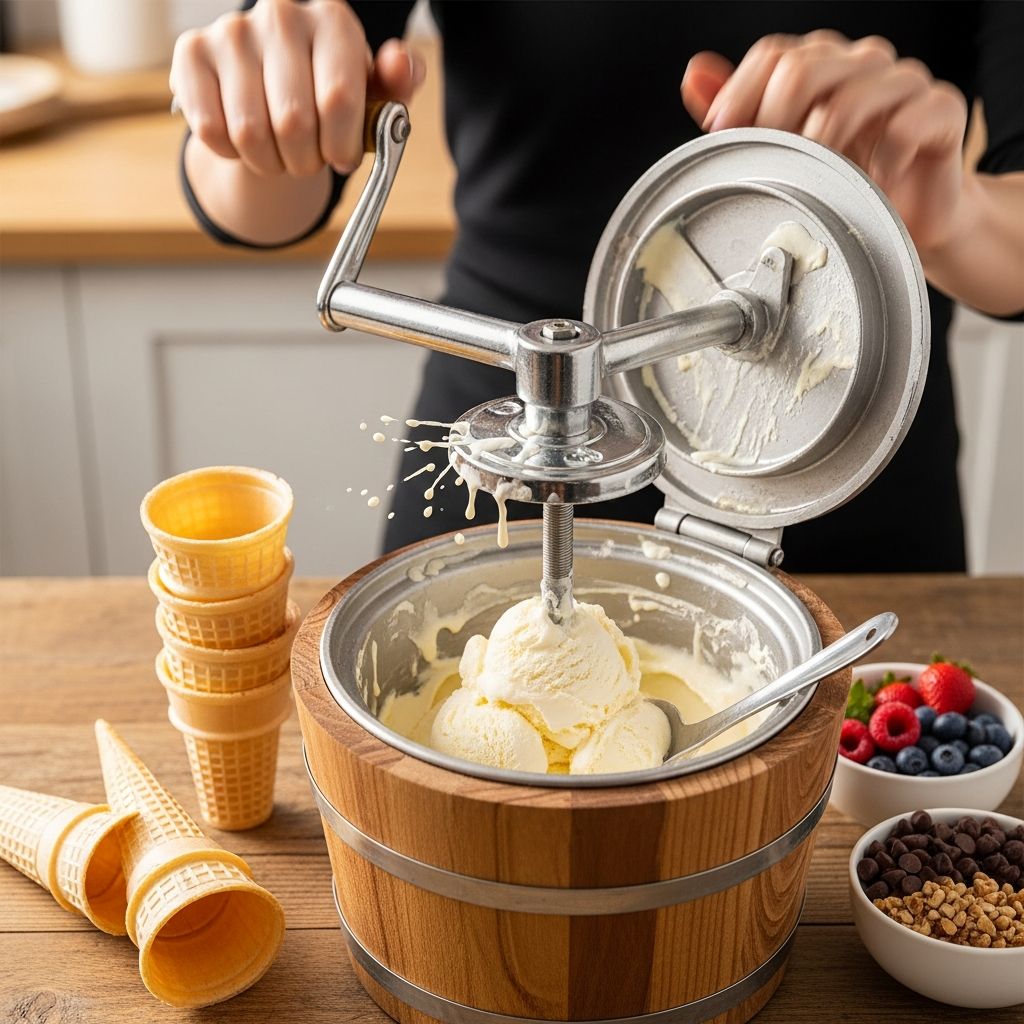
Hand-crank ice cream makers combine simple physics, a little muscle power, and time-honored technique to transform a liquid custard into smooth, old-fashioned ice cream. Unlike countertop electric machines, hand-crank models demand attention to technique: how you chill your base, layer the ice and salt, and maintain a steady churning rhythm all determine whether you end up with silky scoops or icy, uneven results.
This guide walks you through exactly how to use a hand-crank ice cream maker, how much effort to expect, and the best tips for even churning and consistently great texture.
Table of Contents
- Overview: How a Hand-Crank Ice Cream Maker Works
- Essential Equipment and Setup
- Preparing and Pre-Chilling the Ice Cream Base
- Layering Ice and Salt for Optimal Freezing
- Churning Technique: Speed, Rhythm, and Effort
- Tips for Even Churning and Smooth Texture
- Firming and Hardening the Ice Cream
- Common Problems and How to Fix Them
- Cleaning, Maintenance, and Long-Term Care
- Safety, Effort Management, and Making It Fun
- Frequently Asked Questions (FAQs)
- Conclusion
Overview: How a Hand-Crank Ice Cream Maker Works
A hand-crank ice cream maker freezes ice cream by surrounding a metal canister of sweetened cream with a super-cold bath of ice and salt, then stirring the mixture continuously with rotating paddles (dashers). As the mixture contacts the cold canister walls, tiny ice crystals form; the churn scrapes and mixes these crystals into a smooth, semi-solid ice cream.
In many traditional designs, the canister sits inside a wooden or plastic bucket. A crank at the top turns gears that rotate the dasher inside the canister, sometimes also rotating the canister itself for more efficient scraping. The basic components are:
- Outer bucket (often wood or heavy plastic)
- Metal canister with a tight-fitting lid
- Dasher (paddle) that scrapes and stirs the mixture
- Gear mechanism and crank handle
- Ice and rock salt bath surrounding the canister
By lowering the freezing point of the ice, salt creates an extremely cold brine, which draws heat out of the ice cream base more efficiently than plain ice alone. Constant churning prevents large ice crystals from forming and incorporates a moderate amount of air, yielding a creamy, scoopable texture.
Essential Equipment and Setup
Before you start churning, make sure you have the right tools and that your ice cream maker is properly assembled and ready for use.
Key Components to Check
- Intact bucket with no leaks
- Canister free of dents, with a secure lid
- Dasher that fits easily inside the canister and turns freely
- Gear frame and crank that mesh smoothly
- Drain hole or plug at the bottom of the bucket for brine runoff
Supplies You Will Need
- Ice cream base (custard or no-cook mixture), well chilled
- Plenty of ice (crushed or small cubes work best)
- Rock salt or ice cream salt (coarse salt is ideal)
- Towels or a mat under the bucket to catch drips
- Serving containers or freezer-safe containers for storage
Basic Setup Steps
- Place the empty bucket on a sturdy, non-slippery surface.
- Insert the canister (empty at first if you want to pre-chill it) into the bucket.
- Ensure the gear frame fits securely on the bucket and engages with the dasher shaft.
- Test-turn the crank briefly to confirm smooth rotation before you add any ice cream base.
Preparing and Pre-Chilling the Ice Cream Base
Good ice cream starts with a well-balanced base. It should be cold, slightly sweet, and have enough fat and solids to freeze smoothly. Pre-chilling reduces churn time and helps the mixture freeze evenly without overworking your arms.
Basic Guidelines for the Base
- Use a mix of cream and whole milk for richness and smooth texture.
- Ensure sugar is fully dissolved; undissolved sugar can make texture grainy.
- If using an egg custard base, cook, then chill the mixture thoroughly before churning.
- Aim to fill the canister to no more than 2/3 to 3/4 full to allow room for expansion as it freezes.
Pre-Chilling Steps
- Refrigerate the base for at least 4 hours, preferably overnight.
- For faster freezing, chill the empty metal canister in the refrigerator or briefly in the freezer before adding the base.
- Do not pour warm or room-temperature base into the canister; it will lengthen churn time and encourage uneven freezing.
| Step | Why It Matters |
|---|---|
| Chill base thoroughly | Reduces churn time and prevents large ice crystals |
| Leave headspace in canister | Allows for expansion and better circulation during churning |
| Pre-chill canister | Gives an immediate temperature drop for faster initial freezing |
Layering Ice and Salt for Optimal Freezing
The ice and salt bath is the engine that powers your hand-crank ice cream maker. Proper layering ensures consistent freezing and protects your ice cream from salty contamination.
Why Salt Is Essential
Salt lowers the freezing point of ice, creating extremely cold, slushy brine around the canister. This brine pulls heat from the ice cream base more efficiently than ice alone, allowing it to freeze quickly enough that ice crystals stay small.
How to Layer Ice and Salt
- Start with a layer of ice in the bucket around the canister, 2–3 inches deep.
- Sprinkle a thin, even layer of rock salt over the ice.
- Repeat layering: 2–3 inches of ice, followed by a light sprinkle of salt.
- Continue until the ice level is about 1–2 inches below the top of the canister lid.
Keeping the ice slightly below the lid helps prevent salty brine from creeping into the canister through the lid edges.
Salt Amount and Adjustments
- Use enough salt to create a cold, slushy mixture, but not so much that the ice melts extremely fast.
- If churning slows down too soon and the ice has melted significantly, add more ice and a bit more salt.
- In very warm weather, expect to refresh the ice and salt at least once during a long churn.
Churning Technique: Speed, Rhythm, and Effort
Churning is where human effort replaces electricity. Technique matters: your speed, rhythm, and how you adjust as the mixture thickens determine both texture and comfort level while cranking.
Starting the Churn
- Pour the chilled base into the pre-chilled canister, leaving 1/4 to 1/3 of the volume empty.
- Insert the dasher, making sure it is properly seated.
- Secure the lid tightly to prevent brine from entering the ice cream.
- Fit the gear frame and crank onto the bucket and confirm the dasher engages when you turn the handle.
Recommended Cranking Speed
- Aim for a steady 1–2 full handle revolutions per second at the beginning.
- Keep your motion smooth rather than jerky to avoid splashing and reduce gear wear.
- As the ice cream thickens, you may slow slightly, but try to maintain consistent movement.
How Long to Churn
- With a well-chilled base and sufficient ice and salt, typical churn times range from 15 to 30 minutes for many home-sized models.
- Larger batches or warmer ambient conditions may require closer to 30–45 minutes.
- The main indicator that you are done is resistance: when the crank becomes very hard to turn and moves only with effort, the ice cream is usually at soft-serve thickness.
Managing Effort
- Trade off crank duty among family or friends when arms get tired.
- Stand with your feet planted firmly, using your core and shoulders rather than just your wrist.
- Consider placing the bucket at a comfortable height, such as on a low bench, to avoid bending awkwardly.
Tips for Even Churning and Smooth Texture
Even freezing and constant scraping are the keys to smooth, uniform ice cream. These techniques help prevent icy pockets, graininess, or unevenly frozen patches.
Maintain a Consistent Brine Level
- Monitor the level of ice and salt during churning.
- Add more ice as it melts, keeping the level around the mid-height of the canister at minimum, up to just below the lid.
- When you add fresh ice, sprinkle a light layer of salt over it to maintain the freezing temperature.
Keep the Crank Moving
- Avoid long pauses; stopping for more than a minute can allow ice crystals to grow unevenly.
- If you must rest, keep the pause short and resume churning as soon as possible.
Do Not Overfill the Canister
- Overfilled canisters prevent the dasher from effectively scraping the sides.
- Too much mixture increases churn time and leads to uneven freezing and poor aeration.
Adding Mix-ins Without Disrupting Texture
- Add solid mix-ins (chocolate chips, nuts, cookie pieces) near the end of churning, when the mixture is thick but still turning.
- Pour them in slowly through any opening that does not require removing the lid completely, if your model allows.
- Keep churning for a few more minutes to distribute mix-ins evenly without melting the base.
| Goal | Technique |
|---|---|
| Small ice crystals | Pre-chill base, maintain steady churning, adequate salt and ice |
| Even freezing | Consistent ice level, avoid long pauses, proper fill level |
| Good mix-in distribution | Add towards the end, churn a few minutes more |
Firming and Hardening the Ice Cream
When the crank becomes hard to turn, the ice cream is usually at a soft-serve consistency. For firmer scoops, you need a short rest in the ice bath or additional freezer time.
Firming in the Ice Bath
- Once you stop churning, pack extra ice around the canister, covering the lid completely.
- Sprinkle a little more salt to maintain a cold brine.
- Let the canister sit undisturbed for 10–20 minutes.
- During this time, the ice cream will firm up without being over-churned.
Transferring to Containers and Freezing
- Remove excess ice and salt until the top of the canister is exposed.
- Open the lid and gently lift out the dasher, scraping any ice cream clinging to it back into the canister.
- If serving immediately, you can scoop directly from the canister.
- For later serving, transfer the ice cream into a freezer-safe, odor-free container, cover tightly, and freeze for several hours to harden.
Common Problems and How to Fix Them
Even experienced users occasionally face issues such as icy texture, mixture not freezing, or salty ice cream. Understanding causes and solutions will help you correct problems quickly.
Icy or Grainy Texture
- Cause: Base not adequately chilled, too low in fat, or inconsistent churning.
- Solution: Pre-chill thoroughly, use sufficient cream or fat, and maintain steady cranking with proper ice and salt levels.
Ice Cream Will Not Freeze or Takes Too Long
- Cause: Not enough salt, too little ice, or base too warm.
- Solution: Add more ice and a moderate amount of salt. For future batches, chill the base longer and consider pre-chilling the canister.
Salty Flavor in the Ice Cream
- Cause: Brine creeping into the canister through the lid or imperfect seals.
- Solution: Keep ice level slightly below the lid, avoid overfilling the bucket, ensure the lid is tightly sealed, and do not submerge weak points where brine can seep in.
Uneven Freezing or Soft Pockets
- Cause: Inconsistent churning or insufficient scraping by the dasher.
- Solution: Maintain a steady cranking rhythm and avoid stopping for long periods. Make sure the dasher fits properly and is not bent or damaged.
Cleaning, Maintenance, and Long-Term Care
Proper cleaning and care ensure your hand-crank ice cream maker performs well for many years and avoids rust, odors, or wood damage.
Immediate Post-Use Steps
- Dump out remaining ice and salty water promptly after you are finished.
- Rinse the bucket thoroughly to remove salt residue that might corrode metal parts or dry out wooden staves.
- Wash the canister, lid, and dasher in warm soapy water, then rinse and dry completely.
Caring for Wooden Buckets and Metal Parts
- Allow wooden buckets to air-dry thoroughly after rinsing; do not store them while damp.
- If recommended by the manufacturer, apply a light coat of food-safe oil (such as mineral or butcher-block oil) to metal gears or moving parts to prevent rust.
- Store the ice cream maker in a dry location, away from extreme heat or humidity.
Periodic Maintenance Checks
- Inspect the gear teeth for wear or damage and lubricate lightly if the design allows.
- Check that screws and bolts are snug but not overtightened.
- Verify that the dasher blades remain straight and that they still scrape the canister walls evenly.
Safety, Effort Management, and Making It Fun
Hand-crank ice cream making is physical but not extreme. With a few precautions, it is safe, manageable, and a great group activity.
Safety Considerations
- Keep fingers away from the gear mechanism while the crank is moving.
- Do not let children operate the crank unsupervised; guide them on safe hand placement.
- Wipe up brine spills quickly to prevent slippery surfaces.
- Use towels or gloves if the cold bucket or handle becomes uncomfortable to touch.
Managing Physical Effort
- Rotate crank duty among several people, especially for large batches.
- Take short, planned pauses to add more ice and salt rather than stopping frequently and randomly.
- If the crank becomes almost impossible to turn, the ice cream is probably done; forcing beyond this point is unnecessary.
Making the Process Enjoyable
- Turn churning into a shared task during gatherings, picnics, or family events.
- Let participants sample the freshly churned, soft-serve stage before firming.
- Encourage kids to take short turns cranking so they feel part of the result.
Frequently Asked Questions (FAQs)
Q: How long does it usually take to churn ice cream by hand?
A: With a properly chilled base and enough ice and salt, most hand-crank batches reach soft-serve consistency in about 15–30 minutes. Larger batches, warmer weather, or warmer base temperatures can push this closer to 30–45 minutes.
Q: What is the ideal ratio of ice to salt?
A: A practical approach is to sprinkle a thin, even layer of rock salt over every 2–3 inches of ice as you build up the bucket. You want enough salt to create a cold, slushy brine, but not so much that all the ice melts rapidly and warms up again.
Q: Can I use regular table salt instead of rock salt?
A: Yes, you can use table salt, but rock salt is easier to handle and typically melts the ice at a more manageable rate. Table salt is finer, so you may need to use slightly less to avoid overly rapid melting.
Q: Why does my ice cream sometimes taste salty?
A: Salty flavor usually means brine has entered the canister. Prevent this by keeping the ice level below the lid, ensuring the lid is firmly sealed, and not overfilling the bucket so that the brine does not flood the top of the canister.
Q: How do I know when to stop churning?
A: The crank will become noticeably harder to turn as the ice cream thickens. When it resists strongly and moves only with effort, the mixture is usually done and at a soft-serve consistency. At that point, stop churning and firm the ice cream in the ice bath or freezer.
Q: Do I need to scrape the sides of the canister by hand?
A: A properly fitting dasher is designed to scrape the sides automatically. If you notice unmixed frozen layers on the canister walls after churning, check that the dasher is not bent and that it still fits snugly enough to contact the sides.
Conclusion
Using a hand-crank ice cream maker is a blend of basic science and simple, repetitive effort. When you pre-chill your base, build a balanced ice and salt bath, and maintain a steady churning rhythm, the reward is a batch of remarkably smooth, evenly frozen ice cream that reflects your technique as much as your recipe.
The most important factors are consistency and attention: consistent temperature from the ice-salt mixture, consistent motion from your churning, and consistent care in filling and sealing the canister. When something goes wrong—icy texture, slow freezing, or salty flavor—the solutions usually lie in these same fundamentals.
By understanding how your hand-crank machine works and following the methods outlined here, you can approach each batch with confidence, adjust intelligently for conditions, and enjoy the distinctive satisfaction of ice cream made by hand, one crank at a time.
Similar Articles






Read full bio of medha deb