Using Ice Cream Makers for Gelato-Style Desserts: Texture, Overrun, and Serving Temperature
Master gelato-style desserts at home by controlling texture, overrun, and ideal serving temperature with any ice cream maker.
Using Ice Cream Makers for Gelato-Style Desserts
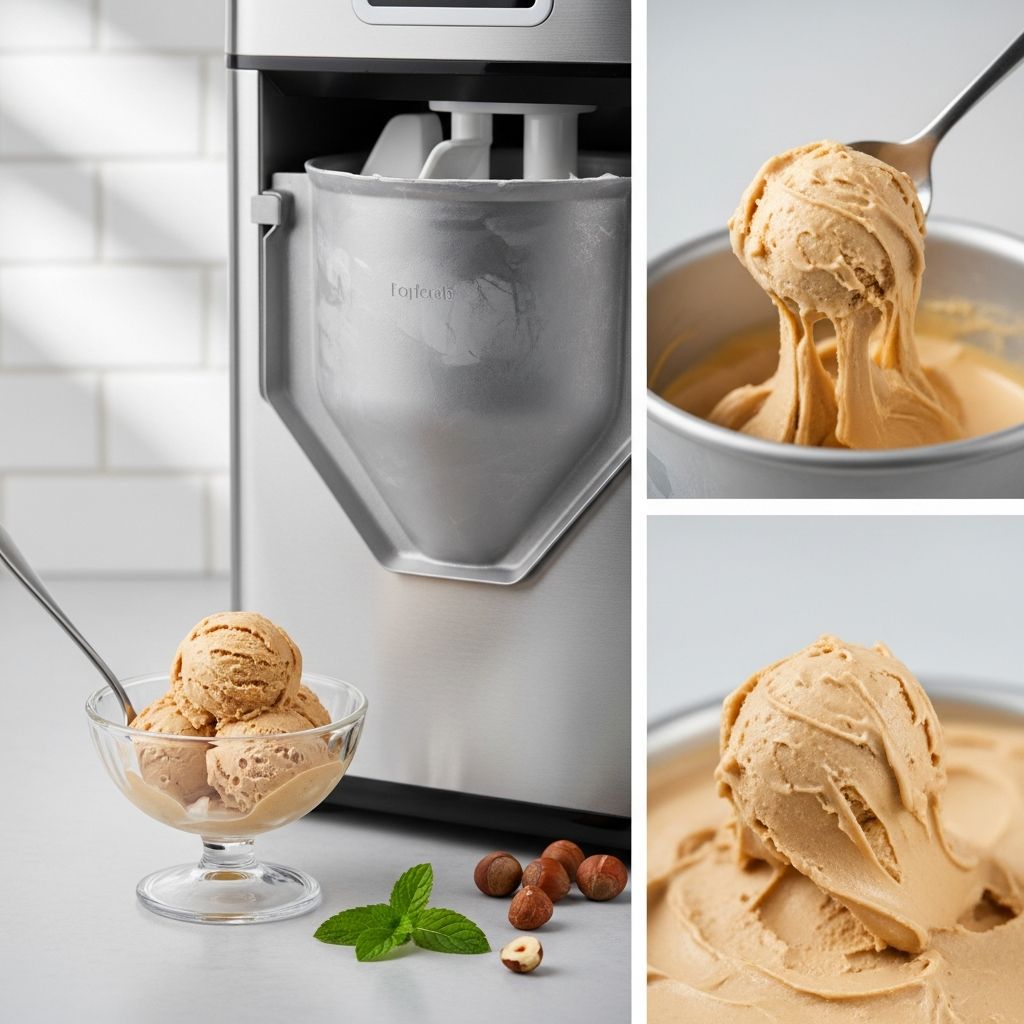
Home ice cream makers can produce excellent gelato-style desserts if you learn to control three key variables: texture, overrun (incorporated air), and serving temperature. Unlike American ice cream, gelato is churned more slowly, has less fat and air, and is served warmer, which creates an intensely flavorful, dense, and silky result.
Table of Contents
- What Makes Gelato Different from Ice Cream?
- Understanding Home Ice Cream Makers
- Gelato Base and Ingredients for Ideal Texture
- Controlling Overrun with Home Ice Cream Makers
- Churning and Freezing Technique for Gelato-Style Results
- Serving Temperature and Storage Best Practices
- Troubleshooting Common Texture Problems
- Example Gelato-Style Process Step by Step
- Frequently Asked Questions (FAQs)
- Conclusion
What Makes Gelato Different from Ice Cream?
To use an ice cream maker effectively for gelato-style desserts, it helps to understand the classic differences between gelato and American ice cream.
| Characteristic | Traditional Gelato | Typical Ice Cream |
|---|---|---|
| Fat content | Lower, often 4–8% from more milk than cream | Higher, commonly 10–16% or more |
| Overrun (air) | Low, around 20–35% (dense) | High, up to 100% or more (lighter) |
| Churning speed | Slow, to limit air incorporation | Faster, to whip in more air |
| Serving temperature | Warmer, roughly -11 to -14°C (12–7°F softer) | Colder, often around -18°C / 0°F |
| Texture | Silky, elastic, and dense | Fluffy, sometimes more icy or hard |
When adapting a home ice cream maker for gelato-style results, your main goals are to lower fat a bit, slow or shorten churning, and serve slightly warmer than ice cream while maintaining very small ice crystals through proper base preparation and fast freezing.
Understanding Home Ice Cream Makers
Different ice cream makers behave differently, but nearly all can be tuned toward gelato-style texture.
Common Types of Home Ice Cream Makers
- Freezer bowl machines: A double-walled bowl is pre-frozen for 12–24 hours, then a motor churns the base as the bowl slowly warms.
- Compressor (self-refrigerating) machines: Have an internal compressor that chills the bowl on demand and can run multiple batches without pre-freezing.
- Manual or crank-style freezers: Ice and salt around a canister; you crank by hand, which naturally encourages slower, intermittent churning similar to artisan gelato making.
Professional gelato shops often use batch freezers that freeze quickly with close control over beater speed and run time, which helps produce tiny ice crystals and low overrun. At home, you imitate this by starting with a very cold base, chilling or freezing components thoroughly, and closely monitoring churn time.
How These Machines Affect Texture and Overrun
- Fixed-speed home paddles usually whip in more air than classic gelato machines, so you compensate with a slightly thicker, lower-fat base and shorter churning time.
- Compressor units with a dedicated gelato mode may run at a slower speed or shorter cycle, naturally reducing overrun.
- Manual crank machines allow you to control speed and pauses, mimicking the slow churning used in gelato production.
Gelato Base and Ingredients for Ideal Texture
Texture in gelato-style desserts depends heavily on the base formulation before you even churn. Classic gelato uses more milk than cream and often relies on egg yolks or starch for body.
Typical Gelato-Style Base Ratios
- Dairy: Mostly whole milk with a smaller amount of cream to keep fat modest.
- Sugar: Enough to provide sweetness and control freezing point, which keeps the texture scoopable.
- Egg yolks or starch: To thicken the base, add emulsification, and reduce iciness by stabilizing water.
For example, many home gelato recipes warm milk, cream, and sugar together, then slowly incorporate beaten egg yolks to create a light custard base before chilling and churning. Some approaches, especially Sicilian-style gelato, use starch instead of yolks for a silkier but lighter result.
Key Ingredient Tips for Texture
- Heat the base gently to hydrate proteins and thicken slightly, then cool completely before churning to minimize ice crystals.
- Aging the base in the refrigerator for several hours or overnight further improves body and smoothness.
- Avoid very high fat; too much cream makes the product heavy and can mute flavors, while the gelato style emphasizes flavor intensity.
- Balance sugars: Using a mix of sucrose and sometimes other sugars (like dextrose or corn syrup) in advanced recipes helps control hardness, though simple household sugar works well for most home applications.
Controlling Overrun with Home Ice Cream Makers
Overrun is the amount of air that is whipped into the frozen dessert. Gelato typically has less overrun than ice cream, which is why it tastes more intense and feels denser. Commercial gelato makers use slower beater speeds and very efficient refrigeration to keep overrun low.
How to Reduce Overrun in a Home Machine
- Start with a slightly thicker base: A well-cooked and cooled custard or starch-thickened base will trap less air than a thin mixture.
- Avoid over-churning: Stop when the mixture is soft-serve thick and still slightly flowing, rather than waiting for it to be bone-firm in the machine.
- Use a slower setting if available: Some machines offer a gelato or soft serve mode with reduced agitation.
- Do not whip extra air before churning: Stir the cold base gently before adding to the machine instead of using a mixer that would pre-whip it.
Commercial batch freezers monitor the viscosity of the mix and stop when it reaches optimal consistency, which helps maintain low overrun and small ice crystals. At home, you play that monitoring role by watching texture closely and ending the churn early compared with typical ice cream.
Churning and Freezing Technique for Gelato-Style Results
Churning is where your ice cream maker becomes a gelato-style machine. Your goals are to freeze quickly, keep crystals tiny, and avoid whipping in extra air.
Before Churning
- Chill the base thoroughly in the refrigerator for at least 2 hours, and often overnight, as many recipes recommend.
- Pre-freeze freezer bowls for the full time recommended so they are rock solid; any warmth lengthens freezing time and allows larger ice crystals to form.
- Keep mix-ins cold (such as chocolate chunks or fruit pieces) to avoid warming the mix during addition.
During Churning
- Load and start immediately: Pour the cold base into the cold machine and start churning right away to maximize freezing power.
- Target soft-serve consistency in about 15–25 minutes, depending on your machine; many gelato-style recipes churn for roughly this long.
- Add mix-ins at the end of churning to minimize disruption of the freezing process.
- Stop when the gelato is thick but still soft: You want a consistency where a spoon leaves defined ridges, but the mix is not yet rock hard.
After Churning
- Transfer to a shallow container such as a loaf pan to help the gelato firm quickly and evenly in the freezer.
- Cover well with plastic wrap or a lid pressed to the surface to prevent ice crystals and freezer odors.
- Ripen (firm up) in the freezer for about 1–2 hours, until scoopable but still softer than typical hard ice cream.
Serving Temperature and Storage Best Practices
Gelato is designed to be served at a slightly warmer temperature than ice cream, which keeps it soft, elastic, and more aromatic. Many home freezers are colder than ideal for gelato-style desserts, so you adjust with timing.
Ideal Serving Temperature Range
- Classic gelato is typically served warmer than the -18°C (0°F) common for hard ice cream, often around -11 to -14°C (12–7°F softer), which keeps the texture velvety and the flavors more pronounced.
- At home, where freezers tend to be quite cold, you can simulate this by tempering the gelato briefly at room temperature or in the refrigerator before scooping.
How to Temper Gelato-Style Desserts
- Remove from the freezer and let stand on the counter for 5–10 minutes until a scoop slides in with gentle pressure.
- For very dense or fruit-based flavors, you can chill in the refrigerator instead of the counter for a slightly slower, more controlled softening.
Storage Guidelines
- Enjoy within 1–2 weeks for best flavor and texture; extended storage can lead to iciness and muted flavors.
- Always keep the container tightly covered and minimize temperature swings, which cause larger crystals to form.
Troubleshooting Common Texture Problems
Even with a good ice cream maker, gelato-style desserts can develop texture flaws. Most issues trace back to base formulation, freezing speed, or storage conditions.
Problem: Icy or Grainy Texture
- Possible causes:
- Base was not fully chilled before churning, so freezing was slow.
- Freezer bowl was not completely frozen, weakening freezing power.
- Too little sugar or fat, leaving excess free water to crystallize.
- Product thawed and refroze during storage.
Fixes:
- Chill the base overnight, and ensure freezer bowls or compressor machines are fully cold.
- Use appropriate sugar and fat levels in the recipe; avoid cutting sugar too drastically.
- Store in small containers to reduce temperature swings.
Problem: Too Soft or Not Setting
- Possible causes:
- High sugar or alcohol content lowering the freezing point beyond what the machine can handle.
- Insufficient churning time or warm base.
Fixes:
- Reduce added liqueurs and very sweet mix-ins.
- Let the gelato ripen in the freezer for 1–2 hours after churning.
Problem: Too Fluffy or Ice-Cream-Like
- Possible causes:
- Over-churning in a fast machine, which increases overrun.
- Very high cream content similar to American ice cream.
Fixes:
- Stop churning earlier, when the gelato is just at soft-serve thickness.
- Reformulate with more milk and slightly less cream, and consider a modest yolk or starch thickener.
Example Gelato-Style Process Step by Step
The following streamlined process shows how to use a typical home ice cream maker to get gelato-style texture, overrun, and serving behavior, based on common methods across home and professional guides.
Step 1: Prepare the Base
- Combine milk, a smaller amount of cream, and sugar in a saucepan; gently warm while stirring until the sugar dissolves.
- If using egg yolks, beat them separately, then slowly add some of the warm milk mixture while whisking, and return everything to the pan to cook until slightly thickened, without boiling.
- If using starch, whisk it with a bit of cold milk, then add to the warm dairy while whisking and cook until just thickened.
- Add flavorings that require heat (such as cocoa powder or some chocolates) while the mix is warm.
Step 2: Cool and Age the Base
- Remove from heat and cool quickly by placing the pan in an ice bath, stirring occasionally.
- Refrigerate until fully cold, at least 2 hours and preferably overnight, for improved body and smoother texture.
Step 3: Churn in the Ice Cream Maker
- Ensure the freezer bowl or compressor machine is thoroughly cold before starting.
- Briefly whisk or stir the chilled base to smooth it, then pour into the machine and churn according to the manufacturer’s instructions, watching texture closely.
- Most batches reach gelato-style soft-serve consistency in about 20 minutes; stop when thick but still soft and creamy.
Step 4: Firm and Serve at the Right Temperature
- Transfer the churned gelato-style dessert to a cold container, cover, and freeze for 1–2 hours to firm.
- Before serving, temper for a few minutes so it reaches a softer, gelato-like serving temperature, where a spoon glides in easily.
Frequently Asked Questions (FAQs)
Can any ice cream maker be used to make gelato-style desserts?
Yes. While professional gelato machines offer more precise control over speed and freezing, home freezer bowl, compressor, and manual machines can all produce gelato-style results when you use a lower-fat, well-chilled base, churn gently or for a slightly shorter time, and serve at a warmer, scoopable temperature.
Do I need egg yolks for gelato texture?
No, but egg yolks are a traditional way to add richness and stability. Some styles use starch instead of yolks, producing a lighter but very smooth gelato. Both approaches can work well at home; what matters most is properly cooking and chilling the base before churning.
Why is my homemade gelato hard after freezing overnight?
Most home freezers run colder than ideal gelato serving temperatures, and simpler formulas can freeze quite firm. Let the container sit at room temperature for 5–10 minutes before scooping, or briefly chill in the refrigerator, to restore the softer, elastic gelato texture.
How long should I churn gelato in a home machine?
Many home recipes reach an ideal soft-serve stage in about 15–25 minutes, depending on the machine and batch size. Stop churning once you see a thick, creamy consistency that holds soft peaks, even if the machine could run longer, to avoid excess overrun.
Can I make dairy-free gelato-style desserts in an ice cream maker?
Yes. Using rich plant-based milks and stabilizing the base with starches or other thickeners can create a dense and creamy texture. The same principles apply: chill the base thoroughly, freeze quickly in the machine, minimize overrun, and temper before serving for best texture.
Conclusion
Using a home ice cream maker for gelato-style desserts is primarily about technique rather than equipment. By formulating a balanced base, chilling it thoroughly, and carefully managing churning and freezing, you can achieve the dense, silky texture and intense flavor that define gelato.
Focusing on texture, overrun, and serving temperature gives you a clear framework for decision-making: select ingredients and methods that support small ice crystals, churn only until softly frozen to avoid excess air, and serve at a slightly warmer temperature to highlight flavor and creaminess.
Once these fundamentals are in place, any reliable ice cream maker becomes a versatile tool for crafting gelato-style desserts tailored to your preferred richness, sweetness, and flavor combinations.
Similar Articles






Read full bio of Sneha Tete