Using a Wine Refrigerator for Red Wines: Temperature, Access, and Long-Term Holding
Practical temperature, access, and long-term storage strategies for keeping red wines at their best in a dedicated wine refrigerator.
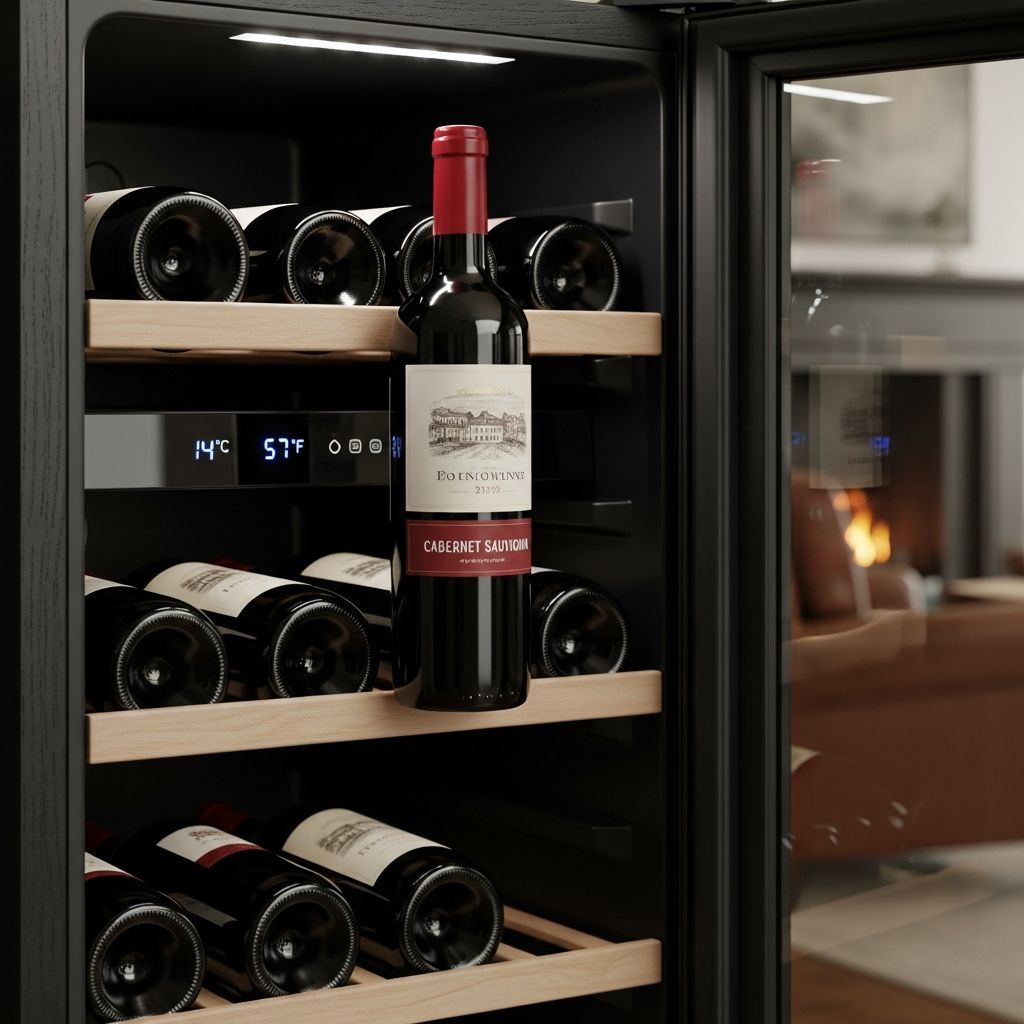
Using a Wine Refrigerator Primarily for Red Wines: Temperature, Access, and Long-Term Holding
Storing red wine correctly is one of the simplest ways to protect both its value and drinking pleasure. A dedicated wine refrigerator offers far better control than a normal kitchen fridge or a room-temperature rack, but to get the most from it you must balance ideal temperatures, convenient access, and long-term aging needs.
Table of Contents
- Why Use a Wine Refrigerator Mainly for Red Wines?
- Core Principles of Red Wine Storage
- Ideal Temperature Ranges for Red Wines
- Single-Zone vs. Dual-Zone: Best Setup for Red-Focused Use
- Serving vs. Storage Temperature for Red Wine
- Access and Organization in a Red Wine Fridge
- Long-Term Holding and Aging in a Wine Refrigerator
- Common Mistakes When Using a Wine Fridge for Reds
- Sample Temperature and Usage Configurations
- Frequently Asked Questions (FAQs)
- Conclusion
Why Use a Wine Refrigerator Mainly for Red Wines?
Red wines are particularly sensitive to heat, light, and temperature swings. Room temperature in most homes is typically above the ideal storage range and fluctuates throughout the year, which can prematurely age wine and dull its aromas.
Using a wine refrigerator primarily for red wines offers several advantages:
- More precise and stable storage temperature than ambient conditions.
- Protection from heat spikes that can cook the wine or push corks.
- Lower vibration and less door opening compared with a kitchen fridge, which helps aging.
- Ability to keep red wines near their ideal serving temperature, so they are ready to drink with minimal adjustment.
For collectors or regular red wine drinkers, dedicating a fridge to reds (or making them the priority in a dual-zone model) is often the most effective way to protect a growing collection.
Core Principles of Red Wine Storage
Regardless of the specific temperature you choose, proper red wine storage is guided by a few core principles.
- Stability over precision: A consistent 55°F (about 13°C) is better than frequent swings between 50°F and 65°F.
- Cooler than room temperature: Typical room temperatures (70°F/21°C or higher) are usually too warm for storage.
- Darkness and low vibration: UV light and constant mechanical vibration can degrade wines over time.
- Moderate humidity: Around 70% relative humidity helps keep corks from drying out, though most household wine fridges are closed systems and will usually maintain adequate humidity.
These principles guide how you set and use your red-focused wine refrigerator over months and years.
Ideal Temperature Ranges for Red Wines
The ideal storage temperatures for red wine are somewhat flexible, but most expert sources cluster around a relatively narrow band.
General Storage Range for Red Wines
- Commonly recommended red wine storage range: 50°F–60°F (10°C–16°C).
- Many producers and storage experts cite about 55°F (13°C) as the standard long-term storage temperature.
Some references allow a slightly higher upper limit, especially for full-bodied reds.
| Red wine style | Typical storage range (°F) | Typical storage range (°C) |
|---|---|---|
| Light reds (e.g., Pinot Noir, Gamay) | 55–60°F | 12–16°C |
| Medium reds (e.g., Merlot, Sangiovese) | 57–60°F | 14–16°C |
| Full-bodied reds (e.g., Cabernet, Shiraz) | 60–65°F | 16–18°C |
| General long-term storage (mixed reds) | 50–55°F | 10–13°C |
This table reflects both storage and practical serving ranges; when you must pick just one setting for a mixed red collection, a mid-point close to 55°F is a safe choice for long-term holding.
Short-Term vs. Long-Term Temperature Targets
How soon you plan to drink a bottle influences the best temperature setting.
- Short-term storage (weeks to a few months): Around 55°F–60°F (13°C–16°C), which keeps wines fresh and closer to serving temperature.
- Long-term aging (years): Often recommended at slightly cooler and very stable conditions, roughly 50°F–55°F (10°C–13°C).
Warmer storage will speed up aging, while cooler storage slows it down. The key is consistency, not pushing the temperature to extremes.
Single-Zone vs. Dual-Zone: Best Setup for Red-Focused Use
Wine refrigerators are typically either single-zone or dual-zone, and each has advantages depending on how you drink your red wine.
Using a Single-Zone Wine Fridge Mainly for Red Wines
In a single-zone model you choose one temperature for the entire interior. A practical approach when storing mostly reds is:
- Set the fridge around 54°F–56°F (12°C–13°C) as a balanced temperature.
- Use it primarily as a storage environment; bring bottles out 30–60 minutes before serving if you prefer them slightly warmer.
- If you occasionally store whites, accept that they will sit closer to cellar temperature and chill them further in a regular fridge before serving.
This strategy maximizes long-term protection while keeping most reds close to an acceptable drinking temperature.
Using a Dual-Zone Wine Fridge with Reds as the Priority
Dual-zone fridges allow independent temperature settings in two compartments, which is helpful if you want both storage and ready-to-pour reds, or a mix of reds and whites.
Common red-focused dual-zone configurations include:
- Zone A (storage zone): 54°F–55°F for long-term holding of all age-worthy reds.
- Zone B (ready-to-serve zone): 60°F–65°F for bottles you plan to drink in the next days or weeks, especially full-bodied reds.
If you also store whites:
- Reserve one zone (often the lower, more stable one) at around 55°F for mixed long-term storage of both reds and whites.
- Use the second zone for service temperatures: slightly warmer for reds or cooler for whites, depending on your habits.
In all cases, maintaining at least one zone at a steady 55°F aligns with widely accepted long-term storage guidance.
Serving vs. Storage Temperature for Red Wine
Storage temperature is not always the same as serving temperature. Red wines often taste best slightly warmer than their ideal long-term storage point, but still cooler than typical room temperature.
Recommended Serving Temperatures for Red Wines
- General red wine serving range: 55°F–65°F (13°C–18°C).
- Lighter reds (e.g., Pinot Noir, Beaujolais): often best at the cooler end, about 55°F–60°F.
- Full-bodied reds (e.g., Cabernet Sauvignon, Malbec, Shiraz): can be served a bit warmer, about 60°F–65°F.
Red wine served too warm can taste flat, alcoholic, or jammy, while overly cold red wine can emphasize harsh tannins and mute aromas.
Practical Steps to Move from Storage to Serving Temperature
- If stored at 55°F, remove the bottle about 30 minutes before serving to allow it to warm slightly toward 60°F–62°F.
- If your fridge is set nearer to 60°F for immediate consumption, you may be able to pour straight from the fridge for many reds, especially in warmer weather.
- For very warm rooms, keep a bottle in the fridge up to the moment you serve to avoid it creeping above the ideal range.
This approach lets one red-focused wine refrigerator serve both as a cellar and as a ready source of well-tempered bottles.
Access and Organization in a Red Wine Fridge
Because temperature stability is so important, how often and how you open the wine refrigerator matters. Good organization balances protection with convenient access.
Minimizing Temperature Fluctuations from Frequent Access
- Group everyday drinking reds near the front or in an upper zone so you can grab them quickly.
- Place long-term aging bottles toward the back or in the most temperature-stable section (usually lower shelves), where they are disturbed less.
- Avoid leaving the door open while deciding what to drink; decide first, then open and retrieve.
- Check that door seals are tight and that the fridge is not placed in direct sun or near heat sources to reduce compressor cycling.
Labeling and Layout for Red-Only or Red-Dominant Collections
For primarily red collections, consider organizing by:
- Drinking window: “drink now,” “short-term,” and “age longer” sections, so you open the door less often for rarely needed bottles.
- Style and body: group light, medium, and full-bodied reds together to simplify choosing bottles and managing serving temperatures.
- Region or grape: helpful for larger cellars with many similar wines.
Clear tags or simple bottle neck labels can reduce how long you keep the door open while searching.
Long-Term Holding and Aging in a Wine Refrigerator
Many modern wine refrigerators can be used not only for short-term convenience but also for genuine long-term storage of red wines.
Is a Wine Fridge Suitable for Long-Term Aging of Reds?
- Long-term storage guideline for both red and white wines is about 55°F (13°C) with minimal fluctuation.
- A quality wine fridge that maintains this temperature steadily, with modest humidity and low vibration, can be suitable for aging red wines over many years.
- Compared with a true underground cellar, the main limitations are often capacity and the degree of humidity control, rather than temperature.
If your goal is to hold age-worthy red wines for five to fifteen years, aim for the most stable environment your fridge can deliver, and avoid frequent reorganization of older bottles.
Best Practices for Long-Term Holding of Red Wines
- Set at or very close to 55°F and avoid changing the thermostat frequently.
- Keep bottles on their side so corks remain in contact with the wine, helping prevent drying and oxidation.
- Minimize vibration by placing the fridge on a firm, level surface.
- Do not overload air circulation; leave some space between bottles and avoid blocking vents.
For red-focused cellaring, it can be helpful to separate wines intended for very long aging into a distinct area or a dedicated zone if the unit allows.
Common Mistakes When Using a Wine Fridge for Reds
Even with a good wine refrigerator, a few frequent errors can undermine your efforts to protect red wines.
- Setting it too warm: Using true room temperature (around 70°F) inside the fridge defeats its protective function and can accelerate aging.
- Using kitchen fridge temperatures: Setting a wine refrigerator as cold as a regular fridge (mid-30s to low 40s°F) is unnecessary for reds and can hinder their development and flavor, especially for long-term storage.
- Constantly changing settings: Frequent thermostat adjustments create fluctuations; it is better to choose a sensible range and leave it.
- Overfilling shelves: Blocking vents and tightly packing bottles can cause uneven temperatures inside the unit.
- Placing the fridge in a hot environment: Very warm ambient air makes it harder for the appliance to hold set temperatures, especially in small or budget units.
Sample Temperature and Usage Configurations
To make the guidance more concrete, here are several example setups for using a wine refrigerator primarily for red wines.
Configuration 1: Single-Zone, Red-Only Cellar
- Temperature: 55°F (13°C).
- Use: Mixed light to full-bodied reds, short- and long-term storage.
- Serving strategy: Remove bottles 30–45 minutes before serving to allow a slight warm-up.
Configuration 2: Dual-Zone, Reds Only (Storage + Service)
- Zone 1 (Storage): 54°F–55°F for age-worthy bottles and wines not intended for immediate consumption.
- Zone 2 (Service): 60°F–63°F for bottles to be opened in the next week or two, especially full-bodied reds.
- Serving strategy: Light reds can be served straight from Zone 1 or briefly chilled further in the fridge on hot days; heavier reds are ready from Zone 2.
Configuration 3: Dual-Zone with Reds as Priority, Some Whites
- Zone 1: 55°F for long-term storage of both reds and whites; bottles here are treated as cellar inventory.
- Zone 2: 45°F–50°F for white service, or 60°F–62°F if you prefer a ready-to-drink red zone instead.
These examples illustrate how you can customize your wine fridge around red wines, while still accommodating different drinking patterns.
Frequently Asked Questions (FAQs)
Q: What is the single best temperature to set a red-only wine fridge?
The most widely accepted single setting for mixed red wine storage is about 55°F (13°C). This temperature works well for long-term aging and keeps red wines near a good serving range with minimal adjustment.
Q: Can I store both red and white wines together if I am focusing on reds?
Yes. For long-term storage, both red and white wines can be kept together at around 55°F, then moved and adjusted for serving temperatures when needed. If your primary interest is red wine, you can dedicate most space to reds and keep a smaller number of whites in the same cellar zone, chilling them further in a regular fridge before serving.
Q: Is a wine fridge better for red wines than a standard refrigerator?
For red wines, a wine fridge is usually much better. Kitchen refrigerators are typically too cold (often below 40°F), dry, and frequently opened, which is not ideal for storing or aging reds. Wine refrigerators operate in the appropriate 45°F–65°F range with gentler conditions.
Q: How long can I keep red wine in a wine refrigerator?
If your unit maintains a stable temperature around 55°F with minimal vibration, you can hold many age-worthy red wines for years in a wine refrigerator. The exact lifespan depends on the wine itself, but the appliance can provide conditions similar to a modern, controlled cellar.
Q: Should I adjust the temperature seasonally?
In most cases, no. The goal is a stable temperature year-round; frequent adjustments can create the very swings you are trying to avoid. Instead, make sure the fridge is installed in a location where ambient temperature does not exceed the unit’s operating limits.
Conclusion
Using a wine refrigerator primarily for red wines works best when you treat it as a controlled, stable cellar rather than just a cold box. A narrow temperature range centered around 55°F provides a safe, widely recommended balance between protecting wines for the long term and keeping them reasonably close to their ideal serving window.
Thoughtful organization inside the fridge allows you to separate everyday drinking bottles from long-term aging candidates, minimizing temperature disruption while keeping access convenient. Whether you have a single- or dual-zone appliance, aligning one zone with standard cellar conditions and the other with service temperatures gives you flexibility to support different red wine styles and drinking habits.
Ultimately, the key to successful red wine storage in a dedicated refrigerator is consistency: consistent temperature, careful placement, and a clear plan for how bottles move from long-term holding to the table. With these elements in place, a red-focused wine fridge can safeguard both everyday favorites and treasured bottles over many years.
Similar Articles




Read full bio of medha deb