Washing Machine Capacity Explained: How Many Clothes Really Fit in Each Drum Size
Understand washing machine drum sizes, real-world load examples, and how many clothes truly fit without overloading your washer.
Washing Machine Capacity Explained: How Many Clothes Really Fit?
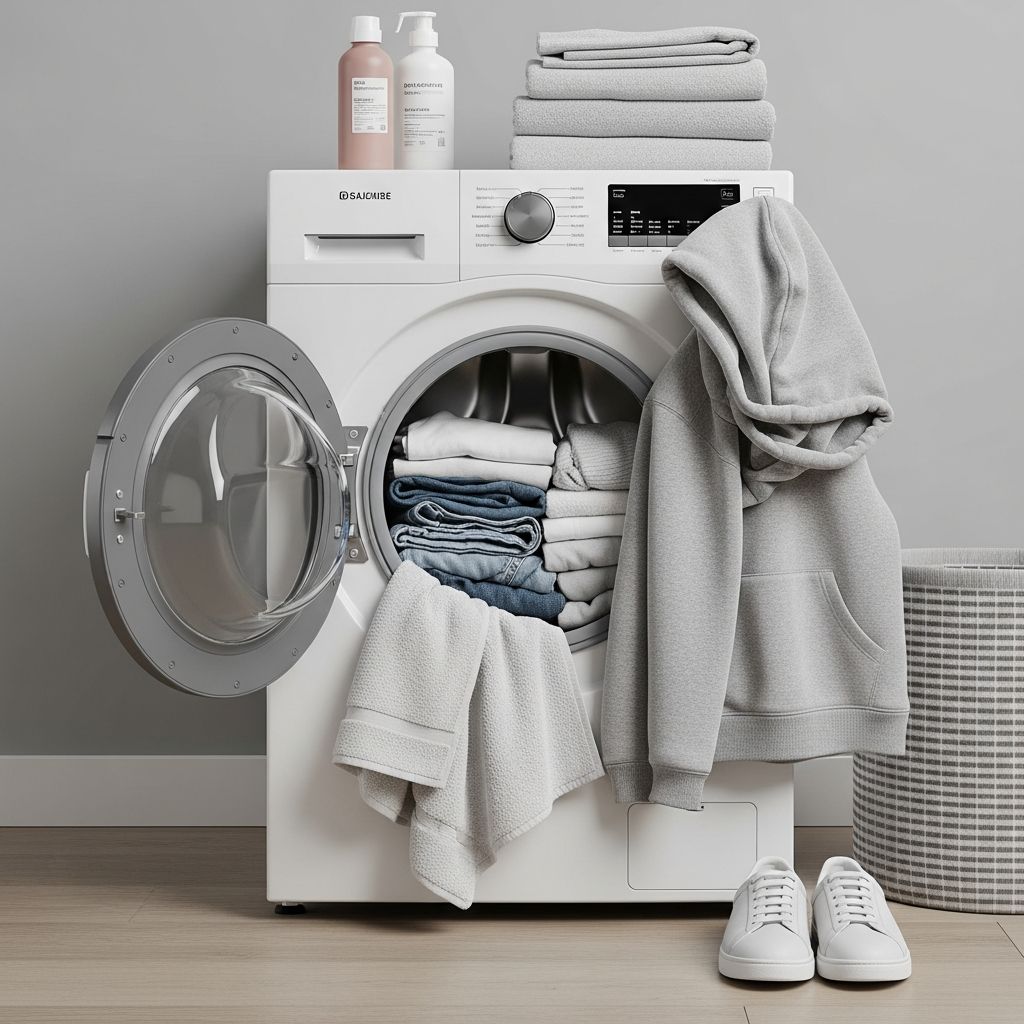
Washing machine capacity can be confusing because manufacturers rate washers by weight (kilograms or pounds) or volume (cubic feet), while most people think in terms of items: jeans, towels, sheets, or a weekly mixed load. Understanding how drum size translates into real-world loads helps you clean better, protect your machine, and avoid wasting water and energy.
Table of Contents
- What Washing Machine Capacity Really Means
- Capacity: Kilograms vs Cubic Feet vs Drum Volume
- Typical Washing Machine Sizes and Who They Suit
- How Capacity Translates to Real Clothes and Loads
- Fill Levels: Small, Medium, Large and Extra-Large Loads
- Dangers of Overloading and Underloading
- Bulky Items: Duvets, Towels and Bedding by Drum Size
- How to Measure Your Washer’s Drum Capacity
- How to Choose the Right Drum Size for Your Household
- Frequently Asked Questions (FAQs)
- Conclusion
What Washing Machine Capacity Really Means
Washing machine capacity is the maximum weight of dry laundry the machine is designed to wash effectively in a single cycle. In most regions outside North America, this is expressed in kilograms (kg), such as 7 kg, 8 kg or 10 kg. In North America, capacity is often given as drum volume in cubic feet, such as 3.5 cu ft, 4.5 cu ft or 5.0 cu ft.
The key points to understand are:
- The rated capacity assumes mixed cotton loads under standard test conditions, not a drum jammed full of heavy wet fabrics.
- It is a maximum, not a target for every cycle; delicate fabrics and bulky items usually require smaller loads.
- Capacity describes the weight of dry clothes the drum can handle, not the number of items.
Capacity: Kilograms vs Cubic Feet vs Drum Volume
There are three common ways to describe how big a washer is:
1. Kilograms of Dry Laundry
Many front-load and European-style machines are labeled 5 kg to 12 kg or more. Rough guidance for household size:
- 5–6 kg: Singles or couples, light laundry loads.
- 7–8 kg: Typical family of 2–4 people, everyday washing.
- 9–12 kg: Larger families, frequent washing, or regular bulky items.
2. Cubic Feet (Drum Volume)
Washer volume is measured in cubic feet, especially in North America. Typical size ranges include:
- Compact: About 1.5–2.4 cu ft.
- Small: About 2.0–4.0 cu ft.
- Medium: About 4.0–4.5 cu ft.
- Large: More than 4.5 cu ft, up to about 5.0–6.0 cu ft.
A standard full-size front loader is usually around 4.2–5.0 cu ft.
3. Calculating Drum Volume Yourself
If your machine does not list cubic feet, you can estimate it by measuring the drum:
- Measure the diameter of the drum opening in feet.
- Divide by 2 to get the radius in feet.
- Measure the depth of the drum in feet.
- Use the formula: radius × radius × 3.141 × depth = capacity in cubic feet.
Example: If diameter is 1.5 ft and depth is 0.5 ft, capacity is about 3.533 cu ft.
Typical Washing Machine Sizes and Who They Suit
The table below gives an overview of typical drum sizes and suitable households, combining kg ratings and cubic-foot volumes from several guides.
| Type / Rating | Approx. Volume | Typical Use |
|---|---|---|
| Compact washer | 1.5–2.4 cu ft | Singles, small apartments, very small loads. |
| Small drum | Up to ~6 kg or 2.0–4.0 cu ft | 1 person, or infrequent washing, small items like children’s clothes and towels. |
| Standard drum | 7–8 kg or ~4.0–4.5 cu ft | Couples or small families doing 4–6 loads per week. |
| Large drum | 9–12 kg or >4.5 cu ft | Large families, frequent washing, bulky items like duvets and blankets. |
How Capacity Translates to Real Clothes and Loads
Because capacity is a weight or volume measurement, translating it into number of garments is always approximate. Different fabrics weigh different amounts, and bulky items take up more space even when they do not weigh much.
Everyday Clothing Examples
Manufacturer guides provide approximate examples of what fits in a 7–8 kg standard drum for a regular mixed load.
- About 4 pairs of jeans + 1 jumper + 20 pairs of socks or underwear is a typical standard load.
- Alternatively, about 2 bedsheets and 4 pillowcases.
For a similar 7–8 kg or 4.0–4.5 cu ft washer, you can think in rough terms such as:
- 6–7 lightweight T-shirts.
- 2–3 pairs of sweatpants or heavier hoodies.
- 10–15 smaller items like socks and underwear.
These numbers vary by fabric density, size and how loosely the items sit in the drum. Always prioritize drum fill level and free movement over counting exact pieces.
How Many Clothes in Different Drum Sizes?
Below is an approximate guide for a mixed cotton load with average adult sizes. It assumes you are filling to the recommended level (about three-quarters full for a large load).
| Drum Rating | Example Load (Approximate) |
|---|---|
| 5–6 kg (small) | 3 pairs of jeans, 3–4 T-shirts, 1 light sweater, 10 pairs of socks/underwear. |
| 7–8 kg (standard) | 4 pairs of jeans, 1 jumper, 5–6 T-shirts, 20 pairs of socks/underwear. |
| 9–10 kg (large) | 5–6 pairs of jeans, 2 jumpers, 7–8 T-shirts, 25–30 pairs of socks/underwear. |
| 11–12 kg (extra-large) | Full family load for 4–5 people: mix of jeans, shirts, children’s clothes and some towels. |
These examples help you visualize capacity, but in practice you should check how full the drum looks instead of counting garments.
Fill Levels: Small, Medium, Large and Extra-Large Loads
Most laundry experts recommend using the drum fill level to judge load size, not just the washer’s kg rating. This is because water and detergent need space to move through the fabrics.
Visual Drum Fill Guide
Several guides describe load sizes as a fraction of the drum volume:
- Small load: About one-third of the drum full of laundry. Ideal for a few shirts, underwear, or a small batch of towels.
- Medium / regular load: About half full drum. Good for a normal batch of mixed clothes.
- Large load: About three-quarters full drum. Suits bedding, larger items or many garments.
- Extra-large load: Almost full, but you can still fit your hand between the wall of the drum and the top of the clothes.
A simple rule is to leave enough space for your hand to fit between the clothes and the top of the drum, allowing items to tumble freely.
Armload Rule of Thumb
You can also estimate load size by how many armloads of laundry you carry:
- Medium load: About one comfortable armload of laundry.
- Large load: A full, heavy armload.
- Extra-large load: More than one armload, often needing two trips to the washer.
Dangers of Overloading and Underloading
Correctly matching the amount of laundry to your drum size matters for cleanliness, fabric care and machine longevity.
Why Overloading Is a Problem
Overfilling the drum can cause several issues:
- Poor cleaning: Detergent and water cannot circulate properly, so dirt is not rinsed out and clothes may come out still soiled.
- More wrinkles: Fabrics are compressed and cannot move freely, increasing creasing.
- Mechanical stress: The motor and bearings must work harder to rotate a heavy, tightly packed load, increasing wear and the risk of breakdown.
- Spin problems: An overloaded drum may not spin up to full speed, leaving clothes wetter and increasing drying time.
Why Underloading Also Matters
Very small loads can also be inefficient:
- Water and energy waste: Most machines use almost the same water and energy per cycle regardless of a small vs medium load, unless a specialized half-load or small-load setting is used.
- Balance issues: A single heavy garment can throw the drum off balance, leading to noisy or incomplete spin cycles.
If you only have a few items to wash, check whether your machine has a half-load or small load program that uses less water and energy.
Bulky Items: Duvets, Towels and Bedding by Drum Size
Bulky items like duvets, blankets and large towels use drum volume quickly and are the main reason many households upgrade to a larger washing machine.
Small Drums (Up to 6 kg)
- Good for light items: children’s clothes, smaller towels, T-shirts and underwear.
- May struggle with a queen or king-size duvet; these often need an 8 kg+ drum to wash safely.
Standard Drums (7–8 kg)
- Typically enough for 2 bedsheets and 4 pillowcases in one load.
- Can handle a double or light queen-size duvet, depending on thickness and fabric.
Large Drums (9–12 kg)
- Suited to king-size duvets, heavier blankets and large loads of towels.
- Better for washing curtains or large sofa covers that need room to move.
Regardless of drum rating, bulky items should only fill the drum to around half to three-quarters so that water can penetrate and rinse out detergent fully.
How to Measure Your Washer’s Drum Capacity
If the rating plate is missing or unclear, you can estimate the capacity of your top-load or front-load washer by measuring the drum and using a simple formula.
Step-by-Step: Estimating Drum Volume
- Step 1: Measure the diameter of the drum (the distance across the opening) in feet.
- Step 2: Divide this figure by 2 to get the radius in feet.
- Step 3: Measure the depth of the drum in feet (from the opening to the back).
- Step 4: Use the formula radius × radius × 3.14 × depth to calculate capacity in cubic feet.
This calculation gives you an approximate cubic-foot value that can be compared with standard size ranges, such as compact, small, medium or large.
How to Choose the Right Drum Size for Your Household
Selecting the right capacity is a balance between washing needs, energy efficiency and available space.
Key Factors to Consider
- Household size: More people generally means more and larger loads. Single users often do well with 5–7 kg (small to standard), while families typically benefit from 7–9 kg or more.
- Laundry habits: If you wash every day, you may manage with a slightly smaller drum. If you prefer fewer, larger loads, a larger drum can help.
- Bulky items: Regularly washing duvets, blankets or large towels is easier with an 8 kg+ or 4.5 cu ft+ machine.
- Available space: Compact and small-capacity machines are often chosen for small homes, even if more frequent loads are needed.
Matching Drum Size to Real Loads
Use these rough guidelines:
- If your normal load is one light armload of clothes, a small to medium washer (up to 7 kg or about 3.0–4.0 cu ft) is usually sufficient.
- If you regularly wash two baskets of clothes at once, look for at least a standard 7–8 kg or 4.2–4.5 cu ft washer.
- If you want to comfortably wash bedding for a king bed at home, consider 9–10 kg or 4.8–5+ cu ft.
Frequently Asked Questions (FAQs)
Q1: Is a 7 kg washer enough for a family of four?
A 7–8 kg drum is typically considered standard for a small family and can handle several outfits plus underwear and some bedding per load. If your family produces heavy laundry (sports gear, bulky towels), 8–9 kg may offer more flexibility.
Q2: How full should I load my washing machine?
For a large or regular load, the drum should be about three-quarters full, leaving enough space to fit your hand between the top of the clothes and the drum wall. This helps water and detergent move freely.
Q3: Can I fill the drum to the top if the machine is rated 10 kg?
No. The 10 kg rating refers to the weight of dry cotton under test conditions. In everyday use, you should still follow the one-third (small), half (medium), three-quarters (large) drum fill guidelines and leave some empty space in the drum.
Q4: How much laundry can I put in a top loader?
Top-loaders usually have slightly smaller effective capacities than similarly rated front-loaders, so a full load is often around 12 pounds (about 5.4 kg), depending on the model. Always check the manufacturer’s capacity recommendation and follow drum fill guidelines.
Q5: How do I know if I am overloading my washer?
Signs of overloading include a drum packed so tightly that you cannot move clothes around easily, poor rinsing, heavy vibration, and clothes coming out wetter than normal or still dirty. If in doubt, remove a few items so the load can turn freely.
Conclusion
Washing machine capacity labels like 7 kg or 4.5 cu ft are useful, but they only make sense when you relate them to real-world loads, drum fill levels and the types of items you wash. Thinking in terms of mixed loads, half-full vs three-quarters-full drums, and rough garment counts provides a more practical way to decide how many clothes really fit in your machine.
By staying within the recommended capacity for your drum size, leaving space for clothes to move and adjusting for bulky items like duvets and towels, you allow water and detergent to circulate properly. That leads to cleaner laundry, less wear on fabrics and fewer mechanical problems over time.
Ultimately, the right washing machine capacity is the one that handles your typical weekly laundry without pushing the drum to its limits on every wash. Understanding how drum size translates into real load sizes enables you to choose and use your washer in a way that balances cleaning performance, energy efficiency and long-term reliability.
Similar Articles





Read full bio of medha deb