
What to Expect on Air Conditioner Installation Day: Steps, Timing, and Your Role
Understand every step of AC installation day, typical timeframes, and exactly what you need to do as a homeowner for a smooth project.
What to Expect on Air Conditioner Installation Day
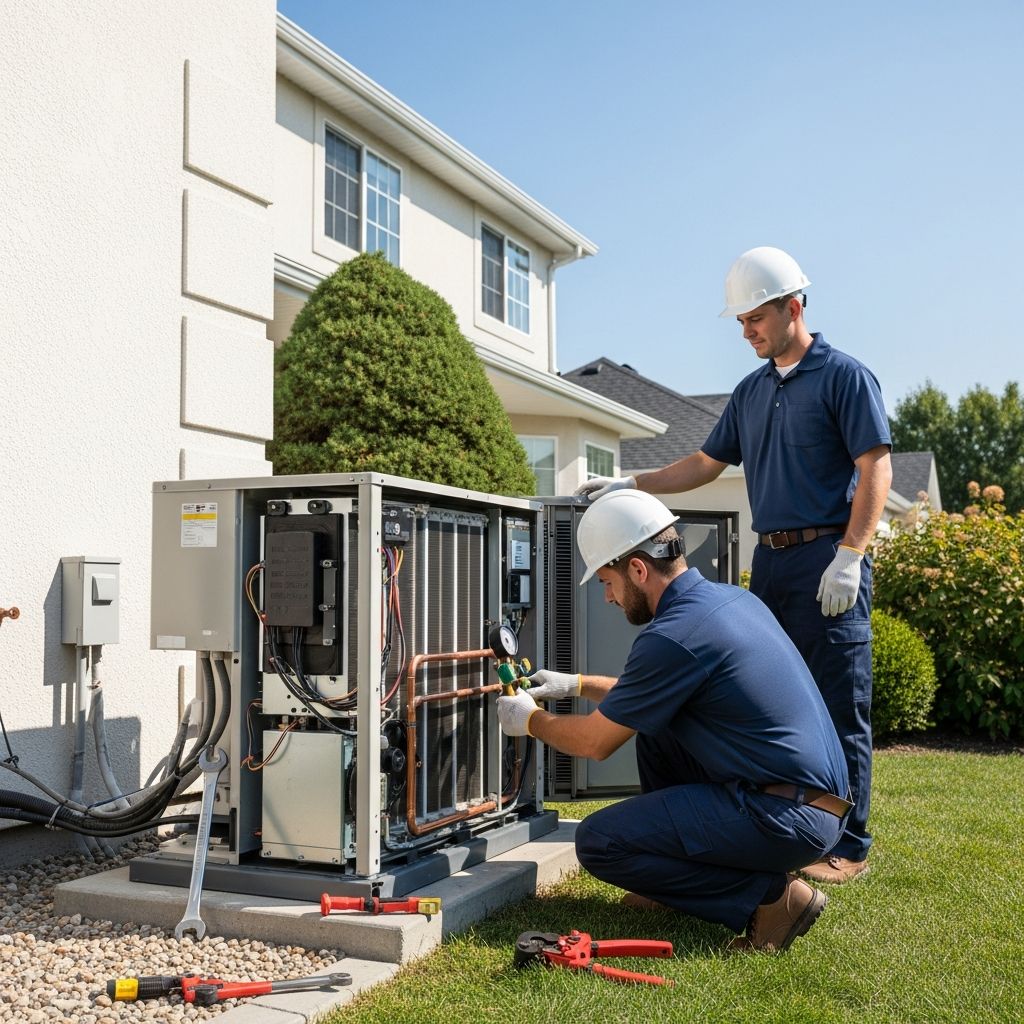
Air conditioner installation day is the final step in a process that starts with sizing, selecting, and designing your new cooling system. On installation day itself, technicians remove the old equipment, set and connect your new indoor and outdoor units, wire and charge the system, test performance, and clean up the work area before walking you through how everything operates. Understanding each step, how long it usually takes, and what you should do as a homeowner can make the entire day smoother and more efficient.
Table of Contents
- Pre-Installation Preparation for Homeowners
- Arrival, Site Walk-Through, and Protection Setup
- Removal of the Old Air Conditioning System
- Installing the New Indoor Unit
- Installing the New Outdoor Condenser Unit
- Refrigerant, Electrical, and Drain Connections
- Thermostat Installation and Setup
- System Startup, Balancing, and Performance Testing
- Cleanup, Inspection, and Final Walk-Through
- Typical Timeframe and What Affects It
- Key Homeowner Responsibilities Before, During, and After
- Frequently Asked Questions (FAQs)
- Conclusion
Pre-Installation Preparation for Homeowners
Much of the technical work happens on installation day, but your preparation before the crew arrives helps avoid delays and complications.
Confirming Details and Access
Several items should be confirmed in the days and hours leading up to the appointment:
- Verify the scheduled date, approximate start time, and contact information for the installer.
- Confirm which doors, driveways, or gates the crew should use to access your home and equipment areas.
- Make sure adults who can authorize decisions and sign any required paperwork are present.
Clearing Work Areas
Technicians need clear, safe access to your existing system and the planned locations for the new equipment.
- Indoor unit area: Move furniture, boxes, and storage items at least several feet away from the furnace or air handler and the indoor coil area.
- Outdoor unit area: Remove debris, lawn furniture, grills, and planters where the new condenser or heat pump will sit.
- Pathways: Clear hallways, stairs, and entrances so large components can be carried in and out safely.
- Pets and children: Arrange for them to stay in a separate area of the home for safety.
Electrical and Parking Considerations
Most AC installations require power tools and frequent trips in and out of your home.
- Free up driveway or curb space close to the house for the installation truck or van.
- Ensure outdoor outlets and the main panel are accessible in case technicians need electrical access.
- Do not shut off the main power unless your installer specifically instructs you to do so.
Arrival, Site Walk-Through, and Protection Setup
When the installation crew arrives, they will introduce themselves, confirm the work order, and review the job details with you before starting.
Initial Walk-Through
Technicians typically perform a quick walk-through to:
- Verify the locations of the existing indoor and outdoor units.
- Confirm the planned spot for the new condenser pad and any line-set routes.
- Review thermostat location and any planned upgrade.
- Discuss any special concerns, such as sensitive flooring or landscaping.
Home Protection and Setup
Reputable installers protect your home before removing or installing equipment.
- Floor protection: Drop cloths or floor runners are placed along main pathways.
- Work zones: A tool staging area is set up, often in a garage, utility room, or near the outdoor unit.
- Dust and debris control: Some installers may use plastic sheeting or covers in tight spaces.
Removal of the Old Air Conditioning System
The first major technical step is safely removing the existing indoor and outdoor components.
Recovering Refrigerant and Disconnecting Power
Removing an old AC must comply with safety and environmental regulations.
- Technicians shut off power at the disconnect or breaker panel before touching equipment.
- Refrigerant is professionally recovered using certified equipment, not vented into the air.
- Electrical wiring, control cables, and thermostat connections are disconnected and labeled if needed.
Removing Indoor and Outdoor Components
After the system is safely isolated:
- The indoor air handler or furnace and coil are disconnected from ductwork, condensate drains, and refrigerant lines, then removed.
- The outdoor condenser cabinet is disconnected from the line set and electrical connections and then carried out or dolly-transported.
- Old line sets, if being replaced, are pulled out and discarded.
For a typical replacement, old system removal may take about 1–2 hours, depending on accessibility and ductwork configuration.
Installing the New Indoor Unit
Once the old equipment is out, installers prepare the space to receive your new indoor unit and coil.
Positioning and Securing the Indoor Unit
The new indoor unit must be carefully positioned for performance and service access.
- Technicians place the air handler or furnace, verify clearances, and ensure the unit sits level and secure.
- They confirm that there is sufficient space for future filter changes and maintenance.
Ductwork, Coil, and Drain Connections
Proper duct and condensate connections are essential for airflow and moisture management.
- Ductwork is connected or resized as needed and all joints are sealed to prevent air leaks.
- The indoor coil is installed in or above the supply plenum, with support rails or pans as needed to protect plastic drain pans from heat.
- Primary and secondary condensate drain lines are connected and routed to approved drain locations, with correct slope for gravity drainage.
- Condensate safety switches may be installed to prevent overflow damage.
Indoor Electrical and Control Wiring
At this stage, installers start reconnecting the electrical side of the indoor equipment.
- Power wiring from the panel or disconnect is reconnected to the air handler or furnace within code requirements.
- Low-voltage control wiring to the thermostat and the outdoor unit is run or reconnected and clearly labeled.
Installing the New Outdoor Condenser Unit
The outdoor unit houses the compressor and condenser coil and must be properly supported and placed for airflow.
Pad or Mount Preparation
Before the condenser goes in:
- A concrete or composite pad is set, leveled, and positioned for adequate clearance and drainage.
- In some installations, wall brackets or rooftop supports are installed instead of a ground pad.
Setting and Securing the Condenser
After the pad is ready:
- The new outdoor unit is uncrated and inspected for shipping damage.
- Technicians place the condenser on the pad, level it in all directions, and secure it according to manufacturer guidelines.
- They verify clearances around the unit, typically at least a couple of feet on all sides for service and airflow.
Refrigerant, Electrical, and Drain Connections
Next, technicians connect the components into a single functioning system using refrigerant lines, wiring, and drains.
Refrigerant Line Set Installation
The line set carries refrigerant between the indoor coil and outdoor condenser.
- New copper line sets, typically one insulated suction line and one smaller liquid line, are measured and routed.
- Lines are carefully uncoiled, supported with hangers every few feet, and routed near beams or ductwork where possible.
- Lines pass through a small hole in the exterior wall near the condenser and are cut to length to reach the service valves.
- Connections at the indoor and outdoor units are brazed or flared, with nitrogen purging during brazing to protect the line interior.
- All joints are leak-tested before the system is charged.
Electrical and Control Connections
Proper electrical setup ensures safe, reliable AC operation.
- An outdoor disconnect box is installed or updated, and power is run from the electrical panel if needed.
- Technicians verify wire size, breaker rating, and grounding for the new system’s power requirements.
- Low-voltage control wiring from the indoor unit and thermostat is landed in the outdoor unit per the wiring diagram.
- All connections are double-checked before startup.
Drainage and Condensate Safety
Since air conditioners remove moisture from indoor air, reliable drainage is critical.
- Primary and secondary drain lines are tested with water to confirm proper flow and slope.
- Condensate pumps, if used, are wired and tested for correct operation.
Thermostat Installation and Setup
If your project includes a new thermostat, installers usually handle this near the end of the physical installation.
Mounting and Wiring the Thermostat
- Technicians confirm the thermostat location is away from heat sources, drafts, and direct sunlight.
- The thermostat is mounted level, usually about five feet from the floor on an interior wall.
- Existing thermostat wires are reused or new low-voltage cable is run as needed, then labeled and connected by terminal.
Programming and User Setup
For both standard and smart thermostats:
- Technicians configure system type, fan settings, and any available comfort profiles.
- For Wi-Fi models, they may assist with network connection and app setup if requested.
- They will usually demonstrate basic operation, temperature setting, and fan control before leaving.
System Startup, Balancing, and Performance Testing
After everything is connected, technicians start and thoroughly test your new system to verify safe, efficient operation.
Evacuation and Charging
Before refrigerant flow begins, the lines must be evacuated.
- Technicians connect vacuum pumps and gauges to remove air and moisture from the line set and indoor coil.
- Once proper vacuum levels are achieved and held, the system is charged with the correct amount of refrigerant according to manufacturer specifications.
Operational Checks
With the system running, several measurements are taken:
- Supply and return air temperatures are checked to confirm an appropriate temperature split, often in the 18–22°F range under typical conditions.
- Airflow is measured or estimated to ensure the blower and duct system are delivering adequate cubic feet per minute (CFM).
- Refrigerant pressures, superheat, and subcooling are measured to confirm the refrigerant charge is correct and components are working as designed.
- Thermostat control is verified, including start, stop, and mode changes.
Safety and Code Checks
Installers also confirm that the installation meets safety and code requirements.
- Electrical disconnects are labeled and accessible.
- Wire sizing, breaker rating, and grounding meet code.
- Refrigerant and drain lines are insulated and supported correctly.
Cleanup, Inspection, and Final Walk-Through
The last phase focuses on leaving your home clean and ensuring you understand your new system.
Site Cleanup
- Old equipment, packaging, and scrap materials are removed from your property.
- Floors are swept or vacuumed where installers worked, and protective coverings are picked up.
- Outdoor areas are checked for tools, debris, or hardware left behind.
Homeowner Orientation
Before leaving, technicians typically review:
- How to operate the thermostat and basic system modes.
- Filter types, locations, and recommended change intervals.
- What sounds and behaviors are normal for your system.
- Warranty information and what to do if you notice issues.
Typical Timeframe and What Affects It
Most standard residential air conditioner replacements are completed in a single day, though the exact duration varies.
| Type of Installation | Typical Duration | Main Influencing Factors |
|---|---|---|
| Simple like-for-like AC replacement | 4–6 hours | Good existing ductwork and electrical, easy access, no major design changes |
| Standard replacement with some adjustments | 6–8 hours | Minor duct or line-set changes, thermostat upgrade, average access |
| Complex replacement | 8–10 hours or 1–2 days | Challenging access, larger systems, code upgrades, new electrical or pad |
| New AC plus major ductwork replacement | 2 days or more | Full duct redesign, attic or crawlspace work, multiple zones |
Weather, unexpected issues (such as rotten platforms or hidden electrical problems), and permitting or inspection requirements can also affect the timeframe.
Key Homeowner Responsibilities Before, During, and After
While the technical work belongs to licensed professionals, homeowners play an important role in ensuring a smooth installation day.
Before Installation Day
- Review your contract and installation scope so you understand what is included, such as thermostat replacement or duct modifications.
- Confirm that permits and any required inspections will be handled, typically by the contractor.
- Clear indoor and outdoor work areas and secure pets and valuables.
During Installation
- Be available to answer questions and authorize any necessary changes if unforeseen issues arise.
- Stay reachable on-site or by phone throughout the day.
- Allow technicians uninterrupted access to indoor and outdoor areas, including the electrical panel and thermostat.
Immediately After Installation
- Walk through the finished work with the lead technician and ask for clarification on any aspect you do not understand.
- Confirm you know how to change filters, adjust thermostat settings, and recognize basic error signs.
- Store all documentation, including manuals, warranty cards, and inspection records, in a safe, accessible place.
First Days of Operation
- Pay attention to system performance: temperature consistency, airflow, and any unusual noises.
- Contact the installer promptly if you notice warm air, frequent cycling, water near the indoor unit, or breaker trips.
- Schedule any required follow-up inspections or tune-ups recommended by your contractor or local codes.
Frequently Asked Questions (FAQs)
How long will I be without cooling on installation day?
For a standard replacement, you may be without cooling for most of the workday, typically between 4 and 8 hours; more complex projects or those with duct replacement can extend that to one or two days.
Do I need to be home during the entire installation?
It is best for an adult decision-maker to be home or readily available throughout the day to answer questions, approve any changes, and participate in the final walk-through and thermostat orientation.
Will technicians need access to my attic, basement, or crawlspace?
Yes, if your ductwork, air handler, or line set runs through these areas, technicians will need safe access to complete installation and testing.
What should I do with my old thermostat and equipment?
Most contractors remove and dispose of old equipment and thermostats as part of the job, but you can request to keep any components you want for records or reuse; confirm this in advance.
How soon can I adjust the thermostat after installation?
Once the system has been started, tested, and the technician confirms everything is operating correctly, you can set the thermostat to your normal comfort settings and begin using the system immediately.
Conclusion
Air conditioner installation day involves a structured sequence of steps: removing the old equipment, installing and connecting the new indoor and outdoor units, setting up the thermostat, and performing careful startup and performance testing before cleanup and handoff. For most homes, this work fits comfortably into a single day, though more complex projects can extend the timeline.
Knowing what to expect and what is expected of you as a homeowner makes the process clearer and less stressful. By preparing access, understanding approximate timeframes, and actively participating in the final orientation, you help ensure your new system is installed correctly, runs efficiently, and is easy for you to operate and maintain from the first day onward.
Viewed this way, installation day is not just a technical project but a transition to a more comfortable, efficient home, grounded in thoughtful planning, clear communication, and careful, code-compliant workmanship.
Similar Articles






Read full bio of medha deb