What You Can and Can’t Cook in an Air Fryer: Full Practical Guide
Learn exactly which foods shine in an air fryer, which ones fail, and how to adapt recipes safely and deliciously every time.
What You Can and Can’t Cook in an Air Fryer
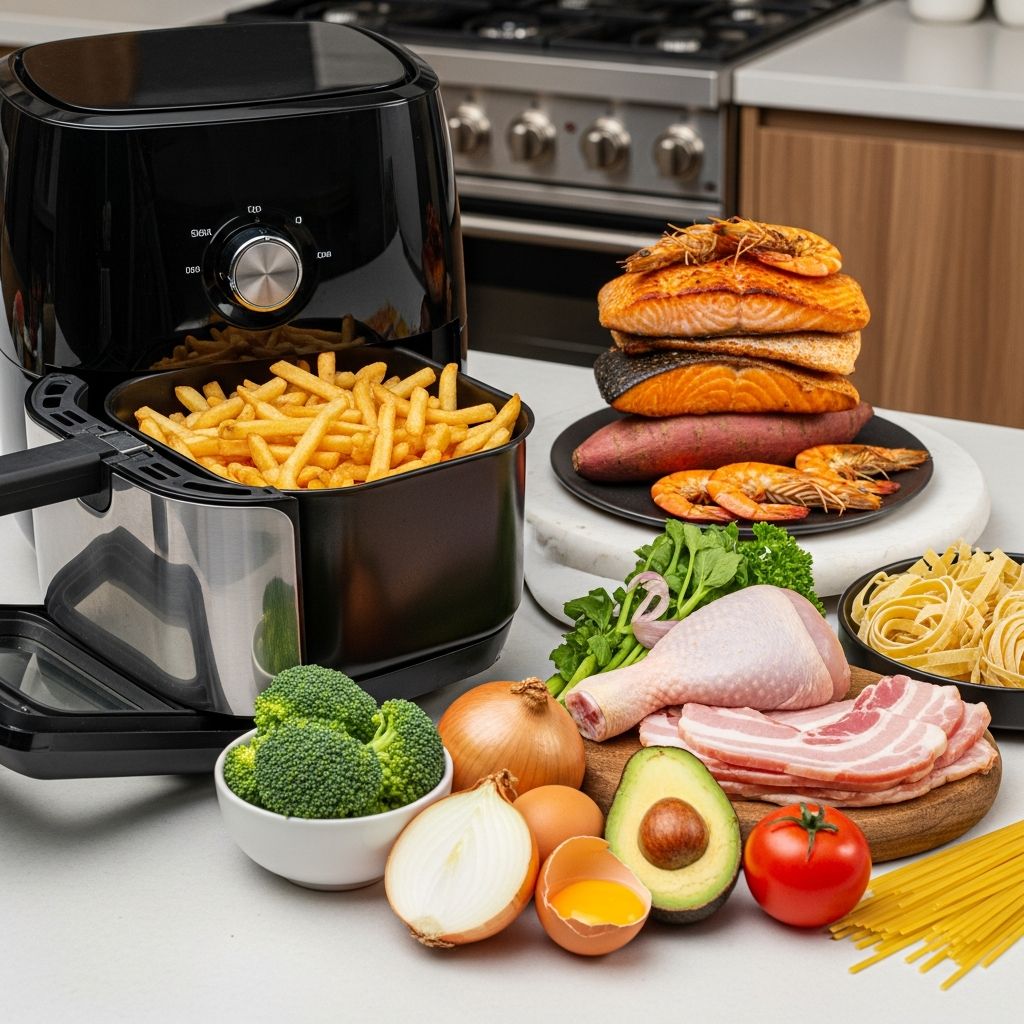
An air fryer can deliver crisp, flavorful food with far less oil than deep-frying, but it is not a magic box that works for everything. Some foods come out beautifully golden and crunchy, while others turn soggy, dry, or even become a safety concern. Knowing what you can and can’t cook in an air fryer helps you get better results and protect your appliance.
Table of Contents
- How Air Fryers Work and Why Some Foods Fail
- Best Foods to Cook in an Air Fryer
- Foods You Should Not Cook in an Air Fryer
- “Tricky” Foods That Need Adjustments
- Key Safety and Technique Tips
- Quick Comparison Table: Can You Air Fry It?
- Frequently Asked Questions (FAQs)
- Conclusion
How Air Fryers Work and Why Some Foods Fail
An air fryer is essentially a compact, high-speed convection oven. It uses a heating element and a powerful fan to blow very hot air around the food, producing a crisp exterior similar to deep-frying but with much less oil.
Because air fryers rely on rapid air circulation, foods that are very light, very wet, or require submersion in liquid often do not perform well. Loose seasonings, herbs, or lightweight items can be blown around the basket and may burn or stick to the heating element.
Understanding this airflow principle explains most of the “can and can’t” rules:
- Foods that already have a surface coating (breaded, lightly oiled, or naturally fatty) tend to crisp well.
- Very wet batters or foods that should boil (like pasta) are poor candidates.
- Delicate items can dry out or break apart unless handled carefully.
Best Foods to Cook in an Air Fryer
Many everyday foods are ideal for the air fryer, delivering crispness and browning with minimal effort.
Crispy Frozen Convenience Foods
Frozen, pre-breaded items are among the easiest and most reliable foods to cook in an air fryer.
- French fries, potato wedges, tater tots
- Chicken nuggets, chicken strips, popcorn chicken
- Onion rings, mozzarella sticks, jalapeño poppers
- Frozen breaded fish fillets or shrimp
These products usually already contain some oil in the coating, so you often do not need to add extra oil.
Fresh Meats and Poultry
Air fryers excel at cooking proteins with a browned exterior and juicy interior when not overcrowded.
- Chicken: wings, drumsticks, thighs, bone-in or boneless breasts, and tenders.
- Pork: chops, pork tenderloin, pork steaks.
- Beef: burgers, meatballs, small steaks, steak bites.
- Lamb: chops and small cuts.
Fattier cuts (like chicken thighs or well-marbled steak) often need little or no additional oil because their own fat renders and crisps the surface.
Always verify doneness with a food thermometer; for example, poultry must reach an internal temperature of 165°F (74°C) to be safe.
Seafood and Fish
Fish and seafood cook quickly and evenly in the air fryer when arranged in a single layer.
- Salmon fillets and other fatty fish
- White fish fillets (cod, tilapia, haddock)
- Shrimp (breaded or simply seasoned with a bit of oil)
- Fish sticks and pre-breaded seafood
Delicate fish can be placed on a small piece of parchment cut to the size of the fillet to help with removal, but the paper should not cover the entire basket to avoid blocking airflow.
Vegetables That Roast Well
Vegetables that normally roast well in an oven generally perform well in an air fryer.
- Potatoes, sweet potatoes (fries, cubes, wedges)
- Brussels sprouts, cauliflower, carrots, parsnips
- Green beans, asparagus, zucchini, squash
- Bell peppers, onions, mushrooms
Lightly coat the vegetables in a small amount of oil and seasonings so they do not dry out or get blown around.
Toasted and Crisped Carbohydrates
Because air fryers act like powerful mini-ovens, they are excellent for crisping and reheating baked goods.
- Garlic bread and toast
- Bagels, English muffins, flatbreads, pita
- Quesadillas, burritos, and wraps (especially for reheating)
- Croutons made from leftover bread
Use lower temperatures for thinner items to avoid scorching and check frequently, as air fryers often toast faster than conventional ovens.
Reheating Leftovers
Leftovers that were originally crispy or roasted often reheat better in an air fryer than in a microwave.
- Pizza slices
- Fried chicken or other breaded meats
- Roast potatoes and roasted vegetables
- Baked or grilled meats that need a quick warm-up
The circulating hot air restores crispness that the microwave usually destroys, often in just a few minutes.
Foods You Should Not Cook in an Air Fryer
Some foods not only turn out poorly in an air fryer but can also create messes or safety issues. Avoid the following or use an alternative method.
Foods in Wet, Drippy Batters
Traditional deep-fry batters (like tempura, funnel cake, or beer batter) do not work well in an air fryer. Unlike a deep fryer, the food is not submerged in oil, so the batter runs off, drips through the basket, and cooks unevenly.
- Funnel cakes and deep-fried “fair food” (Oreos, Twinkies, etc.)
- Tempura-style shrimp or vegetables
- Beer-battered fish or onion rings
Instead, use dry breading (flour plus breadcrumbs or panko) or pre-breaded products designed for oven baking.
Foods That Need Boiling or Simmering
You should not try to boil water in an air fryer, which makes some traditional cooking methods impossible.
- Uncooked pasta (requires boiling water to cook properly)
- Dry rice or grains that normally simmer in a pot
- Soups, stews, or large amounts of liquid-based dishes
These are better prepared on the stovetop or in a pressure cooker, then optionally finished or reheated in the air fryer for texture.
Very Lightweight, Loose, or Flying Ingredients
The fan in an air fryer is strong enough to blow around very light ingredients, which may result in burning or uneven seasoning.
- Very light leafy greens (like raw spinach or light herbs) when dry
- Loose dry herbs or powdered seasonings sprinkled on top of food
- Very light bread slices or thin chips without any moisture or oil
To prevent this, coat food lightly with oil so seasonings adhere, or mix herbs into a marinade rather than sprinkling them on the surface.
Large Cakes or Traditional Layer Cakes
While small baked goods can sometimes be made in an air fryer, full-size cakes are problematic. The compact space and close proximity to the heating element often cause the top to burn before the center is cooked through.
- Full-size layer cakes or very thick single-layer cakes
- Dense batters in deep pans
Cakes also require longer, even baking, which a conventional oven provides more reliably. If you do attempt cake in an air fryer, small, shallow pans work better and require careful monitoring.
Uncontained Melted Cheese
Cheese placed directly in the basket without support tends to melt through the holes and can be blown around by the fan.
- Loose shredded cheese sprinkled directly into the basket
- Cheese slices without a base (like trying to air fry just cheese)
Instead, melt cheese over a solid base like bread, a tortilla, or a piece of meat, and consider using a small pan or dish rated for air fryer use.
“Tricky” Foods That Need Adjustments
Some foods are not completely off-limits but require specific handling to succeed.
Fresh Broccoli and Some Other Tender Vegetables
Fresh broccoli can dry out and become tough or burned when air fried directly, often tasting bitter.
- Par-cook broccoli (lightly steam or boil) before air frying with seasonings and oil.
- Cook at a moderate temperature and check frequently to avoid scorching.
Other tender vegetables like spinach, kale chips, or thin asparagus may need lower temperatures or shorter times to avoid burning.
Baked Goods and Desserts
Air fryers can bake, but capacity and heat distribution limit what works well.
- Works better: cookies, small brownies, single-serve lava cakes, hand pies.
- More challenging: large cakes or loaves that are very thick.
Because the food is so close to the heating element, tops may brown or burn early. Cover with foil partway through if necessary, and use lower temperatures for delicate desserts.
Eggs
Eggs can be cooked in an air fryer but require proper containers and careful temperature control.
- Hard “boiled” style eggs in the shell (using the air fryer as a dry-heat oven).
- Egg bites or mini frittatas in silicone molds or ramekins.
- Shakshuka-type dishes in oven-safe pans.
Avoid cracking eggs directly into the basket, as they will run through the holes and cook unevenly. Suitable bakeware rated for oven temperatures makes egg dishes far more successful.
Foods with Very High Fat Drip
Very fatty meats can release large amounts of grease, which may smoke or even present a fire risk if not managed.
- Very fatty sausages
- High-fat bacon cooked at very high temperatures
- Large pieces of very fatty pork belly without a drip tray
Use lower temperatures, shorter cook intervals, and empty the drip tray if excessive grease accumulates. Never leave an air fryer unattended when cooking very fatty foods.
Key Safety and Technique Tips
Using the right techniques matters as much as choosing the right foods.
Airflow and Lining the Basket
Blocking airflow is one of the most common mistakes. Lining the entire bottom of the basket with foil or parchment paper can prevent hot air from circulating properly and cause uneven cooking.
- Cook directly on the basket whenever possible for best results.
- If using parchment paper, cut it to roughly the size of the food so air can circulate around it.
- Do not place empty parchment in the basket during preheat; it can blow around and contact the heating element.
Oil Use: Not Too Much, Not Too Little
Air fryers require far less oil than deep frying, but some oil is often helpful for browning and preventing dryness.
- Use a light coating of oil (often 1–2 teaspoons for a batch) for lean proteins and vegetables.
- Do not use too much oil; it can lead to soggy or burned food and increased smoke.
- Pre-breaded frozen foods often contain enough oil already and may not need extra.
Avoid aerosol sprays that contain propellants (like many generic cooking sprays), as they can damage nonstick coatings over time.
Cooking Times and Temperatures
Do not assume oven times and air-fryer times are identical. Air fryers often cook faster because of their compact size and intense convection.
- Start with slightly lower times than an oven recipe and check the food early.
- Shake or flip halfway through cooking to promote even browning.
- Consider manufacturer recommendations as guidelines, then adjust for your specific model.
Food Safety and Doneness
Because outside surfaces can brown quickly, it is important to ensure that the inside of foods, especially meats, reach safe temperatures.
- Use an instant-read thermometer to check thick pieces of meat or poultry.
- Follow established minimum internal temperatures (for example, poultry to 165°F / 74°C).
Cleaning and Maintenance
Grease buildup and leftover crumbs can smoke or burn, affecting flavor and potentially damaging the appliance.
- Clean the basket and drip tray regularly with warm, soapy water.
- Dry the basket thoroughly before storing to protect the nonstick surface.
- Check the heating element area periodically (when unplugged and cool) for stuck-on debris.
Quick Comparison Table: Can You Air Fry It?
| Food Type | Air Fryer Friendly? | Notes |
|---|---|---|
| Frozen breaded snacks (fries, nuggets, rings) | Yes | Crisp well; usually no extra oil needed. |
| Fresh meats and poultry | Yes | Do not overcrowd; verify safe internal temperatures. |
| Fish and shrimp | Yes | Use parchment cut to food size for delicate fillets. |
| Roasting vegetables | Yes | Light oil and seasoning; shake basket for even browning. |
| Leftovers (pizza, fried foods) | Yes | Great for restoring crisp texture. |
| Wet, drippy batters (tempura, funnel cake) | No | Batter runs off; designed for deep frying. |
| Uncooked pasta and boiling foods | No | Air fryers are not for boiling water. |
| Large cakes or tall loaves | Mostly no | Prone to burning on top before center cooks. |
| Loose shredded cheese alone | No | Melts through basket; can be blown around. |
| Fresh broccoli (plain) | Tricky | Often dries out; par-cook or monitor closely. |
Frequently Asked Questions (FAQs)
Can I put raw meat in an air fryer?
Yes. Raw meat cooks very well in an air fryer as long as you do not overcrowd the basket and you cook to safe internal temperatures. Use a thermometer to verify doneness, especially for poultry and thicker cuts.
Is it safe to use aluminum foil or parchment paper in an air fryer?
It can be safe when used correctly. Do not completely line the basket, because blocking airflow leads to undercooked food. Instead, cut parchment or foil to the size of the food, leaving space for air to circulate around the sides.
Can I bake a cake in my air fryer?
You can bake small cakes or cupcakes in an air fryer, but full-size cakes are not recommended because the top usually over-browns while the center stays underdone. If you try, use small pans, lower heat, and watch closely.
Why do my seasonings fly around in the air fryer?
Because the fan blows hot air at high speed, loose dried herbs and powdered spices can be lifted off the food and tossed around inside the chamber. Toss foods in a bit of oil to help seasonings adhere, or incorporate them into marinades or breading instead of sprinkling them loosely on top.
Can I cook fresh vegetables like broccoli or green beans in the air fryer?
Yes, but some vegetables need care. Fresh broccoli tends to dry out or burn unless par-cooked or cooked with enough oil and at moderate temperatures. Green beans, cauliflower, and potatoes usually roast well with a light oil coating.
Conclusion
Air fryers are most effective for foods that benefit from intense, circulating dry heat: breaded items, roast-style vegetables, and many cuts of meat and fish. These foods develop crisp, browned surfaces without needing to be submerged in oil, and they typically cook faster than in a conventional oven.
Foods that depend on boiling, large quantities of liquid, or very wet batters are better suited to other appliances. Understanding that an air fryer is a compact convection oven, not a deep fryer or saucepan, makes it easier to predict which recipes will succeed and how to adapt them.
When in doubt, think about structure and moisture: solid, lightly oiled foods with stable coatings usually work; loose, thin, or dripping mixtures usually do not. Combine that with attention to airflow, moderate oil use, proper temperatures, and regular cleaning, and your air fryer can handle a wide range of everyday meals while minimizing mess and maximizing flavor.
Similar Articles




Read full bio of Sneha Tete