
Why Homemade Ice Cream Turns Icy or Grainy And How To Fix It
Understand the science behind icy, grainy homemade ice cream and learn practical ways to keep every batch smooth and creamy.
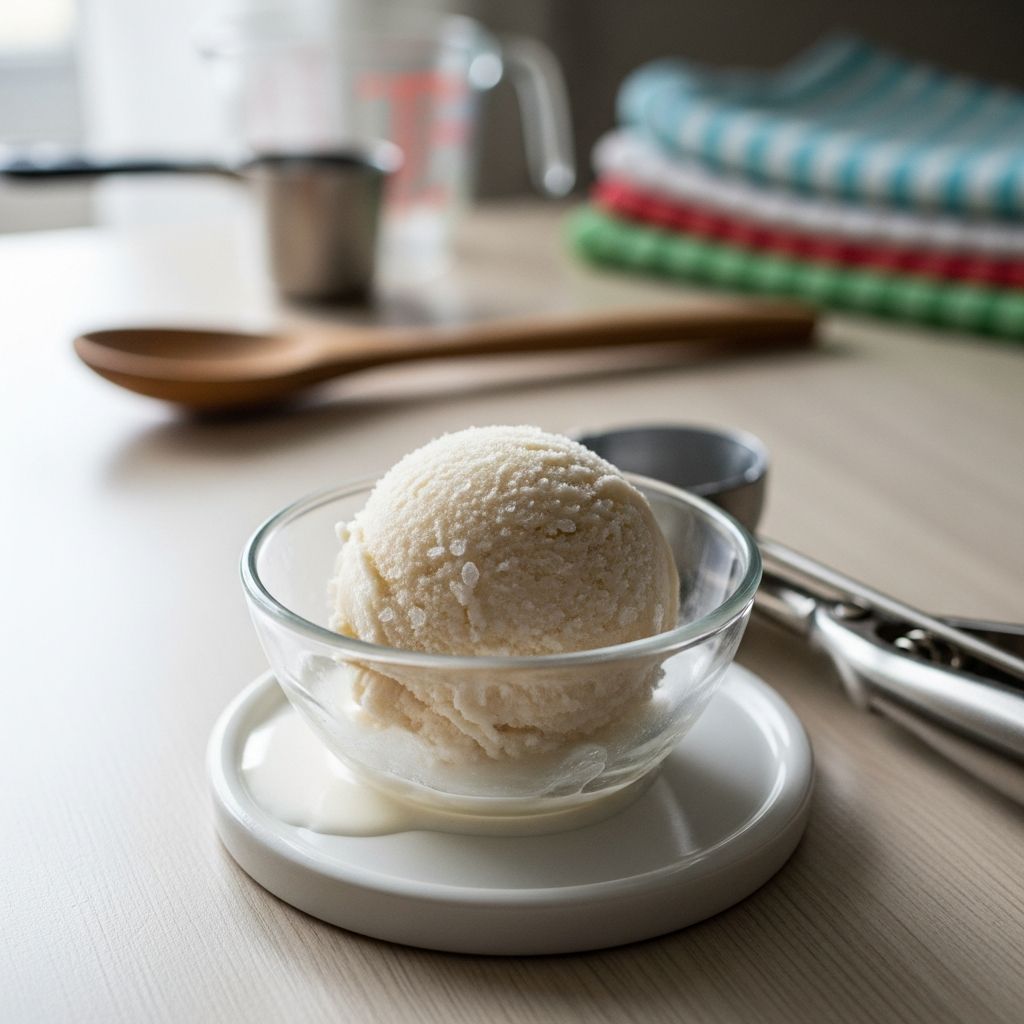
Why Ice Cream Becomes Icy or Grainy From a Home Ice Cream Maker
Many people are surprised when ice cream made at home tastes great but feels disappointingly icy or grainy on the tongue. Instead of a smooth, velvety scoop, you get rough crystals or sandy bits that crunch between your teeth. This problem is common with home ice cream makers and mostly comes down to the way ice crystals form and grow, as well as how you mix, freeze, and store your ice cream base.
Understanding the science of ice crystals and a few key technique adjustments can dramatically improve your results. With the right balance of ingredients, freezing speed, and storage habits, you can keep those crystals tiny and your homemade ice cream consistently smooth.
Table of Contents
- What Makes Ice Cream Icy or Grainy?
- How Ice Crystals Form in Ice Cream
- Why Home Ice Cream Makers Are More Prone to Icy Texture
- Ingredient Issues That Cause Icy or Grainy Ice Cream
- Process Mistakes During Freezing and Churning
- Storage Problems and Temperature Fluctuations
- How to Prevent Icy or Grainy Ice Cream at Home
- Can You Fix Icy or Grainy Ice Cream?
- Frequently Asked Questions (FAQs)
- Conclusion
What Makes Ice Cream Icy or Grainy?
Ice cream feels icy or grainy when the ice crystals inside it become too large or uneven. Freshly churned ice cream typically contains many tiny crystals that are too small for your tongue to detect. Over time, or when the freezing process is not well controlled, those crystals grow bigger and begin to feel rough.
Two main mechanisms create that unpleasant texture:
- Ice crystal growth – small crystals merge and grow larger when ice cream melts slightly and refreezes.
- Freezer burn and moisture migration – water moves through the ice cream and refreezes as surface frost or pockets of ice.
Homemade ice cream is especially vulnerable because it usually lacks commercial stabilizers and is frozen in equipment that is slower and less powerful than industrial machines.
How Ice Crystals Form in Ice Cream
Ice cream is a complex mixture of water, fat, sugar, proteins, and air. When you freeze it, the water portion solidifies into ice. The way that happens determines texture.
Nucleation: The Birth of Ice Crystals
The first step is nucleation, where tiny ice particles (nuclei) begin to form as the temperature drops. The more nuclei that form at this stage, the more numerous and smaller your ice crystals will be. Fast freezing creates many nuclei and leads to smoother ice cream.
Crystal Growth: From Tiny to Noticeable
After nuclei form, they grow as more water molecules lock onto them. If freezing is slow, each crystal has plenty of time to grow larger. Slow freezing and long delays in the freezer bowl therefore tend to create bigger, more noticeable crystals, which are experienced as iciness.
Recrystallization: What Happens After Freezing
Even after your ice cream is frozen, the ice crystals continue to change. Temperature fluctuations in the freezer allow small crystals to melt slightly and refreeze into larger structures, in a process known as recrystallization. This is why ice cream that starts out smooth can turn grainy after sitting in the freezer for a while.
| Stage | What Happens | Effect on Texture |
|---|---|---|
| Nucleation | Small ice nuclei form as the mix cools | More nuclei = smaller crystals = smoother ice cream |
| Crystal Growth | Crystals grow as more water freezes | Slow growth = bigger crystals = icier texture |
| Recrystallization | Melting and refreezing during storage | Crystals merge and enlarge over time, causing graininess |
Why Home Ice Cream Makers Are More Prone to Icy Texture
Homemade ice cream often feels icier than commercial ice cream because of slower freezing, less powerful refrigeration, and the absence of industrial stabilizers.
- Slower freezing: Home machines usually freeze the mix over 15–30 minutes or more. This slower process allows more time for crystals to grow, leading to larger ice particles and rougher texture.
- Less consistent temperature: Home freezers cycle on and off, and home ice cream makers cannot match the extremely low, stable temperatures of commercial blast freezers.
- Limited stabilizers: Commercial ice cream typically includes stabilizers like guar gum or carrageenan that help prevent ice crystal growth over time. Homemade recipes often rely only on eggs, cream, and sugar, which provide some protection but less than specialized stabilizers.
Because of these limits, home ice cream can be wonderfully fresh and flavorful but needs more careful handling to stay smooth.
Ingredient Issues That Cause Icy or Grainy Ice Cream
Even with a good machine, the wrong ingredient balance can cause iciness. Several factors in your recipe directly affect ice crystal size.
Too Much Water, Not Enough Fat
Ice cream bases that are low in fat and high in water freeze harder and icier. Fat helps interrupt ice crystal formation and gives body and creaminess.
- Using milk instead of cream increases water content and iciness.
- Low-fat or dairy-free bases need more careful formulation to avoid large crystals.
Insufficient Sugar or the Wrong Type
Sugar lowers the freezing point of the mix, meaning not all the water turns to solid ice. This helps keep crystals smaller and the texture softer.
- Too little sugar leads to harder, icier ice cream.
- Using a blend of sugars (for example sucrose plus corn syrup or honey) can further improve smoothness by interfering with ice crystal growth.
Lack of Stabilizers and Emulsifiers
Stabilizers such as guar gum, locust bean gum, or egg yolks help bind water and slow down ice crystal growth. Emulsifiers help fat and water stay evenly mixed, preventing separation of fat globules and water pockets that can freeze into ice.
- Homemade ice cream without stabilizers is more likely to become icy over time.
- Egg yolks provide both emulsifiers and some stabilizing effect, improving smoothness.
Mix Separation
If your base is not well mixed, or sits too long before churning, heavier components (like fat) can separate from water. When this happens, the watery parts can freeze into large ice crystals while fat aggregates separately, contributing to a grainy or uneven mouthfeel.
Process Mistakes During Freezing and Churning
How you freeze and churn your ice cream base matters as much as what is in it. Several common process errors in home ice cream making lead directly to iciness.
Starting with a Warm or Partially Chilled Base
If your base is not thoroughly chilled before it goes into the machine, it will take much longer to freeze. Longer freezing time means more opportunity for large ice crystals to form.
- Always chill the base in the refrigerator, often for several hours or overnight, before churning.
Under-Churning or Over-Churning
Churning serves two purposes: it breaks up ice crystals as they form and incorporates air for lightness. If you under-churn, crystals may not be broken up enough. If you over-churn, you may end up overworking the mix as it gets too firm, which can also harm texture.
Some soft serve machines, for example, can over-agitate product if the flow of mix into the freezing barrel is restricted, leading to texture defects and fat separation.
Improper Machine Settings or Equipment Problems
In soft serve or continuous freezers, issues such as a flow valve that is set too low, mix not feeding properly, or refrigeration cycling incorrectly can lead to partial melting, overworking of the mix, and icy or grainy texture. While home batch machines are simpler, problems like a poorly frozen bowl or overfilled chamber can have similar effects.
- Make sure the freezer bowl is fully frozen according to the manufacturer’s instructions.
- Do not overfill the machine; leave room for expansion as air is incorporated.
Storage Problems and Temperature Fluctuations
Even a perfectly churned batch can turn icy if it is stored poorly. The biggest culprits are temperature fluctuations and air exposure in the freezer.
Melting and Refreezing
Each time your ice cream warms slightly and refreezes, ice crystals can melt and then re-form into larger ones. This is especially common when:
- The freezer cycles between slightly warmer and colder temperatures.
- The container is kept near the freezer door, which warms up when opened.
- You leave the tub on the counter for a long time, then put it back.
Over time, this process can turn previously smooth ice cream into a grainy, crunchy mass.
Freezer Burn and Air Exposure
Freezer burn occurs when moisture in the ice cream evaporates in the dry freezer environment and refreezes as surface frost or ice pockets. This is related to, but slightly different from, simple melting and refreezing; freezer burn also contributes stale or off flavors.
- Containers with too much headspace allow more moisture loss and air exposure.
- Loose or damaged lids, or thin packaging, increase the risk of freezer burn.
How to Prevent Icy or Grainy Ice Cream at Home
While you cannot turn a home kitchen into a commercial factory, you can greatly reduce iciness by managing ingredients, process, and storage carefully.
1. Optimize Your Recipe
- Use enough fat: Choose cream and whole milk, or a mixture that provides a reasonably high fat content, to interrupt ice crystal formation and add richness.
- Balance the sugar: Ensure the recipe has sufficient sugar to lower the freezing point. Consider blending sugars (such as white sugar with a small amount of corn syrup or honey) to help keep crystals small.
- Include stabilizers when appropriate: Egg yolks, a small amount of guar gum, or similar stabilizers can help hold water and slow ice crystal growth.
- Mix thoroughly: Whisk or blend the base so fat, sugar, and water are fully combined, preventing separation that can lead to icy or grainy regions.
2. Chill the Base Completely Before Churning
- Refrigerate the mixture for several hours or overnight before freezing.
- A colder base freezes faster in the machine, promoting more nucleation and smaller crystals.
3. Maximize Freezing Efficiency in Your Ice Cream Maker
- Fully freeze the bowl: If you use a freezer-bowl machine, make sure the bowl is frozen solid according to the manual before you begin.
- Do not overfill: Leave room for expansion and airflow around the dasher or paddle.
- Follow churning guidelines: Churn until the ice cream is thick and soft-serve-like, but stop before it becomes overly stiff and stressed.
- If your machine has settings, use the one recommended for ice cream rather than for slower freezing desserts.
4. Handle the Ice Cream Quickly After Churning
- Transfer the soft ice cream immediately to a pre-chilled container.
- Press a piece of parchment or plastic wrap directly onto the surface to reduce air exposure.
- Place the container in the coldest part of the freezer, not in the door.
5. Store Ice Cream to Minimize Temperature Fluctuations
- Keep the freezer at a consistently cold temperature and avoid frequent or long openings of the door.
- Store ice cream in smaller containers so you can remove only what you need, rather than repeatedly warming an entire large tub.
- Avoid leaving the container on the counter to soften for long periods; instead, let it sit briefly or move it to the refrigerator for a short time to soften more evenly.
- Do not microwave the container, as this causes uneven melting and refreezing, leading to graininess.
Can You Fix Icy or Grainy Ice Cream?
Once ice crystals have grown too large, they generally cannot be fully reduced back to a smooth state. The damage is mostly irreversible because the microstructure of the dessert has been altered. However, there are a few ways to make icy ice cream more enjoyable:
- Blend into milkshakes or smoothies: Blending physically breaks up some of the crystals and masks the rough texture with added liquid.
- Re-churn with a small amount of fresh dairy: In some cases, softening the icy ice cream slightly and re-churning it with a little milk or cream can help even out texture, though it will not be identical to freshly made ice cream.
These methods are best seen as ways to salvage a batch, rather than fully restore its original smoothness.
Frequently Asked Questions (FAQs)
Why does my homemade ice cream get icy after a few days?
Over time, temperature fluctuations in the freezer cause small ice crystals to melt and refreeze into larger ones, a process called recrystallization. Homemade ice cream is more vulnerable because it usually lacks commercial stabilizers that slow this process.
Is icy ice cream the same as freezer-burned ice cream?
They are related but not identical. Icy ice cream generally refers to large crystals forming throughout the dessert, often from slow freezing or repeated melting and refreezing. Freezer burn specifically involves moisture evaporating and refreezing as frost on the surface, often creating stale flavors as well.
Does adding more sugar make ice cream less icy?
Within reason, yes. Sugar lowers the freezing point and helps keep some water unfrozen, resulting in smaller crystals and a softer texture. However, too much sugar can make ice cream overly sweet and affect structure, so it is best to follow well-tested recipes that balance sweetness and texture.
Why does low-fat or dairy-free ice cream turn icy more easily?
Low-fat and dairy-free bases usually contain more water and less fat. Without enough fat and with fewer traditional stabilizers, water can freeze into larger crystals more easily, increasing iciness. Carefully chosen stabilizers and sugars are especially important in these styles.
Can the ice cream maker itself cause grainy texture?
Yes. If the machine does not freeze efficiently, or if settings or parts such as flow valves and agitators are not working correctly, the mix may partially melt, over-churn, or freeze unevenly, leading to graininess and fat separation. Ensuring your machine works properly and follows the manufacturer’s guidelines helps maintain a smoother texture.
Conclusion
Icy or grainy homemade ice cream is mainly the result of ice crystal growth, driven by slow freezing, temperature fluctuations, and imbalances in ingredients. Home ice cream makers freeze more slowly and less consistently than industrial equipment, and homemade recipes usually lack strong stabilizers, which together make small crystals harder to maintain.
By understanding how ice crystals form, and by paying attention to fat and sugar levels, thorough mixing, proper chilling, efficient churning, and careful storage, you can greatly reduce the risk of iciness. Thoughtful control of each step, from recipe design to freezer habits, is what leads to consistently smooth, creamy ice cream from a home ice cream maker.
Similar Articles






Read full bio of medha deb