
Why Your Water Heater Is Not Producing Enough Hot Water: Causes and First Checks
Understand the most common reasons your water heater runs out of hot water and the safe first checks you can do yourself.
Why Your Water Heater Is Not Producing Enough Hot Water
When your shower suddenly turns lukewarm or you run out of hot water halfway through washing dishes, the problem is often with the water heater, not your imagination. A drop in hot water output can be caused by incorrect settings, worn components, sediment buildup, or even undersizing of the system for your household. Understanding the most common causes and knowing the right first checks can save time, money, and unnecessary stress.
This guide explains the typical reasons your water heater is not producing enough hot water and walks you through safe, practical checks you can perform before calling a professional.
Table of Contents
- Recognizing the Symptoms of Insufficient Hot Water
- How Water Heaters Produce Hot Water (Quick Overview)
- Common Causes of Not Enough Hot Water
- Basic First Checks for All Water Heater Types
- First Checks for Electric Water Heaters
- First Checks for Gas Water Heaters
- First Checks for Tankless (On-Demand) Water Heaters
- When the Real Problem Is Capacity, Not a Fault
- Preventive Maintenance to Keep Hot Water Flowing
- Safety Guidelines and When to Call a Professional
- Conclusion
- Frequently Asked Questions (FAQs)
Recognizing the Symptoms of Insufficient Hot Water
Different patterns of hot water loss often point to different underlying causes. Paying attention to how and when you run out of hot water can help narrow down the problem.
- Hot water runs out quickly: You get a short burst of hot water that turns lukewarm or cold after a few minutes. This may indicate a partially functioning heater, a broken upper or lower heating element in an electric unit, or a small tank with higher-than-usual demand.
- Water is warm but never hot enough: Temperature settings may be too low, the thermostat could be faulty, or sediment buildup is limiting heating efficiency.
- Only one fixture has poor hot water: The issue could be with the fixture’s mixing valve or plumbing, not the water heater.
- Hot water output has gradually decreased over time: Sediment accumulation, aging components, or deteriorated dip tubes can slowly reduce hot water volume.
- Sudden loss of hot water in the whole house: Power loss, tripped breaker or reset button, extinguished pilot light, or gas supply issues are likely.
How Water Heaters Produce Hot Water (Quick Overview)
Understanding the basics of how different water heaters work makes troubleshooting more logical.
| Type | How It Heats | Common Hot Water Issues |
|---|---|---|
| Storage tank (electric) | One or two electric heating elements warm water stored in an insulated tank, controlled by thermostats. | Burned-out elements, faulty thermostats, tripped reset button, sediment buildup reduce available hot water. |
| Storage tank (gas) | A gas burner under the tank heats the water, regulated by a gas control valve and thermostat. | Extinguished pilot light, dirty thermocouple or thermopile, gas valve issues, sediment, or venting issues reduce heating. |
| Tankless (gas or electric) | Heats water on demand as it flows through a heat exchanger; no storage tank. | Flow rate limits, undersizing, clogged inlet screens, error codes, or low gas supply cause temperature drops. |
Common Causes of Not Enough Hot Water
Most instances of insufficient hot water trace back to a predictable set of issues. Many of these can be checked safely by a homeowner.
- Incorrect thermostat setting: If the thermostat is set below about 120°F, water may feel only lukewarm.
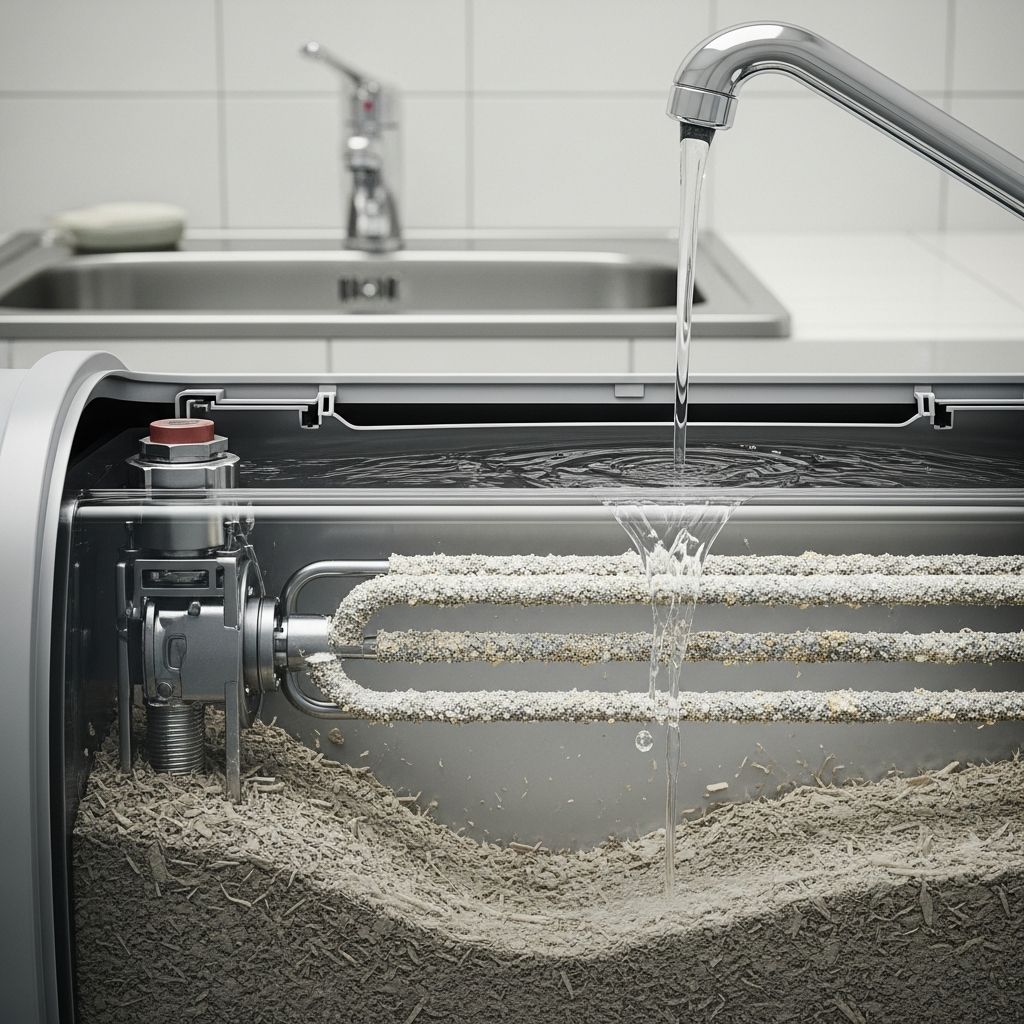
- Sediment buildup in the tank: Minerals in the water settle at the bottom of the tank, forming a layer between the burner or heating element and the water, which reduces efficiency and available hot water volume.
- Faulty heating elements (electric): One burned-out element can cause rapid temperature drop or partial heating.
- Extinguished pilot light or ignition failure (gas): Without a stable pilot flame or successful ignition, the burner will not heat the tank.
- Partially closed or mis-set valves: A partially closed cold water inlet or hot water outlet valve restricts flow and can mimic capacity problems.
- Tripped reset button (electric): Many electric heaters include a high-temperature limit switch that trips if overheating is detected, shutting off power to the elements until manually reset.
- Failing dip tube: The dip tube directs incoming cold water to the bottom of the tank; if it breaks, cold water mixes at the top and cools the outgoing hot water.
- Undersized heater or excessive demand: If the household’s hot water use has grown but the heater has not been upgraded, running out of hot water can simply reflect capacity limits, not failure.
- Thermostat or gas control valve failure: If these controls misread temperature or fail internally, they may shut down heating too early or not heat at all.
- Tankless flow rate or error codes: Tankless units may throttle temperature or shut down when incoming water is too cold, flow exceeds rated capacity, or sensors detect faults.
Basic First Checks for All Water Heater Types
Before opening panels or using tools, a few non-invasive checks apply to nearly every water heater.
- Confirm energy supply:
- Electric: Ensure the dedicated breaker in the electrical panel is in the ON position and has not tripped.
- Gas: Verify the gas shutoff valve handle is parallel to the pipe (open) and other gas appliances are working.
- Check temperature setting: Look at the thermostat dial or control panel; for many models, 120°F–140°F is the typical range.
- Inspect around the heater for leaks: Puddles, dripping valves, or rust streaks can indicate serious internal problems or pressure issues.
- Verify valves are fully open: Ensure the cold water supply and hot water outlet valves at the top of the tank are fully open; a partially closed valve reduces flow and hot water availability.
- Check hot water at multiple fixtures: Test both nearby and distant faucets. If only one fixture is affected, the problem may be local to that faucet or its mixing valve rather than the heater.
First Checks for Electric Water Heaters
Electric water heaters rely on one or two heating elements and thermostats. A problem with any of these can reduce or eliminate hot water.
1. Confirm Power and Reset the High-Temperature Limit
- Locate your electrical panel and confirm the water heater breaker is ON; if it is tripped, switch it fully OFF and then back ON.
- Remove the upper thermostat access panel on the heater (after turning off the breaker), peel back the insulation, and locate the red reset button on the thermostat.
- Press the reset button firmly; if it clicks, the limit switch had tripped and may restore heating. If it keeps tripping, an underlying electrical or thermostat problem likely exists.
2. Check Thermostat Settings
- With power OFF, inspect both upper and lower thermostat settings on dual-element heaters.
- Ensure they are within a reasonable range—around 120°F is common for safety and efficiency.
- If only one thermostat is set very low, the tank may never reach a comfortable temperature.
3. Test Heating Elements with a Multimeter
If you are comfortable using a multimeter and have confirmed power is off at the breaker, you can test the condition of the heating elements.
- Turn off the water heater breaker and verify power is off.
- Remove the metal access panels for each element and gently pull back the insulation.
- Disconnect one wire from the element terminal.
- Set the multimeter to the lowest ohms (Ω) range and place a probe on each element screw.
- A functioning element typically shows resistance between roughly 10 and 30 ohms; a reading near zero or infinite resistance indicates a failed element that must be replaced.
- Repeat for the second element if the heater has two.
A burned-out lower element often causes hot water that quickly turns cold, because only the top of the tank is heated.
4. Observe Recovery Time
After restoring power or replacing components, allow sufficient time for the tank to fully reheat. A typical electric heater may take an hour or more to recover from a full draw, depending on tank size and element wattage.
First Checks for Gas Water Heaters
Gas storage water heaters use a burner and pilot system managed by a gas control valve. Issues with the pilot, thermocouple or thermopile, or the gas valve can all reduce heating.
1. Check the Pilot Light and Burner
- Look through the viewing window at the base or side of the heater to see if the pilot flame is burning.
- If the pilot is out, follow the manufacturer’s lighting instructions on the unit label to relight it, ensuring the gas control is set to the correct position.
- If the pilot will not stay lit, the thermocouple or thermopile (which senses flame and allows gas flow) may be dirty or failing, or the gas control valve may be faulty.
2. Review Status Lights and Error Codes
Many modern gas heaters use LED status lights that flash in patterns indicating normal operation or faults.
- Observe the status light and count flashes after a heating cycle attempt.
- Compare flash codes to the chart on the heater’s label or manual; codes may indicate low thermopile voltage, overheat failures, sensor issues, or gas control valve failures.
3. Check Temperature Setting and Gas Supply
- Ensure the temperature dial on the gas control valve is not set too low; a common starting point is a “hot” or 120°F-equivalent marking.
- Verify the gas shutoff valve to the heater is fully open; the handle should be parallel with the gas pipe.
4. Inspect for Sediment Buildup
Heavy sediment at the bottom of a gas tank can insulate the water from the burner flame, causing slow heating and reduced hot water volume.
- Listen for rumbling, popping, or banging sounds during heating, which often indicate sediment boiling.
- Periodic flushing of the tank (best done with the heater off and the tank cooled) helps restore capacity and efficiency.
First Checks for Tankless (On-Demand) Water Heaters
Tankless heaters do not store hot water; they heat water as it flows through the unit. That means flow rate, inlet conditions, and error codes are critical to diagnosing low temperature issues.
- Check the digital display: Most tankless units show error codes when a problem is detected. Refer to the manual for code meanings and basic responses such as resets.
- Verify minimum flow: If faucets are only slightly opened, flow may be below the heater’s activation threshold, causing inconsistent heating.
- Inspect inlet water filter screens: Many tankless units have small screens that can clog with debris, restricting flow and causing temperature fluctuations.
- Consider simultaneous demand: Using multiple showers, appliances, and faucets at once can exceed the unit’s rated flow, producing lukewarm water instead of hot.
- Check gas supply for gas models: Undersized gas lines or low supply pressure can prevent the burner from reaching full output.
When the Real Problem Is Capacity, Not a Fault
Sometimes there is nothing “broken” at all—the water heater is simply too small or the household demand has grown.
- New appliances: Adding large soaking tubs, multiple body-spray showers, or additional bathrooms increases hot water requirements.
- Household growth: More people showering, doing laundry, and running the dishwasher multiplies demand across the day.
- Recovery time: Storage tank heaters need time to reheat the tank; drawing multiple full tanks in quick succession will inevitably lead to cold water.
If the pattern of hot water use has changed and no obvious technical problem is found, upgrading to a larger tank or a properly sized tankless system may be the long-term solution.
Preventive Maintenance to Keep Hot Water Flowing
Regular maintenance extends the life of your heater and reduces the risk of running out of hot water unexpectedly.
- Annual tank flushing: Draining several gallons from the bottom of the tank each year helps remove sediment and maintain efficient heating.
- Inspect the anode rod: The anode rod sacrifices itself to prevent tank corrosion; when it is heavily corroded or under about half an inch thick, replacement can extend tank life.
- Check the Temperature-Pressure Relief (TPR) valve: Operate the lever briefly to ensure it moves freely and discharges water; a stuck valve can pose a safety risk and may also relate to performance issues.
- Review thermostat and control settings: Periodically confirm that temperature settings have not been bumped or changed accidentally.
- Keep the area around the heater clear: Maintain good airflow for gas units and allow easy visual inspection for leaks or rust.
Safety Guidelines and When to Call a Professional
Hot water systems involve electricity, gas, and high temperatures. Some checks are safe for homeowners, while others are better left to licensed professionals.
- Always turn off power: Before removing access panels or touching wiring and heating elements, switch off the appropriate breaker and verify power is off.
- Handle gas with care: If you smell gas or suspect a leak, shut off the main gas supply, leave the area, and contact your utility or emergency services.
- Do not cap or disable safety devices: Never plug or tamper with the TPR valve, reset switches, or venting components.
- Call a professional if:
- The reset button trips repeatedly.
- The pilot light will not stay lit after following manufacturer instructions.
- Multimeter tests show failed elements or wiring issues you are not comfortable repairing.
- You see significant leaks, rusted tank walls, or signs of tank failure.
- Error codes indicate sensor, gas valve, or control board failures.
Conclusion
When your water heater is not producing enough hot water, the cause is often something straightforward: a tripped breaker or reset button, an extinguished pilot, incorrect thermostat settings, or gradual sediment buildup in the tank. Systematically checking these basics for your specific heater type—electric, gas, or tankless—can quickly reveal whether the issue is minor and easily addressed or points to a deeper problem.
Recognizing patterns such as hot water that runs out quickly versus water that never gets truly hot helps narrow down suspects like failed heating elements, faulty thermostats, or gas control valve issues. In some homes, the apparent problem is simply that the water heater is undersized for current usage, highlighting the role of system capacity in everyday comfort.
Regular maintenance, including tank flushing, anode rod inspection, and periodic review of settings and safety devices, is one of the most effective ways to keep hot water reliable. By combining simple first checks with an understanding of when to involve a professional, you can manage hot water issues calmly, safely, and with a clear sense of the most likely causes.
Frequently Asked Questions (FAQs)
Why do I suddenly have much less hot water than before?
A sudden drop in hot water output is often linked to a tripped breaker or reset button on electric units, an extinguished pilot on gas units, or an internal component such as a heating element or gas control valve failing unexpectedly.
Why does my hot water run out so quickly now?
If your hot water used to last longer, a failed lower heating element in an electric heater, significant sediment buildup, or a broken dip tube may be limiting how much of the tank is actually heated.
What temperature should I set my water heater to?
Many experts and manufacturers suggest around 120°F as a balance between comfort, energy efficiency, and scald safety, though some households opt for up to 140°F with appropriate precautions.
Is it safe to reset my water heater’s reset button?
Pressing the reset button on an electric heater’s thermostat is generally safe if power is off and you follow manufacturer instructions, but repeated tripping indicates an underlying fault that should be inspected by a professional.
How often should I flush my water heater?
Flushing at least once a year is commonly recommended, and more often in areas with hard water, to control sediment and maintain both hot water capacity and heater efficiency.
Similar Articles





Read full bio of Sneha Tete