Working With Mix-Ins in Ice Cream Makers: Timing and Techniques for Nuts, Chocolate, and Inclusions
Master the timing and technique of adding nuts, chocolate, and inclusions so every scoop of homemade ice cream has perfect flavor and texture.
Introduction
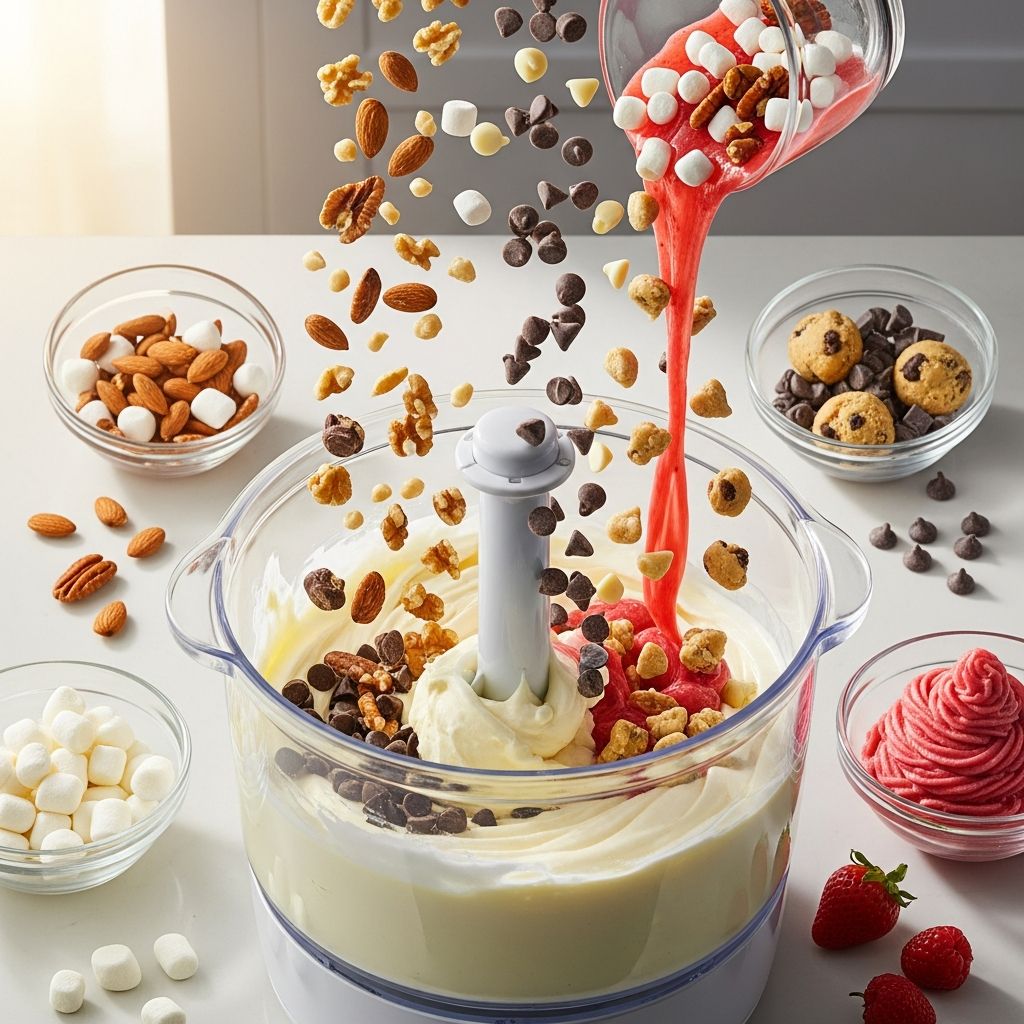
Mix-ins are the crunchy, chewy, and chocolatey extras that transform a basic ice cream into something memorable. From toasted nuts to chocolate chunks, cookie pieces, and candy bits, these inclusions add texture, pockets of intense flavor, and visual appeal to every scoop. Working with mix-ins, however, is more than just tossing ingredients into a churn; it requires attention to timing, size, moisture, and temperature so that nothing turns soggy, rock-hard, or sinks to the bottom of the container.
This guide explains how ice cream mix-ins behave in the frozen environment, when to add them to your ice cream maker, how to prepare nuts and chocolate, and how to keep cookies, candies, and other inclusions pleasantly textured. It focuses on practical, step-by-step techniques so you can reliably create professional-style ice cream at home.
Table of Contents
- What Are Ice Cream Mix-Ins and Inclusions?
- Key Principles: Texture, Flavor Harmony, and Moisture Control
- When to Add Mix-Ins in Different Ice Cream Makers
- Working With Nuts: Toasting, Coating, and Adding
- Working With Chocolate: Chips, Chunks, and Stracciatella
- Cookies, Cake, Pie Crust, and Baked Inclusions
- Candy, Toffee, Caramel, and Chewy Inclusions
- Fruit, Swirls, and Variegates
- Ensuring Even Distribution and Ideal Piece Size
- Freezing, Storage, and Serving Considerations
- Troubleshooting Common Mix-In Problems
- Frequently Asked Questions (FAQs)
- Conclusion
What Are Ice Cream Mix-Ins and Inclusions?
In ice cream making, the term mix-ins or inclusions refers to any solid ingredient that is folded into the ice cream after the base has been prepared. These can be simple ingredients or complex composite pieces designed specifically for frozen desserts.
Common types of mix-ins include:
- Nuts (pecans, almonds, walnuts, pistachios, peanuts, hazelnuts)
- Chocolate (chips, chunks, couverture, flakes, stracciatella shards)
- Cookies and baked pieces (sandwich cookies, brownies, cake, pie crust, graham crumbs)
- Candy and confections (toffee, brittle, peanut butter cups, coated candies, caramels)
- Fruit pieces and variegates (fruit chunks, jam swirls, compotes)
- Specialty inclusions (granola, cereal, marshmallows, cookie dough bits)
Unlike flavorings that dissolve into the base (such as vanilla extract or coffee), inclusions are meant to remain as distinct pockets, adding contrast and complexity in every bite.
Key Principles: Texture, Flavor Harmony, and Moisture Control
Before focusing on specific ingredients, it helps to understand the core principles that determine whether your mix-ins enhance or ruin your ice cream.
Texture is king
The primary role of many inclusions is to provide textural contrast. A scoop is more interesting when creamy ice cream is punctuated by crunch, chew, or slight snap. For best results, aim for mix-ins that:
- Stay crunchy or pleasantly chewy when frozen
- Do not become rock-hard or tooth-breaking
- Do not turn soggy or pasty
Moisture is the main enemy of crunch. High-moisture ingredients, or dry ingredients that absorb moisture from the base, will lose texture in the freezer unless you protect them.
Flavor harmony
Each mix-in should complement the ice cream base rather than fighting it. Consider:
- Matching intensity: A delicate vanilla base can be overwhelmed by too many bitter chocolate chunks, while a dark chocolate base can support tart fruits or strong nuts.
- Balancing sweetness: Some inclusions (toffee, candies) are very sweet; pair them with slightly less sweet bases to avoid cloying results.
- Building themes: Classic profiles like buttered pecan, cookies and cream, and rocky road show how a consistent idea ties the base and mix-ins together.
Moisture control and protective coatings
To keep mix-ins crisp or structurally sound in a watery environment, professional makers often use coatings or pre-treatments. Common strategies include:
- Toasting or roasting nuts to reduce moisture and intensify flavor.
- Candying or sugar-coating nuts and brittle to create a barrier that slows moisture absorption.
- Coating baked elements (like pie crust crumbs) with butter, sugar, or chocolate to protect texture.
- Reducing fruit purees into thicker compotes or jams before swirling them in.
These techniques are inexpensive and greatly improve the quality of your finished ice cream.
When to Add Mix-Ins in Different Ice Cream Makers
Timing is crucial. Add mix-ins too early and they can sink, break down, or interfere with freezing. Add them too late and they will not distribute evenly.
General rule: add at the end of churning
For both home and professional machines, the standard approach is:
- Churn the ice cream base until it reaches a soft-serve consistency.
- In the last 1–3 minutes of churning, add solid mix-ins.
- Let the dasher (paddle) fold them through gently.
- Transfer to a container and, if needed, fold in any delicate or swirl components by hand.
By equipment type
| Ice Cream Maker Type | Best Timing for Mix-Ins | Notes |
|---|---|---|
| Freezer-bowl home machine | Last 2–5 minutes of churning | Add slowly through the opening; stop once evenly distributed. |
| Compressor home machine | Last 2–4 minutes | Similar to freezer-bowl; avoid overloading to keep churn efficient. |
| Soft-serve machine | Often added after dispensing | Use a mix-in feeder or fold into soft-serve in cups or cones. |
| No-churn (freezer-set) base | Fold into base just before freezing | Base should be thick but still spreadable when adding. |
When to add swirls and liquid variegates
Swirls such as fudge, caramel, or fruit ribbons are usually introduced after churning rather than in the machine:
- Layer the soft ice cream and swirl in spoonfuls of sauce in a container.
- Use a knife or spatula to gently ripple without fully mixing.
- Avoid overly warm sauces; they should be thick and cool to prevent melting the base.
Working With Nuts: Toasting, Coating, and Adding
Nuts are among the most popular inclusions, prized for their rich flavor and crunch. However, raw nuts can be bland and rubbery in ice cream, and unprotected nuts may turn soggy over time.
Best nuts for ice cream
- Pecans: Buttery and soft-crunch; excellent in vanilla, maple, and butter bases.
- Almonds: Versatile and firm; pair well with chocolate, cherry, and coffee.
- Walnuts: Slightly bitter; ideal with maple, coffee, or caramel bases.
- Pistachios: Distinctive flavor and green color; classic in pistachio ice cream.
- Peanuts: Strong, familiar flavor; great with chocolate and peanut butter themes.
Toasting nuts for maximum flavor
Always toast nuts before adding them to ice cream:
- Spread nuts in a single layer on a baking sheet.
- Toast at moderate heat (for example around 160–175°C) until fragrant and lightly golden.
- Cool completely, then chop.
Toasting drives off excess moisture and concentrates flavor, making nuts more aromatic and crisp in the frozen dessert.
Protective coatings: candied and buttered nuts
To prevent sogginess and add extra flavor, coat nuts before adding them as mix-ins:
- Candied nuts: Toss toasted nuts in a simple sugar syrup, then bake again until dry. The sugar coating forms a moisture barrier and adds a sweet crunch.
- Buttered nuts: Sauté nuts in butter with a little sugar and salt until glossy and aromatic, then cool and use as mix-ins.
- Chocolate-coated nuts: Dip or toss nuts in melted chocolate and let set; this gives you both chocolate and nut texture in each bite.
When and how to add nuts
For best results with nuts:
- Chop to small, bite-friendly pieces (roughly 0.5–1 cm).
- Cool completely so they do not melt the base.
- Add them in the last 2–3 minutes of churning.
- If adding heavily coated or large nut clusters, introduce them more gradually to prevent clogging the machine.
Working With Chocolate: Chips, Chunks, and Stracciatella
Chocolate is a classic mix-in that can be used in many forms, each with its own texture and behavior in ice cream.
Chips, chunks, and shaved chocolate
- Chocolate chips: Convenient, but can be quite firm when frozen. Mini chips are often more pleasant in texture than standard-size chips.
- Chopped chocolate bars: Chopping a good-quality bar creates irregular pieces of varying size, making for interesting texture and pockets of flavor.
- Shaved or grated chocolate: Fine shavings distribute widely and create a delicate texture similar to chocolate flecks.
Stracciatella technique
Stracciatella is an Italian style where thin strands of chocolate are drizzled into churning ice cream, forming delicate shards that break and distribute evenly.
To make a stracciatella-style mix-in:
- Melt chocolate and mix with a small amount of neutral oil (such as refined coconut or vegetable oil) to keep it from becoming rock-hard.
- With the machine running near the end of churning, drizzle a thin stream of the melted chocolate into the soft ice cream.
- The chocolate sets instantly on contact with the cold base and is broken into fine flakes by the dasher.
Tips for adding chocolate mix-ins
- Use chocolate that you enjoy eating on its own; its quality will be noticeable.
- Keep pieces small so they remain bite-friendly straight from the freezer.
- Add solid chocolate in the last few minutes of churning for even dispersion.
Cookies, Cake, Pie Crust, and Baked Inclusions
Baked inclusions like cookies and cake pieces give ice cream a nostalgic, indulgent feel. Think cookies and cream, brownie fudge, or key lime pie ice cream.
Choosing cookies and baked components
- Sandwich cookies: Chocolate sandwich cookies with cream filling are classic; the filling helps keep the cookie pieces soft but not mushy.
- Crunchy cookies: Crisp cookies (shortbread, gingersnaps, biscotti) hold up better than very soft cookies.
- Brownies and cake: Dense brownies and pound cake fare better than very airy sponge cakes, which can disintegrate.
Preventing soggy crumbs
Baked inclusions tend to absorb moisture from the ice cream. To help them maintain structure:
- Use drier, fully baked components rather than under-baked or very soft ones.
- Toss crumbs with melted butter and a little sugar, then bake briefly to create crunchy clusters, especially for pie-crust or graham-style mix-ins.
- Optionally coat pieces with melted chocolate to form a protective shell.
How and when to add baked mix-ins
- Break cookies or cake into small chunks (roughly 1–2 cm).
- Add them during the last 1–2 minutes of churning or fold in by hand afterward.
- For swirl-heavy flavors (like cheesecake with crust clusters), layer the baked pieces with sauce and ice cream in the storage container.
Candy, Toffee, Caramel, and Chewy Inclusions
Candies add bold flavor and fun texture, but some can become hard or overly brittle when frozen. Careful selection and preparation are important.
Crunchy candy mix-ins
- Toffee and brittle: These provide intense caramelized flavor and crunch. Smash them into small pieces so they are not too hard to bite.
- Coated candies: Candy-coated chocolate pieces (like mini chocolate lentils) work well; the shell protects the chocolate and keeps a pleasant crunch.
Soft candies and chewy additions
- Peanut butter cups: A favorite inclusion; chop into chunks and add near the end of churning.
- Soft caramels and truffles: Use candies that are soft at room temperature; they will firm up but still be chewable when frozen.
- Marshmallows: Mini marshmallows or cut larger ones can be added, but they may become quite firm; some makers briefly coat them in chocolate.
Guidelines for candy mix-ins
- Test a piece in the freezer before committing if you are unsure how hard it will become.
- Chop large candies into smaller pieces to avoid overly hard bites.
- Add in the last few minutes of churning or fold in by hand to avoid smearing or breaking delicate pieces.
Fruit, Swirls, and Variegates
Fruit and swirls (variegates) bring color, acidity, and contrast to ice cream. Because whole fruit pieces contain a lot of water, they can become icy unless handled properly.
Using fruit pieces
- Cook fruit into a compote or jam to drive off water and concentrate flavor.
- Cool completely before adding to the ice cream.
- Add thick compotes near the end of churning or ripple them into the container.
Swirls and ribbons
Common swirl components include:
- Chocolate or fudge sauce
- Caramel or butterscotch
- Fruit preserves or coulis
- Peanut butter or nut pastes
To create clear ribbons:
- Spread a layer of soft ice cream into the storage container.
- Spoon or pipe thin lines of sauce over the surface.
- Repeat layers, then drag a knife gently to marble if desired.
Ensuring Even Distribution and Ideal Piece Size
Evenly distributed mix-ins ensure that every scoop delivers the intended experience, not just the first or last serving.
Piece size guidelines
- Hard or crunchy mix-ins (nuts, toffee): about 0.5–1 cm.
- Softer pieces (brownies, peanut butter cups): up to 1.5–2 cm for identifiable chunks.
- Very hard ingredients (brittle, firm chocolate): keep on the smaller side to be safe on teeth.
Techniques for even distribution
- Add mix-ins gradually through the opening instead of dumping all at once.
- Pause the machine briefly and scrape down sides if ingredients stick.
- After transferring to the container, gently fold with a spatula if you notice pockets with more or fewer inclusions.
Freezing, Storage, and Serving Considerations
Once the ice cream is mixed and packed, how you freeze and store it affects both the base and the mix-ins.
Hardening and storage
- Transfer freshly churned ice cream to a shallow, freezer-safe container for faster hardening.
- Press parchment or plastic wrap directly on the surface to limit ice crystals.
- Freeze until firm, typically several hours or overnight for scoopable texture.
Serving temperature
Mix-ins, especially nuts and chocolate, feel harder at very low temperatures. For best texture:
- Let the ice cream sit at room temperature for a few minutes before scooping.
- Use a warm scoop to reduce stress on both the ice cream and any harder inclusions.
Troubleshooting Common Mix-In Problems
Even experienced ice cream makers sometimes encounter issues with mix-ins. Here are common problems and solutions.
Mix-ins sinking to the bottom
- Add the mix-ins later in the churning process, when the base is thicker.
- Ensure the base has been properly aged and chilled before churning to improve viscosity.
- Avoid very heavy, large pieces that the base cannot support.
Soggy nuts or cookies
- Toast nuts thoroughly and consider candying or coating them.
- Use crisp cookies and pre-bake graham or crust crumbs with butter and sugar.
- Limit storage time for ice creams with high-moisture inclusions; they are best within a week or two for optimal texture.
Rock-hard chocolate or candy
- Chop pieces smaller so they are easier to bite when frozen.
- Use chocolate with added fat or mix with a little neutral oil when making stracciatella.
- Choose soft caramels or candies designed to remain chewy at low temperatures.
Uneven distribution
- Add mix-ins slowly rather than all at once.
- Consider folding some ingredients by hand after churning, especially if the machine struggles with larger chunks.
Frequently Asked Questions (FAQs)
Q: Can I add mix-ins directly to the liquid ice cream base before churning?
No, most solid mix-ins should not be added to the liquid base. They will sink, interfere with freezing, and may become waterlogged. Wait until the base is thick and nearly fully churned before adding them.
Q: How much of each mix-in should I use?
A common range is about 15–25 percent of the volume of the finished ice cream. Too few pieces feel disappointing, while too many can make the ice cream difficult to churn and scoop. Adjust according to ingredient size and intensity.
Q: Do I need to chill mix-ins before adding them?
Mix-ins should be fully cooled but do not necessarily need to be very cold. Warm inclusions will melt the base and cause icy texture, so ensure anything cooked or melted has returned to room temperature or cooler.
Q: Can I use store-bought candy bars and cookies as mix-ins?
Yes. Many excellent ice creams are built from chopped candy bars and commercial cookies. Just chop them into small pieces and add at the end of churning. Be aware that some very hard candies may become too firm in the freezer.
Q: How long will ice cream with mix-ins stay at its best?
Texture is usually optimal for one to two weeks in a well-sealed container, although high-sugar, high-fat inclusions (like chocolate and toffee) hold up longer than delicate cookies or fruit pieces. Over time, moisture migration and ice crystal growth can dull textures.
Conclusion
Thoughtful use of mix-ins is what turns a simple ice cream base into a layered dessert with personality. By understanding how nuts, chocolate, cookies, candies, and fruit behave in the cold, and by timing their addition correctly, you can create flavors that deliver balanced texture and flavor in every spoonful.
The most important practices are straightforward: toast and protect nuts, keep inclusions dry and well sized, add them only when the base has thickened near the end of churning, and distribute them gradually. Paying attention to these details ensures your mix-ins stay crunchy or pleasantly chewy instead of soggy or rock-hard.
With these techniques, each batch becomes an opportunity to compose your own combinations, confident that the nuts will stay crisp, the chocolate will snap just enough, and every scoop will capture the mix of flavors and textures you intended.
Similar Articles







Read full bio of Sneha Tete